
Q1 Could you please start by introducing yourself to our readers?
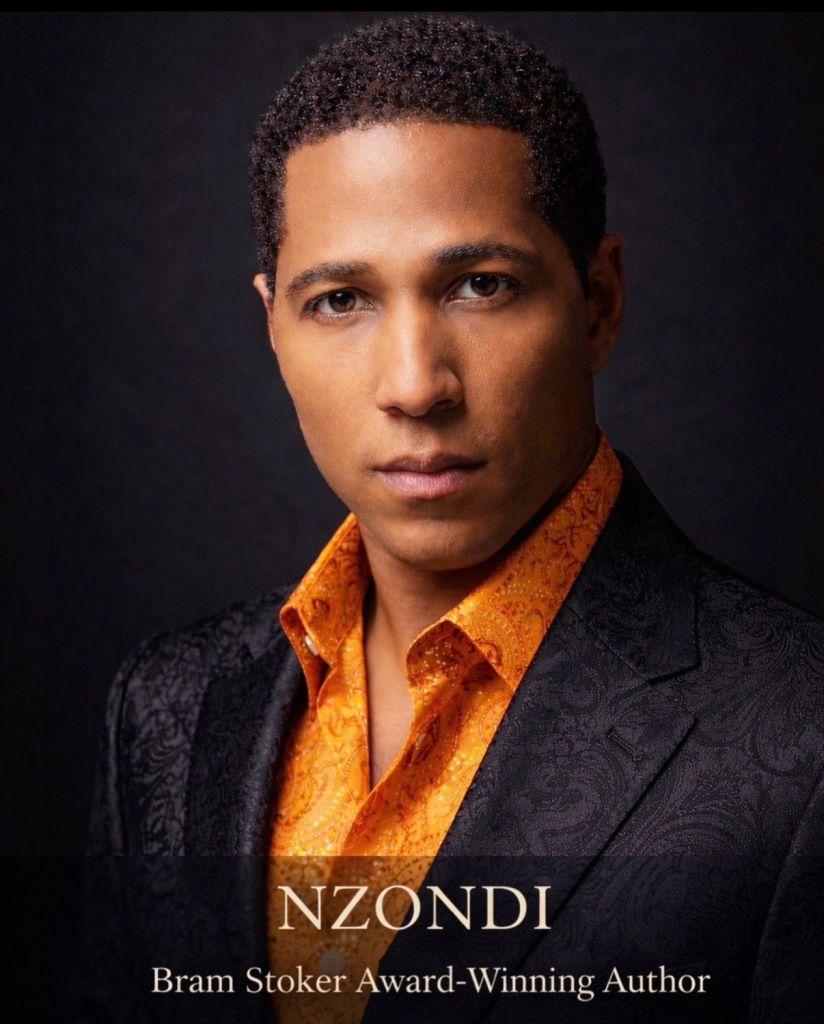
A1. I’m Nzondi, the first African American to win a Bram Stoker in the novel category for my book Oware Mosaic, and I write stories about young people trying to survive the things that should have broken them. My novels may contain horror, mystery, science fiction, or the supernatural, but those elements are really vehicles for exploring trauma, resilience, grief, identity, and survival. As an educator, I’ve spent years working with teenagers and empathizing with their stories of pain, loss and dysfunction.
When you read my latest novel, DeathCon: A Zombie Story, you may pick up that I love writing with a female character as my protagonist. It’s because I’ve also watched many of the women in my life carry heavy burdens that were often invisible to everyone else and that deeply inspires my writing. So many of the women in my life had mental health issues that they fought through every day to raise their children properly or still perform well at their jobs, or just to survive life, in general.
Those experiences of seeing people face their struggles and live with trauma, shaped me as a writer. The monsters are symbolic of the emotional struggles I face, and my friends and family face, every day but fictionalized with vampires and zombies and the supernatural.
Q2 What would you say is your strength as an author?
A2. My strength, my superpower, as an author is empathy. I write characters whose pain feels authentic because much of it comes from real-life people I’ve known and cared about. Readers may come to my books for the mystery, suspense, or horror, but I think they stay because they recognize something relatable in the characters, that pain, that grief and struggle of every day life. I’m interested in what happens after the worst thing imaginable occurs. How do people keep going? How do they get out of their own way? How do they find meaning in loss? How does someone who is young and immature handle great power? They’re bound to make terrible mistakes. Are they the kind of mistakes that are redeemable? Those are the questions that drive nearly everything I write.
Q3 What is your favorite part from your poem ‘The Devil’s Blood’?
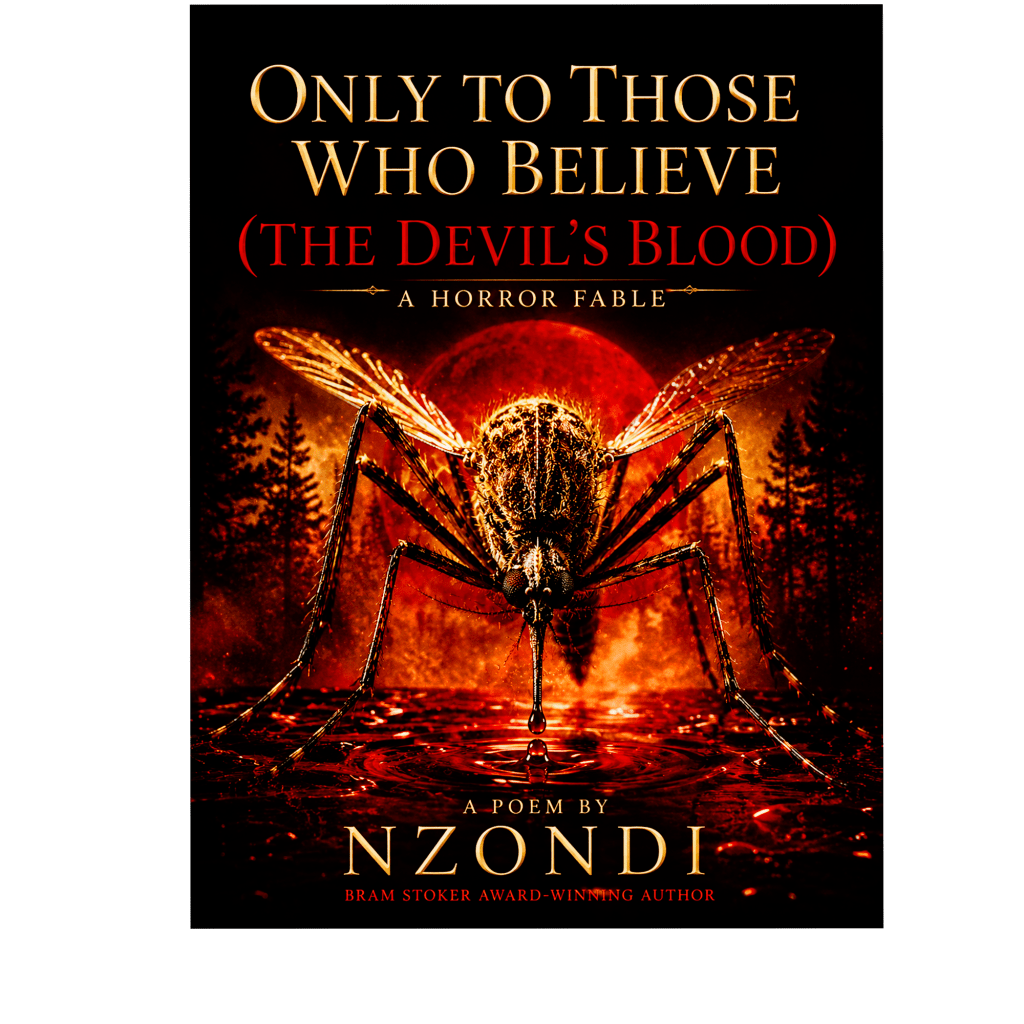
A3. My favorite part of the poem is when Nurse Gnat asks, “Does she not know who she is?” Up until that moment, readers believe they’re following a curious mosquito searching for answers about the devil. Then the story reveals that the seeker and the subject of the search may be one and the same. I enjoy that moment because the poem suddenly becomes larger than a discussion about good and evil. It becomes a story about identity, memory, self-discovery, and the possibility that we spend our lives searching for truths that already exist within us. As a writer, those are themes that continually fascinate me.
The other passage that I hope resonates with readers is:
“What’s fed, grows.”
Because that line quietly becomes the theme of my entire fable.
Not just evil. Not just goodness. Whatever we feed grows.
Fear.
Faith.
Hatred.
Compassion.
Curiosity.
It’s one of those lines that keeps echoing after the story ends.
Q4 How do you handle literary criticism?
A4. I don’t lose sleep over it. Letting something like that weigh me down could affect my energy. It’s okay to have grief, or anger, or pain when I write. Some of the best works came from heartbreak. I just don’t want someone’s opinion to make me not want to write. I have to protect my muse at all costs.
Q5 What do you like about audiobooks?
A5. They’re awesome, aren’t they? Audio books give many people who don’t have the time to read, the opportunity to be exposed to many horror authors and their works.
Q6 How has the experience of writing and publishing a book influenced your perception of yourself?
A6. I thought teaching eighth grade English was challenging, and believe me, it was, but writing a novel, one that gets traditionally published is a hundred times more challenging. It took me writing a million words, and reading 50 novels in my genre(s) to innately get a grip on writing compelling stories.
Q7 What, in your opinion, are the most important elements of good writing?
A7. I just spoke about this in a panel I spoke on at StokerCon in Pittsburgh.
There are many elements to writing a good story. Sometimes, as a writer we get caught up in mechanics but there are stories out there that I personally, couldn’t get past page ten because the writing was so bad but you know what? The readers didn’t care as much about writing mechanics as they did about the story. If they could relate to the characters, their situations and the plot, they fell in love with the story. That showed me that writing a good novel is more than just learning mechanics. That very same story that I couldn’t read, sold millions of copies, and was adapted to a string of films. It had many of my friends in a frenzy to read cover-to-cover, fiending for more.
That tells me, writing a good story, as obvious as it sounds is the basic element. How do we do that?
1. Have a compelling plot that strings each chapter along and has the type of conflicts that play tug-o-war with the reader’s emotions.
2. Develop characters that are relatable.
3. Create an obstacle from the protagonist’s inner demons or past, he or she must overcome to reach a personal goal in the story.
4. Create an impossible conflict for the character to face that delivers pain and turmoil
5. Develop a strong narration
And there are other elements that make a good story but the bottom line is that it all depends on which genre one is writing in and what their goal is in telling the story. Whatever it is, make it compelling and relatable to readers.
Q8 What is your work schedule like when you are writing?
A8. If I’m not on set, I get up at 5:30 a.m., head to Starbucks and write for four-to-six hours. Hit the gym or go for a run for two hours, and then hit the library for a couple more hours of writing or reading.
Q9 What is the significance of the title ‘Only to Those Who Believe: The Devil’s Blood’?
A9. It’s just an ideology. I had a friend recently that said, “I can’t do that,” and I replied, “I’m going to respond to that in three words—I. Believe. You.”
I would then go on and explain to them most things happen in a person’s life based on belief. If you believe something, then in your reality, it’s probably true. If you believe you can’t do something, you’re probably right. If you believe you can, you’re probably right. If you believe you have bad luck, guess what? You probably do.
The title reflects that ideology. The Devil lives…only to those who believe.
Q10. What did you want to be when you grew up?
A10. I wanted to be Evel Knievel. I wanted to be Muhammad Ali. I wanted to be the Six Million Dollar Man. I wanted to be Sammy Davis, Jr., and I wanted to be Rod Serling. I guess I’ve always been interested in science fiction, horror and storytelling.
Social Media Links:
Website: https://nzondiauthor.com/
Read DeathCon: https://books2read.com/deathcon
BookBub: https://www.bookbub.com/authors/nzondi
Instagram: https://www.instagram.com/nzondiofficial

