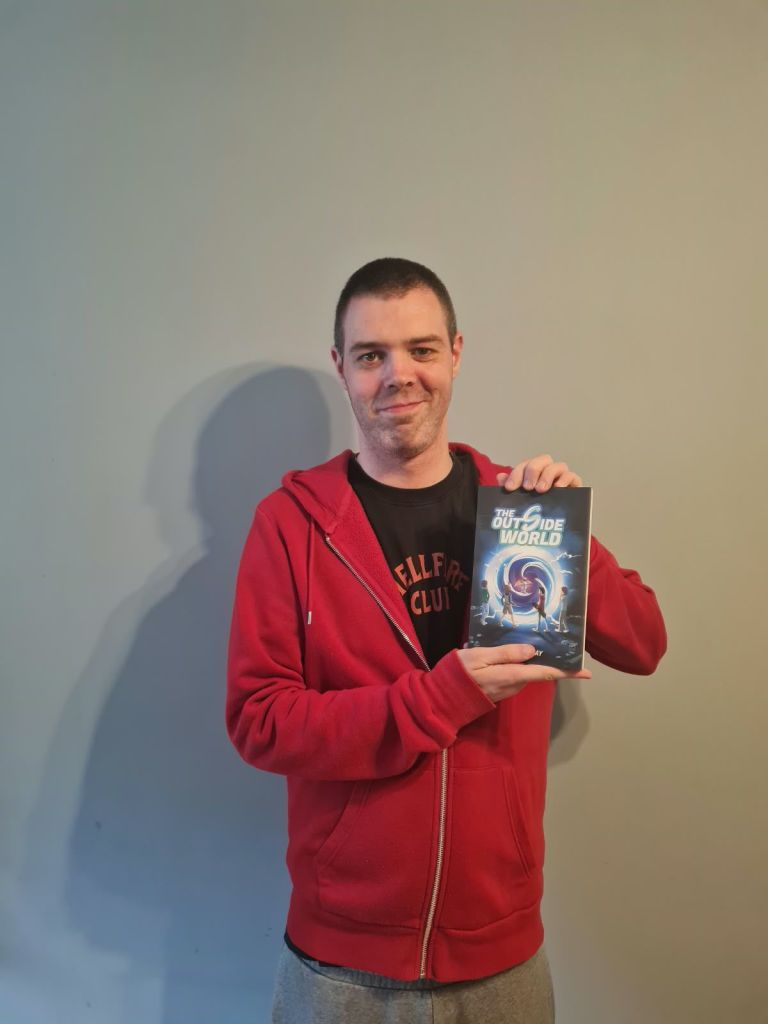
Interview with author Alison McBain

Q1. Hello, can you please introduce yourself? Readers would love to know more about you.

A1. Hello! I’m Alison McBain, and I’m an author, editor, and ghostwriter. I have four books published under my own name, and about two dozen ghostwritten for clients. I enjoy penning novels in all genres from fantasy to historical fiction, literary stories to poetry.

On a more personal front, I’m a mom of three girls aged 10-16 and draw a webcomic called Toddler Times from my home in Alberta, Canada. I have 2 black-and-white cats who keep me company when I’m writing (or stand on my keyboard, depending on their mood).

Q2. What were the key challenges you faced while writing your book “The New Empire”?

A2. Research! The New Empire is an alternate history set in the 1700s, and the story mixes multiple cultures together, including the Amah Mutsun, the Haudenosaunee, and Chinese, so it required a ton of research to try to get the cultures, the languages, and the details of the time period correct. Even though my story changes how history unfolded at that time, almost all the details you’ll find in the book, from what the characters ate, their houses, legends, and the like, were as accurate as I could make them.

Q3. What books or authors have most influenced your own writing?

A3. There are so many authors who’ve created amazing writing that it’s hard to pick just a few. I’m a big fan of Ray Bradbury for his imaginative stories that have stood the test of time, Margaret Atwood for… everything, Langston Hughes for his lyrical poetry, as well as Tanith Lee for telling stories decades ahead of her time… and the list goes on.

Q4. What’s your favourite spot to visit in your own country? And what makes it so special to you?

A4. I don’t know if I have a favourite spot, to be honest. I’m more about the people I visit those places with—my friends and family. But if I have to choose, I’d say Lake Louise in Alberta. It’s the most beautiful spot I’ve ever been in my life. It looks like AI created photos of it because it’s just too darn perfect. If you ever have a chance to visit, please do. But a word of warning—the water is very, very cold all year round.

Q5. What inspired you to write the book ‘The New Empire’?

A5. About a decade ago, I read an article that mentioned some evidence had been found that indicated the Chinese Empire could have sent ships to the coast of South America sometime in the 1400s. Others have further explored this concept from a nonfiction perspective (example: https://nacfocus.substack.com/p/tracing-the-admirals-forgotten-voyage), but I wanted to imagine that this could have actually happened and could have changed the way history unfolded. What if the voyages of Zheng He led to permanent contact between China, the greatest empire in the world at the time, and the Americas? That’s the background for my book.

Q6. How long did it take you to write your book ‘The New Empire’?

A6. That’s a complicated answer. The first half of the book was written during one November as part of NaNoWriMo – that’s short for “National Novel Writing Month,” which was a worldwide phenomenon where writers around the globe challenged themselves to write 50,000 words in one month. After I completed the first 50,000 words, I set the draft aside with the idea of eventually getting back to it. But it wasn’t until a book pitch contest hit my radar that I ended up finishing the book within another month, with edits taking a bit longer, in order to compete. So, technically it took only a couple months to write—in reality, though, it took years before it was actually completed, with a big break in the middle.

Q7. On what platforms can readers buy your books?

A7. Pretty much anywhere books are sold online. It’s also available in select libraries and bookstores in North America.

Q8. Tell us about the process of coming up with the book cover and the title ‘The New Empire’?

A8. I wanted a cover that represented the contrasts inherent in the main character, Jiangxi, who is the son of a former Chinese Emperor sold into slavery in the Americas. The cover’s colours are primarily red, white, and black—red is the colour of good luck in most Asian cultures, and some of the ways Jiangxi survives and thrives in his new environment can be attributed to luck and favour. The ouroboros serves a dual purpose: it represents both life and death, as well as representing the imperial house of China, whose symbol is a dragon. At the same time, it circles a boy who looks sad and without many material goods to his name.

As to the title, it highlights the change in history that is the omnipresent background of Jiangxi’s tale—a new empire where he is not at the top anymore, but on the bottom as a slave.

Q9. When writing a book how do you keep things fresh, for both your readers and also yourself.

A9. I’m a big fan of using cliffhangers in chapters—cliffhangers help keep the reader turning the page (and the writer jumping eagerly into the next chapter). I also write quickly, so I tend not to have time to get bored with a book. On top of that, writing in multiple genres helps each story stay fresh—if I’m not in the mood to write a romance, I might pen something apocalyptic or dystopian. Or vice versa. And readers seem to enjoy variety as well—each new book tackles new territory.

Q10. What is the most valuable piece of advice you’ve been given about writing?

A10. Many years ago, I was attending a one-day writer’s conference at a university in Connecticut, and one of the professors said something that stuck with me. I don’t think it was original to him, but advice that he himself received from his own creative writing professor even more years ago: “Write towards the fear.” I’ve carried that advice with me ever since, and it helps me look at a scene or a character or a story and ask: how can I twist this? I’ve delved into the darkest parts of my psyche and written about things that are unpleasant, unsavoury, and terrible, and it’s created some amazing fiction simply because it begins from a personal place of discovery. What do I fear? Well, I’ll put it into a book. Fear is a commonality that we all have because we’re only human, and so it’s helped me create 3D characters who are as complex as real people.

Buy a book on Amazon

Interview with author Sandy Malone

Q1 Could you please start by introducing yourself to our readers?

A1. My name is Sandy Malone and I live on Jekyll Island, just off the coast of Georgia. I’ve written a five-book fiction series about a young wedding planner who loses her job in a storm and has to start over. The Gem of the Golden Isles series is based on my experiences planning more than 500 destination weddings in the Caribbean. It’s a combination of romcom and mystery/suspense. Although the series isn’t autobiographical, it’s based on all the real crazy I saw with brides and grooms and fictionalized it to protect the guilty.

Q2 What would you say is your strength as an author?

A2. I am a fantastic storyteller, and I’ve had lots of interesting life experiences that make me a subject matter-expert in weddings, law enforcement, and politics. There’s a whole lot of you can’t make that up in wedding planning. Also, I worked as a news reporter and editor for years and so I write really quickly. I could write a book every two weeks if I didn’t have to do all the pesky promotion and marketing to sell them, too.

Q3 What is your favorite part from your book ‘Escape to Jekyll Island’?

A3. I giggled through writing all five of the books in the series – my favorite part is telling stories about real weddings we’ve done through the eyes on my main character. You just can’t make up the crazy things that people do. Or the mean and nasty things. I think In Bloom on Jekyll – Gem of the Golden Isles Book Two – is the funniest book in the series. The bride who asked us to hold her wedding date while she found a new groom is a true story.

Q4 How do you handle literary criticism?

A4. Criticism hurts because my books are like my babies, but I value every bit of it that I get and I try to use it constructively to become a better writer. Honestly, it’s a lot easier than the mean tweets I received when I starred in the TLC reality TV show “Wedding Island” about my wedding business.

Q5 What do you like about audiobooks?

A5. Audiobooks let me do my favorite thing (reading!) while I’m doing something else. I’m a multitasker. Reading is a guilty pleasure and I don’t feel badly if I consume books while I’m also cleaning or driving.

Q6 How has the experience of writing and publishing a book influenced your perception of yourself?

A6. It’s helped me re-evaluate a lot of things in my life. It’s made me reconsider how I did things when I was younger. Writing characters that are loosely based on myself has been eye-opening. This is what I’ve always wanted to do, but it’s also the most terrifying kind of writing I’ve ever done – and I wrote the Politics.Net column at the Wall Street Journal when I was 24. But finally seeing my name on the cover of books makes me realize that I can do anything I set my mind to do.

Q7 What, in your opinion, are the most important elements of good writing?

A7. My first five books are a series, and I think it’s critically important that a reader could pick up any book in the series and start there, without having read the ones that came before it. I’ve always been a voracious reader and there’s nothing worse than picking up a book and realizing that you missed the first book and don’t know what’s going on.

Q8 What is your work schedule like when you are writing?

A8. I began writing fiction full-time almost two years ago. I prefer to write for hours, uninterrupted, when possible. When I’m working on a book, my husband has to fend for his own meals. I start with an outline but once I get going, I only refer to it to make sure I haven’t forgotten anything. Sadly, I have to admit that I spend about 10 percent of my time writing, and 90 percent of my time promoting on social media or trying to get bookstores to carry my series. I wish it were the other way around. Maybe someday it can be!

Q9 What is the significance of the title ‘Escape to Jekyll Island’?

A9. The main character, Tally Davis, lost everything in Hurricane Maria – her house, her boyfriend, and her job. When she’s evacuated off Vieques Island, she goes home to Jekyll Island to lick her wounds and work on her resume. Instead, she ends up launching her own wedding planning company and falling in love.

Q10 What did you want to be when you grew up?

A10. I have always wanted to be a writer. I got my degree in print journalism and won awards writing and editing for my high school and college newspapers. I went into political reporting straight out of school. I’ve been paid to write my entire professional career. The first books I wrote were traditionally published, but they were non-fiction and a few were ghost-writing gigs. This is the first time that I’ve ever gotten to write what I wanted to write instead of something I was hired to do.

Buy a book on Amazon

Interview with author Pat Daily

Q1. Hello, can you please introduce yourself? Readers would love to know more about you.

A1. Pat Daily here. I’m a former USAF Test Pilot and engineer who worked on NASA’s Space Shuttle and International Space Station programs. These days, I devote most of my professional time to writing and consulting on new aviation projects, such as hydrogen-powered aircraft. I’m a proud husband, father, and grandpa. In whatever free time is left, I love gaming, mostly on consoles. My favorites are role-playing games with expansive worlds where your choices have in-game consequences.

Q2. What were the key challenges you faced while writing your book “Fire”?

A2. When I started the series, I thought Spark would be a stand-alone novel. It wasn’t until I was writing the last paragraph that I realized there was much more to the story. That realization opened so many possible pathways for Fire that I had to spend a good deal of time deciding what would and wouldn’t be in the book. Later, while the book was in editing, I faced another challenge familiar to many writers: the book had grown too large. Something had to go.

It’s always hard to cut out things you are proud of in your writing. I agonized for a week or two before making the call. In the end, I cut about sixty pages. That decision triggered the third book, OrcLand.

Q3. What books or authors have most influenced your own writing?

A3. Robert Heinlein’s Glory Road, Arthur C. Clarke’s Childhood’s End, and Isaac Asimov’s Foundation Series were strong early influences. Later, Neal Stephenson’s Diamond Age and William Gibson’s Neuromancer gave me new energy.

Q4. What’s your favourite spot to visit in your own country? And what makes it so special to you?

A4. Yosemite National Park is visually stunning with it’s craggy faces and waterfalls. It’s a joy to hike.

Q5. What inspired you to write the book ‘Fire’?

A5. The Spark Chronicles were inspired by the game Pokemon Go. My daughters were playing, and I wanted to see what it was all about. The technical aspect – virtual constructs superimposed over a real-world background – got me thinking. What if we could build a theme park based on a world where the virtual and the real existed side by side and could interact? How could we control it all? That led me to introduce an AI with a personality. Her story and evolution became central to Fire and continued through the final book, Embers.

Q6. How long did it take you to write your book ‘Fire’?

A6. First idea to final draft took just over one year. Editing, covers, and publication added another six months, but gave me time to work on OrcLand.

Q7. On what platforms can readers buy your books?

A7. All of the books are on Amazon in both print and eBook formats. They are also available on audio via Audible.

Q8. Tell us about the process of coming up with the book cover and the title ‘Fire’?

A8. Great question. As soon as I knew there would be a second book, I saw it as a trilogy: Spark, Fire, and Ash. I started publishing Ash on a platform called Kindle Vella, which allowed authors to serialize their work. The platform didn’t take off, and Amazon shut it down in 2025. To avoid confusion (and because I was changing it significantly), I renamed it to Embers.

Jesh Art Studios did the cover for Spark. I connected with them through 99Designs. When it was time for Fire, I tried to find them again, but they had left that platform and I was unable to find where they had gone. So, I ran a contest for a new cover artist and selected The Busy Dee. She kept the theme consistent and also did the cover for OrcLand. By the time Embers came around, she was no longer in the business, but happily, I found Jesh again and they did the final cover.

Q9. When writing a book how do you keep things fresh, for both your readers and also yourself.

A9. I try to stay current on the sci-fi market and what’s trending. Then, mostly, I avoid that. If I pay too much attention to it, the ideas become blurred – what’s mine and what did I read elsewhere? It’s okay for books to have some similarities, but not too many.

Q10. What is the most valuable piece of advice you’ve been given about writing?

A10. Write fast, bad, and wrong. That sentence is a great example. “Bad” should actually be “badly.” It’s important to get the story out first, then go back and make it clean and proper in later drafts.

Buy a book on Amazon

Interview with author A-M Mawhiney

Q1. Could you please start by introducing yourself to our readers?

A1. Hello and thank you for providing me with the opportunity of talking about “Spelldrifts,” my second novel.

My name is A-M Mawhiney. I grew up in mainly single-industry mining and farming communities in Northeastern Ontario leaving only to complete my post-secondary education at three different universities.

When I was a child I declared I wanted to be a writer but instead became a social worker and then a professor at a small university in Northern Ontario Canada. When I retired in 2018 I never imagined that I would realize my childhood dream of writing. In March 2020, overwhelmed during the first lockdown of the Covid pandemic, I opened my laptop and started to write. What escaped from my fingers became the first sentence in my debut novel, “Spindrifts.” I am now a self-published author of three books: “Spindrifts” (2021), “Spelldrifts’ (2023), and “Fugitive Rifts’ (2025), all supported with services by FriesenPress. 

Q2. In your view, what distinguishes a writer from an author?

A2. This is a very good question because, for me, there is a blurry distinction between the two. It is up to the individual, of course, to identify themself as either a writer or an author.

Some will likely disagree with my answer. Many outstanding writers choose never to publish. They might journal or write diaries, create poetry or prose for a variety of reasons other than a desire to publish. I would call them writers: people who spend time regularly writing, whether non-fiction or fiction, for the love of writing and, perhaps, for sharing what they have written to a select audience. For example, I know of a local group of writers who challenged each other to write poems and then read them to each other at regular gatherings. One published her poem, and the rest were happy to write and share their poetry with the group.

Authors, in my opinion, are writers who decide to seek publication of their writing and therefore also become immersed other activities related to being an author, including, for example, engaging technical support for editing, design, and other activities leading to publication. They are also active in pre- and post-publication activities like book promotions, writing articles, speaking at literary festivals and community forums, being on or hosting podcasts, and attending public events.

In my opinion, there is no hierarchy between a writer and an author. Both write and some publish what they write. There is creative excellence in both groups, but one may be more private and the other more public about where their writing is found.

Q3. Which part of your book “Spelldrifts” proved to be the most challenging to write, and why?

A3. There were two writing challenges with “Spelldrifts”.
Because this is a stand-alone sequel to “Spindrifts” I had to shift my world-building because the stories are twenty years apart and the world transformed in significant ways between the two stories. I also had a request from two pre-teens to include a dragon and a wolf in “Spelldrifts.” That required a lot of creative thought to develop a backstory that could explain how a dragon appeared in a future version of Earth, when there was no hint of such a creature in the first book. Developing the character of the dragon was initially daunting but, to my surprise, Chiyo emerged clearly as I was writing.

The second challenge was writing the climax to the story, which involved a battle between factions, in a world that valued working together with mutual respect and inclusion for everyone. A battle seemed the very antithesis of the ways of living in the world I created for “Spelldrifts,” but it became necessary to defend all that was good in that world.

Q4. How do you typically celebrate once you’ve completed a book?

A4. It is a quiet moment for me. I tell family and friends and then enjoy a rich hot cocoa and start to plan the launch, which is the public celebration to send out word that I have a new book.

Q5. How do you leverage social media to connect with your audience as an author?

A5. I spend dedicated time almost daily on social media. I have accounts with Twitter/X, SubStack, Instagram, Blue Sky and Threads. I have stepped back recently to think about new social media strategies and will be back in full force soon on all these platforms.

Q6. On average, how many hours a day do you dedicate to writing?

A6. Times vary. I seldom take a day away from some aspect of writing, publicity, and promotions. I spend anywhere from 3-14 hours a day. When I am immersed in my story I rarely am away from my desk and, even when I am, my mind is most often engaged in thinking about what comes next. When I am focussed only on promotions and publicity, between publications, I spend fewer hours each day and take more breaks.

Q7. What kinds of books did you enjoy reading during your childhood?

A7. Even as a child I was a voracious reader and read every day since I was six years old. I read mysteries like Trixie Belden, Hardy Boys, Nancy Drew. Polly Anna and Anne of Green Gables were difficult reads for me because I felt sorry for Anne and Polly Anna. I adored Maggie Muggins. Then there was the infamous moment when I was eight years old and my mother discovered me reading a racy adult novel, because I had read all the children’s books. My parents decided to let me finish it.

Q8. Is there an author within your genre whom you particularly admire?

A8. I have been enjoying a trio of books by Anne M. Smith-Nochasak, The Taggak Series, and also P.L. Stuart’s Drowned Kingdom Saga. These are great fantasy books by emerging Canadian authors.

Q9. How has the experience of writing and publishing a book “Spelldrifts” influenced your perception of yourself?

A9. Writing “Spelldrifts” opened up hidden talents when it came to writing my own version of fantasy. It turns out I have a vivid imagination! Normally perceived as quiet and straightforward, I now feel much more confident about my ability as a writer to dig deep and write something way out of what used to be my comfort zone.  More than the other two books, “Spelldrifts” relied on my ability to formulate my own vision of characters and magical powers when it came to the fantasy elements.

Q10. If you had to describe yourself using just three words, which would you choose?

A10. Thinker. Dreamer. Hopeful.

Buy a book on Amazon

Interview with author Seth Voorhees

Q1 Could you please start by introducing yourself to our readers?

A1. I’m Seth Voorhees. I live in South Dakota. I’m a dark fiction author with four published novels.

Q2 What would you say is your strength as an author?

A2. My strength is my openness to criticism, my willingness to learn from others, and my continual improvement of my craft. That includes working with fellow authors, reading books on the craft, and doing the one thing all authors must do: write a lot and read a lot.

Q3 What is your favourite part from your book ‘Immune’?

A3. The part of Immune that I love most is near the end of the book, where the clash between Helen Olsen and the President takes place in his office. When they argue over their next course of action regarding how to “take care of the Immune,” it becomes a very emotionally charged moment for her, allowing her character to be unencumbered for the first time in her journey.

Q4 How do you handle literary criticism?

A4. For me, I try to take all criticism with an open mind. What can I learn from it? Can I apply it to my next story? Will it be helpful? Criticism is part of the process. I think the most important thing is not to take it personally and to move on if it’s something you cannot learn from or grow from.

Q5 What do you like about audiobooks?

A5. They make my car rides easier. For my job, I travel frequently across the state, and it’s always good to have a book to pass the time. I love stories, and I don’t need a car ride to enjoy them. I enjoy listening to a story while doing chores around the house, when I’m busy with tasks and can’t sit down to read, or at the end of the day when I’m tired and just want to lie down, shut my eyes, and zone out.

Q6 How has the experience of writing and publishing a book influenced your perception of yourself?

A6. Yes. When I was younger, in elementary and middle school, I had an IEP and was told that I would never be able to understand how grammar works, that I was consonant deaf, and that I would never be able to grow in that area. But through a lot of hard work, practice, learning the art of editing, and picking up as many resources as I could, I have proven many of those people wrong, which, of course, feels great.

Q7 What, in your opinion, are the most important elements of good writing?

A7. One of the most important elements is learning to balance how much of your story to show versus how much to explain. I have a tendency to narrate too much and have gotten better at recognizing it when I’m reviewing. I ask myself, is this something I should be showing? Too much narrating bores the reader and takes them out of the story.

Q8 What is your work schedule like when you are writing?

A8. I’m an early bird when it comes to writing. On weekends, I stick to the mornings and the mid-afternoon. I complete my daily word count first, then edit a project, and tackle whatever task I have at that time. On weekdays, it’s the early hours before I go to work, and sometimes I’ll pick up and do some work in the evening when I get home, depending on the day.

Q9 What is the significance of the title ‘Immune’?

A9. One of the sparks of inspiration came during the Swine Flu. While on a walk, I thought about what it would be like to be completely immune to a virus that was wiping out everyone and destroying everything around you. How would it feel to know you were safe, and how would that knowledge affect your psyche and your life? That was part of the premise, with more added as the story unfolded. The story is not only about how the group “Immune,” one of two in the book, interacts with the other group, “The Inflicted,” but also about how they interact with each other. Throughout the book, the dominance and submission between the groups shift, altering how the Immune must live their lives and move forward.

Q10 What did you want to be when you grew up?

A10. Honestly, I don’t think I’ve ever had a clear idea of what I wanted to be or pictured what my life would be like as an adult. I started reading and loving books when I was young, but I didn’t take it seriously until later in life. In college, I switched majors a few times, starting with History, then Mass Communication, and finally Sociology and Psychology. At this point, I’ve been a cook, a server, a dishwasher, an HVAC tech, a youth supervisor, a youth counselor, an educator, a CNA, and an author. I feel like I’m still trying to answer that question.

Buy a book on Amazon

Interview with author Deborah Wilde

Q1. Hello, can you please introduce yourself? Readers would love to know more about you.

A1. Hello! I’m Deborah Wilde, a former screenwriter who jumped ship to write funny, sexy urban fantasy books and never looked back. I’m a self-professed geek, pop culture lover, and I never say no to a good chocolate chip cookie.
Most of my books are set in my hometown of Vancouver, Canada and I take a lot of pride in the fact that I’ve convinced readers to check out my beautiful city. Only don’t come in the winter. A lot of rain.

Q2. What were the key challenges you faced while writing your book “Throwing Shade”?

A2. My biggest challenge wasn’t really with Throwing Shade, which was book one of the seven book series, Magic After Midlife. It was actually with the final book, Ace of Shades, because the big bad that Miriam had to take down was so formidable, it took me a bit to figure out how she could possibly emerge triumphant.

Q3. What books or authors have most influenced your own writing?

A3. One of the books that had the biggest impact on me as an author, even though I read it as a kid, was The Hitchhiker’s Guide to the Galaxy by Douglas Adams. Even back then, I loved books that would transport me to other worlds—but they didn’t tend to be funny. Then I saw a cover with “Don’t Panic” written on it, and my mind was blown by all the humour, while the characters were still having these amazing adventures in outer space.

Q4. What’s your favourite spot to visit in your own country? And what makes it so special to you?

A4. Osoyoos, BC. It’s a pocket desert and that’s crazy to me that we have those here in Canada. It’s absolutely stunning there, totally different from the lush vegetation in Vancouver. Plus, the lake is warm and there are lots of wonderful wineries in the area.

Q5. What inspired you to write the book ‘Throwing Shade’?

A5. There was this one day, back when I was still teaching screenwriting, when a group of my film school students had an argument about whether a female character in her forties would still have any sexual desire or be seen sexually. Most were arguing that the male character would go for a younger woman.

Intellectually, I understood about the invisibility of middle-aged women—just look at the roles older actresses are offered versus those given to men of a similar age. But I remember sitting there thinking “you’re kidding me, right? Am I supposed to just be some sexless crone now?”

I’d been so happy to turn forty because I’d gotten rid of a lot of negative thinking, especially around my body image, and worrying about how other people saw me, and yet I kept feeling like even though I’d broken out of this box, there were a lot of others trying to keep me inside it.

That got me thinking about invisibility as a strength, and the idea that if you’re invisible, no one sees you coming, which led me to Miriam’s powers.

Ultimately, it’s a story of empowerment.

Q6. How long did it take you to write your book ‘Throwing Shade’?

A6. I spent about a month figuring out the magic system and what Miriam’s journey was going to be. Probably another 3 months writing it and 3 months through the extensive editing process I do.

Q7. On what platforms can readers buy your books?

A7. The best place to buy my books is direct from me at deborahwildebooks.com. I sell ebooks, paperbacks, and audiobooks. We’ve made it really easy to download ebooks to a Kindle or Kobo or most popular ereaders. But my books are also available online at all the major retailers, so readers can pick their favourite store.

Q8. Tell us about the process of coming up with the book cover and the title ‘Throwing Shade’?

A8. One of the things I love to do across different series, is have my designer come up with a symbol to brand it. We knew that we were going to feature different accessories as the main object on each cover in the series and that for Throwing Shade it would be this high heel. Once he added the sparkly gold skull that was the series symbol, it gave the book a dash of cheeky fun.

I don’t remember when I came up with the title. I feel like it was pretty early on in the idea generation stage. Throwing Shade was perfect because it worked on two levels: one, society’s tendency to dismiss older women, and two, Miriam’s shadow magic. From there, it was a matter of roping my husband, kid, and friends into helping me find all the fun plays on the phrases with “shade” for the rest of the books.

Q9. When writing a book how do you keep things fresh, for both your readers and also yourself.

A9. That’s a great question. It comes down to refilling my creative well, so dinners with friends, traveling when I can, taking in a cool exhibit, or losing myself in a book or television series. Plus, the more I engage with the world and other people, the more snippets of conversations or something I’ve seen translates into an idea for my own story.

Q10. What is the most valuable piece of advice you’ve been given about writing?

A10. Finish your first draft. ☺

Buy a book on Amazon

Interview with author Jay Setchell

Q1. Could you please start by introducing yourself to our readers?

A1-raised on a working farm that taught me a lot about responsibility, sense of urgency, and the importance of the cycle of life. U. S. Marine, serial entrepreneur, corporate problem solver, multi time death, and near death survivor, over 70 surgeries. 76 years old and mostly paralyzed and get around in a power wheelchair. Still very involved as an entrepreneur and a partner in a company that’s national and now international, author, and speak to groups when the situation arises about perseverance mindset, resilience and faith other things.

Q2. What inspired you to finally share your life story in this book?

A2-I had been asked to write a book for many years by many people because of all the horrific medical issues I have been through, dozens of surgeries, starting companies and just not letting anything keep me down. When I was 74, I was encouraged to move forward with it, as the person that help encourage me had heard me speak to some folks and they were very inspired and kept asking questions. I thought well maybe it’s time I buckle in and take this challenge on.

Q3. Your journey includes multiple near-death experiences, how did those moments reshape your perspective on life?

A3-They reshaped the direction of my life as well as my perspective. The reshaping was such that I couldn’t do what I thought I would do with my life and had to change it several times due to ongoing major medical issues, as well as multiples of surgeries. My perspective is simple, I have overcome so much, there’s nothing that I can’t conquer. It’s simply mind over matter.

Q4. What was the most difficult part of writing this book and revisiting painful memories?

A4-I dictated the book and let someone else and assemble it, though the most difficult part was thinking back about things I’ve been trying to forget for 55 years and longer. They were very traumatic and involved life and death more than once. Memories I didn’t need to remember.

Q5. What advice would you give to someone who feels stuck or overwhelmed by life’s challenges?

A5-Think about the times and things that you didn’t think you could overcome, that you ended up being a champion over, or at least made some change in it and what it was that brought you through that, and use that to move forward. We all have strengths within us, whether that’s your DNA, resilience, attitude, frustration, irritation, even pain, that you can draw off of and use as a strength to help you push through those adversities and detours in front of you. Don’t let anything stop you. You need the attitude and faith that you can do it, and you will.

It’s always too soon to quit.

Q6. Was there a specific turning point where you decided you would never give up, no matter what?

A6- I don’t believe I’ve ever had a point that I decided I would never give up no matter what. I was raised with that attitude and outlook, and it’s been in me my whole life and everything that I’ve gone through and everybody that’s tried to stop me or hold me back, just continues to strengthen my will and determination. It’s like drip, drip, drip, and finding the glass is full. I let the small things I have ever been through has strengthen me. Especially the times that I’ve had to fight for my life and fight back against the odds as you are told, you physically will never be able to move part of your body again, or this is going be too tough for you, considering your physical condition. I don’t listen to that, I move forward with a faith and a vision, or as some people call it a dream, and don’t let anything stop me.

Q7. What would you say is your strength as an author?

A7-I don’t recognize that I have any strength as an author. I simply dictated for my thoughts and memories, in simple terms, it makes sense, and did it in sections. It took over a year for me just to be able to think about a lot of terrible things. I tried to pull out those things I went through the positives that can help others find the strength within themselves to persevere through the adversities that they are going to face at different times in their life.

Q8. How do you leverage social media to connect with your audience as an author?

A8-I’ve left that up to the publisher at this point to be on Facebook, Instagram and TikTok. I also have a webpage that probably needs to be updated some as things continue to grow rapidly.

Q9. What is the significance of the title ‘The Strength Within You’?

A9-I believe we all have strengths within us. Not just inside of us, but within us. Within us means all that we’ve gathered, including information from beyond ourselves, from experiences with other people or other projects, whether they were successful or failures, or maybe in-between. People need to look back and draw upon those to move forward. The strength in you may be as I mentioned before, in your DNA, maybe your family upbringing, faith, teachers, circumstances you went through whether they were physical or otherwise, or just being irritated or mad as hell, but you can accomplish things by reaching back into yourself and what you’ve experienced, to attain goals, dreams and the vision that you never thought was possible.
You can just never ever ever give up.

Q10. You talk a lot about mindset, how can someone begin developing a stronger mindset in their daily life?

A10-Mindset used to be called attitude. They just changed the name. But it’s positioning your thoughts that you can achieve something and move forward to get the desired results so in my opinion, and the facts seemed to show, that if you do a little bit at a time, step-by-step, you can achieve those desires. Don’t try to do more than you can handle or you’ll end up failing which is detrimental to your objective. So think of it like the dripping of water into a glass. I have an old saying that says inch by inch, it’s a cinch. Yard by yard it’s very hard. So just keep thinking about your vision, dreams or desires and work at them a little bit at a time with calculated risks so you don’t falter and if you go a little bit at a time and catch yourself going in the wrong direction, or not one you are happy about it, it’s easy to change right then and there.

It’s all in your head. It’s simply mind over matter!

Buy a book on Amazon

Interview with author Janet Sweeney

Q1. Hello, can you please introduce yourself? Readers would love to know more about you.

A1. My name is Janet Sweeney. As an individual with considerable life experience and education, I believe these qualities are valuable assets when it comes to writing my stories. My writing is informed by a breadth of personal experiences, including navigating challenging relationships, being a single mum, caring for my parents, raising five sons, and fostering additional children.

Now, however, I have found a wonderful person in my life who supports me in everything I do. His love and support are something I cherish every day.

These varied experiences have contributed to a rich and occasionally demanding life, which continues to influence my work.

Q2. What were the key challenges you faced while writing your book “Sisters in Dust”?

A2. Writer’s block proved to be the most significant obstacle, as it is for most writers, I would think. Although I had a clear direction for my writing, progressing further was occasionally difficult; however, perseverance eventually yielded positive results.

Allowing myself breaks to engage in other activities like gardening, reading, and relaxing by the river was beneficial. It is easy to become overwhelmed during the writing process.

Q3. What books or authors have most influenced your own writing?

A3. I find pleasure in reading autobiographies and books that offer meaningful substance. I appreciate stories where I can reflect on the characters and their roles throughout the narrative.
I found Rosie Batty – A Mother’s Story truly sad and inspirational; I don’t think I could be as strong as her.

Gwen Wilson – I Belong to No-one
Belinda Alexandra – White Gardenia – a story of a mother and daughter’s bond.

Q4. What’s your favourite spot to visit in your own country? And what makes it so special to you?

A4. I have not yet had extensive opportunities for travel. However, my partner Ivan accompanied me to Bateman’s Bay on the NSW coast. I found the area serene and picturesque, offering a relaxing atmosphere, and the local residents were welcoming.

Q5. What inspired you to write the book “Sisters in Dust”?

A5. I have always wanted to write, but life often got in the way. I started several times but lost my notes during moves. I wanted to prove to myself that I could do it.
I finally reached a point in my life where I had the confidence to pursue it.

The story includes parts taken from my own life, such as:

  1. My sister and I have been estranged for 15 years since my father’s funeral.
  2. I helped nurse my father through cancer.
  3. I was betrayed and deceived by my husband.

Now that I have finished Sisters in Dust, I have the confidence to write My Story about my life. I’m finding it extremely emotional and challenging.

Q6. How long did it take you to write your book “Sisters in Dust”?

A6. I made repeated attempts to resume my writing following a work injury, which resulted in a decade-long absence from employment. During this period, I focused on recovery, but my progress was hindered by pain, depression, and a loss of confidence.

I eventually dedicated two years to consistent effort toward achieving my goal, which I am very proud of.

Q7. On what platforms can readers buy your books?

A7. Currently, I am evaluating various platforms. I am in the process of developing my own website and plan to expand to additional platforms in the future.

Q8. Tell us about the process of coming up with the book cover and the title “Sisters in Dust”?

A8. The book cover presents the farmhouse central to the narrative, with the two sisters clearly positioned in the foreground. Their evident tension conveys the initial conflict that propels the story.

Selecting the title required careful consideration, during which I evaluated several alternatives before choosing Sisters in Dust. The presence of two sisters is obvious; for me, “Dust” symbolizes struggle, lost time, neglect, and hidden secrets.

Q9. When writing a book, how do you keep things fresh for both your readers and yourself?

A9. When I encounter challenges, I make it a priority to take breaks. My residence includes a large garden and is situated beside a river, both of which provide a restful environment. Additionally, spending time with my pug, Doug, greatly helps me maintain focus.

Maintaining reader engagement can be one of the most challenging aspects of writing. I strive to keep the narrative dynamic by avoiding prolonged focus on any single element. Striking a balance is essential, as excessive detail can overwhelm the story, while brevity often enhances clarity and flow.

Q10. What is the most valuable piece of advice you’ve been given about writing?

A10. It is essential to maintain authenticity. The characters should be relatable and credible. Although, as I have started to recount my life story, some individuals may perceive certain events as extraordinary or difficult to believe.

Interview with author Janet Sweeney

  1. Hello, can you please introduce yourself? Readers would love to know more about you.

A1. My name is Janet Sweeney.
As an individual with considerable life experience and education, I believe these qualities are valuable assets when it comes to writing my stories. My writing is informed by a breadth of personal experiences, including navigating challenging relationships, being a single mum, caring for my parents, raising five sons, and fostering additional children. Now though I have found a wonderful person in my life who supports me in everything I do. His love and support I cherish every day.

These varied experiences have contributed to a rich and occasionally demanding life, which continues to influence my work.

Q2. What were the key challenges you faced while writing your book “Sisters in Dust”?

A2. Writer’s block proved to be the most significant obstacle as it is for most writers I would think.
Although I had a clear direction for my writing, progressing further was occasionally difficult; however, perseverance eventually yielded positive results.

Allowing myself breaks to engage in other activities like gardening, reading and relaxing by the river was beneficial.

It is easy to become overwhelmed during the writing process.

Q3. What books or authors have most influenced your own writing?

A3. I find pleasure in reading autobiographies and books that offer meaningful substance. I appreciate stories where I can reflect on the characters and their roles throughout the narrative.

I found Rosie Batty – A Mother’s Story truly sad and inspirational, I don’t think I could be as strong as her.

Gwen Wilson – I Belong to No-one.
Belinda Alexandria – White Gardenia – A story of a mother and Daughters bond.

Q4. What’s your favourite spot to visit in your own country? And what makes it so special to you?

A4. I have not yet had extensive opportunities for travel. However, my partner Ivan accompanied me to Bateman’s Bay on the NSW coast. I found the area was serene and picturesque, offering a relaxing atmosphere, and the local residents were welcoming.

Q5. What inspired you to write the book ‘Sisters in Dust’?

A5. I have always wanted to write, but life always got in the way. Having started several times and losing my notes with shifting.
I wanted to prove to myself that I could do it.

I had finally gotten to a point in my life where I finally had the confidence to pursue it.

The story has parts taken from my own life, such as.
1) my sister and I have been estranged for 15 years since my father’s funeral.
2) I helped nursed my father through cancer.
3) I was betrayed and deceived by my husband.

Now finished with Sisters in Dust, I have the confidence to write My Story about my life. I’m finding it extremely emotional and challenging.

Q6. How long did it take you to write your book ‘Sisters in Dust’?

A6. I experienced repeated attempts to resume working on my writing following a work injury, which resulted in a decade-long absence from employment. During this period, I focused on recovery, and my initial progress was hindered by pain, depression, and a loss of confidence. I dedicated two years to consistent effort towards achieving my outcome which I have to say I am very proud of.

Q7. On what platforms can readers buy your books?

A7. Currently, I am evaluating various platforms. I am in the process of developing my own website and plan to expand to additional platforms in the future.

Q8. Tell us about the process of coming up with the book cover and the title ‘Sisters in Dust’?

A8. The book cover presents the farmhouse that is central to the narrative, with the two sisters clearly positioned in the foreground. Their evident tension conveys the initial conflict that propels the story.
Selecting the title required careful consideration, during which I evaluated several alternatives before choosing ‘Sisters in Dust’.
The presence of two sisters is obvious; for me, ‘Dust’ symbolizes struggle, lost time, neglect, and hidden secrets.

Q9. When writing a book how do you keep things fresh, for both your readers and also yourself.

A9. When I encounter challenges, I make it a priority to take breaks.
My residence includes an large garden and is situated beside a river, both of which provide a restive environment. Additionally, spending time with my pug, Doug, greatly assists in maintaining my focus.
Maintaining reader engagement can be one of the most challenging aspects of writing.

I strive to ensure the narrative remains dynamic by avoiding prolonged focus on any single element. Striking a balance is essential, as excessive detail can overwhelm the story, while brevity often enhances clarity and flow.

Q10. What is the most valuable piece of advice you’ve been given about writing?

A10. It is essential to maintain authenticity. The character should be relatable and credible. Although as I have started to recount my life story, some individuals may perceive certain events as extraordinary or difficult to believe.

Interview with author Lynn-Steven Johanson

Q1. Hello, can you please introduce yourself? Readers would love to know more about you.

A1. My name is Lynn-Steven Johanson, but my friends and acquaintances know me as “Lynn.” I hold an MFA degree from the University of Nebraska-Lincoln. My career has gone from stage director to playwright to novelist. I am currently focused on writing the Joe Erickson Mysteries, a series of police procedurals that follow a Chicago detective as he solves homicides. The seventh installment, Wreaking Vengeance, is due out this spring. I have been married to my wife for over fifty years, and we have three adult children and four grandchildren. One of my hobbies is attending car shows with the street rod I built, a 1932 Ford Coupe.

Q2. What were the key challenges you faced while writing your book “Corrupted Souls”?

A2. The challenge I experience with all my books is outlining the plot before I begin writing. I have to work from a detailed plan, and creating a paradigm for the story is time-consuming and requires a great deal of thought. It’s not something that comes easily or something I can do in a few days. It evolves over a period of weeks.

Q3. What books or authors have most influenced your own writing?

A3. That’s an interesting question because I don’t really know. My favorite novelists are David Baldacci, Anne Perry, and Jonathan Kellerman. People say my books remind them of Michael Connelly’s novels, but since I’ve only read one of his, I think any similarity is coincidental. I suppose I could have absorbed elements and techniques from all the authors I’ve read. Being a playwright has certainly influenced my novels, as they feature a lot of dialogue and minimal description.

Q4. What’s your favourite spot to visit in your own country? And what makes it so special to you?

A4. It’s not an exciting or romantic place. It’s more personal. I have lived in Illinois for the past 35 years, but I grew up in Marathon, a small town in Iowa. I like to return there each summer for the town picnic and the school’s alumni banquet. It gives me a chance to visit with old friends and visit the cemetery where my parents, grandparents, and other relatives are buried.

Q5. What inspired you to write the book ‘Sins Revealed’?

A5. In 1975, one of my high school classmates was murdered, and the case has never been solved. I used the circumstances of his death and wrote a fictional story around it. There are a few factual things in the book, things that only I know about, but most of it is fiction. I always thought his tragic story would make a good book, but I wanted to wait until his mother passed before I tackled it. She was a sweet lady, and I didn’t want her to think I was profiting off her son’s death.

Q6. How long did it take you to write your book, ‘Havana Brown’?

A6. My first book, Rose’s Thorn, was adapted from a screenplay I had written several years earlier, so the story was already written. Havana Brown, my second book, was one I had to write from scratch. I had to create a story and structure it before I could begin writing. Because it was a prequel, I drew on references from Rose’s Thorn, such as the serial killer and my main character’s mental breakdown. It was challenging, but the first draft eventually came together in about six months.

Q7. On what platforms can readers buy your books?

A7. Amazon has all of my books available for purchase. And they are available at most major bookstores, such as Barnes & Noble and Books-a-Million. Other online vendors, like Kobo and World of Books, also have my books for sale.

Q8. Tell us about the process of coming up with the book cover and the title ‘Rose’s Thorn’?

A8. My publisher creates the book covers based on my input. If I find an image I would like them to use, they will consider it. The cover to Sins Revealed was one I found online, and my publisher obtained permission to use it. The title of Rose’s Thorn references a character avenging the death of a girl named Rose. I use two-word book titles because they are concise and easy to remember.

Q9. When writing a book, how do you keep things fresh, for both your readers and also yourself?

A9. Every story begins with a homicide, and I try to find an interesting and unique way the victim was killed. Once I have that established, it comes down to developing the characters and the plot elements. Each book has its own story, and I try not to repeat anything I have written about in previous books. Some of the police procedures remain the same, but I make sure the who, what, where, and why are unique. Each book is written as a standalone story rather than a continuation of one in a previous book. That way, they can be read out of order.

Q10. What is the most valuable piece of advice you’ve been given about writing?

A10. Read, read, read. Read the masters of the genre in which you intend to write. You learn a lot from them. In addition, read the works of great writers such as Hemingway, Twain, Steinbeck, and others. And as you read, think about what makes their writing great. They can be your greatest teachers. I have never had a class in playwriting. Tennessee Williams, Anton Chekhov, Samuel Beckett, and others were my teachers.

Buy book on Amazon

Design a site like this with WordPress.com
Get started