
1. Please introduce yourself so that the readers will get to know you better.
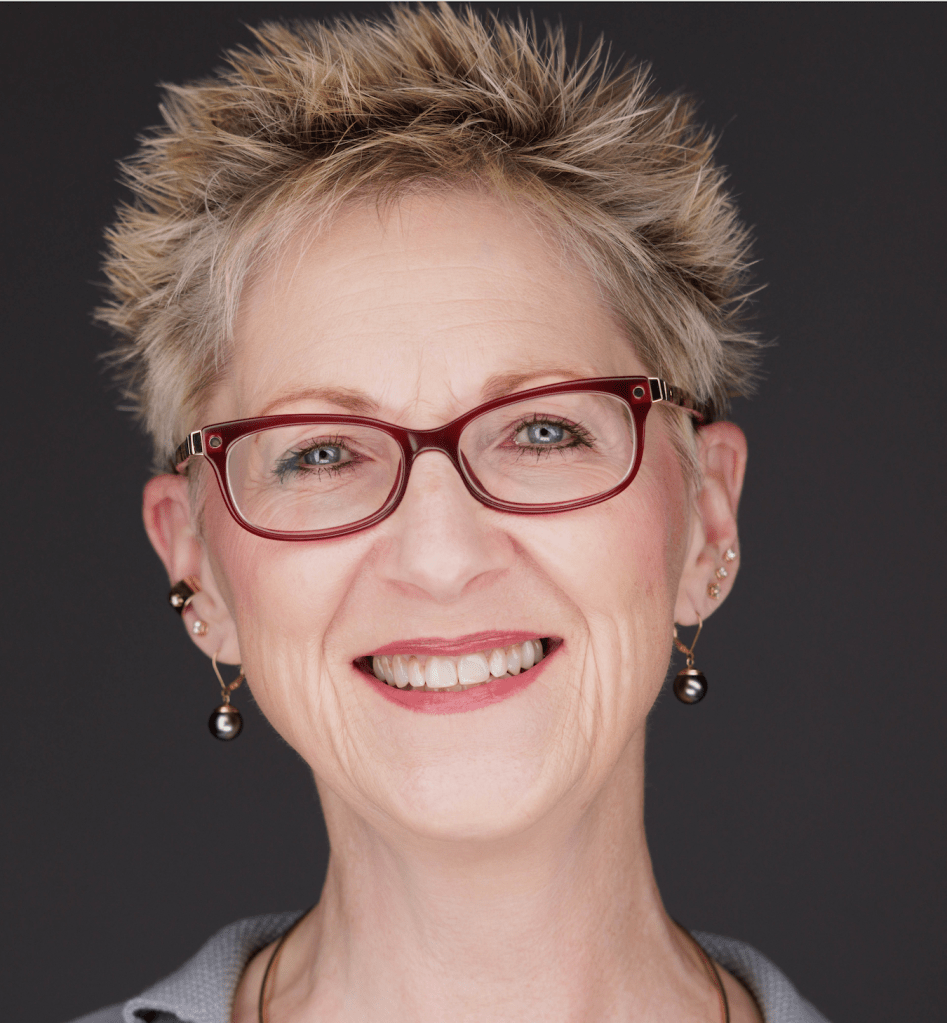
I was born and raised in Montana. I moved away for a while but returned in my early twenties and have been here ever since. I received my BA in English Literature fully expecting to teach high school upon graduation, but jobs were scarce, so I changed direction and found employment in the jewelry industry. This led to 20 years of designing and goldsmithing. Simultaneously, I married, raised children, took care of my elderly parents, and became a grandmother. I’m an avid reader and enjoy books about the natural world, mysteries, biographies, art and artists, and the classics. I like to walk and be out in nature as much as possible. And I enjoy a well-shaken martini.
2. What is the inspiration behind your book “The Mollys B.”?
It started with an incident in which a heifer made her grand escape from a slaughterhouse in Great Falls, Montana in 2006. She ran around town for six hours before being contained and returned to the meat packing plant. Upon her recovery, the manager didn’t have the heart to send her back to the slaughter pens. Her gumption to overcome her fate spoke to him. He secured her freedom and humorously named her “Molly” after the original unsinkable “Molly” – Margaret Tobin Brown – famous for having survived the sinking of the RMS Titanic in 1912. He saw that the two females shared a natural buoyancy: not only had Molly the heifer survived encounters with moving objects (cars, trucks, and a train), like Margaret she had also survived an ordeal with water – a fast-moving and nearly fatal ride down the Missouri River.
I was amused by this incident but was also inspired by this bovine’s determination and pleased when her efforts to save her life were rewarded with clemency. I cut it out of the newspaper, added it to a folder about animals I’d been keeping for years, and then forgot about it.
Eight years later this heifer made the news again. The article provided a recap of her escapade (hilarious again in its retelling) and proceeded to inform readers about what she’d been doing in the intervening years. Having evaded slaughter, she had been a resident of two large animal sanctuaries. When both of those operations had to close, a third home was found for her at The Last Best Place for Animals, a farm animal sanctuary located in my hometown. The story once again tickled my funny bone, so I cut the article out of the newspaper, filed it away, and proceeded to forget about it.
By this time, I was now seriously engaged in learning the craft of writing children’s books and despite having entertained the idea of attempting to document her story, I kept getting hung up on how to position it. A cow escaping from a slaughterhouse? For children?
Fast forward another eight years: it was November. My husband and I were flying home from New York City, and I was as sick as sick could be—the kind of embarrassing sick that had me using the motion sickness bag. And in that weird, brain-fogged, “please let me die” place, I was touched by magic, and THE MOLLYS B. landed in my lap.
In my flulike stupor, I envisioned these two, indomitable gals side-by-side. The text started unfurling and with racing thoughts, I dictated it to my husband, who patiently let me interrupt his reading each time I leaned over with a fresh line. I wrote the first draft of THE MOLLYS B. in four brain-addled hours, but it’s evident that the desire to tell this story had been germinating a long time—sixteen years! Success? Yes and no. I had found my way into the story. I had words down on paper, but I still had a sticky problem. How does one explain a slaughterhouse to little children? What was my responsibility here? I really wanted to tell Molly’s story; her gumption inspired me. I wanted to celebrate that. But how? Finally, I decided I could tell the story by focusing on one single, shared experience, and how both females, from places of determination and inner strength, fought to save their lives.
Fast forward another two years: after a year of conducting interviews, obtaining testimonials from experts, purchasing licenses for photographs, rewriting, and revising, and then another year of working with a publisher and illustrator, the dual story of the Mollys was at last ready for its audience. It had been a long journey, demanding an amount of patience for which no synonym exists, but it has been fun and immensely gratifying.
3. When did you realize you want to be an author?
My desire to tell stories began when I was still in elementary school and grew stronger when I reached middle school. My eighth-grade teacher, Mr. Cummings, recognized some ability and gave me tons of encouragement. My mother was also a huge supporter of me, and when I had to take a break between high-school and college, enrolled me in The Institute for Children’s Literature correspondence courses. From there I began to think about a career as an author although it took me five decades to make it a reality. Life commitments and detours, and probably a little self-doubt, got in my way.
4. Please tell us something about your book “The Mollys B.”.
Written in parallel storytelling format, THE MOLLYS B. is a picture book biography about Margaret Tobin Brown of Titanic notoriety and a brockle-face heifer of Montana renown who share an experience of a singular day that forced them to fight for their lives. Margaret’s life is threatened while sailing across the Atlantic Ocean on the famous RMS Titanic. Number 469’s life is perilously close to being over as she awaits slaughter in a Montana abattoir. Filled with fear and anxiety, they each fight to escape their harrowing circumstances. Despite increasing uncertainty and calamitous encounters, these remarkable females face their individual situations with resourcefulness and courage and in the end, are graced with rescue and the endearing nickname “Molly.” This book documents their brave reactions, telling side-by-side stories of hope and resilience.
5. For which age group is your book “The Mollys B.”?
It’s written for ages 5-11.
6. What is your favorite Quote?
“Molly didn’t want to be anybody’s hamburger!”
7. What do you like the most about your country?
I’ve never lived in any other country, but I’m convinced that the USA is one of the finest industrialized countries in existence. Being born and raised here I have gotten to enjoy many freedoms and privileges and have been afforded opportunities that I suspect may not be so easily obtained in other countries. I’ve been able to pursue my dreams with relative ease from attending college and obtaining my BA to becoming a goldsmith and operating my own jewelry studio. Now I get to pursue the life of a published author. I have been so very lucky!
8. What suggestion do you want to give to parents of little readers regarding a reading habit?
I think children should be read to every day and that a home should be filled with books. Also, I think that it can be a case of “monkey see, monkey do.” If children observe their parents reading, they are more inclined to try out this activity. Making a weekly habit of going to the library is invaluable beginning with story time for toddlers. And helping children when they encounter reading difficulties is imperative. So often when reading becomes difficult, kids think they’re stupid when they are so absolutely not! They just need encouragement and a little help getting over the hurdle. I firmly believe that if a child can read, he can do anything he sets his mind to.
9. What does literary success look like to you?
Success? I think at this stage of my life, success will translate into getting my books into kids’ hands. I will never be rich or famous, but I have already been validated by being informed by parents that their youngster likes my book and asks for it to be read to them— sometimes every day!
10. Lastly, who is your inspiration in life and why?
That would be my mom. She grew up very poor but managed to work her way through college as a housekeeper for a wealthy family. She graduated as an RN just as WWII was ending. She was never without a job and worked very hard all her life. She was blessed with an optimistic personality and a wry, Scandinavian sense of humor. She was quietly spiritual, very loving and empathetic, and tremendously talented. She supported me through thick and thin. And she was a superb grandmother to my daughters.
Buy a book on Amazon

