
Q1. Hello, can you please introduce yourself? Readers would love to know more about you.
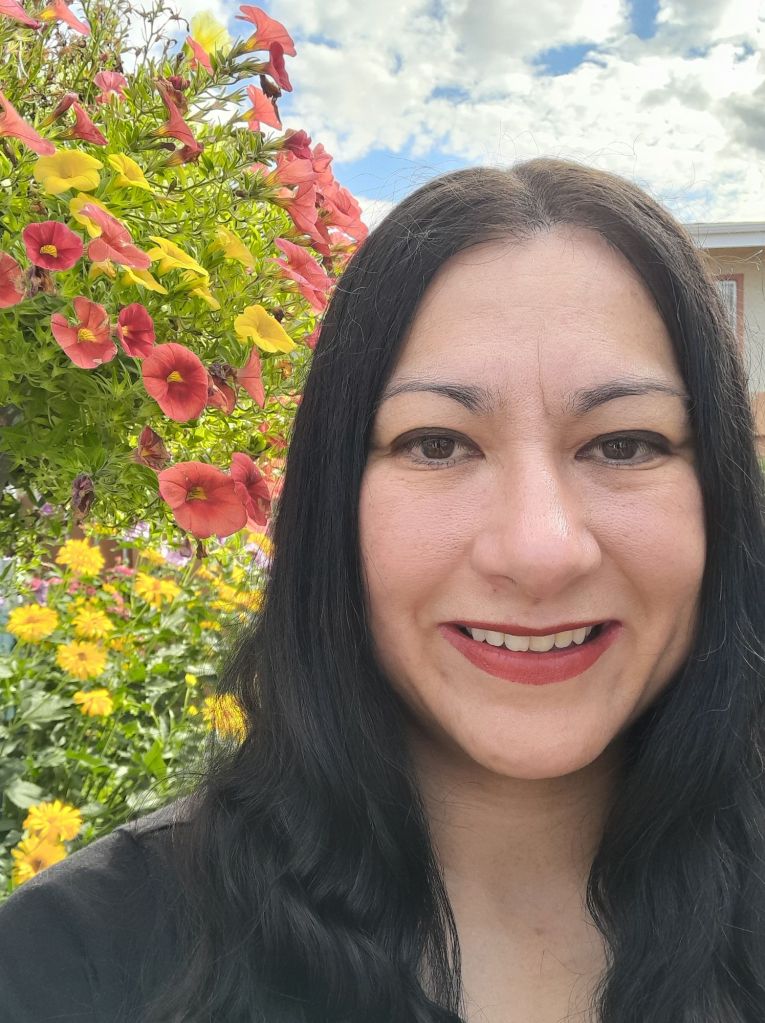
A1. Hello! I’m Alison McBain, and I’m an author, editor, and ghostwriter. I have four books published under my own name, and about two dozen ghostwritten for clients. I enjoy penning novels in all genres from fantasy to historical fiction, literary stories to poetry.
On a more personal front, I’m a mom of three girls aged 10-16 and draw a webcomic called Toddler Times from my home in Alberta, Canada. I have 2 black-and-white cats who keep me company when I’m writing (or stand on my keyboard, depending on their mood).
Q2. What were the key challenges you faced while writing your book “The New Empire”?
A2. Research! The New Empire is an alternate history set in the 1700s, and the story mixes multiple cultures together, including the Amah Mutsun, the Haudenosaunee, and Chinese, so it required a ton of research to try to get the cultures, the languages, and the details of the time period correct. Even though my story changes how history unfolded at that time, almost all the details you’ll find in the book, from what the characters ate, their houses, legends, and the like, were as accurate as I could make them.
Q3. What books or authors have most influenced your own writing?
A3. There are so many authors who’ve created amazing writing that it’s hard to pick just a few. I’m a big fan of Ray Bradbury for his imaginative stories that have stood the test of time, Margaret Atwood for… everything, Langston Hughes for his lyrical poetry, as well as Tanith Lee for telling stories decades ahead of her time… and the list goes on.
Q4. What’s your favourite spot to visit in your own country? And what makes it so special to you?
A4. I don’t know if I have a favourite spot, to be honest. I’m more about the people I visit those places with—my friends and family. But if I have to choose, I’d say Lake Louise in Alberta. It’s the most beautiful spot I’ve ever been in my life. It looks like AI created photos of it because it’s just too darn perfect. If you ever have a chance to visit, please do. But a word of warning—the water is very, very cold all year round.
Q5. What inspired you to write the book ‘The New Empire’?
A5. About a decade ago, I read an article that mentioned some evidence had been found that indicated the Chinese Empire could have sent ships to the coast of South America sometime in the 1400s. Others have further explored this concept from a nonfiction perspective (example: https://nacfocus.substack.com/p/tracing-the-admirals-forgotten-voyage), but I wanted to imagine that this could have actually happened and could have changed the way history unfolded. What if the voyages of Zheng He led to permanent contact between China, the greatest empire in the world at the time, and the Americas? That’s the background for my book.
Q6. How long did it take you to write your book ‘The New Empire’?
A6. That’s a complicated answer. The first half of the book was written during one November as part of NaNoWriMo – that’s short for “National Novel Writing Month,” which was a worldwide phenomenon where writers around the globe challenged themselves to write 50,000 words in one month. After I completed the first 50,000 words, I set the draft aside with the idea of eventually getting back to it. But it wasn’t until a book pitch contest hit my radar that I ended up finishing the book within another month, with edits taking a bit longer, in order to compete. So, technically it took only a couple months to write—in reality, though, it took years before it was actually completed, with a big break in the middle.
Q7. On what platforms can readers buy your books?
A7. Pretty much anywhere books are sold online. It’s also available in select libraries and bookstores in North America.
Q8. Tell us about the process of coming up with the book cover and the title ‘The New Empire’?
A8. I wanted a cover that represented the contrasts inherent in the main character, Jiangxi, who is the son of a former Chinese Emperor sold into slavery in the Americas. The cover’s colours are primarily red, white, and black—red is the colour of good luck in most Asian cultures, and some of the ways Jiangxi survives and thrives in his new environment can be attributed to luck and favour. The ouroboros serves a dual purpose: it represents both life and death, as well as representing the imperial house of China, whose symbol is a dragon. At the same time, it circles a boy who looks sad and without many material goods to his name.
As to the title, it highlights the change in history that is the omnipresent background of Jiangxi’s tale—a new empire where he is not at the top anymore, but on the bottom as a slave.
Q9. When writing a book how do you keep things fresh, for both your readers and also yourself.
A9. I’m a big fan of using cliffhangers in chapters—cliffhangers help keep the reader turning the page (and the writer jumping eagerly into the next chapter). I also write quickly, so I tend not to have time to get bored with a book. On top of that, writing in multiple genres helps each story stay fresh—if I’m not in the mood to write a romance, I might pen something apocalyptic or dystopian. Or vice versa. And readers seem to enjoy variety as well—each new book tackles new territory.
Q10. What is the most valuable piece of advice you’ve been given about writing?
A10. Many years ago, I was attending a one-day writer’s conference at a university in Connecticut, and one of the professors said something that stuck with me. I don’t think it was original to him, but advice that he himself received from his own creative writing professor even more years ago: “Write towards the fear.” I’ve carried that advice with me ever since, and it helps me look at a scene or a character or a story and ask: how can I twist this? I’ve delved into the darkest parts of my psyche and written about things that are unpleasant, unsavoury, and terrible, and it’s created some amazing fiction simply because it begins from a personal place of discovery. What do I fear? Well, I’ll put it into a book. Fear is a commonality that we all have because we’re only human, and so it’s helped me create 3D characters who are as complex as real people.
Buy a book on Amazon

