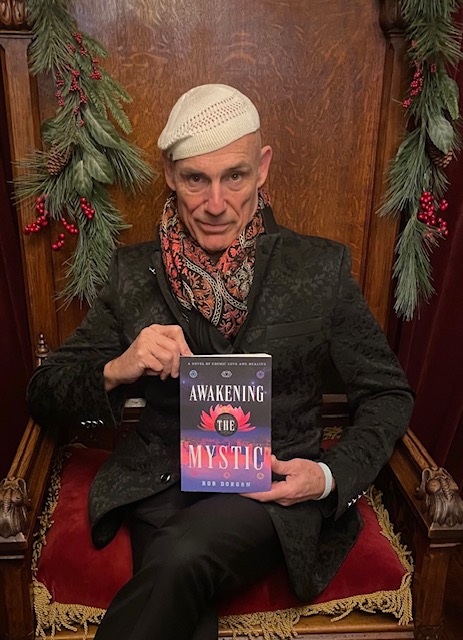
Interview with author Shreyan Laha

Q1. What part of The Scent of Redemption was the most personal or meaningful to you, and why?

A1. All the times Ashani answered Ronit’s philosophical queries and even guided him in this direction. Ashani belongs to a group of creatures who are significantly advanced – as advanced as humans are when compared to ants! You have to know, Ronit as a character, has a very warped ideology.

Q2. Did the story or structure of the book change significantly from your original plan?

A2. Many times. On the positive side, it’s more interesting when ideas are pouring in abundance and you can’t help but to write. Always better than a writer’s block!

Q3. Can you walk us through your writing journey — from the initial idea to the final draft?

A3. It’s a boring process involving tonnes of research. The novel has extraterrestrial plant creatures, who have the capability to contact with humans. Now, this trope is rare in science fiction. Imagine you’ve to build a planet which rotates around two suns. How would their skies look like? Also, the planet has an axial tilt of 89 degrees as opposed to 23 and a half. You have to look at everything from YouTube videos to scientific journals to come to a conclusion and then describe the world. Now, the lifestyle and day and night cycle would have impacts on the creatures of Flarelix. What would they be? They receive more sunlight, so plant-life would be abundant. That draws back to the very reason why the life-forms on this planet are plants. With so much energy to spend, plants would be aided in their evolutionary process. Maybe they end up as intellectuals and philosophers… and so on. And then comes the MS Excel where I keep a tab on the dates and character progression. Then, there are chapter outlines, synopsis and finally submission!

Q4. Were there any major challenges or obstacles you faced while writing this book? How did you overcome them?

A4. Yes, indeed. I lost my father and my mother got hospitalised repeatedly. Publishing The Scent of Redemption while taking care of my mother feels like a personal badge of honour.

Q5. How involved were you in the design of the book cover, and what was the vision behind it?

A5. I was searching for cover designers across Instagram and that’s when few books caught my attention. They were designed by Tanisha Singh and while I considered it an option amongst all, the first outcome was so good that I only had to add one minor change and that was it. The vision behind it was a monk in a new land with yellow grasslands and two suns. The monk signifies Ronit’s journey of renunciation and a new beginning, the yellow grasslands and the two suns gives you an insight into the world of Flarelix that I tried to build.

Q6. What inspired the title The Scent of Redemption? Did it come to you early or evolve during the writing process?

A6. Sure. I love collecting perfumes and perfumes have this wonderful way of making us remember about the faint memories associated with the time when we last smelled that particular scent. Also, it’s not just perfumes but any scent – but here’s the thing. There’s no concrete philosophy around the sensation of smell. There are philosophies on what we see, what we think, what we feel but not on what we smell. That was the building block for my book. Added a bit of worldbuilding and tried to add a nativist appeal. This is something which I will continue to work on, in books to come.

Q7. How do you hope readers will feel after finishing your book?

A7. I hope people are filled with a sense of tranquillity, spirituality and knowledge.

Q8. Was there a specific moment when you knew the book was “done”?

A8. No, actually. I have written novels but I did not have an idea of how to make sure the readers have a reasonable ending when my novel happens to be a part of a trilogy! Should I do a cliffhanger? Should I end it like normal novels? I did read other book series but they were authored by big shots. They have dedicated readers in thousands while mine is a dozen! I had to get the formula right.

Q9. What advice would you give to aspiring authors who are just starting their own journey?

A9. Read, read and read. That’s the These days, there are even courses for fictional writing. Take up a course and it will surely give you insights which other people are missing out on! Back in my day, I learnt writing science-fiction through trial and errors but reading helped me a lot: especially the different writing styles of various authors.

Q10. What’s next for you — any upcoming projects or ideas already in the works?

A10. The sequel for ‘The Scent of Redemption’

Interview with author Louise Hurd

Q1. Hello, can you please introduce yourself? Readers would love to know more about you.

A1. Hi, I am Louise and I am a very happy writer of literary fiction. I have 5 adult children and 5 adult granddaughters and 5 adorable great grandchildren. I have been a fiction lover all my life and it seemed natural to just pick up a pencil and start writing fiction of my own. There was no such thing as personal computers at that time. I did write with a pencil, then typed my manuscripts on a typewriter and sent them through the mail with a self addressed stamped envelope. I was selling short stories and poems while raising 3, then 4, then 5 babies, in my twenties and thirties. I quit writing for a few years when life got in the way and I got overwhelmed. My husband died about 5 1/2 years ago. About 3 years ago I started writing again. I think this is the perfect way to spend this last part of my life. I love writing and it makes me happy.

Q2. What were the key challenges you faced while writing your book “The Secret of Surviving In The Sea”?

A2. I really didn’t face any challenges. The story practically wrote itself. It was in my head every day and night. I finally sat down and started writing it on my iPad.

Q3. What books or authors have most influenced your own writing?

A3. That’s hard to say. I’ve been a big reader but I can’t remember many of the books I read. I did read a lot of Kristin Hannah and I see my book as somewhat like hers, in its saga-like plot. I read The Book Thief and many others of that quality. Also Stephen King and Dean Koontz though I never tried to follow in their footsteps.

Q4. What’s your favourite spot to visit in your own country? And what makes it so special to you?

A4. In 2023 I went on a 30 day road trip from the beginning of the Mississippi River at Lake Itasca all the way to the Gulf of Mexico north of New Orleans. I loved everything about that trip and would love to go back to New Orleans. It was more exciting and fascinating with entirely different looks, sounds and vibe than I had ever experienced in the USA. ,

Q5. What inspired you to write the book ‘The Secret of Surviving In The Sea’?

A5. I can’t say what actually inspired me. It just started, then grew in my mind like a persistent kudzu plant that wouldn’t quit till I got it down.

Q6. How long did it take you to write your book ‘The Secret of Surviving In The Sea’?

A6. Surprisingly, only about 3 months. But then it took about 2 years to go back and forth between my editor and myself rewrites and polishing.

Q7. On what platforms can readers buy your books?

A7. Right now it is available online in paperback and e-book through Amazon and Barnes and Noble. But it will be available soon in all major bookstores and hopefully some not so major ones as well.

Q8. Tell us about the process of coming up with the book cover and the title ‘The Secret of Surviving In The Sea’?

A8. The book cover was easy because the sea in all of its amazing colors is mentioned so much in the book, then along with the title it was natural. The title is the last line of the character Tracy’s poem in the book. And throughout the book the theme of surviving through pain, loss and grief is brought about often, though subtly.

Q9. When writing a book how do you keep things fresh, for both your readers and also yourself?

A9. I love the characters and their story as if they were dear friends of mine, though they bear no resemblance to anyone I know. My writing stayed fresh because I was so invested in what happened to my characters.

Q10. What is the most valuable piece of advice you’ve been given about writing?

A10. I think the most valuable lesson learned way back in high school creative writing class and still the most important today is show, don’t tell.

Buy The Secret of Surviving In The Sea on Amazon

Author’s website

Interview with author Jeffrey A. Denman

Q1. Hello, can you please introduce yourself? Readers would love to know more about you.

A1. I am a retired American History and World Geography teacher from the Brookline Public Schools, Brookline, MA. I have written seven magazines/journal articles on subjects ranging from the American Revolution to World War II. My latest book was John Quincy Adams, Reluctant Abolitionist and my third book, The Philadelphia Quakers and the American Revolution will be published next March to coincide with the birth of the country. I’m currently writing my fourth book, Closing the Ring: George Washington’s War in the North, 1778-1781. I am an outdoor person who enjoys mountain biking, fishing, and hiking from spring to fall and cross-country skiing and snowshoeing in the winter. I am married with nine children (all grown) and our 22nd grandchild is due on April 22 of this year.

Q2. What were the key challenges you faced while writing your book “John Quincy Adams, Reluctant Abolitionist”?

A2. John Quincy Adams left behind a diary that consisted of 51 volumes and 14,000 pages. Combing through that diary, looking for his references to slavery was a tall task. There were also numerous letters and speeches he made, especially during his congressional career that needed to be sifted through as well.

Q3. What books or authors have most influenced your own writing?

A3. David McCullough, Ron Chernow and Nathaniel Philbrick have been some of my favorites. I love the way they tell a story and weave primary source documents into the story so you really get the feeling you are there while events are unfolding. It’s not dry, it’s alive, and action abounds.

Q4. What’s your favourite spot to visit in your own country? And what makes it so special to you?

A4. I have two favorite spots. Concord is my favorite. From the American Revolution to the literary center of the country, it holds the most for me. The literary giants like Ralph Waldo Emerson, Henry David Thoreau, Hawthorne, always fascinate me, particularly the Transcendentalist movement. My second favorite is Gettysburg. Walking those fields, you get a sense of the enormity of what happened there. Walking the area of ground that was Pickett’s Charge is amazing, as well as standing at Little Round Top imagining the intensity of that battle is an awesome experience.

Q5. What inspired you to write the book ‘John Quincy Adams, Reluctant Abolitionist’?

A5. After reading several biographies of John Quincy Adams, I never got a sense of what his relationship to slavery was earlier on in his life. I wanted to know more about that, and I wanted to expand on his experiences in the 1830s and 1840s while he was a congressman. It was all worthwhile to me to write this book as you begin to see the influences on his life begin to shape him, and his own evolution on the subject.

Q6. How long did it take you to write your book ‘John Quincy Adams, Reluctant Abolitionist’?

A6. It took me a little over three years to write that. The research part was intense. Before I started writing, I had 250,000 words of notes that I had to whittle down to 105,000 words.

Q7. On what platforms can readers buy your books?

A7. Amazon and Barnes and Noble, as well as the publisher McFarland & Company, Inc.

Q8. Tell us about the process of coming up with the book cover and the title ‘John Quincy Adams, Reluctant Abolitionist’?

A8. I knew what I wanted for the book cover early on. The 1843 photograph captures the essence of JQA’s personality. He was distant, and some thought cold, and his personality was offset by that of his wife, Louisa Catherine Adams, who was the opposite of him in the public sphere. The title reflects his feelings about abolitionists, and the fact that he was evolving and moving in that direction toward the end of his life. He never joined the abolitionists, but he revealed in his private papers about the annexation of Texas that he was one.

Q9. When writing a book how do you keep things fresh, for both your readers and also yourself?

A9. Keep the narrative moving. Don’t get bogged down in excessive and unnecessary detail. I also use the words of my subject extensively wherever possible. It keeps people engaged in the subject. I prefer paraphrasing their words. I also don’t sugarcoat my subject. Every  public figure’s life has the good, the bad, and the ugly, and I think it is important to provide a complete picture, not just their heroic exploits.

Q10. What is the most valuable piece of advice you’ve been given about writing?

A10. The best advice I’ve received yet is to avoid writing long books. Most of the general history reading public is interested in getting to the point so I’ve been told to keep my books between 95,000 and 105,000 words. Secondly, finding stories that are not generally told, are good ways to fill a niche. My first book (co-authored) about Nathanael Greene and Charles Cornwallis was a good example. Many northerners are not familiar with the southern campaign, and few know that at the end of his life, Greene, a Rhode Islander and a former Quaker, had a plantation and held slaves!

Author’s Amazon page

Interview with author Karah Khalia

Q1. Hello, can you please introduce yourself? Readers would love to know more about you.

A1. I am Karah Khalia, a native of Los Angeles, California. Splendidly single!!! As of April 2025, I continue to live in southern California. Before the pandemic, I would get plagued with the thought, ‘my life is boring!!!’ Reading articles and watching documentaries about the sudden onset of poverty since COVID-19 has awakened me to my blessings. I have love, joy, and peace. Billions of people don’t have those assets.

Q2. What were the key challenges you faced while writing your book “The Canary Journal: a novel”?

A2. Time management and consistency challenged me daily.

Q3. What books or authors have most influenced your own writing?

A3. I am influenced by women writers who present the truth with verve. Carolina Maria de Jesus (Child of the Dark), Aline Kominsky-Crumb (Need More Love), Isabel Allende (Paula), and Bebe Moore-Campbell (Sweet Summer) have kept me enthralled for several hours.

Q4. What’s your favourite spot to visit in your own country? And what makes it so special to you?

A4. Los Angeles: I am a faithful visitor of public libraries. The Central Library in downtown Los Angeles has exquisite architecture. I encourage any bibliophage to visit the Central Library. Make sure you can distinguish between the Los Angeles Public Library and Los Angeles County Library. Please know the library branches often have ongoing book sales.

The Last Bookstore is east of the Central Library on Spring Street. It’s within walking distance!!! If you abhor downtown, visit the Studio City location.

We have orchards of new and used bookshops. No need for literary deprivation. Book Soup, Hennessey + Ingalls, Vroman’s, Dave’s Olde Book Shop, Sandpiper, Chevalier, Alias….

I refuse not to include food in this answer. Fill me up with a juicy burger and hot, fresh fries—-> happy camper!!! I have a theory that cash-only restaurants serve tastier burgers and fries than those that accept credit cards: A-1 Burgers, Tommy’s, Steven’s Burgers, Y-Not Burger, Wilson Burgers, and Fatburger.

Santa Barbara makes for an incredible getaway. Once the fire debris gets cleared, everyone will be able to revel in driving the Pacific Coast Highway. Wondrous sights and azure skies!!! I encourage people to visit the Andersen Bakery on State Street to pick up a butter roll. Soft sweetness envelops your senses!!! Also, trek over to East Beach Tacos in Milpas. The faithful devour the tacos. They serve a delectable cheeseburger and fries combo. Yep, there’s those burgers!!!

New York, New York: a true alpha city. I would immerse myself with the arts scene. Concerts in the park, arthouse cinema, Off-Broadway plays, long walks, jazz lounges, et cetera. I am not ashamed to admit it: reading qualifies under art and I yearn to visit the public libraries and bookshops.

Q5. What inspired you to write the book ‘The Canary Journal: a novel’?

A5. I figured that since I had read hundreds of books equated that I had the skill to write a book. I felt that the meticulousness needed for a book would strengthen my clarity. What if it succeeds? It could provide the financial independence I crave.

Q6. How long did it take you to write your book ‘The Canary Journal: a novel’?

A6. I spent 5 years writing The Canary Journal: a novel.

Q7. On what platforms can readers buy your books?

A7. Readers can purchase my literary debut, The Canary Journal: a novel, on Amazon in hardcover, softcover, and Kindle formats.

Q8. Tell us about the process of coming up with the book cover and the title ‘The Canary Journal: a novel’?

A8. Selecting the cover photo and book title were no trouble!!! I had snapped the photo in our garden long before the pandemic. Therefore, no legal trouble. As for the title, I have heard the phrase “singing like a canary” when people made confessions under duress. The protagonist, Jolie Tanique Cade, needs her journal because she can confess without fear of retribution. Canaries are songbirds who have led people from bondage to a liberated life. I wanted that for Jolie.

Q9. When writing a book how do you keep things fresh, for both your readers and also yourself?

A9. I feel the inclusion of brilliant musicians keeps this novel fresh. I figured readers would explore the oeuvres of these great artists. It brings me delight to write about these gifted ones. The more delight in a task, the deeper the willingness to execute the task.

Q10. What is the most valuable piece of advice you’ve been given about writing?

A10. I haven’t received any writing advice thus far. Yet, I appreciate Mark Twain’s quote: write what you know. Writing about what I don’t know requires guessing and generalized statements. Writing about what I know enables insights to gleam because of my intimacy with the topic.

Buy The Canary Journal on Amazon

Interview with author Trevor Rodgers

Q1 What is your favorite line from your book ‘Adventures in The Sky’?

I do not have a single favorite line but among my favorites would be the dialog with the Sam character talking about food and dozing off. Chapter three is meant to be a more comedic version of the story to show off my comedy chops mixed in with the action adventure.

Q2 What would you say is your strength as an author?

Setting up the basic premise of the story and then going from there to think of the right characters to draw from. Comedy, action, and pop culture references are something I love to conjure.

Q3 How do you manage your work schedule?

I work part time at a training facility that trains firefighters and policemen I help out the staff there twice a week. I usually do my writing work in the afternoons either on days when I’m in the office or days when I’m not in the office at all. I’ve found a great balance between the two but I do work on my writing more often on non office days.

Q4 How do you handle literary criticism?

I take it as a challenge to keep improving in various areas, while also keeping in mind that everybody’s got an opinion about everyone and everything. It’s impossible to please everybody in the world, but as long as we are giving it our all that’s what counts.

Q5 What do you like about audiobooks?

What I love about audiobooks is that it’s an excellent way to bring the stories to life leaping from the page to a person’s voice. I am new to the field of audiobooks I only have one made so far, but I’m working on putting out more. (FYI it is also a great option for people who prefer to have the story read to them out loud instead of reading the words themselves).

Q6 What inspired you to start writing?

Writing for me is very therapeutic to help me exercise some of my demons and trauma that I’ve experienced through my own life experiences. I enjoy sharing stories with people and finding a way to relate back to those experiences is what helps us feel connected. Art is also in my genes as my mother is an artist herself (painting, sculpting, little bit of writing). My older sister is also a writer for a magazine. It’s in the family so to speak.

Q7 What, in your opinion, are the most important elements of good writing?

Grammar is a big one. Having the ability to structure sentences properly makes a big difference. Having the ability to describe what characters look like, and how they’re feeling in the story. Names are the most challenging aspect for me to come up with good ones, so that’s always a bonus if the author can conjure up memorable names that stick.

Q8 What is your work schedule like when you are writing?

So on a typical week, I normally edit/write Monday through Friday. Every now and then I might write something down on the weekends, but this is a rare occurrence that does not happen often. As I prefer to take the weekend to recharge my creativity. Some weeks are more active than others. When I’m experiencing writers block for instance and the ideas aren’t coming, I’ll take a step back and give myself however much time I need until I get the ball rolling.

Q9 What is the significance of the title ‘The Mysterious House’?

The title sets the tone for the mystery/horror/thriller trilogy I wrote for the story, with the exception of the last chapter which is disconnected from the locked doors concept but ties everything up from the first three chapters using a different setting to keep the story fresh.

Q10 What did you want to be when you grew up?

Ever since my junior high days going back to the seventh grade I knew that I wanted to be a writer for the rest of my life. The want and need for it came out of hardships in my personal life. I took to writing as a coping mechanism to deal with it. (I am a Special Needs young man, and “Adventures in the Sky” is the first book I wrote and self published). I am currently working on the second half which will be ten chapters in total. I have written eight out of the ten thus far.

Author’s profile on Amazon

Interview with author Amanda Albery

Q1. Hello, can you please introduce yourself? Readers would love to know more about you.

A1. Hello! My name is Amanda Albery, author of “Soulbound: Destiny’s Move,” and my passion is writing. I’ve always had a love and talent for storytelling. I remember writing my first story at seven years old.

I am a mom of two handsome young men, and I have many furbabies, Five dogs, four cats and a bunny. I am also currently a student, pursuing my degree in creative writing.

Q2. What were the key challenges you faced while writing your book “Soulbound: Destiny’s Move”?

A2. One of the challenges I faced while writing “Soulbound: Destiny’s Move,” was keeping everything together cohesively. I suffer from ADHD and keeping all my scenes flowing was a challenge. My mom helped me on days I was really struggling. My whole book was basically one large and weird jigsaw puzzle. But thanks to her, I was able to finish it and get it published.

Q3. What books or authors have most influenced your own writing?

A3. Well, first, I’d have to say, my mom. She was a poet. I can thank her for my love and passing the talent on for writing. There were also classic authors like Vern, Dickens, Stevenson, Fitzgerald, and of course, the lady who hooked me with vampires and werewolves and all things gothic and paranormal, Anne Rice.

Q4. What’s your favourite spot to visit in your own country? And what makes it so special to you?

A4. I have many places in my country that are special to me. The Mountains where I live in Northeast Tennessee, where the cool breezes brush away my worries. and I love the beach. The ocean waves are calming to my soul and I feel inspired watching them roll in and take my stresses away with them. I find beauty in all the landscapes in the US, but the mountains where I live and beaches where I love to visit are my favorites.

Q5. What inspired you to write the book ‘Soulbound: Destiny’s Move’?

A5. Honestly, I just loved writing, and coming up with stories, I don’t know that I had actual inspiration. I know that I wanted to write a book I wanted to read, so, I did it!

Q6. How long did it take you to write your book ‘Soulbound: Destiny’s Move’?

A6. It took me about ten months to write the book. It wasn’t until after my divorce that I was able to publish it. So all in all, it took a little over a year to write and publish the book.

Q7. On what platforms can readers buy your books?

A7. My book can be read on Amazon(print on demand and kindle), Barnes and Noble (print on demand and kindle) anywhere e-books are sold, google books, ibooks and can even be ordered from walmart.

Q8. Tell us about the process of coming up with the book cover and the title ‘Soulbound: Destiny’s Move’?

A8. The cover was actually created for me from a previous publisher. I pulled my book from them and republished myself. I am interested in a different cover, but for now I will keep the one I have.

Q9. When writing a book how do you keep things fresh, for both your readers and also yourself?

A9. When writing any book, to keep things fresh for my readers, I look back at my previous work, and what I am currently working on. To keep things fresh for me, to “cleanse the creative pallet” so to speak, I write a short story, sometimes it’s inspired by my characters, other times it’s something completely different. I also draw inspiration from music or art to help keep things fresh.

Q10. What is the most valuable piece of advice you’ve been given about writing?

A10. Write, for the sake of writing. It doesn’t matter if it’s good, or if you think it’s horrible, just write because you love it. You don’t always have to write for someone else, sometimes, you need to write for you and that’s enough.

Buy Soulbound on Amazon

Interview with author Clifton Nixon

Q1. Hello, can you please introduce yourself? Readers would love to know more about you.

A1. Hello, I am Clifton Don Nixon A fifth generation Texan and confessed liar by way of authoring crime fiction mystery novels. More info at cliftonnixon.com

Q2. What were the key challenges you faced while writing your book “Try Dying”?

A2. The key writing challenge for me was taking the time to write. I solved that problem by joining classes at SMU Fiction Tract (Southern Methodist University ) and subsequently a Writers Group for 12 years just to keep writing. That got the “writing muscle” developed for me.

Q3. What books or authors have most influenced your own writing?

A3. You must first be a reader to become a good writer. I was initially influenced by English to American writers–Shakespeare to Poe. More recently, I continue to read Michael Connelley, James Lee Burke, Robert Crais, and Nelson DeMille as my major influencers, and currently, Nick Petrie and Harry Dolan.

Q4. What’s your favourite spot to visit in your own country? And what makes it so special to you?

A4. Of course, I am partial to Texas. There is such a variety from beaches(Padre Island) to mountains ( Marfa), plains(West Texas) to canyons (Palo Duro), grasslands (North Texas) to forests (East Texas), and the old west Fort Worth) to gleaming cities (Houston). However, my favorite spot, outside of Texas, is Carmel-by-the-sea. A great American writer blessed it with the title of “the greatest ever meeting of land and sea.” I agree

Q5. What inspired you to write the book ‘Two Times Dead’?

A5. If you will release me from these handcuffs and remove that hot light from my face, I will confess that “TWO TIMES DEAD” is autobiographical. Yeah, closer to True Crime than mere Fiction.

Q6. How long did it take you to write your book ‘Try Dying’?

A6. Writing “TRY DYING” took a decade. That was my SMU writing project that I labored into a published novel, finally.

Q7. On what platforms can readers buy your books?

A7. My books are not widely available. Amazon was my only refuge, except maybe Goodreads or Book Sirens.

Q8. Tell us about the process of coming up with the book cover and the title ‘Two Times Dead’?

A8. The cover for “TWO TIMES DEAD” was totally a desperate compromise. My contacts with book cover designers became a major “failure to communicate.” I sent them pics of downtown Houston skylines in the 70’s, bridges, too. Got back renderings nothing like that. Picture a scenic old concrete bridge over a bayou with 70’s city skyline background on a dark night with one man following another. What I got was Clip Art. As for the book title name, read the book and you will see it fits.

Q9. When writing a book how do you keep things fresh, for both your readers and also yourself?

A9. I keep stories fresh with different characters and/or locations. That’s possible even though readers are liking continuing their favorite characters. Although both “TRY DYING” and “TWO TIMES DEAD” take place in Houston, my next book is in and around the Mexican pyramids with an uncompromising archaeologist battling Mexican Cartels.

Q10. What is the most valuable piece of advice you’ve been given about writing?

A10. The best writing advice I ever got was to just keep writing—never stop.

Buy Clifton Nixon’s books on Amazon

Interview with author Ike Triplett

Q1. Hello, can you please introduce yourself? Readers would love to know more about you.

A1. Thank you for having me! Writing has a sentimental value to me. I have a speech impediment, and that led me to not speaking much due to anxiety. I would have trouble getting my words out properly. That led me to write. To put my thoughts, my opinions, my passion, etc onto paper.

Looking back, that was a blessing in disguise. I do not think that I would have a joy for writing, much less publishing a book!

Q2. What were the key challenges you faced while writing your book “A Change in the Dark”?

A2. I had some trouble in organizing the flow of the work. I want to reflect the gradual change from negative beginnings to a positive finish.

Q3. What books or authors have most influenced your own writing?

A3. Fyodor Dostoevsky is the first person who comes to mind. He had such a way of developing characters and diving into their psyche. It inspires me to dig deep into the emotions in my work as well.

Q4. What’s your favorite spot to visit in your own country? And what makes it so special to you?

A4. Panama City, Florida. My family and I sometimes visit my aunt who lives there. She and her husband own a good portion of land with a plethora of animals. I remember we stayed there for an extended period of time evacuating from Hurricane Katrina. I am eternally grateful to them for that.

Q5. What inspired you to write the book ‘A Change in the Dark’?

A5. My faith in God served a primary inspiration for this work. I believe that He gives me the words to write down. There are plenty of times in which I look over what I wrote, and I think to myself “Did I really write that? How could I have written something like this?” That is no exception here.

Q6. How long did it take you to write your book ‘A Change in the Dark’?

A6. When I am really inspired, it does not take me long to truly start writing. For this book in particular, it took me no more than a couple of weeks to complete.

Q7. On what platforms can readers buy your books?

A7. Anywhere books are sold really. Barnes And Nobles, Books a Million, Amazon, etc.

Q8. Tell us about the process of coming up with the book cover and the title ‘A Change in the Dark’?

A8. The title is based on a poem of the same name within the book. That poem in particular stood out to me, and I wanted to expound on the meaning of it. That led to me to theme the book from the concept of looking outside of yourself to seek meaningful change.

The book cover was all my publisher’s doing. I supplied them with the title and the meaning. That was all they needed to produce such a beautiful cover. I am still floored by how amazing it is!

Q9. When writing a book how do you keep things fresh, for both your readers and also yourself?

A9. When I write, I want to picture myself as a reader at the same time. When I write a stanza / verse, I would think to myself “How would I view this if someone else wrote this?”

I am not simply writing a book for myself. I am writing for others to read. I always try keep that in mind.

Q10. What is the most valuable piece of advice you’ve been given about writing?

A10. That actually ties into the previous question. My uncle gave me great advice the other day. He suggested that I write with my audience in mind. At first, I did not get it. In fact, I thought that I would “dumb down” my work to please the masses.

But I thought about it some more. What’s the point in publishing a book when my audience does not understand the message I am trying to convey? To reiterate from before, I am not simply writing “for” myself “to” myself. I am writing for other people to read.

Buy A Change in the Dark on Amazon

Interview with author Peter Pappas

Q1. Hello, can you please introduce yourself? Readers would love to know more about you.

A1. Hello my name is Peter Pappas and this is my first published work! When I’m not writing I love: yoga, working out, jogging, playing with my cat and dog, traveling, going to theme parks, hitting up the beach, and playing with legos!

Q2. What were the key challenges you faced while writing your book “The Wizard of Starz”?

A2. Organizing my ideas. Especially since TWOS is book 1 in what will be a series, I wanted to keep writing but knew that I had to stop somewhere and save content for book #2. When you have the whole story in your head, it can be hard to break it down into one book at a time! Another challenge I faced was editing, and having to re-read 357 pages, dozens of times. After a while, my eyes began to play tricks on me 🙂

Q3. What books or authors have most influenced your own writing?

A3. First and foremost I am a huge Stephen King fan. I was definitely very inspired by both ‘The Shining’ and ‘Doctor Sleep’. Growing up, the first series that got me into reading was-Harry Potter and that will forever be in my heart and soul. Thank you J.K. Rowling!

Most recently I became a fan of Sarah J. Maas and ‘A Court of Thorns and Roses’ series. I really like the way she writes and her attention to detail was what I channeled when writing TWOS. I wanted to make the reader feel like they were in another world by stimulating their senses.

Q4. What’s your favourite spot to visit in your own country? And what makes it so special to you?

A4. I know this is cheesy but I absolutely love going to Universal Studios and spending time at ‘The Wizarding World of Harry Potter’. I have a collection of Wands and enjoy casting spells in the park. The rides are incredible, too!

Q5. What inspired you to write the book ‘The Wizard of Starz’?

A5. I think it’s a story I’ve been writing my whole life. I’ve had so many journals and diaries and I’m constantly writing my inner feelings. I think I traveled to Starland In my dreams or maybe even a past life, too. Writing the book felt natural and real because , in a sense, it’s a piece of my personal journey.

Q6. How long did it take you to write your book ‘The Wizard of Starz’?

A6. About a year and 1/2 .

Q7. On what platforms can readers buy your books?

A7. Readers can purchase TWOS off of my website http://www.peter-pappas.com. They can also find it directly on Amazon.comand direct-download on Kindle too.

Q8. Tell us about the process of coming up with the book cover and the title ‘The Wizard of Starz’?

A8. I came up with several mock covers – almost a collage of what I wanted, based on what I felt were key elements in the story that I wanted to showcase. I went into the forest and took pictures of trees and myself standing in the forest pretending to be the main character. Then I took my ideas to the graphic designer at my publishing company (Native Publishing- ASP) and we worked together to make it happen. I love how the colors turned out and how spooky the cover is. Once you read the book you will understand everything about it too. I love when books have a cover that allows you to just glance at it and get a snapshot of the most exciting elements of the story!

Q9. When writing a book how do you keep things fresh, for both your readers and also yourself?

A9. I keep things fresh by using dialogue that will resonate with today’s generation. Using Words like: “Sus” and “Totes” and giving readers characters that they feel like they have met in real life, based on how people act and talk in today’s world.

Q10. What is the most valuable piece of advice you’ve been given about writing?

A10. Don’t overthink it. Nothing will ever be “Perfect” or “Right” and to stay true to your idea and not stray. Don’t second guess yourself.

Book is available on Amazon

Interview with author William Grace

Q1. Hello, can you please introduce yourself? Readers would love to know more about you.

A1. William Grace has been a busboy, a bank messenger, an editor, a trial lawyer, and a United States Marine. A lifelong martial artist, he holds the rank of 4th Degree Black Belt in Okinawa Shorin-Ryu Karate. He lives in the Pacific Northwest, where he is currently at work on the Omniverse Chronicles.

Q2. What were the key challenges you faced while writing your book “Bloodline”?

A2. The greatest challenge was bringing Charley Floyd into the late 20th Century. How would a man who died in 1934 cope with the world as it was in 1998? Charley was truly “a stranger in a strange land.”

Q3. What books or authors have most influenced your own writing?

A3. To name just a few: Andersonville, by Mackinlay Kantor; Something of Value and The Old Man and the Boy, by Robert Ruark; The Grapes of Wrath and Tortilla Flat, by John Steinbeck; the late Dewey Lambdin’s Alan Lewrie novels; The King Must Die, by Mary Renault; The Flashman novels, and Quartered Safe Out Here, by George McDonald Fraser; Robert A. Heinlein’s Starship Troopers; and The Long Ships, by Franz G. Bengtsson.

Q4. What’s your favorite spot to visit in your own country? And what makes it so special to you?

A4. Northern California’s Wine Country, where I lived until my family moved to San Francisco.

Q5. What inspired you to write the book ‘Bloodline’?

A5. I wanted a change from the characters and story line of my first novels, and Bloodline was born.

Q6. How long did it take you to write your book ‘Bloodline’?

A6. Bloodline went through five drafts before I was reasonably satisfied with it. From start to finish, the book took slightly more than fourteen months. I am a perfectionist, and I do a great deal of research. I am always searching for le bon mot juste.

Q7. On what platforms can readers buy your books?

A7. Only Amazon at present.

Q8. Tell us about the process of coming up with the book cover and the title ‘Bloodline’?

A8. The book cover was a collaboration between a very talented Australian artist, a gorgeous model, and myself. Jackie Thornton is Jack Thornton’s niece, and she is mentioned in Eternal Hero. They share the same dark heritage: hence the title, Bloodline.

Q9. When writing a book how do you keep things fresh, for both your readers and also yourself?

A9. I am always learning and open to new ideas. I also find that having other interests is of great benefit. Doing something like Karate clears out the cobwebs and allows me to stay focused.

Q10. What is the most valuable piece of advice you’ve been given about writing?

A10. Write, then write some more. Keep writing. Keep writing. Keep writing. Never stop writing.

Buy Bloodline on Amazon

Design a site like this with WordPress.com
Get started