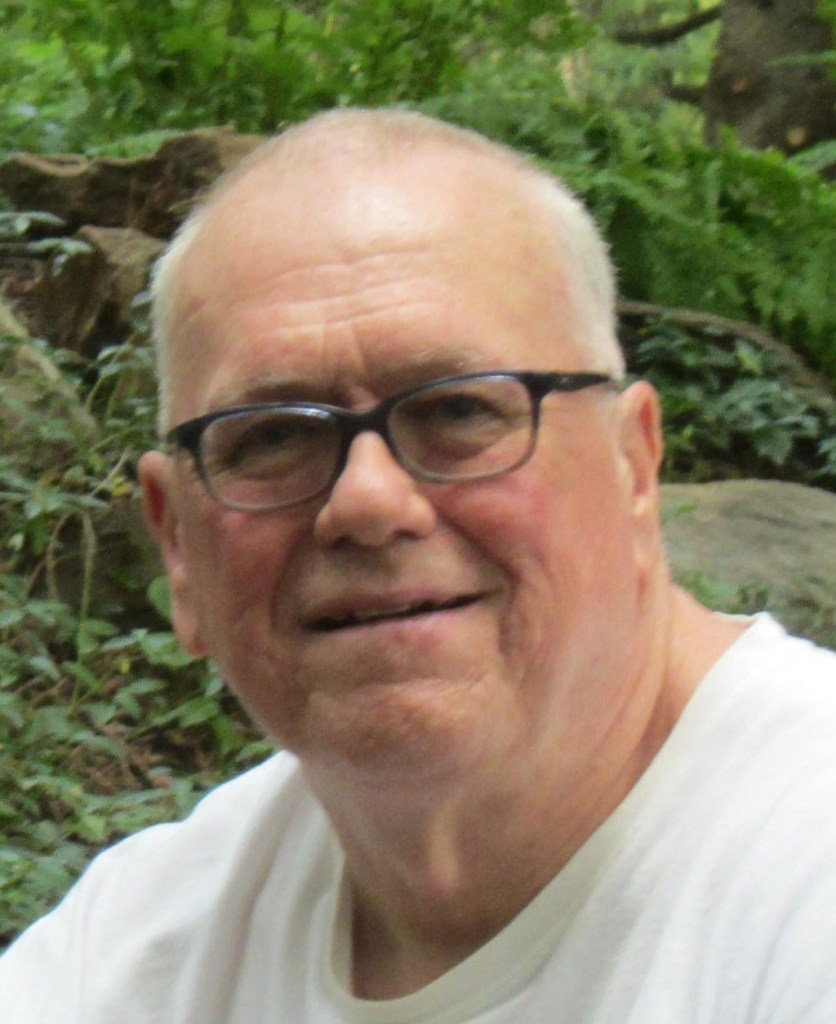
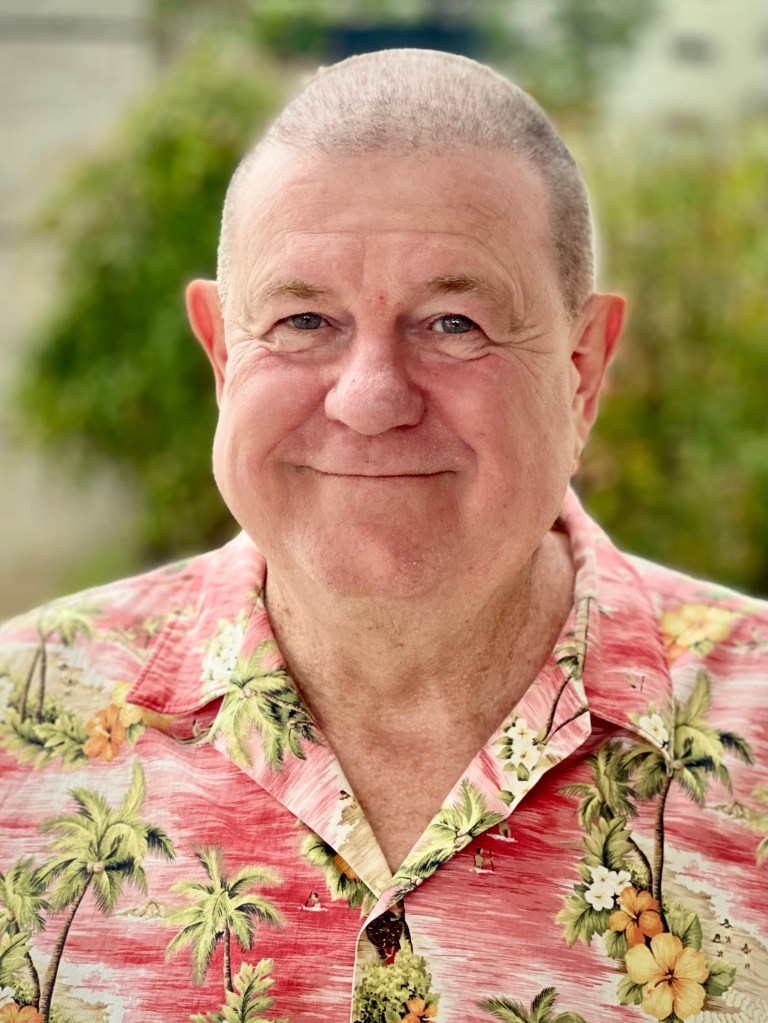
Interview with author D.R. Spires

Q1. Hello, can you please introduce yourself? Readers would love to know more about you.
A1. That is a tall order. You see, I’m old. I’ve been around for a while now and have at least once completely circumnavigated this amazing globe we all share … though I found that this sharing is divvied out in somewhat unequal proportions.

From my Amazon Writer’s page:

“Born in Columbus, Ohio, my spark for writing was lit while attending Reynoldsburg High School. Being severely dyslexic — a condition my teachers had apparently never heard of at the time — I could barely read and could almost write by the time I was eight years old. I had to knuckle down and teach myself how to get into those things called books. At the age of 14, I even copied an entire novel on my Remington typewriter, trying to get a feel for the author’s charismatic lure. It was one of the “Lucky Starr” young-adult sci-fi adventure stories by Paul French (aka the legendary Isaac Asimov). While attending high school, I fell in love with — of all things — English 101, though my mental condition continues to confound me to this day (thank you, spellcheck).”

After high school, I stepped into a pair of Army boots, met my unexpected wife-to-be in beautiful Panama, and we toured this world of ours for 14 beautiful years with three equally impressive sons. Following Desert Storm, my wife gave me the ultimate ultimatum, and I had to leave military service. If the choice was between her and anything else on the planet, she got what she wanted. That was inevitable. Having had enough of packing and unpacking, shipping and flying and walking and driving and roaming, she wanted a permanent home, so… Well, taking up various technical occupations, I found time between working and sleeping to write another paragraph, a chapter or two. After 30 years together, my lovely wife passed away, and here do I sit, still pounding out these confounding stories.”

My usual genre is science-fiction, where I feel most at home, and always an adventure, a sure boon for readers, young and old. From Alpha Centauri A to Vega, from Andromeda to the Whirlpool Galaxy, across dimensions and universes, to all stars and countless worlds between. Let go and fly, my friend, for surely an adventure awaits, ‘second star to the right, and straight on ‘til morning.’ ”

Enjoy the written word, for nowhere else will you find such a variety of intrigue and adventure, love and hate, peace and turmoil, worry and relief, all in light-weight pages to fill the evening hours and lull you to a dream-filled sleep. I have been a warrior and a technician, a leader and a follower, a hater and a lover. As for my dyslexia, it remains here with me; still a bane, yet my current experiences include lauded publications, both creative and technical. My creative writing is generally science-fiction, now with three exciting publications available to you. My technical writing encompasses both military and civilian worlds, with hundreds of highly detailed documents.”

The details — it is there where my little demons thrive.”

Q2. What were the key challenges you faced while writing your book “Mit-Ro-Don: 1974”?

A2. Well, youth more than anything else. I started puttering around with it in high school, then shelved it and joined the US Army Infantry. I had a break in service three years later and looked over that manuscript. In all seriousness, It looked like it had been written by a child … and it had. After a year and a half of Army Reserve, I returned to Active Duty … they called me a ‘retread soldier.’ Fully 7 years Infantry, 7 years Signal, and Supply Clerk for my 1.5 years break to Reserve Duty. I finally departed military service in 1992 and dug deep into the “Mit-Ro-Don” story, eventually self-publishing it in 2000. The reworked manuscript is now getting set for a revised re-release, hopefully before Christmas.

Q3. What books or authors have most influenced your own writing?

A3. Well, I’m highly dyslexic, so motion pictures more than books, such as:

Stanley Kubrick’s and Sir Arthur C. Clarke’s “2001: A Space Odyssey” (1968)

Harry Kleiner’s, Jerome Bixby’s, and Otto Klement’s “Fantastic Voyage” (1966)

“Bantam Books obtained the rights for a paperback novelization based on the screenplay (for ‘Fantastic Voyage’) and approached Isaac Asimov to write it. Because the novelization was released six months before the film, many people mistakenly believed that the film was based on Asimov’s book.” Yeah … people like me….
— Wikipedia

Irwin Allen’s and Charles Bennett’s “Voyage to the Bottom of the Sea” (1961)

H. G. “Herbert George” Wells’ “The Time Machine” (1960) and “The War of the Worlds” (1953)

Jules Verne’s “Around the World in 80 Days” (1956) and “20,000 Leagues Under the Sea” (1954)

William Shakespeare’s “A Midsummer’s Night Dream” (1935)

Thor Heyerdahl’s “Kon-Tiki”

I was drawn to read the books these films came from, which led me further through Edgar Rice Burrows’ books with the “John Carter of Mars” series and the “Tarzan” books, Isaac Azimov’s “Lucky Starr” series, “Foundation and Empire,” this sci-fi master’s comedic short story “Pâté de Foie Gras,” and of course Sir ACC’s “Rendezvous with Rama.” I got into a lot of Shakespeare, which drew me into the epic poetries of Greek classical plays and poems; “Odysseus,” “Argonauticus,” “Oedipus Rex,” and the like. In my youth, “The Adventures of Robin Hood” and Thor Heyerdahl’s book “The Kon Tiki Expedition” took me over, and the “12 Labors of Hercules” held me tight to those three marvelous books by Thomas Bulfinch:

“The Age of Fable” (1855)

“The Age of Chivalry” (1858)

“Legends of Charlemagne” (1863)

Of course there were also the old “Tom Swift,” “Brains Benton,” and the “Rick Brant” young reader adventure series of books … and comics of all sorts….

Your next adventure begins with that first step into your future.

Q4. What’s your favourite spot to visit in your own country? And what makes it so special to you?

A4. Any local library, the Ohio State Fair, just because it’s the Ohio State Fair (the smells, the chatter, the machines of the midway, the food, all of it). I also like going to Blacklick Woods State Park for a quiet picnic table and some serious writing. Cup-A-Joe, Panera Bread—really, any nice, quiet place (with coffee) to iron out a story or kick off some unbelievable new adventure.

I don’t think I’m very good with places, I analyze quite a lot, so I probably have a pretty good idea of wherever I happen to be. I remember disappointing my wife on a visit to the Grand Canyon. We were on our way to a military assignment at White Sands Missile Range, NM, and crossed the canyon at the narrows of Marble, spotting a few small wild horse herds along the way. From Marble Canyon, we headed west to the wider Grand and stopped for a look from the grounds of a somewhat plush hotel. It was nearing Thanksgiving Day and I told her and the kids it was getting late, but all I could think about was signing in early at Sands that evening. She said we could spend the night and leave early the next day, but all I really wanted was to get into my new work at White Sands.

“Look at it, Honey. It’s a hole in the ground. C’mon.”

Yeah … today, I’m pretty sure we should have stayed.

Q5. What inspired you to write the book “Olympus, and the House of Tchrlok”?

A5. That would have been my wife, Anita. Throughout the 1990s, Hollywood seemed of the mind to recreate all the classical mythologies to their liking—kinda like the misinterpretations that shouted down at audiences viewing Disney’s “Pocahantas”—with lame TV shows, multi-million dollar comic book flicks and the like. For some reason, my wife liked watching those portrayals, but the episodes drove me to write (angrily) at least a hundred short stories of how mythological persons and deities might actually interact with present day mere mortals … you know, you and I. Well, I caught my wife leafing through that mess of mythology one day and she told me that these needed to be published. …And, as always, what Anita wanted, Anita got.

A Book of Traxis

A Book of Earth

A Book of Gods

A Book of Khaos

At the time, I was employed as a network software guru—coworker’s word, not mine—at MCI WorldCom over in Hilliard and took the pages to work with me. At the end of my workday, I found an unoccupied boardroom and spread the sheets out, rearranging my collection of short stories into a kind of plotline. I sat and thought about them for a while, coming up with the 4-book method of arrangement, with the first two—“A Book of Aliens” and “A Book of Earth”—starting approximately 5,000 years ago. Backstory stuff. Since there really were no Greek Olympian deities from mythology—hence the term ‘mythology’—I had them created by an alien race just 100 years before the main story’s timeline, which was just after World War II, a time that coincides with when these aliens began their flight of a few thousand light years to the invasion of Earth, traveling from the Perseus Arm of our Milky Way galaxy, as well as the date of an erred radio telescope signal recorded from 1946 as a starting point.

I even included a light sprinkling of deities from other religions of the period.

Had I researched a bit further, I could have pulled the story in a little closer to current time by using OSU’s now famous “WOW!” signal of August 15, 1977, as the second contact, rather than the imagined April 24, 1996.

https://en.wikipedia.org/wiki/Wow!_signal

Once I had the basic layout for the story, I just fussed it all out into a novel. Also, I had first published this tangle of ideas online while it was being created, in a somewhat volatile place called HabitableZone.com where I got a lot of suggestions, including the idea of adding a glossary of terms and characters to help members of this nation’s population that had been brainwashed away from the old Bulfinch textbooks. The site used to be a fairly habitable place to visit for scientific reckoning…. I haven’t been there in a while—of late, it’s gone quite political. I’ve posted a few very short stories on the site’s Science Fiction page, but nothing very recently. I used to be one of the HabitableZone moderators.

Anita passed away before I could get it published, and I shelved the whole thing, spending time just moping about and feeling sorry for myself over the loss of my one, true soulmate. I had been 21 when we met in Panama, and she was in her final year of high school. She wanted nothing to do with me…

…But all of that is recounted in my dedication pages for “Olympus, and the House of Tchrlok.”

Q6. How long did it take you to write your book “Mit-Ro-Don: 1974”?

A6. I started it in 1973. Its initial publication was not until 2000. Between those dates, I sort of tinkered around with it, trying for an angle of plausibility.

Q7. On what platforms can readers buy your books?

A7. Amazon.com would have to be my first choice, if only for the tidy arrangement of the various works. The newer books should also be available at Barnes and Noble, Google Books…. A person should be able to request a copy from any major outlet store.

Q8. Tell us about the process of coming up with the book cover and the title “Olympus, and the House of Tchrlok”?

A8. The book cover was all mine. I figured I would use the Crab Nebula’s neutron star, a pulsar at the core of that bubble of star debris. It’s surrounded by a very colorful, fairly symmetrical nova and always makes for a thought-provoking picture. My Traxian Empire would be located in the Perseus Arm of the Milky Way galaxy, and the Crab Nebula is situated far below that arm and approximately 7,000 light-years out from our Solar System. In the novel, the collapsed red giant star that created the pulsar and the accompanying nebula was referred to by my Traxian historians as Tractosk Prime. |The collapse into a supernova occurred approximately 7,850 years ago, which was visually recorded by Chinese astronomers back in the year 1154.

[If you do the math it won’t exactly add up, because the measurements used are estimates.]

Overlaying the Crab Nebula (in the Taurus constellation) with the constellation of Perseus was done simply because Perseus, as a new godling, was a main character in the novel.

Seemed okay to me. I have not yet seen what my publisher’s idea for a newer cover might be, but it should be quite interesting.

Q9. When writing a book how do you keep things fresh, for both your readers and also yourself.

A9. With some bit of conflict, a thought provoking dialog, or just a stroll along a quiet, dark, likely hazardous city street….

It stays fresh because no one has read it yet. For many, my books are still a mystery.

When I was tweaking “Mit-Ro-Don,” I thought about how movies were made and I would read through a chapter slowly. If there was no new adventure in that chapter, I tossed one in and built upon it for the next chapter. I would build and build and build, until I just needed to end the war.

Q10. What is the most valuable piece of advice you’ve been given about writing?

A10. “Ah, you’ll never do it.”

That was from my older brother, Rick, a trucker who has now passed away. I miss him a lot, and I think he knew I was a determined soul. He pushed his protests almost daily, saying there was no way I could ever get published, but in 2000, I did it anyway.

From then on, Rick would introduce me as “My writer-brother Dan!”

He was proud of me—and I was proud of him.

Buy books on Amazon

Interview with author Lynette Lindsay

Q1. Hello, can you please introduce yourself? Readers would love to know more about you.

A1. Hello! I’m Lynette Lindsay, a storyteller with a lifelong connection to the eerie, the emotional, and the unexplained. I write ghost-driven fiction with a strong human heart at its centre, blending horror with mystery and psychological depth. I was born in England but now live in Australia with my husband and our three boys. When I’m not writing, you’ll usually find me reading, drinking too much tea, or dreaming up the next story that insists on being told.

Q2. What were the key challenges you faced while writing your book “The Haunting of Little Maggie Smith”?

A2. One of the biggest challenges was balancing the supernatural elements with the emotional core of the story. I wanted the haunting to feel unnerving, but never at the expense of the very real human struggles at the centre of the narrative. Another challenge was managing the timeline and multiple perspectives—making sure each character’s voice felt distinct and that every thread tightened the tension rather than distracting from it. And, of course, there’s the ever-present battle with self-doubt that seems to accompany every writer!

Q3. What books or authors have most influenced your own writing?

A3. I’ve always been drawn to authors who blend the eerie with genuine human emotion. Shirley Jackson has been a major influence—her ability to build unsettling tension from ordinary moments is something I deeply admire. Stephen King also shaped my love of character-driven horror, reminding me that stories are most powerful when the people feel real. More recently, writers like C.J. Tudor and Simone St. James have inspired me with their ability to weave mystery, atmosphere, and the supernatural into something both haunting and heartfelt.

Q4. What’s your favourite spot to visit in your own country? And what makes it so special to you?

A4. That’s a really tough question because both England and Australia are full of amazing places. But if I had to choose, I’d say I’m most drawn to open green spaces. There’s something magical about feeling the breeze on your face, hearing birds and other wildlife all around, and just taking a moment to breathe it all in. Those moments remind me how incredible it is to simply be alive.

Q5. What inspired you to write the book ‘The Haunting of Little Maggie Smith’?

A5. As a child, I would see dark figures swirl around me, hear whispers in my ears, and feel the heavy breathing of shadows that could not possibly have lungs. Fear was always there, but so was something else—a quiet invitation to a world beyond sight, beyond touch, where beauty and serenity could exist. Writing The Haunting of Little Maggie Smith allowed me to share those experiences, where shadows and light meet, and the extraordinary quietly brushes against the ordinary.

Q6. How long did it take you to write your book ‘The Haunting of Little Maggie Smith’?

A6. Honestly, it took me a few years to finish the book, with lots of starts, stops, and moments where I convinced myself I was “researching” rather than writing. The last half came together surprisingly quickly once I finally faced the truth—I’d been procrastinating far too much and just needed to dive in.

Q7. On what platforms can readers buy your books?

A7. Readers can currently enjoy my book as an ebook on Amazon Kindle. For those who love holding a story in their hands, a paperback version will be available in January. I hope it’s a journey that captures your imagination from start to finish.

Q8. Tell us about the process of coming up with the book cover and the title ‘The Haunting of Little Maggie Smith’?

A8. The process of creating the book cover and choosing the title was a really special part of bringing the story to life. My niece designed the cover, and I couldn’t have been happier with her work—she captured the mood and mystery perfectly. The title, The Haunting of Little Maggie Smith, came naturally as the story itself unfolded. It felt like the perfect way to hint at both the eerie and the emotional heart of the book.

Q9. When writing a book how do you keep things fresh, for both your readers and also yourself.

A9. Keeping things fresh while writing is always a balancing act. I think it’s important to stay curious and open—explore new ideas, experiment with scenes, and even step away for a while to return with fresh eyes. For readers, I’ve focused on creating surprises, layering characters, and inserting moments of tension or emotion that they won’t see coming. The goal is to make the story feel alive for both of us.

Q10. What is the most valuable piece of advice you’ve been given about writing?

A10. The best advice I ever received about writing was to just keep showing up. Even on days when the words felt heavy or messy, writing a little bit every day made all the difference. It didn’t have to be on my book, just something to keep the momentum. It reminded me that stories grow not from perfection, but from persistence—and that every word brings you closer to the heart of your story.

Buy The Haunting of Little Maggie Smith on Amazon

Interview with author Lynette Lindsay

Q1. Hello, can you please introduce yourself? Readers would love to know more about you.

A1. Hello! I’m Lynette Lindsay, a storyteller with a lifelong connection to the eerie, the emotional, and the unexplained. I write ghost-driven fiction with a strong human heart at its centre, blending horror with mystery and psychological depth. I was born in England but now live in Australia with my husband and our three boys. When I’m not writing, you’ll usually find me reading, drinking too much tea, or dreaming up the next story that insists on being told.

Q2. What were the key challenges you faced while writing your book “The Haunting of Little Maggie Smith”?

A2. One of the biggest challenges was balancing the supernatural elements with the emotional core of the story. I wanted the haunting to feel unnerving, but never at the expense of the very real human struggles at the centre of the narrative. Another challenge was managing the timeline and multiple perspectives—making sure each character’s voice felt distinct and that every thread tightened the tension rather than distracting from it. And, of course, there’s the ever-present battle with self-doubt that seems to accompany every writer!

Q3. What books or authors have most influenced your own writing?

A3. I’ve always been drawn to authors who blend the eerie with genuine human emotion. Shirley Jackson has been a major influence—her ability to build unsettling tension from ordinary moments is something I deeply admire. Stephen King also shaped my love of character-driven horror, reminding me that stories are most powerful when people feel real. More recently, writers like C.J. Tudor and Simone St. James has inspired me with their ability to weave mystery, atmosphere, and the supernatural into something both haunting and heartfelt.

Q4. What’s your favourite spot to visit in your own country? And what makes it so special to you?

A4. That’s a really tough question because both England and Australia are full of amazing places. But if I had to choose, I’d say I’m most drawn to open green spaces. There’s something magical about feeling the breeze on your face, hearing birds and other wildlife all around, and just taking a moment to breathe it all in. Those moments remind me how incredible it is to simply be alive.

Q5. What inspired you to write the book ‘The Haunting of Little Maggie Smith’?

A5. As a child, I would see dark figures swirl around me, hear whispers in my ears, and feel the heavy breathing of shadows that could not possibly have lungs. Fear was always there, but so was something else—a quiet invitation to a world beyond sight, beyond touch, where beauty and serenity could exist. Writing The Haunting of Little Maggie Smith allowed me to share those experiences, where shadows and light meet, and the extraordinary quietly brushes against the ordinary.

Q6. How long did it take you to write your book ‘The Haunting of Little Maggie Smith’?

A6. Honestly, it took me a few years to finish the book, with lots of starts, stops, and moments where I convinced myself I was “researching” rather than writing. The last half came together surprisingly quickly once I finally faced the truth—I’d been procrastinating far too much and just needed to dive in.

Q7. On what platforms can readers buy your books?

A7. Readers can currently enjoy my book as an ebook on Amazon Kindle. For those who love holding a story in their hands, a paperback version will be available in January. I hope it’s a journey that captures your imagination from start to finish.

Q8. Tell us about the process of coming up with the book cover and the title ‘The Haunting of Little Maggie Smith’?

A8. The process of creating the book cover and choosing the title was a really special part of bringing the story to life. My niece designed the cover, and I couldn’t have been happier with her work—she captured the mood and mystery perfectly. The title, The Haunting of Little Maggie Smith, came naturally as the story itself unfolded. It felt like the perfect way to hint at both the eerie and the emotional heart of the book.

Q9. When writing a book how do you keep things fresh, for both your readers and also yourself.

A9. Keeping things fresh while writing is always a balancing act. I think it’s important to stay curious and open—explore new ideas, experiment with scenes, and even step away for a while to return with fresh eyes. For readers, I’ve focused on creating surprises, layering characters, and inserting moments of tension or emotion that they won’t see coming. The goal is to make the story feel alive for both of us.

Q10. What is the most valuable piece of advice you’ve been given about writing?

A10. The best advice I ever received about writing was to just keep showing up. Even on days when the words felt heavy or messy, writing a little bit every day made all the difference. It didn’t have to be on my book, just something to keep the momentum. It reminded me that stories grow not from perfection, but from persistence—and that every word brings you closer to the heart of your story.

Buy The Haunting of Little Maggie Smith on Amazon

Interview with author Eren Viau

Q1. Hello, can you please introduce yourself? Readers would love to know more about you.

A1. Hello, My name is Eren. I am a queer fantasy author from Rochester New York. I have been reading fantasy since I was a child and finished my first book, the first edition of War of Silence, when I was 17. I am now 31 and have created stories and characters I would have loved to see in fantasy growing up. I believe strongly that queer and disabled people can be in fantasy as more than a background character or a villain.

Q2. What were the key challenges you faced while writing your book “The Vanishing Prince”?

A2. Honestly for Vanishing Prince the biggest issue is that the story that I wanted to be told was not at all the story I plotted out. But that original idea for the book will be coming out later.

Q3. What books or authors have most influenced your own writing?

A3. Hands down fanfiction writers, I’ve read many that have sparked amazing ideas.

Q4. What’s your favourite spot to visit in your own country? And what makes it so special to you?

A4. Lake Ontario in New York. It just feels like home surrounded by the water and the woods.

Q5. What inspired you to write the book ‘The Vanishing Prince’?

A5. I had an idea for a completely different book. When an author says the story has a mind of its own, it’s true. Vanishing pretty much wrote itself.

Q6. How long did it take you to write your book ‘The Vanishing Prince’?

A6. It took me maybe 6 months to finish the writing portion. It is the editing and formatting that takes me longer.

Q7. On what platforms can readers buy your books?

A7. My website fantasyviaubooks.com has signed copies of the books but you can also get them on amazon, walmart, barnes and nobles, and a few indie books stores throughout the US for now.

Q8. Tell us about the process of coming up with the book cover and the title ‘The Vanishing Prince’?

A8. The title was actually what sparked the idea for the book. That’s where the original plot came from. The cover was the art done by my beautiful artist wife Korinn as I told her about the project. She does the covers and maps.

Q9. When writing a book how do you keep things fresh, for both your readers and also yourself.

A9. For me it is idea-hopping. It is why I never finish a book series all at once. I work on one part of a series then hop ideas with stand alones and then go back to a series.

Q10. What is the most valuable piece of advice you’ve been given about writing?

A10. Write the story that you want to see. Don’t worry about what you think the world wants, fans will come later. Your story is your own first and foremost and as long as you love it nothing else really matters.

Buy book on Amazon

Interview with author Shechinahglory Tucker

Q1. Hello, can you please introduce yourself? Readers would love to know more about you.

A1. My name is Shechinahglory Tucker, and I’m the author and founder of Shekinahglory Press — a creative faith-based publishing imprint dedicated to healing, self-discovery, and purpose. Through my writing, I combine personal experience, spirituality, and transparency to help others embrace their true selves and walk boldly in God’s purpose for their lives. I’m also a visionary entrepreneur, filmmaker, and creative who believes that every story has the power to transform hearts.

Q2. What were the key challenges you faced while writing your book A Pure Heart With NO Boundaries?

A2. The biggest challenge was revisiting the emotional places that inspired the book. Writing about healing and self-forgiveness required me to confront my own pain and growth all over again. There were moments when I had to stop, pray, and give myself grace to continue. Balancing vulnerability with purpose, learning what to share and how to share it, was both the hardest and most rewarding part.

Q3. What books or authors have most influenced your own writing?

A3. I’m honestly not much of a reader, which is why I find it so ironic that God led me toward becoming an author. But when I did read growing up, I loved books like The Giver and Petey. Both were emotional, visionary, and deeply heartfelt stories that stuck with me because of how they made me feel. As for authors who influenced me, I’d say my childhood friend Damere Holloway. He’s a very inspirational person, and his creativity and determination continue to motivate me in my own journey as a writer.

Q4. What’s your favourite spot to visit in your own country? And what makes it so special to you?

A4. I’ve always loved beaches, especially Virginia Beach, Myrtle Beach, and Hilton Head Island. The ocean is calm and peaceful, and each of those places holds beautiful family memories for me. My second favorite place is the open road. As a truck driver, I love seeing different sceneries and finding quiet moments to think, pray, and write. There’s something about both the road and the ocean that remind me of God’s peace and endless grace.

Q5. What inspired you to write the book A Pure Heart With NO Boundaries?

A5. The book was born out of a season of healing and reflection. I had gone through experiences that tested my faith, my love, and my identity, but through it all, God showed me that true strength comes from staying pure-hearted even when life hardens you. I wanted to create something that would help others heal the same way — through honesty, forgiveness, and faith.

Q6. How long did it take you to write your book A Pure Heart With NO Boundaries?

A6. It took me about two months to write this book. God had already given me the clarity and vision for how He wanted it laid out and what needed to be said. Once I started writing, the words just flowed because the message was already placed in my heart. It wasn’t about rushing — it was about obedience and letting God guide each chapter.

Q7. On what platforms can readers buy your books?

A7. Readers can find A Pure Heart With NO Boundaries on Amazon, and soon it will also be available through IngramSpark, Barnes & Noble, and directly from my official site Shekinahglorypress.com, where signed copies include a pen, bookmark, and QR code for exclusive film access.

Q8. Tell us about the process of coming up with the book cover and the title A Pure Heart With NO Boundaries.

A8. The cover was inspired by one of my personal drawings. It reflects the duality of purity and pain, the beauty that comes from brokenness. I wanted the design to feel spiritual and timeless. The title came during prayer; it represents a heart that loves freely, forgives deeply, and isn’t limited by past wounds. It’s not about being naïve, it’s about being brave enough to stay open.

Q9. When writing a book how do you keep things fresh, for both your readers and also yourself?

A9. I stay connected to real life ,to the people, emotions, and spiritual lessons that shape who we are. I don’t write from imagination alone; I write from transformation. I also take breaks to breathe and create visually, through art, poetry, and short films, so that when I return to writing, my voice feels renewed and alive.

Q10. What is the most valuable piece of advice you’ve been given about writing?

A10. “Write even when you’re healing.” That advice changed everything for me. You don’t have to be perfect or have it all figured out before you tell your story. Sometimes the most powerful writing comes from the middle of the journey, not the end. Be honest, stay faithful, and let your story do what it was meant to do reach someone who needs it.

Buy book on Amazon

Interview with author James Robinson Jr.

Q1. Hello, can you please introduce yourself? Readers would like to know more about you.

A1. I’m 73 years old, retired, I have a wife of 48 years, and 3 young ladies in their forties. I began writing when I was 45 years old—I was busy working and raising my children until then—but I didn’t publish my first book until 2012 when I was 60. The book was entitled Fighting the Effects of Gravity: A Bittersweet Journey Into Middle Life. Fighting Gravity was an Indie Award Winner. My 7th book, Old Age Sucks published in 2022, could be considered a painful, physical sequel to Gravity, proof that everything can get worse with age.

My next 3 books are a series of fiction accounts of an obstetrician/gynecologist his two boys, his wife and his parents. The first in the series, Book of Samuel, was set in the Pittsburgh Airport where, after a flight is missed, all heck breaks loose with the family so to speak. The main character, Dr. Samuel Johnson, has a dream of becoming a writer in the series and begins writing his story within my story—a book within a book.

Book of Samuel is a Reader’s Favorite Award winner. The rest of my collection consists of satirical, humorous vignettes accentuated with pictures and illustrations for added humor and effect.

Q2 What were the key challenges you faced while writing your book Last Train to Snarksville?

The key challenges were battles (not really battles) with my editor over the use of song lyrics and illustrations. I had another illustration that I really liked for the cover but Shutterstock, frowned upon me using that illustration for that purpose. iStock on the other hand, to whom I pay $80 a month for the privilege of using their artwork, is much more liberal in their policies. I used one of their illustrations for the cover.

Also, there were song lyrics that I wanted to use in their entirety but I was warned that lyrics could only be used if referred to or summarized to avoid copyright infringement.

Q3. What books or authors have most influenced your writing?

An author who was very popular years ago by the name of Irma Bombeck was one of my favorites. Another essayist whose style is similar to mine is Kurt Vonnegut. I also owe, at least in part, my sense of humor to comedians like Bill Cosby, David Letterman, and Johnny Carson.

Q4. What’s your favorite spot to visit in your own country and what makes it so special to you?

My family has always had a special affinity for Hilton Head, SC. My wife and my 3 children began to go there for summer vacations in 1987—first by car and now by plane when we can go. My parents traveled with us until they could no longer make the trip due to age. They are both deceased now and our children are planning their own trips.

Q5. What inspired you to write the book Last Train to Snarksville?

When I think I have enough fresh ideas to begin writing a new book I just start writing one essay at a time.

Q6. How long did it take you to write your book Last Train to Snarksville?

It takes about a year to get from one project to the next.

Q7. On what platforms can readers buy your books?

Amazon

Q8. Tell us about the process of coming up with the book cover for Last Train to Snarksville.

Interesting story. I have an essay in the book entitled “(As Long as There’s Superman) They’ll Always Be Kryptonite.” Hence the picture of Superman on the cover. I was going to name the back after this essay. But one day, after she had made her initial read of the book, my editor told me, “Well you haven’t lost your snarky sense of humor.”

Later in the conversation I said, “hey I have a new title for the book “Last Train to Snarksville. I was kidding around but she thought it was great. “That’s a lot catchier than your other one,” she said. I had to agree.

Q9. When writing a book how do you keep things fresh, for both your readers and yourself?

During my normal life journey, I make day-to-day observations that I find humor in, situations that others might not see the same way. For instance, why do people refer to athletes by their first names like they know them personally? I make a note of these reflections that I feel would make a good essay and when I get the opportunity I sketch them out with a pencil and paper. When I think I have enough I start writing in earnest.

Q10. What is the most valuable piece of advice you’ve been given about writing?

Writing is a marathon not a sprint.

Buy Last Train to Snarksville on Amazon

Interview with author Gill McCabe

1. Please introduce yourself so that the readers will get to know you better. 

A1. I’m Gill McCabe, a proud Scouser. After a legal career, I followed my heart into schools, volunteering to promote literacy and later working in Special Educational Needs. I’m passionate about making reading irresistible—joyful, engaging and genuinely humorous — so every child feels, “this book is for me.” My first book The Adventures of Roger the Royal Runaway is the latest step on that journey.

2. What is the inspiration behind your book “The Adventures of Roger the Royal Runaway”?

A2. I wanted to write a positive book that is heart-warming with a focus on friendship, resilience and loyalty (we all could do with a bit of that.)

3. When did you realize you want to be an author?

A3. I have always had it on my very long to-do list, so in March 2025 I literally put pen to paper (the old-fashioned way.)

4. Please tell us something about your book “The Adventures of Roger the Royal Runaway”

A4. What begins as a royal escape from danger becomes a journey about belonging, kindness, and courage — and above all, finding the place where you are truly loved, not just looked after. Along the way we meet a busy doctor, sneaky cats, World Book Day bullies, a football legend, and of course a shoebox that nearly became a mouse mansion.

The book shows children that even tiny characters can have giant stories — and sometimes friendship turns up in the most unexpected places… like an old ink well at the back of a dusty garage! But just when Scouse (formerly Roger) thinks he has found his forever home… a royal TV appeal flashes across the screen asking for his return. Will he choose the comforts of a palace, or the warm love of a friend?

5. For which age group is your book “The Adventures of Roger the Royal Runaway?

A5. It’s for 6-11 age range, for the parent to read out loud, or independent reading for older children.

6. What is your favorite Quote?

A6. You’re braver than you believe, stronger than you seem and smarter than you think. A.A. Milne (Winnie the Pooh)

7. What do you like the most about your country?

A7. I like its rich cultural diversity, with different counties having their own unique features. Whether it’s accents, food or landmarks.

8. What suggestion do you want to give to parents of little readers regarding a reading habit? 

A8. Guided reading is a brilliant interactive way of engaging children. Asking questions like “What would you do if you were Roger?”, for example, or “What emotions do you think such and such a character is feeling?”  It’s great when parents and teachers can step into the characters too while reading the book.

9. What does literary success look like to you?

A9. Literacy is a gateway to life-long skills.  If a child is eager to turn the pages, anticipating the next chapter, then I feel I’ve succeeded. Mostly reading should be enjoyable and never a chore.  The reader should be invested in the characters.

10. Lastly, who is your inspiration in life and why?

A10. I have many heroes in my life, including my family and friends.  Pupils I have taught have inspired me to champion literacy.  The writer Jimmy McGovern was my English Teacher.  His lessons were fun and interactive and gave me a love of stories.

Buy books on Amazon :

The Adventures of Roger the Royal Runaway (Liverpool (LFC) Version)

The Adventures of Roger the Royal Runaway (Everton Version)

Interview with author Nathalie Iseli-Chan

Q1. Hello, can you please introduce yourself? Readers would love to know more about you.

A1. Hello, I’m Nathalie Iseli-Chan. I am a former teacher, a mother, and now an indie author.

I absolutely loved teaching and was fully dedicated to my career for many years. However, after moving to Canada several years ago, I turned my focus to our two young children and only two years ago did I begin a new chapter in life, one that led me to writing.

Writing was something I had always enjoyed, but never truly dared to explore. As an introverted and often insecure person, I hadn’t imagined sharing my words with anyone. Yet, inspired by our journey through adoption, an experience that has been reshaping my life, I began writing for my children first, then for other families who share the same journey.

I focus my work on what I care about most: our children, adoption, and fostering honest, confident conversations within families.

Q2. What were the key challenges you faced while writing your book “Erin’s Journal – 6th-Grade Big Project”?

A2. My earlier books were designed to help children and parents start conversations or reflect on adoption together, often paired with Lifebooks or workbooks. Erin’s Journal, however, had to stand on its own and reach a completely different audience: preteens, teens, and schools. Finding the right voice and balance between storytelling and education was both exciting and demanding.

However, the process was far from simple. As my first chapter book, it required a new rhythm: longer narrative arcs, deeper emotional layers, and a tone that felt authentic to a preteen narrator. Keeping the story engaging and meaningful without becoming overly didactic proved to be one of the biggest challenges.

On top of that, my creative process can be a bit chaotic; ideas pour in from all directions, often for multiple projects at once, and I rarely focus on a single book from start to finish. While that can make writing lively and inspiring, it can also be disorienting. Erin’s Journal pushed me to slow down, stay grounded, and give the story and its characters my full attention. It was both exhausting and deeply fulfilling.

Q3. What books or authors have most influenced your own writing?

A3. Interestingly, what I enjoy reading and what I write have very little in common. My favourite authors, Kawabata Yasunari, Freg Vargas, and Larry Feign, are all very different in style and inspiration, and far from the stories I create.

What has influenced my writing the most is my teaching background. Years of university teaching taught me how to explain complex ideas clearly, engage diverse audiences, and structure content meaningfully. Those skills shape my books, especially when tackling sensitive topics like adoption. My goal is always the same as in the classroom: to inform, inspire reflection, and spark meaningful conversations.

Q4. What’s your favourite spot to visit in your own country? And what makes it so special to you?

A4. That’s such an interesting question, and a tricky one for me, because “my own country” could mean several places: I was born and raised in France, spent almost two decades in Asia (thirteen of which in Hong Kong), and now live in Calgary, Canada. But if I answer from the heart, my “own country” would be Hong Kong. It’s the place where I feel most at peace, blissful, and fulfilled. I love it most at night, whether the streets are buzzing or quiet. After a long day, when the heat and humidity make your body surrender and you feel slightly light-headed, the air wraps around you, thick with the smells of food, the sea, and the city itself. There’s a comforting feeling that fills me completely; it’s what makes Hong Kong, every part of it, so special to me.

Q5. What inspired you to write the book ‘Erin’s Journal – 6th-Grade Big Project’?

A5. It all started when my daughters, 8 and 10 at the time, voiced their frustration at the misinformation and outdated ideas they saw in the moralistic videos they loved to watch so much. They were tired of how adoption was being portrayed and asked me to write something that would help people understand what adoption really is.

Their determination gave me a sense of mission; I couldn’t let them down. Erin’s Journal – 6th Grade Big Project grew from that moment, and from our own family’s experiences as well as the stories shared by other adoptees and adoptive families.

I wanted to give young readers an authentic and relatable voice that reflected the real questions, emotions, and challenges many adopted children face.

This project also came with its own challenges: it was my first chapter book, very different from my previous publications, which were created for younger children, their parents, or prospective adoptive parents. Writing for preteens meant finding a balance between education and storytelling, while keeping the tone natural and genuine, something that felt true to a child’s perspective yet meaningful to anyone who reads it.

Q6. How long did it take you to write your book, ‘Erin’s Journal – 6th-Grade Big Project’?

A6. From the moment my daughters “commended this project”, the ideas poured out fairly fast; I had the full outline done in about two hours, then spent a few weeks writing the story itself. What followed were months of tedious rewrites, proofreading, and endless small adjustments until it felt right.
I’ve also been working on its French adaptation, which has also been a challenging process!

Q7. On what platforms can readers buy your books?

A7. At the moment, my books are available exclusively on Amazon. Erin’s Journal – 6th Grade Big Project is currently offered in both paperback and hardcover editions, and an eBook version will be released soon. You can find links to purchase all my books on my website: http://www.adoptionreads.com.

Q8. Tell us about the process of coming up with the book cover and the title ‘Erin’s Journal – 6th-Grade Big Project’?

A8. Keeping the cover simple and clean was actually quite challenging for me, as I love bright colours and busy patterns, which I know aren’t everyone’s taste.
The character on the cover was inspired by my two daughters; I combined some of their features to create Erin. I gave her an orange T-shirt because it felt warm, lively, and full of energy, just like her personality.

The blue sky in the background reminded me of daydreams and hopes, which fit perfectly with Erin’s story and the spirit of her “big project.” The title itself came naturally; it’s her journal, her voice, and her journey of discovery.

Q9. When writing a book, how do you keep things fresh, for both your readers and also yourself.

A9. For me, keeping things fresh starts with being a lifelong learner. I observe, listen, and learn from my own children, from other families, and from adoptees who share their stories and perspectives. Their experiences constantly remind me that adoption is not one story, but thousands of unique ones.

I also like to challenge myself creatively. I rarely work on just one project at a time; ideas tend to spill over from one book to another, which helps me stay inspired and avoid falling into routine. I also write in different languages, and that change in audience or tone refreshes the way I approach each topic.

Most importantly, I try to stay focused on the reason I started writing in the first place: to open hearts, spark honest conversations, and change the narrative about adoption. As long as I write with that purpose, my work stays meaningful and new, both for my readers and for me.

Q10. What is the most valuable piece of advice you’ve been given about writing?

A10.The best writing advice I’ve ever received came from my best friend, Gaëlle: “Just write. Believe in yourself, and don’t worry about what others may think.” Those words helped me overcome insecurities. My daughters — part cheerleaders, part brutally honest critics — are my biggest inspiration. Their laughter and observations make me both nervous and proud, pushing me to write with authenticity and heart, knowing they’re reading, judging, and cheering me on every step of the way..

Interview with author Kerry Edwards

Q1. Hello, can you please introduce yourself? Readers would love to know more about you.

A1. I am Kerry, I came to my writing as a place of refuge from a career in fashion and a decade spent in New York as a designer. I wanted to be able to speak about all of my observations on the people I have met and the places I have experienced. I am a yoga instructor and these two activities support each other as my writing comes from a place of calm and stillness and this is hard to find without the yoga. I have two wonderful grown up daughters and I live close to the sea in the South of England.

Q2. What were the key challenges you faced while writing your book “Voices through Time”?

A2. The key challenges are as with any writing project, how to keep the voice authentic and populate the story with enough detail to hold the readers attention.
kerryedwards.net

Q3. What books or authors have most influenced your own writing?

A3. I read as widely as possible but the writing of Elif Shafak is profound.

Q4. What’s your favourite spot to visit in your own country? And what makes it so special to you?

A4. I think anywhere in nature is nurturing for me but cities and beautiful libraries inspire me too. The libraries in Oxford are places of magic!

Q5. What inspired you to write the book ‘All our yesterdays’?

A5. All our yesterdays is an episodic fictionalised memoir of my life as a single young woman living in NYC in 1990s. It is the memories of the love, laughter, anxiety and personal growth that I experienced in those ten years of my life.

Q6. How long did it take you to write your book ‘Voices through Time’?

A6. Voices through Time took me a year to write.

Q7. On what platforms can readers buy your books?

A7. I sell my novels on Amazon.

Q8. Tell us about the process of coming up with the book cover and the title ‘All our yesterdays’?

A8. The cover for All our Yesterdays was made for me by a friend. I think she found a photograph that does look like the younger me and the mood of the photograph captures the mood of the novel so well.

Q9. When writing a book how do you keep things fresh, for both your readers and also yourself.

A9. Keeping writing fresh relies on reading all around the subject and widely so that you hear many voices. I also push myself to think about style and structure and this requires writing exercises.

Q10. What is the most valuable piece of advice you’ve been given about writing?

A10. The most important advise is from Stephen King who said it is a myth to imagine that authors know what they will and are writing about, you just need a daily habit of writing and a clear space and dedication.

Kerry Edwards on Amazon

Interview with author Herta Feely

Q1. Hello, can you please introduce yourself? Readers would love to know more about you.

A1. I am the author of SAVING PHOEBE MURROW and STRANGE SHAPE OF LOVE; both fall into the category of suspenseful women’s fiction and deal with the dark side of social media. My short stories and memoir have been published in anthologies and literary journals. My short and long fiction has received assorted awards, and I’m also the founder of Chrysalis Editorial, where I’ve worked with hundreds of writers. As a writing coach and editor, I have helped dozens of writers get their books published. I have also ghostwritten three people’s memoirs.

I was born in Yugoslavia, lived in Germany, then moved to the US at age seven. I was an adventurous child, exploring my world on bike and on foot, and grew up to be an adventurous traveler and have continued on that path to discover the various people and cultures of our planet. I recently went snorkeling in Palau, an island nation in the Pacific north of Australia. What an unbelievable world lives just under the surface of the ocean! I’ve traveled widely in South America and Europe. I’ve been on safari in Africa, an adventure hike in Patagonia, numerous river cruises, and still have a long list of places to visit. India, the Galapagos, and Egypt top my list. Before my writing and editing career, I co-founded Safe Kids Worldwide, an organization dedicated to the prevention of unintentional injuries to children.

Q2. What were the key challenges you faced while writing your book “Strange Shape of Love”?

A2. I struggled for a bit about where to set the story and the age and career of my protagonist, Charlotte Cooper. Initially, I set the story in multiple places — the US, Istanbul, an archaeological site on the border of Turkey and Syria, London, even Nicaragua. Charlotte was in her mid-forties and a human rights activist. Some feedback from one of my publishers prompted me to rethink this. Eventually, after a couple of drafts, I ended up with a younger Charlotte, age 30, and the story mostly takes place in London, and briefly in New York. Now, I feel it’s set exactly where it ought to be, and I admire Strange Shape of Love’s protagonist.

Q3. What books or authors have most influenced your own writing?

A3. I’m an avid, even voracious, reader. I wouldn’t exactly say that specific authors have influenced my writing, but I’m a careful reader and learn from all of them, even the bad ones. I enjoy everything from literary fiction to thrillers, to memoir and some non-fiction. Ishiguro is one of my favorite authors, also love Emily St. John Mandel. On the non-fiction front, I’m a fan of Ronan Farrow and Michael Finley, and admire Natasha Trethewey’s memoir. In terms of authors who write fiction similar to mine, I’d include Kimberly McCreight, Liane Moriarity, Jodi Picoult, Paula Hawkins, and several others, whose novels I enjoy. In a sense, every author has influenced me. Even the author of the original Nancy Drew series, which I devoured as a child, and Victoria Holt novels, that I loved as a teen.

Q4. What’s your favourite spot to visit in your own country? And what makes it so special to you?

A4. I don’t have a single favorite spot, but I do love nature, and the Naples Botanical Garden is a “happy place,” as is Big Sur in California.

Q5. What inspired you to write the book ‘Strange Shape of Love’?

A5. I was shocked to learn that some people post or threaten to post nude photos of someone they once loved on social media/the internet…this is now referred to as revenge porn. It’s a way of getting revenge, of regaining control of the narrative of your relationship. It’s really another form of cyberbullying and sexual harassment. Two things triggered my desire to write about this. One: an incident I read about in which a couple of guys hacked into female celebrity’s phones, stole their nude photos and posted them online. This was such an invasion of privacy that I wanted to write about it. Related to this was a book written by Ronan Farrow—Catch and Kill, which is about sexual harassment in the workplace, especially in the media and Hollywood. I explore these elements and bring them into the story of Strange Shape of Love. I also wanted to incorporate a love story in this novel, and also the various ways people “love”—hence, strange shapes love takes!

Q6. How long did it take you to write your book ‘Strange Shape of Love’?

A6. Honestly, too long. I wrote a couple of other versions of this novel before landing on the final story, which took me a couple of years to complete.

Q7. On what platforms can readers buy your books?

A7. It is available on Kindle and other e-readers. Of course, the print book is also available at Amazon, Bookshop.org, Walmart, and Barnes and Noble.

Q8. Tell us about the process of coming up with the book cover and the title ‘Strange Shape of Love’?

A8. The title came to me quite a few years ago. Originally, I titled the book Her Other Life, but then out of thin air, Love Takes Strange Shapes came to me and then over time I preferred Strange Shape of Love and it stuck. Jason Henderson, my publisher at Castle Bridge Media (CBM), liked it too. In Churl Yo, his partner at CBM, designed the cover. They sent it to me, asking what I thought. I loved it right away and gave it a thumbs up. I’m not sure what In Churl’s process was, but I think he nailed it!!

Q9. When writing a book how do you keep things fresh, for both your readers and also yourself.

A9. I follow the protagonist’s journey without projecting too much of my own ideas onto him or her. In suspense fiction, surprising things happen. Otherwise the story can become boring and predictable. Bad guys/evil characters emerge. I was pretty surprised by how some aspects of the plot twisted and turned. And that a psychopathic character showed up on the page.

Q10. What is the most valuable piece of advice you’ve been given about writing?

A10.You really have to make space in your mind and in the course of your day for your writing. It won’t happen otherwise. Obviously. I do a fair amount of pre-writing…some scenes, some dialogue, some character profiles before I begin writing the novel. This was true for both Saving Phoebe Murrow and Strange Shape of Love.

Author’s website

Design a site like this with WordPress.com
Get started