Interview with author H.H. Hauser

  1. Please introduce yourself so that the readers will get to know you better.

A1. Hi I’m HH Hauser, a children’s book author who loves telling stories of the strange, unknown, and mysterious. I love that children can discover so much of the world and also be entertained by it.

  1. What is your inspiration behind your book “Miles and the Moon Cave”?

A2. The inspiration came from my son. He was still in the womb and I kept thinking of all the adventures we would have together and the fun in exploring the world.

  1. When did you realize you want to be an author?

A3. I became an author after realizing my wife was pregnant and thought what better than to write all my experience of life and share them with my son.

  1. Please tell us something about your book “Miles and the Moon Cave”?

A4. The book is an adventure and mystery. The world and its natural powers help fuel the story and tell the story of a kid frustrated in boarding school and ready to do anything to come home.

  1. For which age group is your book “Miles and the Moon Cave” suitable for?

A5. This book is meant for children 5 to 12.

  1. What is your favorite Quote?

A6. “The world is not what you think it is” – Miles Father

  1. What do you like the most about your country?

A7. The unknown places that still yearn to be discovered and the history that keeps evolving.

  1. What suggestion do you want to give to parents of little readers regarding a reading habit?

A8. Make reading spontaneous, it’s a treat that’s always a surprise and they never know when a new adventure will happen.

  1. What does literary success look like to you?

A9. Evolving as a thoughtful author that entertains and teaches young minds to keep learning and exploring.

  1. Lastly, who is your inspiration in life and why?

A10. My father, which passed away recently. I started reflecting on his life and realized all that he had taught me and the hardships of life turning into fruitful memories and lessons.

Buy book on Amazon

Interview with author R.M. Watters

Q1. Hello, can you please introduce yourself? Readers would love to know more about you.

A1. Hello, this is where I become incredibly awkward, but bear with me. I’m RM Watters, a literary historical fiction and fantasy writer and author of ‘The Book of Jezebel’. I’m also an editor, creative director, and managing partner of Frequency 3 Media. Apart from that, I’m a mother and a cat-person. I like video games, true crime documentaries, British cozy mysteries, and solving cryptograms. While I’m a homebody, I love going out with friends from time to time and staying active: biking (usually on my stationary indoor bike, because Floridian humidity is a thing), hiking outdoors, yoga, things like that. I also have a somewhat dry, dark sense of humor that can just pop out at any moment without warning.

Q2. What were the key challenges you faced while writing ‘The Book of Jezebel’?

A2. The biggest challenge was the lack of reliable sources, which historical fiction authors are dependent upon to keep their stories as historically accurate as possible. Researching the Iron Age Levant, particularly the world and characters of Jezebel and Ahab, one is limited mostly to tertiary sources. I’ve done painstaking research, starting with the Biblical accounts and the Midrash, then combing libraries, academic journals, etc., in an effort to better understand the world in which Jezebel lived and to portray her and her story accurately. But when it comes to understanding her and the people in her life, we have very few primary and secondary sources.

The only true primary sources relating to Jezebel and Ahab that have, thus far, been found are Jezebel’s seal and the Stele of Shalmaneser III (also known as the Kurkh Monolith). The stele was constructed by the Assyrian king Shalmaneser III, to commemorate a battle against a group of kings, one of whom was Ahab of Israel. It confirms Ahab was King of Israel and had quite a substantial army of chariots—he made the biggest contribution toward the campaign, if the numbers are to be believed— but other than that, it doesn’t give us much information. On the contrary, one can glean a lot from Jezebel’s seal about her understanding of herself and her place in the world, but it’s still pretty limited and dependent upon modern interpretations. Modern people cannot fully see the past for what it was, because our own cultural and personal biases will always get in the way, and that makes historical accuracy a challenge in both scholarly and creative endeavors.

Nevertheless, those two archaeological finds are amazing. They have, at the very least, proven Jezebel and Ahab were real, living people, backing up their existence in relation to the stories about them that are found in the Biblical books of Kings and Chronicles, and in the Midrash. The problem with the Biblical stories is that they were written by people who were incredibly biased against Jezebel and her “foreign” customs, and even more against her religion. And, despite commonly held beliefs, the Biblical books are NOT primary sources. They are actually tertiary sources, as they were likely written by people who were not direct witnesses to the events and people they discuss. They were based on other possibly secondary sources that have been lost to modern researchers, but that’s the closest we can get. Primary and secondary source material for the Iron Age is incredibly scarce and, of those archaeologists have uncovered, few are readable. That is changing now with AI technology being used to translate ancient texts, and it’s very exciting, but for me it’s too little too late because I’ve already finished the book.

Q3. What books or authors have most influenced your own writing?

A3. That’s a hard question to answer. I read so widely in both fiction and non-fiction. I think the biggest influences for my writing style have come from “classic” literature: Jane Austen, Leo Tolstoy, Emily Bronte, and JRR Tolkien. For more “modern” authors (20th century—present), I’d have to say Sylvia Plath, Agatha Christie, Ursula K. Le Guin, Margaret Atwood, Barbara Kingsolver, Shannon Chakraborty, Terry Goodkind, George RR Martin, and Bernard Cornwell. It’s such an eclectic mix of writers, but I’ve analyzed their works a great deal to better understand the craft of writing. Influences depend more on what I’m writing, although when it comes to length, one can certainly see where Martin, Chakraborty, and the classic authors have had the biggest influence on my writing. My writing is not for light-reading, but it’s deep and thought-provoking and incredibly character-driven. I doubt my novels will ever become mainstream, but my goal isn’t to become popular or famous. I want my books to be enjoyed by the people who find meaning in them. I know that’s not a very “market-savvy” way to approach writing, but I’m more interested in remaining authentic than reaching a wider audience.

Q4. What’s your favourite spot to visit in your own country? And what makes it so special to you?

A4. While I live in the state of Florida in the United States, I grew up in the state of Wisconsin. My favorite place to visit is a small state park called Devil’s Lake. It’s a great place to go camping and hiking in the bluffs with many amazing views of the lake. It’s a very peaceful, beautiful place that was sacred to the native communities who originally populated the area before European settlers. It also has a lot of history, which is something I love about it. The lake and the surrounding bluffs were created by the glaciers during the Ice Age, which is just something really fascinating to think about.

Q5. What inspired you to write ‘The Book of Jezebel’?

A5. Well, I grew up hearing about how evil Jezebel was, and she’s become the archetype of a “bad woman.” As a woman, and one who doesn’t always follow the rules, that has always intrigued me. When one digs a little deeper and begins to analyze the tales of Jezebel and Ahab and their supposed “wickedness,” one finds the
condemnation of them rather…odd. When you compare Jezebel and Ahab to other kings and queens of the Bible, you find that their opponents based their assessment on them on some rather paltry incidents: the ‘murder’ of Naboth the Jezreelite, the worship of different gods and constructing temples to them, the persecution of Yahwists… It’s all rather flimsy, when you compare it to King David who literally had a man murdered so he could take his wife, and all the other great and heroic kings who did a lot of really awful things to people but were given a pass because they worshipped the same God as the people writing the Biblical narratives. When it comes down to it, the ONLY reason Jezebel and Ahab are considered wicked—the “most wicked” king and queen to have ever lived, as the Biblical narrative states—is because they worshipped Ba’al and Astarte instead of Yahweh/Jehovah. That is initially what made me feel the need to rewrite their story from their perspective—specifically Jezebel’s perspective, because I felt it was time to give her back her voice.

Q6. How long did it take you to write ‘The Book of Jezebel’?

A6. Not including research: from the first line I wrote to the last, it took about seven months to write the book; a year, if editing is included. I suspect it would have taken less time had I not been raising my family, struggling with the loss of two close friends to cancer, and working on a graduate degree. Once I committed, the book pretty much wrote itself, despite the many challenges of this past year.

Q7. On what platforms can readers buy your books?

A7. As of March 2024, the complete ‘The Book of Jezebel’ will be available on Kindle and in paperback format on Amazon, and also by direct sale through my website http://www.rmwatters.com. In the coming year, we will also be releasing it in 3 volumes through IngramSpark, which may allow us to get it into brick-and-mortar bookstores and offer hardcover editions. We may expand the market, depending on interest.

Q8. Tell us about the process of coming up with the book cover and the title ‘The Book of Jezebel’?

A8. The book named itself. The title was based on the style of naming Biblical writings: ‘Book of [Author/Protagonist]’. Since it’s supposed to be Jezebel telling her own story, ‘The Book of Jezebel’ was the only way to go with the title, especially because I do sometimes mimic the storytelling styles found in the Biblical books. (My editor actually observed that it’s less literary than my usual style, and I had to remind her that’s because it’s written more in that Biblical matter-of-fact style. However, I daresay it reads more excitingly and with far more detail and “feelings” than one finds in even the most exciting of Biblical stories.)

As for the cover, the design was a combination of trying to appeal to the historical fiction fan-base and portraying the character of Jezebel authentically based on my version of her story. Predominant on the front cover is my representation of Jezebel, from a beautiful artwork of an ancient Persian princess by a digital artist on Shutterstock. After licensing it, I used photo-editing software to remove the background, so I could instead have the symbols of ancient Levantine gods as the background—kind of like it’s carved on a sandstone wall or something of that nature. The papyrus scroll with real Phoenician script surrounding the title, and the awesome font (LHF Ascribe Regular) continue to reinforce the idea that it’s like a ‘lost book of the Bible’ written by Jezebel herself. (Obviously, it’s fiction, and so it was necessary to put ‘a novel’ under the title just to be sure there’s no confusion with someone thinking I’m trying to pass this off as non-fiction.) The purple strips on the top and bottom represent the purple dye that was produced by Jezebel’s people, the Phoenicians as we call them today. (‘Royal purple’ gets its name from the expensive and rare purple textiles that were once only produced in the cities of Tyre and Sidon.) The image of Jezebel’s true seal used on the back cover not only gives a visual representation of the seal I describe in the book, but it also again reinforces that idea that this is her true story, as told by her. Finally, the peacock feathers not only represent the royalty and luxury to which she was accustomed; peacocks play a pretty significant role in the story, particularly concerning the story of Naboth of Jezreel, whom the Biblical narrative accuses Jezebel of having murdered.
How they tie into his part of Jezebel’s story you’ll find out by reading the novel.

Q9. When writing a book how do you keep things fresh, for both your readers and also yourself?

A9. Hmm, how to answer this question. I mix it up. I’m always trying something new. Read and watch things outside my regular genre, get inspired creatively, clear my head by going out into nature, spending time with my family… Just doing things that pull me away from it—especially because, when I’m writing something historical like this, I can get so entrenched in the time and place that I could almost lose myself in it. In a way, I had to “become Jezebel” in order to tell her story: to think like her, to feel like her, to move like her…etc. So, I just step away and keep in touch with who I am, and then I go back into it when I feel refreshed enough.

For my readers, I use dividers in the middle of long chapters so they can also stop and step away from it when they need to. The story is long because it basically covers Jezebel’s entire life. It’s pretty intricate with a lot of subplots all woven together, but I think that helps to keep it interesting. ‘The Book of Jezebel’ deals with many difficult and dark and even traumatic topics at times. I try to inject some humor and lightness, and there’s definitely a fair bit of romance, so it’s not too heavy. I don’t want it to be depressing—and if you know how Jezebel’s story ends in the Biblical narrative, if you grow to love and understand her as I hope readers will, it could be pretty depressing.

I like tragedy, but I always want to find the silver-lining or put a positive spin on it, and I think I managed that. My editor was blown away by the final chapter and how I dealt with the ending. That was great to hear, because I spent A LOT of time on that ending, and endings are so hard to do in general. It’s hard to get an ending ‘right’. I impressed my editor. Only time will tell if my readers are also impressed by the ending. I hope they will be, but it’s a long road to get there, and they’ll need to go through a lot of emotional turmoil as well as moments of joy and even ecstasy before they reach the conclusion.
Don’t skip to the end—even if you know how it ends, don’t skip anything, because the ending will only make sense and be truly meaningful if you’ve read the whole story and understand the relationship between Jezebel and Ahab as I portray them.

Q10. What is the most valuable piece of advice you’ve been given about writing?

A10. Above all, let the characters be in charge of their own story. Get to know your characters as real people, even if they’re entirely a figment of your imagination, because it’s the only way you’ll ever write convincing, realistic characters. Anne Lamott said it best in her book, Bird by Bird: “If you stop trying to control your mind so much, you’ll have intuitive hunches about what this or that character is all about.” Each character has their own story, even the minor ones, and sometimes our characters have different ideas about what they want to do or experience, and they might even surprise or horrify or disgust us from time to time—but at the end of the day, unless there is a good reason to do otherwise, we must let them be who they are and do what they’re going to do whether we like it or not. One must always remember that a writer is NOT their characters—not usually, anyway, and certainly not the majority of them. In order to ‘people’ the literary world with authentic and believable characters, we can’t just write ourselves and make the characters like us. As a rule, there should be as much variety and individuality in our characters as there are in the real world—unless we’re writing characters as allegory.

Buy The Book of Jezebel on Amazon

Interview with authors Marshall & Jessica Jones

Q1. Hello, can you please introduce yourself? Readers would love to know more about you.

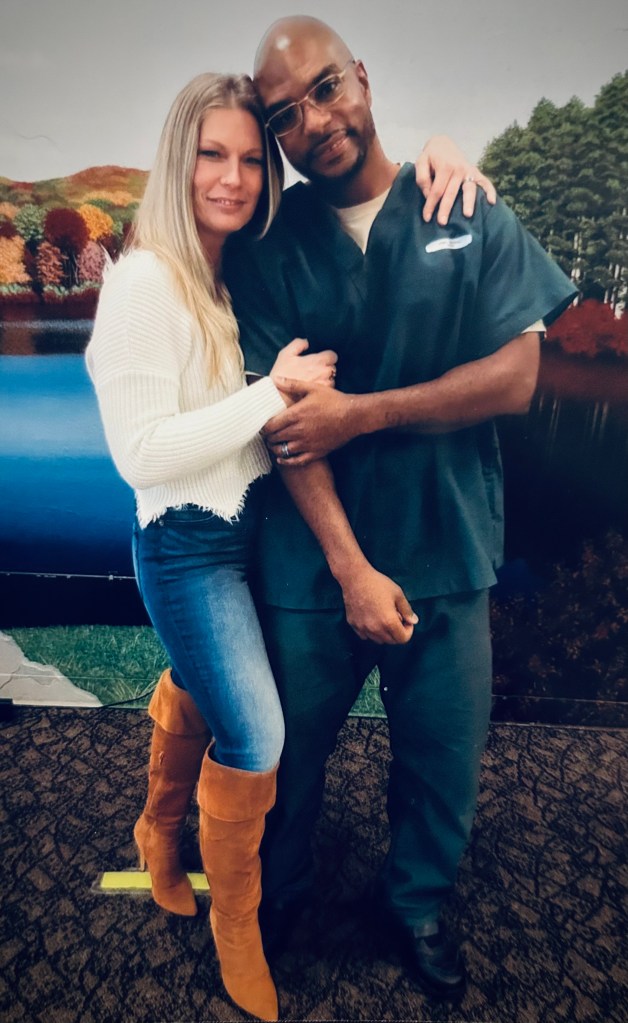
A1. Hello everyone! Our names are Marshall and Jessica Jones. We met five years ago under the most unlikely of circumstances. Jessica was a former Wisconsin Department of Corrections employee, and I am someone currently confined in the Wisconsin prison system, sentenced to two consecutive life sentences without the possibility for parole. Five years later, we are married, the co-authors of ”The Prodigal Son: A Prisoner’s Story of Redemption”! One couldn’t tell us that God isn’t the master of the impossible, and we boldly profess that truth in our words and in our lives. We are Christians, and that is the foundation which everything we build rests upon. We have three amazing children, Cameron, Falicia, and Jaeson, whom we are incredibly proud of. We are in ministry together, having a FB Group called ”Forged by Fire; Iron Sharpening Iron”, and another page called ”Redgranite Daily Devotions”. We are also involved in criminal justice and prison reform, aiming to raise awareness in our Wisconsin community as to the need for reform and second chance initiatives for those whose rehabilitation has vastly overcome the sentences they have received. We desire to use our platforms to spread a message that anyone is capable of redemption under the right environment, especially by faith in Jesus Christ. From my prison environment, where I have been confined for the last 20 years, I have accomplished a great deal. Currently, I happily received my Associate’s Degree of Arts, and I am working towards my Bachelor’s degree in Biblical Studies. Jessica hosted our first criminal justice/prison reform event called ”A Night of Reformation”, as she and I continue to pursue reform and reentry resources for system-impacted individuals. We plan to build more of these events in the future, as more people in our communities are coming into awareness that our criminal justice and prison systems are broken and in need of overhaul and repair.

Q2. What were the key challenges you faced while writing your book “The Prodigal Son: A Prisoner’s Story of Redemption”?

A2. One of the key challenges we faced when writing our book was the emotional toll it would take reopening old scars. When you have moved on from a very damaged life and you then have to reenter those times and write from that place of mind, it can be incredibly taxing. Being in a medium security prison while writing this story was also another incredible challenge, because I had a cellmate who had no appreciation for the importance of this project, nor for my need for a daily writing schedule. Fortunately for me, the officers on my housing unit saw what I was trying to accomplished and gave me use of the music room in order to type our book. Another key challenge was balance between life, writing, family, and quality. Being all of one means that you neglect other areas of your life. Finding that balance of work and leisure is still something we work on today. Finally, another key challenge was building the finances to afford the publishing cost, because neither of us had five grand lying around. We had to do a little fundraising, but praise God we met our goal.

Q3. What books or authors have most influenced your own writing?

A3. Some of the authors that have been huge influences to us in our pursuit are Claude Brown, Paulo Cuehlo, Michael Todd(shout out to ‘Crazy Faith’), T.D. Jakes, Andrew Wommack, John Bevere, my friends Mark Hertzberg and the late Ron McCrea, and my late best friend Bruce Brooks Pfeiffer. All of these authors have lit a fire under my feet and exposed me to the possibilities that exist in fulfilling your dreams. They all showed me that dreaming isn’t enough, but to actually put in the effort to fulfill your purpose in the earth.

Q4. What’s your favourite spot to visit in your own country? And what makes it so special to you?

A4. My favorite spot to visit in America has to be Crestline, Ohio. It is a very small town in north-central Ohio. A lot of my family on my mother’s side of the family lives in Ohio, and Crestline is this small town, where everyone knows each other or knows of each other. That town epitomizes peacefulness and it was a breath of fresh air compared to Milwaukee, Wisconsin, where I was born and raised. It is special to me because no matter whether I was from there or not, I was always viewed as family.

Q5. What inspired you to write the book ‘The Prodigal Son: A Prisoner’s Story of Redemption’?

A5. My wife Jessica gave me the idea to write my life story, believing that my testimony would encourage someone who is broken by life to see the light at the end of the tunnel, to see the power of change. She thought it would be a great way to help people on a wider scale and make people see that they are not alone amid their hardships. Also, Jessica believed that it could also help adults understand youth better, instead of trying to lump them into a category or write them off as incorrigible. She sees that there are gray areas that people never consider that are driving forces behind mentalities and behaviors. Of course, I didn’t see it as a goos idea, because at the time, I saw that I would have to expose my dirty laundry for all the world to see, which would be extremely painful. I only saw the pain involved, but Jess showed me that this was so much bigger than pain, that it would be healing for so many people. Well, she did a great job of convincing me, because we got it done. I have been through a lot personal hell in my life and experienced a great deal of brokenness from it. I made a lot of horrible decisions in my life, and we want to catch someone before they fall into my same situation, staring down a life sentence without parole, wondering how they got there. We also want to show someone who is on the verge of destroying their life that they can rebuild anew and build better than could have ever imagine. We want to show parents that it is not wise to slap labels on their children, but to look deeper, because kids go through a lot more than we could ever acknowledge. Jessica’s life wasn’t easy either, and she has had some hard knocks in her life. We want pain to turn into healing. We also want to show the world that it is time for me to come home. I have changed my life tremendously and have been blessed to become a beacon of hope and change for those in the prison system and those outside of it. I have done over twenty years and officers, civilian staff, and inmates are surprised that I could be in prison for homicide and that I have a life sentence. I live my remorse out in my daily life, as I am terribly sorry for the things I have done in my life that have ultimately placed me here. I mediate disputes, I counsel brothers, I tutor people, I have stopped potential gang wars, I diffused a near-riot, and I have prepared countless brothers to regain their freedom the right way. I have a Technical Diploma, an Associate’s Degree, I’m a Restorative Justice graduate and class speaker, I have participated in numerous criminal justice panel discussion helping educators work with their at-risk youth, and we have ministry pages where we share the Word of God to help people live in a Godly manner. I am a leader in my prison environment, spearheading positive self-change and personal accountability. I am currently a Biblical Studies Bachelor’s Degree student, minoring in psychology, because I want to help people from my Christian worldview. I haven’t had a disciplinary infraction in over 12 years, and I have had countless officers and inmates tell me that I no longer belong in prison. I live with excitement to be a part of the solution, and ”The Prodigal Son: A Prisoner’s Story of Redemption” is yet another tool that helps us to bring solutions.

Q6. How long did it take you to write your book ‘The Prodigal Son: A Prisoner’s Story of Redemption’?

A6. It took four months to write ”The Prodigal Son: A Prisoner’s Story of Redemption”, but that was the easy part of it in my opinion. There was an editing process that took place to ready our manuscript, which added poetry themed to parts of the book, the search for pictures, and doing all of this during Covid made everything more difficult. Jessica was instrumental in every part of this process, and she also edited our book and rewrote certain sections to make our book more fluid of a read.

Q7. On what platforms can readers buy your books?

A7. ”The Prodigal Son: A Prisoner’s Story of Redemption” can be found on Amazon, Barnes & Noble, Kindle, and in most places where books can be purchased online. It has been doing pretty well and there has been a nice demand for our book.

Q8. Tell us about the process of coming up with the book cover and the title ‘The Prodigal Son: A Prisoner’s Story of Redemption’?

A8. The process for coming up with our cover was pretty interesting. It was a combination of mine, Jessica, Falicia and Jaeson’s ideas. We wanted the visual of a man who returns home after being consumed in prison. The Bible story of ”The Prodigal Son” was the direct inspiration to the title of our book, because he took his fathers wealth, left home and squandered it all away. From the depths of his brokenness, he remembered how good home actually was, so he set about a course of action to go home and humble himself before his father. His father receives him with an unexplainable love and restores him to his rightful place. I identify with this story because I grew up in church and I happily served church as a kid, but I left church and everything I valued to chase after the street life. Once the streets chewed me up and spit me out,I remembered how good I had it before and I came back to God, seeking His forgiveness and redemption. He gave it to me with wide open arms and my life is changed for the better because He restored me as His .Son The prison cell represents prison for me, but prison is more than just a physical condition. That is the thing we are seeking redemption for. It could be prison, addiction, abuse, poverty, or a host of other circumstances. The road above prison is that road of redemption, that allow anyone who was once consumed by their brokenness to re-emerge triumphant because of God’s love and forgiveness. The light is really a picture of God’s love, but it also leaves a blank canvas for a person to fit their image of redemption there. The graphic artists at Trilogy Publishing did an amazing job on the cover, encompassing everything we hoped to convey.

Q9. When writing a book how do you keep things fresh, for both your readers and also yourself?

A9. I believe excitement comes with what the reader is able to picture. When I can picture what I am writing clearly, I believe that the reader can as well. With ”The Prodigal Son: A Prisoner’s Story of Redemption”, we wanted to take the reader on a guided tour through my life. Our book will take our readers through a plethora of emotions; some anger, some sadness, some relief, but all to keep our reader engaged from start to finish. Tapping into my vulnerability was essential in conveying the highly emotional nature of our book, and we believe through primary source accounting, and poetry providing a healthy back story provided a necessary conduit to keep our readers excitement at a continuous peak. I wanted to write the book as if I was going though everything right in that moment, so people who read would experience how just one mind works under the circumstances highlighted in our book.

Q10. What is the most valuable piece of advice you’ve been given about writing?

A10. My late best friend and mentor, author and Frank Lloyd Wright historian, Bruce Brooks Pfeiffer, told me something so simple, something I still live by. He said, ”Writers write’ period”. He also said that there is a difference between an author and a writer, and the difference is in the leap of faith of having your work scrutinized and published. Authors never stop writing, but many writers have given up. My first book, a poetry collection called ”A Raven’s Meal”, bombed totally. I didn’t make a hundred dollars in royalties yet, and it has been out since 2019! I actually have a copy of Bruce’s first unpublished manuscript he ever wrote, one that he never sought publication for, but in his career, he has written or edited over 60 books. I also have the very last book he got published, and he took me through the entire process; from manuscript compilation to finished product. He did all of this while battling Parkinson’s! So his testimony showed me that there is no excuse, nor limitation that will keep you from your dreams. Only you can do that.

Buy The Prodigal Son on Amazon

Interview with author Milush Black

Q1. Hello, can you please introduce yourself? Readers would love to know more about you.

A1. I am debut novelist that was born and raised in Bern, Switzerland. For the last six years, I have been living and working in London. Since I was fourteen years old, I have been dreaming of writing a novel, which will inspire my readers. My first story, ‘The Power of Pegasus,’ is a story about external threats, relentless adversity, strength within and the resilience of the human spirit. My hope is that ‘The Power of Pegasus’ will give my readers strength, hope and inspiration for a future in this unprecedented and chaotic times.

Q2. What were the key challenges you faced while writing your book “The Power of Pegasus”?

A2. Writing the story was easy and very much fulfilling, for I had the story outlined inside my head. The most challenging part was, therefore, the editing. It took strength and determination to make the book to the best version it could be.

Q3. What books or authors have most influenced your own writing?

A3. I fell in love with books once I started reading the Harry Potter books. For that reason, J.K. Rowling will always be my hero. Another author I admire is Ransom Riggs who wrote Miss Peregrine’s Home for Peculiar Children. Jane Austen’s writing, is my eyes, unmatched. In my opinion, a good novel should be easy to read, the characters should be fascinating and the plots should keep the reader guessing until the last page. All my favourite authors taught me that.

Q4. What’s your favourite spot to visit in your own country? And what makes it so special to you?

A4. My favourite place in Switzerland is Hasliberg. My family and I used to go there snowboarding. We could snowboard all the way down to our chalet. It was an experience which made childhood happy.

Q5. What inspired you to write the book ‘The Power of Pegasus’?

A5. The idea for the book came to me after reading an article describing the devastating consequences of cyber attacks in Bahrain. Those attacks are a violation of basic human rights, and therefore are a subject people need to be made aware of. Other things which inspired me were movies, books and people.

Q6. How long did it take you to write your book ‘The Power of Pegasus’?

A6. It took me six months to write and edit ‘The Power of Pegaus.’

Q7. On what platforms can readers buy your books?

A7. For now, the book will be only available on Amazon.

Q8. Tell us about the process of coming up with the book cover and the title ‘The Power of Pegasus’?

A8. Pegasus is one of the most powerful weapons in this world. The book demonstrates its immense powers. Therefore, the title ‘The Power of Pegasus.’ A book cover should give the reader an idea what the book is about, capture interest and the reader’s eye. The book cover of ‘The Power of Pegasus’ does precisely that. It’s a clean, eye catching design that gives the reader a clue what the novel is about.

Q9. When writing a book how do you keep things fresh, for both your readers and also yourself?

A9. It’s important that the characters of a novel are original, diverse and to some degree relatable. Therefore, I keep things fresh with interesting characters. A great character, such as Mo, will thrill the readers and make them ask, ‘What is he going to do next?’ A character like Sophie, is a source of inspiration. My aim was to thrill my readers and inspire them at the same time.

Q10. What is the most valuable piece of advice you’ve been given about writing?

A10. The function of the first draft is to help you figure out your story. The function of every draft after that is to figure out the most dramatic way to tell that story. It’s a quote from Darcy Pattison. Having now written my first novel, I can say that this absolute accurate.

Buy The Power of Pegasus on Amazon

Interview with author Vivienne Wallace Culp

Q1. Hello, can you please introduce yourself? Readers would love to know more about you.

A1. Hey there! I’m hoping all is well with you and yours. I am Vivienne Wallace Culp. My friends call me V or Mz V. Former students still refer to me as “Mother.” I am married to a wonderful man I call “My Everything,” mother and doting grandmother. I am a former machine stenographer, Para Legal, executive secretary, CPS in-service provider, developer of interactive educational media, and Master Tutor. I was an exceptional singer before developing nodules on my vocal cords due to overuse. I love drawing, painting, and creating 3d art projects. I still twirl my baton on occasion. I am an avid league bowler. Brick by brick, I created a wonderful basketball court for my son that stands today, a patio, and I climbed onto the roof and repaired it. No more leaks. YouTube is a great teacher.

Q2. What were the key challenges you faced while writing your book “The Truth About Humpty’s Fall”?

A2. The challenge I faced was the lack of peace and living in an environment steeped in negativity and abuse. Although I’ve written before, I started this book more than ten years ago. Most often, my environment did not allow me to relax or think freely. During the day, I homeschooled. When I did write, it was likely between the hours of 11 p.m. and 2 a.m. I’m still a night owl. I slept with the bedroom door locked. For additional security, I’d move my heavy nightstand against it. God delivered me.

Q3. What books or authors have most influenced your own writing?

A3. The authors I lean toward do not influence me in my writing. However, Mario Puzo, Sidney Sheldon, and Danielle Stelle are among my favorites. Nursery rhymes influence me. After reading them to my children and students, we discussed what made sense and what didn’t. From there, I created a short story with illustrations about Humpty Dumpty. But it wasn’t until a dream that I began writing this series’ first book.

Q4. What’s your favourite spot to visit in your own country? And what makes it so special to you?

A4. My favorite spot would be relative to the reason for my visit. Since I love bowling, I enjoy any place a tournament is held, regardless of the weather. We visit Detroit annually. Last year, we were on our way to Vegas for a tournament via California, where we stayed for a week visiting friends and relatives. In the beginning, it was wonderful. Then, we were involved in a vehicle accident. The only things that made it to Vegas were our bowling equipment.

Q5. What inspired you to write the book ‘The Truth About Humpty’s Fall’?

A5. A vivid dream about the character inspired me. I researched the origin of Humpty Dumpty and was enlightened when I discovered it was a cannon atop a castle wall that fell. Can you imagine!

Q6. How long did it take you to write your book ‘The Truth About Humpty’s Fall’?

A6. I started writing it more than ten years ago. When I was no longer living in turmoil, I was able to write consistently. “The Truth About Humpty’s Fall” was completed in 2023. I’ve pinned one other book during that time and started the second book in the series of “Our Twisted Tales.”

Q7. On what platforms can readers buy your books?

A7. Readers can purchase “The Truth About Humpty’s Fall” at these sites. https://ourtwistedtales.com https://www.lulu.com, and https://amazon.com Kindle. However, as of this writing, I discovered that a company called “All Time Fans” has highjacked my book on “Amazon” and put it on sale for $24.23. The paperback is 14.99. The eBook is $9.99. Both are supposed to be secured and sold by Amazon. There is also a coloring book. The paperback is $7.99, and the eBook is $3.99. Like the reader, it appears it’s being sold by “All Time Fans” at a price of $16.64. I’m currently awaiting a response from Amazon. I am confounded by this. Be diligent in your undertakings and aware of things that can go wrong in the most trusted avenues.

To purchase reputably and at the correct price, please visit my website or Lulu.com. Thank you.

Q8. Tell us about the process of coming up with the book cover and the title ‘The Truth About Humpty’s Fall’.

A8. For the cover, I gathered all of the characters, placing them in a specific order and gave my idea to my illustrator, Robert K. Walker. He is magical! There was really no process by which I came up with the name because the fairy tale is not factual. Remember questions three and five. I developed the character and his journey how I saw fit.

Q9. When writing a book, how do you keep things fresh for both your readers and also yourself?

A9. This is a hard question. On occasion, I removed myself from the writing when I started to ramble and continued a few hours or a day later. I also read aloud to small groups and listened to their questions and comments. It was great. From this, I discovered key information that would have made some chapters cohesive was left out. The group helped me become more focused on the who, what, when, where, how, why or why nots. I took notes and focused on each chapter, sometimes having to return and adjust the tale to tie into the complete story. A rhyming dictionary was also handy because I enjoy writing in free verse.

Q10. What is the most valuable piece of advice you’ve been given about writing?

A10.I wasn’t given any advice. However, I learned early in life to accept constructive criticism, not to change my idea to someone else’s and not to depend on my memory. I always kept a small spiral notebook and pen with me to record random thoughts about characters, scenes, what they might say or do, and how they interacted with Humpty Dumpty Eggleston and the cast. The result is a book I am proud of. It is a coming-of-age, gut-wrenching, heart-warming, humorous piece of entertainment and includes deception, common life lessons, morals, or a lack thereof, parenting and its absence. My advice is to keep an open mind. A closed mind is like a closed window with the curtains drawn. The room behind it never receives the freshness or light that comes with every new day. I am humbled.

Buy The Truth About Humpty’s Fall on author’s website

Interview with author Jo E. Jennings

Q1. Hello, can you please introduce yourself? Readers would love to know more about you.

A1. When the doors closed on Cancer Treatment Centers of America, Tulsa, where I was a chaplain, I became a full-time fiction writer, accomplishing a lifetime goal. I wrote my first short story in third grade.

I published SHOOG on Amazon.com. Soon to come, if not out already, is SHOOG II which I sent to Amazon for review on Feb. 29, 2024.

SHOOG and A SUIT FOR MELVIN were both published in 2022.
The first Melvin book was originally written in the 1970’s-80’s, set in 1957 and was the first of THE JOE MACGREGOR series, historical fiction. I had not intended to write a sequel, but surprisingly, men particularly seemed to love the book and asked for a sequel.

The second book, A HORSE FOR JOE, was dedicated to my high school and college peers who were sent to Vietnam, as well as all veterans. I created a glossary of characters and footnotes so readers could easily keep track of the characters and perhaps learn something from the footnotes. I am writing A SEARCH FOR MELVIN right now, and my fans keep telling me to hurry up.

I do not write children’s books. My books contain characters of all ages, causing the generations to interact. The characters don’t hide their feelings from the reader, and I am not afraid to tackle subjects some find taboo. I personally do not swear, but I throw in a couple of colorful words to keep the setting and characters realistic. For all the tears I cause, I hope the reader has several laughs to balance them out. I love to make people smile or laugh.

I first published at age 21 in a national education publication, later working as a news editor, photographer, and writer, following experience in hospital public relations and marketing, a year in labor and delivery and over four years for a psychiatric hospital.

I taught high school English, junior college writing, was a preschool director and children’s pastor. I earned a Masters of Divinity from Phillips Theological Seminary and a BA from Culver-Stockton College. (I was privileged to visit Culver-Stockton in 2023 to lead two writing workshops.)

My three biggest accomplishments in life are my three children which I share with my former husband, A. Thomas Jennings. The “Jennings’ kids” are now successful adults. I have eight grandchildren who seem to be keeping up with their parents as far as accomplishments and education. We all have a great sense of humor.

As a side note, I was born in Tulsa, OK., but grew up in Small Town, MO. People make a big deal out of how to pronounce Missouri. It’s an Indian word, and I was delighted, when I saw CHILDREN OF THE FLOWER MOON, to hear they pronounced it the way it should be pronounced, Mah-zur-ah. The word does not end in an ie. Ah, there will be a response for that teaser!
For four years I was a senior mentor to Oklahoma State University medical students, and I dabble in acting.

Q2. What were the key challenges you faced while writing your book “A Horse for Joe”?

A2. A SUIT FOR MELVIN was based on a dance that really took place, and as I wrote it, I visualized my hometown. A HORSE FOR JOE is purely fiction.

The first challenge in any sequel is catching up the reader so they know what’s happened before even if they didn’t read the first book. Although I am able to tell people, “You don’t have to read the first book to enjoy the Joe book,” I feel they miss out on having fallen in love with the characters and experiencing the emotion that took place before they tuned in.

Bringing people up-to-date without boring them to death is a challenge and a worry.

I kept telling myself the characters all had to be interesting, and all of them had to have a background. The characters are not just names; they have feelings, intentions, and personalities.

In addition to wanting believable, dynamic characters, I wanted a lot of action, as ongoing as possible, events overlapping, hopefully causing a reader who is lying down to sit up, waiting to find out what happens next.

I also care about the writing itself. I aim for rhythm, fascinating words when possible, vocabulary that isn’t just skimmed milk over shredded wheat.

My desire is to leave people “wanting more.”

Truthfully, once I get into a book, the characters take over. They’re dictating; I’m just keyboarding. I thank them for that. If I ever create a character who doesn’t help me out, I shall fire them.

Q3. What books or authors have most influenced your own writing?

My list of favorite books runs from JANE EYRE and WUTHERING HEIGHTS to SOMETHING WICKED THIS WAY COMES. Over the years, Ray Bradbury was very good about answering my letters. In the very first one he said if my characters come alive in my books like they did in my letters, I would make it.
I love THE POISONWOOD BIBLE and anything Barbara Kingsolver writes. Having been an English major, and a child who read three books a day in summer, I have to thank all the writers, because I’m certain all of them gave me something.

When we lived in West Des Moines, Ia., I sat down and visited with Henry Felsen, who wrote many teenage books like STREET ROD and HOT ROD. He later stopped by our house as I was giving a birthday party for a six-year old and asked to read something I’d written. He then invited me to visit his college class, but we were moving to Oklahoma in a few days. His advice was to never be discouraged by rejections. His eighth book was rejected many times, more than any of mine have over the years. I took that to heart.

If I can share one more thing, Henry’s grocery list was lying on the restaurant table. It said, “Something to pick up with my hands and eat.” So often when I’m writing and go to the kitchen, that’s my goal, just something I can grab, like an apple, so I can get back to writing.”

Q4. What’s your favorite spot to visit in your own country? And what makes it so special to you?

A4. I suppose that would be my hometown in Small Town, Missoura. I confess most of the places I have visited, I have also lived. I traveled very little in my adult life, not by choice. It seems like we worked all the time and never had money for trips.

Although my hometown has changed a great deal, the town square still exists although without the hitchings posts. The first house where I lived in Missoura, what we called the big brick house, burned down, but the second, where I lived from third grade until graduation, still looks the same from the outside. The architecture inside is strange as rooms were built as they were needed –family, borders, etc. I lived with my grandparents. My mother and her siblings were all born there.

The high school has been torn down, but I can still see it in my mind. The “new gym” where I graduated has been replaced. I don’t know my way around there anymore, and very few people remember our family, which hurts my feelings.

But the important thing is when visiting there I have my own memories as Jo-Ann, but I also have the memories of Holly who lived in that house and on that street when I was writing SHOOG.

J.J. from the MacGregor series lived uptown on the square over a drug store. People still hang out at “the lake.” In my mind and heart, Small Town, Missouri, has real people as well as the ones I created and put there. Although the barn-house, Tina Tinker, Brett Coffee, and Pastor Billy never existed in that town, SHOOG put them there, and they fit well.

Q5. What inspired you to write the book ‘A Suit for Melvin’?

A5. When I was in seventh grade, several mothers in town planned a semi-formal dance with their daughters in seventh grade. The girls wrote formal invitations and thought nothing of explaining what semi-formal meant as they hand-delivered them. It’s the first dance in my memory where I danced every dance I wanted, because I had two boys who were friends, who took turns dancing with me.

Something happened that night that still brings tears to my eyes it was so touching. I never forgot it. So when my children were young and we were living in Bolingbook, Il., I went to my office in the basement and created J.J. based on a rascal of a boy in my class, and Melvin, a boy who was in the class for seven years but then disappeared as some students seem to do. The experience of the two boys at the dance and their discussion on the way home is probably the most touching thing I’ve ever written. J.J. becomes Joe in the next book and continues to touch people. I was just a spectator and have no idea what they really talked about on the way home, but that book is very dear to me. My daughter Rachel tells people, “It’s a sweet book.” Who knew it would become a series?

Q6. How long did it take you to write your book ‘SHOOG’?

A6. SHOOG took much longer to write than the other books, three years. I was at home one day remembering, as people tend to do as they grow older. I had this beautiful memory of a boy who quietly sat down by me when no one else was yet in the classroom. It was our senior year, and when I realized there was a presence next to me, I looked up, and he had pulled his chair over to mine and was just waiting for me to look up. When I did, my heart swelled, and I know my smile was as big as the moon. When the bell rang, he got up and left before he said a word.

Later, a girl I think of as my nemesis, because of the things she said and did to me, stopped me in the hall at school and said he wanted to go out with me. I blurted out, “I don’t know that my grandmother will let me go – but I’ll talk to her!” I called after her, “Tell him to ask me himself!” He never asked me out, and I was confused.

Two years passed before I heard she had told him I thought I was too good for him. Then someone else in my life affirmed that I was if you can believe that. I was broken hearted that the beautiful boy with the quiet smile thought I had said such a horrible thing. By then I was in college, and he was getting married. Truthfully, he probably never thought a thing about it; he probably forgot me. And I know he went on to be happily married and have children. So did I!

But I remembered that day when he pulled his chair up beside me, I looked him up on my laptop, thinking I would tell him the truth and apologize. He had died eight years before. I am usually not much of a griever, but I could not stop being sad. There was no way to say I was sorry.

One of my granddaughters recommended a book I should read, but it didn’t help.

We never dated; we never had a conversation. He was quiet in class, so I don’t know what his voice sounded like. So I invented Hugh Coffee and Holly Bishop. Holly lived in the house where I grew up, and a fictional love story was born.

When I was at Culver-Stockton, the English majors often talked about therapeutic writing. I was never for it. But in the writing of SHOOG, I was able to deal with many things, and I believe those feelings come through. Women come to me and say, “This is my story.” Humans share experiences.

Q7. On what platforms can readers buy your books?

A7. My books are available on Amazon.com in paperback and Kindle. A SUIT FOR MELVIN and soon, A HORSE FOR JOE are available on Audible, Amazon, and iTunes. For an autographed copy, contact Jo E. Jennings at jjennings29@cox.net. I confess I will have to add postage/envelope cost of $6.50. As I uploaded SHOOG II just now, I also found that SHOOG II will cost more than my other books have, just over $12. However, I would love to hear reader’s questions and will answer them as soon as I can. I would like them to tell me what they think.

Q8. Tell us about the process of coming up with the book cover and the title ‘SHOOG II’?

A8. Be still my heart! When I was in second grade, I visited the library with my classmates in Kansas City, Mo., I chose a “fat book” way above my reading level. There was a photo of a donkey on the front, so I thought I would be reading a book about a donkey. There was not one donkey! It was then I learned pictures on the cover of books may have nothing to do with what’s inside. That’s aggravating.

Grams, whose mental abilities start to slide, is sitting in a rocking chair. Hopefully, it’s obvious she’s depressed. Her hands droop. Her face is covered by a COVID mask because it’s 2020. She’s wearing a military jacket as her son Tim was killed. She holds a sock doll which in the book she says is “Timmy.” In actually, the doll she is holding belongs to Holly and was named Dennis when she made him for Holly years ago. The quilt has many embroidered symbols of Gram’s faith – the Praying Hands, etc. This was taken by what I call my “cabin by the park” as I live in a condo overlooking a park and tried to decorate it as a cabin. The colors are bright, but it’s very humble. So in my mind the cover shows humility, grief, faith, love, that there’s a pandemic going on, and that the military is involved somehow. (I hope the fact I fractured my back several months ago helped with Gram’s expression.

Q9. When writing a book how do you keep things fresh, for both your readers and also yourself?

A9. The characters must be interesting and continue to have personality. If they don’t have personality, then make that an obvious, maybe fun, part of the character. Action needs to continue throughout the book, even events overlap. Once in a while, if possible, the reader may be on the edge of his/her seat. With sequels I am adding things to the character’s lives the reader doesn’t know. Maybe they had the character all wrong! They’re doing THAT? He’s what? Let the characters surprise the reader. I do not get bored with my characters. I love it when they take the reins.

Q10. What is the most valuable piece of advice you’ve been given about writing?

A10. Years ago I received a letter from a publisher saying he would have published my book, but my grammar was too perfect. He said if I continued using perfect grammar, I was going to fail. I didn’t take that advice totally, but I do allow my characters to use the grammar that goes along with their character. My son Adam said, “Mom you’ve got to read Stephen King’s book on writing.” I did. I use a lot of short sentences which are paragraphs. He says that’s OK. I give him credit but use his advice in writing workshops. It’s a great book.

I also remember Henry Felsen’s advice not to worry about rejections. I have never pasted rejections on my wall, etc.

Check the author’s bio on Amazon

Interview with author Josh Goldstein

Q1. Hello, can you please introduce yourself? Readers would love to know more about you.

1) My name is Josh Goldstein and hey I guess I’m a science fiction writer and comic book artist. I have authored not only this book Zayin:Endless War but was a writer & artist of graphic novels.Like the Maccabee Lady series and a Zayin stand alone graphic novel. I also wrote and drew four independent/small press comics. I went to college at Stockton University and got my degree in Historical Studies and also went to Rowen College at Burlington Center where I got my degree in History. I like cars and Mr.Pibb.

Q2. What were the key challenges you faced while writing your book “Zayin: Endless War”?

2) I didn’t face many challenges.I wrote the book in college. I waited years to have it published. I really was excited and pleased to finally get published.

Q3. What books or authors have most influenced your own writing?

3) The books and authors that influenced hmmm. One that comes to mind is Edgar Rice Burroughs I loved his book the The Mars Trilogy I ate it up. Also J.R.R. Tolkien and his Lord of the Rings and The Simarillion which I loved and found fascinating.Two other books I liked were 1984 by George Orwell I was obsessed with it and Robert E. Howards’ Conan Books. As well as Starship Troopers by Robert E.Heinlein.

Q4. What’s your favourite spot to visit in your own country? And what makes it so special to you?

4) I live in New Jersey in South Jersey so my favorite spot to visit is Philadelphia. Philly is cool because it is fun and has loads of sports ,museum, gambling, shopping and places to party and a get a drink or meet someone.It is special because it has loads of historic buildings in Old City and was the old capital of the United States.I also like University City and it’s concerts,museums,and shopping. I made Neggiddo in my book a little Philly. I love Cheesesteaks and the Flyers both Philly stuff.

Q5. What inspired you to write the book ‘Zayin: Endless War’?

5) What inspired were current events at the time like The Yellow Shirts and Red Shirts Riots in Thailand. Mabus-Tel was a little like Thai Prime Minister Thaskin Shinawatra. The downfall of the Zayin monarchy is a little inspired by the downfall of the Nepalease monarchy by the Maosit, Prachanda..Also as a lover of history The First World War and how the world changed because of it. The downfall of empires and birth of a new world. Things from British and Asian history. And my own people’s history is cultural and historical.

Q6. How long did it take you to write your book ‘Zayin: Endless War’?

6) Well let me see.It took a long time. Seven Years about and up till 2021 to publish. It was a labour of love.

Q7. On what platforms can readers buy your books?

7) People can buy a copy from Amazon.Com,Barnes&Noble, as well as Goodreads. As well as the Outskirts Press who publishes me.

Q8. Tell us about the process of coming up with the book cover and the title ‘Zayin: Endless War’?

8) I thought of the popular antagonist the Napoleon-like Prime Minister Mabus-Tel being primarily featured hovering over prantagonist Prince Taal-Alef and his wife Princess Shulamit-Ayin. Below Mabus-Tel is planet Zayin and a Starship. I thought it would be dramatic. I used combined medium pencils&inks and markers,colored pencils,as well as paint. I did the cover myself being an experienced artist hey it’s cheaper.

Q9. When writing a book how do you keep things fresh, for both your readers and also yourself?

9) Yes I find you must certainly.You must be curnt as well as interesting.Give them what they want. And do the book you want.

Q10. What is the most valuable piece of advice you’ve been given about writing?

10) Go with what you want and follow your dreams.

Buy Zayin: Endless War on Amazon

Interview with author Gracie C. McKeever

Q1. Hello, can you please introduce yourself? Readers would love to know more about you.

A1. Hello and thank you for having me!

My name is Gracie C. McKeever and I write cross-genre romance and erotic romance. I also write Why Chose (aka Reverse Harem or Ménage) western romances under the pseudonym Gigi Moore exclusively for Siren Publishing. 

Q2. What were the key challenges you faced while writing your book “Artistic Freedom: Brielle & Rand (Muses 1)”?

A2. Carving out time was and is the key challenge I face writing any of my books. Artistic Freedom: Brielle and Rand was more a labor of love than any of my most recent titles as I went back to my roots and wrote it for me without any thought as to where I was going to submit it or publication. FemDom BDSM is a niche market inside of a niche market but when I completed the trilogy, I realized that it was meaningful and might appeal to someone other than me. I knew if the trilogy was going to be published, however, I had to publish it myself. 

Q3. What books or authors have most influenced your own writing?

A3. Joey W. Hill’s Vampire Queen series and many of her other BDSM romance books, especially the FemDom titles; everything Octavia E. Butler (R.I.P.☹) has ever written; Danielle Steele; Tina Wainscott’s On The Way To Heaven (which has been reprinted under another title that at the moment escapes me) was a major influence on my first published paranormal romance New Life Incognita. I love the reincarnation and second chances theme of all her books, but On the Way to Heaven affected me the most, probably because it was the first book of hers that I read and it struck a chord.  

Q4. What’s your favourite spot to visit in your own country? And what makes it so special to you?

A4. Wow, that’s an interesting question. Let me think… I’d have to say Hawaii, Maui specifically. I’ve only been once, but I would love to visit the island again. It was everything I’d dreamed it would be and more. New Orleans is running a close second. Both these spots were special because I traveled to each place alone, challenged myself to get out of my comfort zone and just went. Also, each place was on my bucket list.  

Q5. What inspired you to write the book ‘Artistic Freedom: Brielle & Rand (Muses 1)’?

A5. I’m a fan of BDSM erotic romance, but specifically FemDom. As I mentioned, FemDom is a niche market within BDSM. The BDSM romance market is flooded with alpha male Dom books and Fifty Shades of Grey wannabes. Not that there’s anything wrong with this. I love these books as much as the next person. I’m just surprised more women don’t prefer reading FemDom stories, especially nowadays, but to each their own. Though there is empowerment and agency in the submissive role, I prefer the idea of women being in charge in the bedroom (as well as outside of it, of course). This has nothing to do with denigrating or feminizing men (unless they want to be, LOL). It’s about power exchange, give and take like any relationship, just more intense and focused. A sub has just as much power in the exchange as does the Dom, if not more. So since I didn’t see many of these types of stories (at least not enough for my liking) I followed the famous author Tony Morrison’s advice: “If there’s a book that you want to read, but it hasn’t been written yet, then you must write it.”

Q6. How long did it take you to write your book ‘Artistic Freedom: Brielle & Rand (Muses 1)’?

A6. That’s a tough one. I wrote the first draft back in 2016 and it (and the other 2 stories) have gone through numerous changes and updates. I would say it probably didn’t take me more than a few weeks to get down the first draft. 

Q7. On what platforms can readers buy your books?

A7. All of the Muses stories are/will be available on Amazon Kindle. There will be a paperback coming out with all three stories under one cover sometime this year (planned release date of August 10th), also available from Amazon.

Q8. Tell us about the process of coming up with the book cover and the title ‘Artistic Freedom: Brielle & Rand (Muses 1)’?

A8. I’ll answer the second part first: The title emerged from the characters and the story themselves as Rand is an artist, specifically a painter. I thought the term, artistic freedom, perfectly suited the theme of the story: a journey of discovery and the freedom to be and express oneself—artistically and sexually. It’s weird how this happens for Rand, that being bound frees him and opens his eyes to new experiences, specifically the possibility of a relationship with a slightly older woman he admires and the opportunity to learn about a new lifestyle and community. Coming up with the book cover was a wonderful collaborative meeting of the minds with the cover artist, Amber Daulton (proprietor of Satin Rose Designs). Amber took the information I provided on the cover art form and plucked the characters from my head. I loved working with Amber. It was a nice give and take relationship and I have and would gladly use her services again. 

Q9. When writing a book how do you keep things fresh, for both your readers and also yourself?

A9. Another great question and a tough one. I think challenging myself and exploring different aspects of my chosen genre keeps things fresh for me, and thus for my readers. I have written numerous BDSM romance books, both MaleDom and FemDom, but I come at each from a different angle, or at least I try to. And create the most multi-dimensional characters and stories I can. The writing process starts with the characters for me. 

Q10. What is the most valuable piece of advice you’ve been given about writing?

A10. Write what you love; don’t write for the market. Trends come and go and if you’re writing only for the market, you’re chasing the crowd. If you write for yourself, eventually the market catches up with you. Better to be a leader than a follower, and when the market comes a knocking, you’ll be/have something ready for it.

Buy Artistic Freedom: Brielle & Rand (Muses 1) book on Amazon

Interview with author Peter Christopher

Q1. Hello, can you please introduce yourself? Readers would love to know more about you.

A1. Ask me for my occupation, and the answer wouldn’t be glamorous: retired businessman. A solid 33 years spent in the world of deals and deadlines. But that was then, this is now. Now, at the sprightly age of 71, I’ve swapped spreadsheets for sonnets and boardrooms for blooms. You see, I’ve always danced with words, scribbling stories and poems in the margins of my busy life. Now, with Kent’s rolling hills as my backdrop, I finally have the time, and the freedom, to let them bloom on the page.

Don’t be fooled by the silver hair, though. I’m not one for rocking chairs and reminiscing. My hands are still happiest when they’re creating, whether it’s coaxing life from the soil in my garden or weaving tales from imagination’s thread. When I’m not digging for inspiration in the flowerbeds, you’ll find me hunched over a notebook, chasing rhymes and crafting worlds. There’s a thrill in building something tangible, be it a sturdy bookshelf with my own two hands or a poem that resonates with a reader’s soul.

The path ahead is an open book, filled with blank pages waiting to be inscribed. Perhaps my stories will find a home in the hands of others, sparking their own adventures in ink and imagination. Or maybe they’ll simply be a quiet pleasure, a testament to the fact that life, like a well-tended garden, keeps blossoming, even after seventy-one seasons. So, here’s to new beginnings, soil-stained fingers, and the stories yet to be told. Let the ink flow, and the journey continue!

Q2. What were the key challenges you faced while writing your book “A Scribbler’s Dream”?

A2. Ask me for my occupation, and the answer wouldn’t be glamorous: retired businessman. A solid 33 years spent in the world of deals and deadlines. But that was then, this is now. Now, at the sprightly age of 71, I’ve swapped spreadsheets for sonnets and boardrooms for blooms. You see, I’ve always danced with words, scribbling stories and poems in the margins of my busy life. Now, with Kent’s rolling hills as my backdrop, I finally have the time, and the freedom, to let them bloom on the page.

Don’t be fooled by the silver hair, though. I’m not one for rocking chairs and reminiscing. My hands are still happiest when they’re creating, whether it’s coaxing life from the soil in my garden or weaving tales from imagination’s thread. When I’m not digging for inspiration in the flowerbeds, you’ll find me hunched over a notebook, chasing rhymes and crafting worlds. There’s a thrill in building something tangible, be it a sturdy bookshelf with my own two hands or a poem that resonates with a reader’s soul.

The path ahead is an open book, filled with blank pages waiting to be inscribed. Perhaps my stories will find a home in the hands of others, sparking their own adventures in ink and imagination. Or maybe they’ll simply be a quiet pleasure, a testament to the fact that life, like a well-tended garden, keeps blossoming, even after seventy-one seasons. So, here’s to new beginnings, soil-stained fingers, and the stories yet to be told. Let the ink flow, and the journey continue!

Q3. What books or authors have most influenced your own writing?

A3. Mainly life was the reason for writing, Ken Nesbitt, the children’s poet, love his writing, going back Robert Frost also.

Q4. What’s your favourite spot to visit in your own country? And what makes it so special to you?

A4. My special place is the Pinetum in Goudhurst, its so peaceful there and thought provoking.

Q5. What inspired you to write the book ‘A Scribbler’s Dream’?

A5. I have always imagined writing a poetry book, I live in kent the garden of england, with this scenery you cannot help but write poems.

Q6. How long did it take you to write your book ‘A Scribbler’s Dream’?

A6. It took me around 4 months, but have other thoughts to write another 2 books in the background, when the flow of poems was not there.

Q7. On what platforms can readers buy your books?

A7. Facebook, twitter, payhip, draft2digital, amazon, kindle, goodreads, and many others from the book funnel which is draft2digital

Q8. Tell us about the process of coming up with the book cover and the title ‘A Scribbler’s Dream’?

A8. I wanted something simple as the book cover, the green was influenced from my love for gardens, the title was created from my scribbles on bits of paper through the years, and the dream was always there, I used to sit at my mums dressing table when I was a kid writing copy from other books, and dreamed I would publish a book one day.

Q9. When writing a book how do you keep things fresh, for both your readers and also yourself?

A9. To keep things fresh, I go for walks when the flow is not there, taking in the surroundings and have a notepad with me just in case somethings pops into my mind which happens sometimes.

Q10. What is the most valuable piece of advice you’ve been given about writing?

A10. The advice was given to me by my father who said whatever you choose to do, don’t give up, keep the dream going.

A Scribblers Dream is available on Amazon

Interview with author Anthony Hodge

Q1. Hello, can you please introduce yourself? Readers would love to know more about you.

A1. Well, my name is Anthony Hodge and I am married to my lovely wife, Sheila Elliott Hodge. We are both United Methodist Clergy serving in the South Carolina Annual Conference of the United Methodist Church. I was born in Savannah, Georgia and reared in Hardeeville, South Carolina.

I served in the United States Navy as an enlisted person and as a commissioned officer. I retired as a Chaplain Corps Officer at the rank of LCDR in October of 2018 after 21 years of total military service.

I have also served as a local church pastor since 1991. Additionally, I am a certified Spiritual Director and have extensive experience assisting others through counseling, mentoring and coaching relationships.

Q2. What were the key challenges you faced while writing your book “Can You Get Better? Sure, You Can!”?

A2. The biggest challenges I faced as I wrote my book was having to consistently carve out time for writing the book while having to maintain my role as a District Superintendent and trying to make time for my wife and other family members.

Q3. What books or authors have most influenced your own writing?

A3. I don’t have a particular author I can pin point as most influential in my writing career, but, since my young adult years, any books or publications focused on Self-Help or Self-Improvement have appealed to me.

Q4. What’s your favorite spot to visit in your own country? And what makes it so special to you?

A4. I grew up near the coast of South Carolina and Georgia, so I love the beach. Any beach, when the weather is good is always appealing to me.

Q5. What inspired you to write the book ‘Can You Get Better? Sure, You Can!’?

A5. I have personally benefitted from most of the approaches shared in the book. Also, as a local church pastor, military chaplain, Spiritual Director, counselor, mentor and coach, I have aided persons in their pursuit for self enhancement for over 30 years.

Q6. How long did it take you to write your book ‘Can You Get Better? Sure, You Can!’?

A6. I believe from start to finish, it took me approximately 6-7 months to complete the book.

Q7. On what platforms can readers buy your books?

A7. The book is available through Amazon and Good Reads.

Q8. Tell us about the process of coming up with the book cover and the title ‘Can You Get Better? Sure, You Can!’?

A8. I worked with a mentor-coach, Mr. Geo Derice and members of a publishing company. Both Geo and members of the publishing company were instrumental in helping me to come up the book’s cover and title of the book.

Q9. When writing a book how do you keep things fresh, for both your readers and also yourself?

A9. I simply try to put myself in other people’s shoes. I also attempt to stay on top of what’s happening with people beyond my sphere of influence. Engaging in either or both approaches will enable me to write something that will be beneficial for me and anyone else who might come into contact with my book.

Q10. What is the most valuable piece of advice you’ve been given about writing?

A10. The most valuable piece of advice I have received about writing is this, “Keep writing even when you don’t feel like or are inspired to write.”

Can You Get Better? Sure You Can! is available on Amazon

Design a site like this with WordPress.com
Get started