Q1. Hello, can you please introduce yourself? Readers would love to know more about you.
A1. I am a serving paramedic. I love my job being able to make a difference in people’s lives I have 2 small children. They’re my world . I used to be in the military for many years. I survived travelling to Afghanistan and Iraq and gained my medals from this.
Q2. What were the key challenges you faced while writing your book “Silent Sirens”?
A2. I wanted to share with people. My story and were not invisible. We all struggle but there’s always a better way.
Q3. What books or authors have most influenced your own writing?
A3. My inspiration is my partner shes a published author on teen books and inspired me to write.
Q4. What’s your favourite spot to visit in your own country? And what makes it so special to you?
A4. My favourite spot is Wales as peace and quiet make me much more relaxed.
Q5. What inspired you to write the book ‘Silent Sirens’?
A5. I was inspired and I was just out of a horrible time and felt people should know the power and endurance that is expected of us.
Q6. How long did it take you to write your book ‘Silent Sirens’?
A6. It took me 2 weeks to write. I was up at 3 am writing, during work time and whenever I had time. I needed to finish it before I lost the courage.
Q7. On what platforms can readers buy your books?
A7. Can find paperback, hardback. E book is free
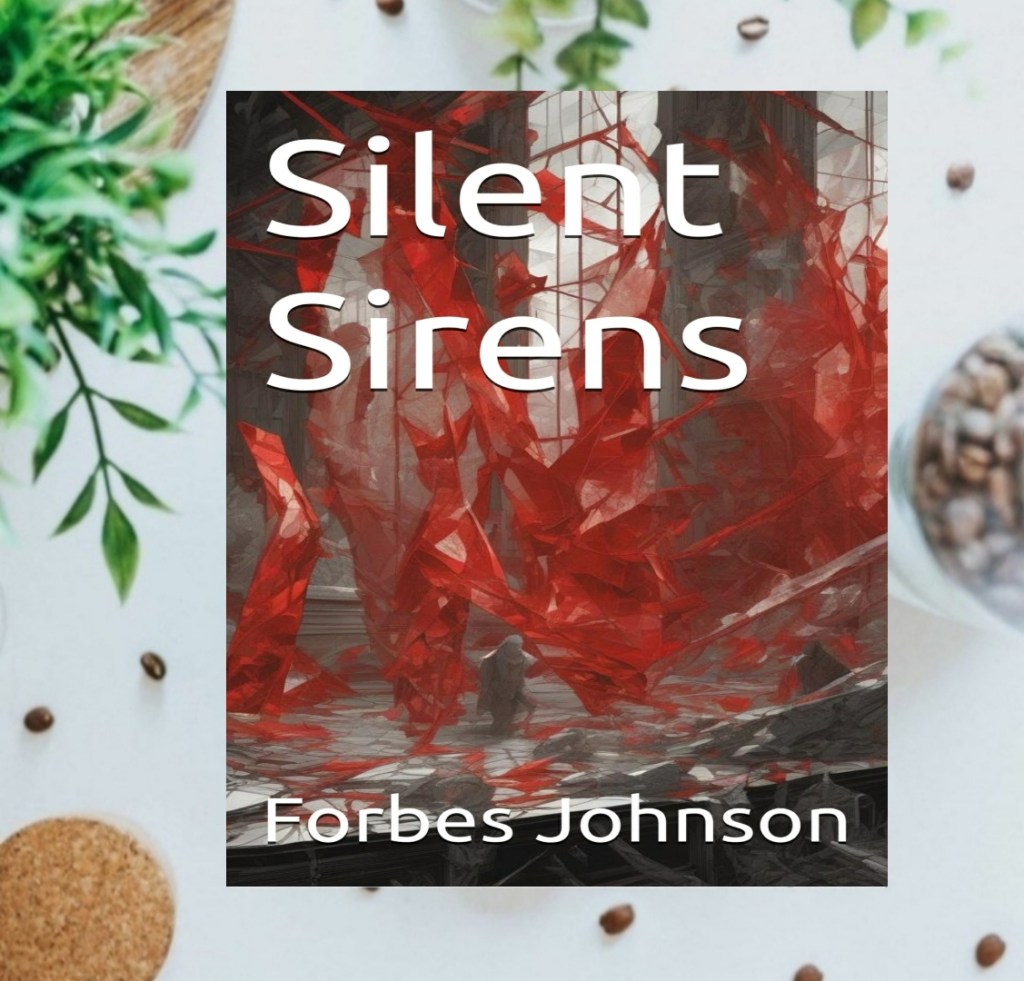
Q8. Tell us about the process of coming up with the book cover and the title ‘Silent Sirens’?
A8. I came up with Silent Sirens as siren means danger or something imminent. So this emergency siren happening to Joe is totally silent but still dangerous.
Q9. When writing a book how do you keep things fresh, for both your readers and also yourself?
A9. It’s a mixture of funny stories to the most serious with a focus on mental health and support available.
Q1. Hello, can you please introduce yourself? Readers would love to know more about you.
A1. Karma and Kismet with Michael Shandler Award-winning, multi-published author, life coach, and organization development consultant Dr. Michael Shandler has spent the better part of the last forty years coaching individuals in their psycho-spiritual development and well-being. Growing up in a dysfunctional family during the apartheid era in South Africa, Michael spent most of his childhood and teen years surrounded by conflict, abuse, and guilt. Filled with poor self-esteem and serious psychological damage, Michael reached adulthood, lost with no real sense of meaning or purpose. Setting out on a transformational personal journey that would span over the next 15 years and across many continents, Michael experienced life through many cultures, lifestyles, and settings that eventually helped him discover a deep meaning of place and purpose, earn him a master’s and a doctorate, and eventually help him find a sense of home with the love of his life. Now, in his new book “Karma and Kismet: A Spiritual Quest Across Continents, Cultures and Consciousness,” Michael shares his journey in this heartfelt memoir about overcoming bad karma and the role of kismet, or fate, and how it shapes your life and destiny.
Q2. What were the key challenges you faced while writing your book “Karma and Kismet”?
A2. Since Karma & Kismet is a memoir, challenges arose regarding content to be included and/or excluded. I worked to an algorithm that helped make the necessary choices of inclusion in terms of how they furthered the story. Because it is such a deeply personal book, writing about difficult scenes and episodes meant being scrupulously “clean”
Q3. What books or authors have most influenced your own writing?
A3. Bryce Courtney — The Power of One, Rian Malan — My Traitors Heart, Aldous Huxley, The Doors of Perception,
Q4. What’s your favourite spot to visit in your own country? And what makes it so special to you?
A4. Cape Town and the Western Cape Province in South Africa where I was born and spent the first twenty years of my life. It is arguably one of the most dramatic geographical areas on the planet. I don’t live there anymore, but I like to return to the southerly tip of Africa from time to time.
Q5. What inspired you to write the book ‘Karma and Kismet’?
A5. The stories in Karma & Kismet have been with me my entire life. Only when I reached a ripe old age did I have the perspective necessary to understand what had happened. I knew that some remarkable things occurred, but it took a lifetime (now pushing eighty) to gain perspective and write about it.
Q6. How long did it take you to write your book ‘Karma and Kismet’?
A6. About eight to ten years
Q7. On what platforms can readers buy your books?
A7. Amazon, B& N, BAM
Q8. Tell us about the process of coming up with the book cover and the title ‘Karma and Kismet’?
A8. The manuscript was completed before the cover was designed by Suzanne Bradshaw, a designer at my publisher – Koehler Books. The book’s structure — Part One — “Karma” covers the challenging karma of my childhood and youth. Part Two — “Seeking” details the internal and external journey undertaken in search of belonging and reconciliation with my painful past. Part Three — “Kismet”- shows how the negative karma of my youth was transmuted and transformed by fate or the unseen hand of God, including the miraculous reconciliation with my abusive father and my finding love and belonging.
Q9. When writing a book how do you keep things fresh, for both your readers and also yourself?
A9. I strived to be completely present in my writing sessions, to be patient, to write and rewrite until I was satisfied, and writing in the present tense, except for flashbacks.
Q10. What is the most valuable piece of advice you’ve been given about writing?
A10. Be true to yourself. Write honestly even when it is embarrassing or challenging in some way — trust the truth as the ultimate arbiter.
Please introduce yourself so that the readers will get to know you better.
A1. I am Molly Arbuthnott and I write. I write poems and stories. They convey more than just my observations of life. They are a way I share hopes, dreams, wishes… everything really. I have written hundreds of poems and published twelve picture books. I like to think that three books are the equivalent of one child so technically I have four children!
What is the inspiration behind your book “Oscar the Ferry Cat”?
A2. We lost our cat on the ferry. I was feeling a bit lost in London myself at the time so decided to write a story conveying a sense of belonging and hope centred around our cat.
When did you realize you want to be an author?
A3. I don’t and I am not sure I really am. I just find it is an enjoyable way to pass time and it brings amazing people into my life too. It is a way I can observe the world and share and give. I love what I do and feel happy every hour of every day. I used to spend a lot of my life pining to be somewhere I wasn’t. This is not a very healthy way to be and so I can now imagine I am somewhere different sometimes through my stories and teach others about different places too.
Please tell us something about your book “Oscar the Ferry Cat”?
A4. It is a story about hope, the courage to try new things and always be open to new experiences and adventures and bringing new people into your life. It is easier to write about human experiences in animals because one is not restricted to a human’s way of being; breakfast, work, lunch, tea, bed, marriage, children etc etc. It is very prescribed. Writing humans as animals gives one much more freedom.
For which age group is your book “Oscar the Ferry Cat” suitable for?
A5. I like to hope that the sign of a good book means that any age can enjoy it so I like to hope it is a book suitable for all age groups.
What is your favorite Quote?
A6. From my book – “Oscar thought for a while and then said ‘Ok.” Life- “I have that I might give.”
What do you like the most about your country?
A7. The traditions- the dancing, the food and the multi-cultural environment.
What suggestion do you want to give to parents of little readers regarding a reading habit?
A8. Don’t force it. It will come naturally if it is supposed to. Do not feel you need to progress on from picture books to chapter books in order to be a ‘good reader’ either. So much can be learnt from reading a picture book. I think the reading progression we teach in our Schools is so wrong for this. It encourages children to not really concentrate on what they are reading, just get though it so they can get onto the next book which is so wrong, I think. It is much better to inspire a ‘love of reading’ whatever it is in a young child as this will stand them in very good stead for the future.
What does literary success look like to you?
A9. Encouraging someone to read a book who maybe wouldn’t otherwise and encouraging a different way of looking at the world.
Lastly, who is your inspiration in life and why?
My mother. We have a fairly up and down relationship; we are so similar you see. But she is one of the smartest women I know and she has always encouraged us all to follow our dreams and never give up and not worry too much about what other people think.. just do what is right for you.
Q1. Hello, can you please introduce yourself? Readers would love to know more about you.
A1. Hello. I’m Louise Glass, the author behind the popular, two-time award-winning Dream Lover series. I am a clairvoyant empath with an abiding interest in the supernatural and the afterlife, so I write paranormal romance. I made the life-altering decision to give up my career as an interior designer to pursue my true passion: writing books.
Q2. What were the key challenges you faced while writing your book “Dream Lover”?
A2. My biggest challenge during the writing process was formulating a solid and captivating storyline. As I delved deeper into the writing process, the characters came to life, describing the experiences of three best friends navigating between two worlds. Like many authors, I had to make numerous revisions, delete chapters, and write extensively. But it is worth it to see the characters resonate with the readers.
Q3. What books or authors have most influenced your own writing?
A3. There have been many authors through the years. Linda Howard was an eclectic writer, and several books dealt with paranormal romance. Death Angel, being a memorable example, stands out in particular. Another author I greatly admire for her descriptive prose is Kristin Hannah. Ira Levin, the mastermind who wrote Rosemary’s Baby and the Stepford Wives, is a favorite.
Q4. What’s your favorite spot to visit in your own country? And what makes it so special to you?
A4. New Orleans, an enchanting city in the USA, is a favorite place to visit. The charming French flavor permeates the city. The Garden District and the architecture are astonishing, and the cuisine is superb. The native New Orleanians are ingratiating, and it’s a beautiful place to visit if you are a Francophile like me.
Q5. What inspired you to write the book ‘Dream Lover’?
A5. When I woke one morning, I didn’t have just one idea for a book but several―an entire series. I was excited and could not get to the computer quick enough and I began typing. I wrote Dream Lover and Book Two in the Dream Lover series; Arianna’s Story needs the requisite rewrites, edits, and formatting. The outline for Book Three is already taking shape in my fertile mind.
Q6. How long did it take you to write your book ‘Dream Lover’?
A6. Dream Lover took approximately eighteen months of dedication, hard work, and late nights to complete. Book two, Arianna’s Story will hopefully be finished in under a year. I plan to get it out before the end of 2024.
Q8. Tell us about the process of coming up with the book cover and the title ‘Dream Lover’?
A8. I create the book covers and the book trailers for all my books. I have always been artistic and enjoy working with Canva Pro. I use Shutterstock, Pinterest, and other venues to put together my covers entirely myself. The cover art has to resonate with potential readers, drawing their eyes to the cover and making them inclined to purchase the book.
The book’s cover depicts the principal friend of the trio, who is psychic and fantasizes about a dream lover. The man shown in the background of the cover is in silhouette. The breakout star of the book is a
toddler-like verbose cockatoo. Fred the Cockatoo is a fan favorite, and I have readers in social media writing me for more information on Fred the Cockatoo!
Q9. When writing a book how do you keep things fresh, for both your readers and also you?
A9. That’s never been a problem for me. My paranormal romances are about real people and spirits as human as you and I. They have relationships and go through real-life problems. Some are dark, frightening, and sad, but the humor of pets in the books and the people themselves helps blend the light and the dark, forming a cohesive whole.
I added LGBTQ characters in book two and plan to expand on them and other ethnicities in book three. My Dream Lover series is diverse, like our world, and my books reflect that. Writing fiction, paranormal in particular, allows the imagination to go to unique places a nonfiction author could not do. I research everything in Dream Lover and the subsequent novels. In book two, Arianna’s Story, I discovered a 1940s wartime Hollywood tragic love affair between two top box office stars. I included that in my book and gave them a happy ending because book two is time travel. Honestly, the ideas are overflowing.
Q10. What is the most valuable piece of advice you’ve been given about writing?
A10. There are two. One is to avoid repetition, which drags a story down and creates boredom for the reader. Additionally, it is essential to focus on the dialogue. I become the character I am writing about, which is a great help. I also read the dialogue aloud to check if it flows well.
Q1. Hello, can you please introduce yourself? Readers would love to know more about you.
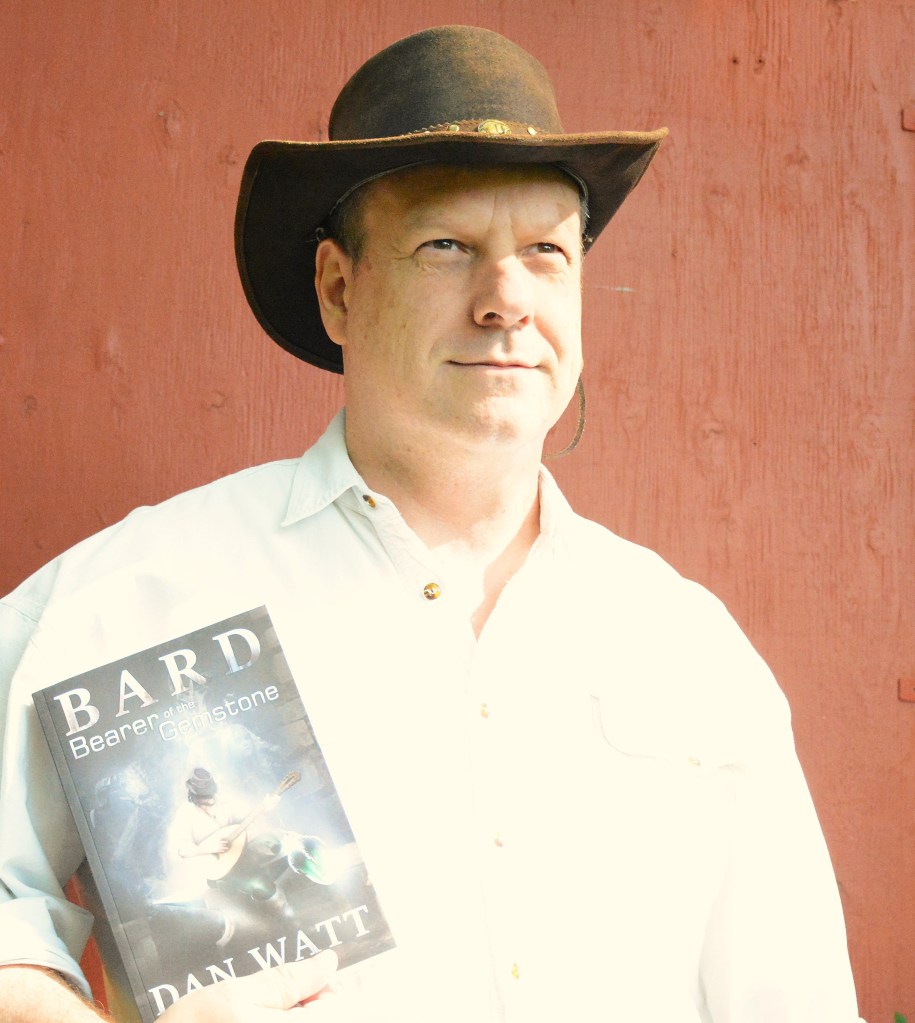
A1. I am a self-published author, personal fitness trainer, and English tutor with a BA from WLU double majoring in Anthropology and History.
Q2. What were the key challenges you faced while writing your book “BARD: Bearer of the Gemstone”?
A2. BARD, as it was originally called, was written over a number of decades. The pith of the story has always remained the same, however my style and knowledge has changed over the years. Re-working the story so it flows seamlessly has been the biggest challenge.
Q3. What books or authors have most influenced your own writing?
A3. The books and authors that have influenced me the most are J.R.R. Tolkien’s “The Hobbit”; Frank Herbert’s “Dune” series; Joe Haldeman’s “Forever War”; Timothy Zahn’s Star Wars “Heir to the Empire” trilogy (Admiral Thrawn); and William Stevenson’s “A Man Called Intrepid” (non-fiction).
Q4. What’s your favourite spot to visit in your own country? And what makes it so special to you?
A4. When I was younger my parents would take us to Mikisew Provincial Park where we could canoe all day and make new friends every summer.
Q5. What inspired you to write the book ‘BARD: Bearer of the Gemstone’?
A5. I was writing poetry in high school and decided I wanted to write a book. Dungeon and Dragons was very popular then but when I asked my one brother what I should write about he said nature. So I combined the two. However, like the Inuit carve out the image that already exists in the soapstone, BARD started dictating to me what to write.
Q6. How long did it take you to write your book ‘BARD: Bearer of the Gemstone’?
A6. The original book BARD, started more than thirty years ago. However, when I told a friend I was struggling to write a synopsis for the story she suggested I split the book in two. BARD: Bearer of the Gemstone is the first book.
Q7. On what platforms can readers buy your books?
A7. The book is published as an e-book and paperback on Amazon.
Q8. Tell us about the process of coming up with the book cover and the title ‘BARD: Bearer of the Gemstone’?
A8. For a while now I’ve been following https://fantasy-art-z.com/. She did two covers for me and I chose the one you see as the cover.
Q9. When writing a book how do you keep things fresh, for both your readers and also yourself?
A9. I like books that teach me something so there’s information on blacksmithing and lute making. However, to keep the story interesting the information is intertwined with the storyline. The river of emotions runs from fear to dark to humour.
Q10. What is the most valuable piece of advice you’ve been given about writing?
Q1. Hello, can you please introduce yourself? Readers would love to know more about you.
A1. Hi, my name is Carissa Taylor! I graduated from Huntington University with a double major in Film Production and film Studies, but I refer to it as a professional storytelling degree. When I was in elementary school I wanted to be an author and would constantly be coming up with new story ideas. I even got picked to read one of my stories over the loudspeaker to the entire school when I was in 3rd grade. In 5th grade I was asked to read one of my poems at one of our school-wide performances. I began writing poems more consistently when I was 13 years old.
Q2. What were the key challenges you faced while writing your book “Chronic: A Healing Journey through Poetry”?
A2. I have autism and ADHD. I didn’t realize how difficult it was for me to communicate my emotions until I started my healing journey. Most autistic people have something called alexithymia, which basically means you have trouble recognizing, expressing, and describing your emotions. A lot of my poems in the Before section I can tell I was holding back from my feelings. The poems in the Healing and After sections are a lot more vulnerable and I think I did a better job of feeling my emotions while I was writing the poems.
Q3. What books or authors have most influenced your own writing?
A3. My favorite author is John Green. My favorite books by him are Turtles All the Way Down and Looking for Alaska. I admire how he doesn’t shy away from the more uncomfortable and difficult topics of the human experience.
Q4. What’s your favorite spot to visit in your own country? And what makes it so special to you?
A4. I live in the United States of America. I would say that I really enjoy visiting theme parks or places that have roller coasters. I’m not too good at standing in lines anymore because I have chronic illnesses now, but I really do enjoy getting roller coasters when I’m able to. It’s the closest thing to thrill seeking on a safe level without having to do anything crazy. I have been skydiving, and that’s about as crazy as I’ll get with high adrenaline activities. I usually go to theme parks with friends or family, and I enjoy spending time with them.
Q5. What inspired you to write the book ‘Chronic: A Healing Journey through Poetry’?
A5. One day, in early 2024, I read my poem “Failure Mode” to my roommate and she encouraged me to publish a book of my poems. I already had a lot of material for it since I had been writing and posting poems since 2017, so I decided to self-publish a book of poetry and organize it into my healing journey. I got some advice about self-publishing, since I had never done it before, and I learned a lot. I’m hoping the process will be a lot easier for my next books.
Q6. How long did it take you to write your book ‘Chronic: A Healing Journey through Poetry’?
A6. I started a trend called “Poetry Wednesday” on my FaceBook page in 2017. In 2019 I started having major health complications and then began my healing journey in 2020 where I went to weekly therapy sessions. My poems range from the year 2017 all the way to July 2024. They’re organized into Before, Healing, and After, with the majority of the Before poems coming from my “Poetry Wednesday” posts. So this book took about eight years before it was finished.
Q7. On what platforms can readers buy your books?
A7. My book is currently available on Amazon.com in paperback. I’m hoping to come out with an ebook and a hardcover copy eventually.
Q8. Tell us about the process of coming up with the book cover and the title ‘Chronic: A Healing Journey through Poetry’?
A8. I drew a concept picture for the book cover with stick figures and shared it with one of my artist friends, who then drew the cover illustration. The cover picture is based on Ezekiel 37 “The Valley of Dry Bones” in the Bible. In that story the Lord tells Ezekiel to prophesy to the dry bones and tell them that He will make breath enter them and they will come to life. One of the things I wrote in my concept picture was “skeletal to eternal, dead to alive.” I feel like the cover art captured my journey from feeling dead to then feeling alive during my healing journey. The definition of Chronic means long-lasting and difficult to eradicate, and being chronically ill I definitely feel like the pain is long-lasting and difficult to eradicate. A Healing Journey through Poetry is basically describing how I healed over time throughout my poetry, and you can really tell that there’s a difference in my poems between the Before, Healing, and After sections.
Q9. When writing a book how do you keep things fresh, for both your readers and also yourself?
A9. That’s a good question. I started keeping journals in 2016 and I have a ton of journals that I keep in a giant storage container. (I still have a ton of empty journals that I need to use and constantly buy more to sit in the pile.) Whenever I get a new idea, or think of a phrase, I always write it down. (Sometimes I wake up in the middle of sleeping and write an idea down in my notes app before I forget. That has been a lifesaver because I usually don’t remember the idea by the time I wake up.) I tend to watch popular shows, movies, and listen to new music and that helps me come up with ideas and get inspired with my writing.
Q10. What is the most valuable piece of advice you’ve been given about writing?
A10. While I was taking screenwriting classes in college, I was constantly told to “write what you know.” I think I was afraid of writing about my experiences because I hadn’t processed them. Once I finished going through my healing journey I found it much easier to talk about everything I had gone through in my life, and it was a lot. I’m even working on writing a fantasy trilogy series, and the main plotline has to do with experiences I have personally gone through that weren’t necessarily the best. I think it’s important to write about your experiences, but not necessarily get lost in them. I think processing them through beforehand definitely helps with writing, especially if they were traumatic.
Q1. Hello, can you please introduce yourself? Readers would love to know more about you.
A1. My name is Jay Davis. I am a writer, producer, film maker, actor, and now author from Bellwood IL. I have been producing films since 2010. Comedy is my first love, but horror / thriller is a close second.
Q2. What were the key challenges you faced while writing your book “The Cornelian Dilemma”?
A2. I write screen plays which is much easier than writing a book. So the Cornelian Dilemma is from a screen play I wrote about 6 years ago that I haven’t had the opportunity to film yet. So that transition from screenplay to book was the biggest challenge for me.
Q3. What books or authors have most influenced your own writing?
A3. Stephen King
Q4 What’s your favourite spot to visit in your own country? And what makes it so special to you?
A4. I’m from Chicago, but I really enjoy California whenever I get the opportunity to go. The sun and the overall atmosphere. Plus I have a few friends who live there.
Q5. What inspired you to write the book ‘The Cornelian Dilemma’?
A5. I’ve always enjoyed the Creep Show series and I wanted to make my version of that.
Q6. How long did it take you to write your book ‘The Cornelian Dilemma’?
A6. It took by about a month and a half to write the original screenplay, and a month to convert it into a book.
Q7. On what platforms can readers buy your books?
A7. Amazon
Q8. Tell us about the process of coming up with the book cover and the title ‘The Cornelian Dilemma’?
A8. I had an Idea about one central evil enity and I let my graphic designer work his magic. After a few revisions we came up with what I feel is an eye catching cover.
Q9. When writing a book how do you keep things fresh, for both your readers and also yourself?
A9. make the subject matter relatable as possible.
Q10. What is the most valuable piece of advice you’ve been given about writing?
A10. Be patient. If an idea isn’t coming to you, stop writing, take sometime to reset your brain, and come back to it.
Q1. Hello, can you please introduce yourself? Readers would love to know more about you.
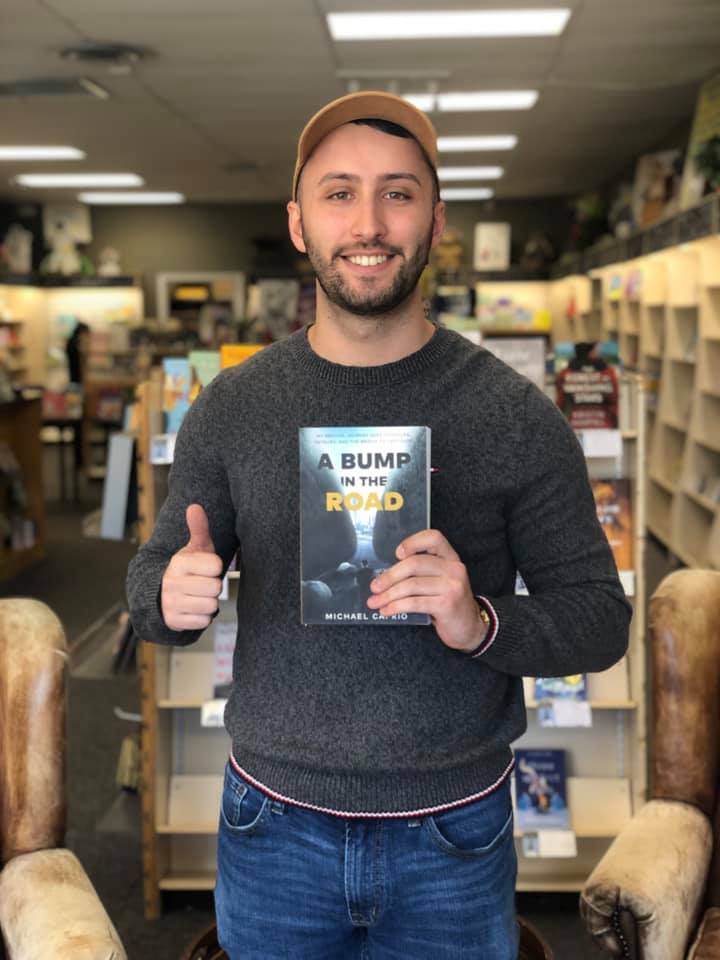
A1. Hello, my name is Michael Caprio and I’m from Hopatcong, New Jersey! When I was 18 years old, shortly after graduating high school, I was diagnosed with a rare genetic condition that runs in my family called Familial Adenomatous Polyposis. What that means is I have a gene in my body that doesn’t stop the growth of polyps, instead, they multiply. Polyps are precancerous growths that can grow anywhere in your digestive system and if left untreated can turn into cancer. With my condition, this occurs within the Large Intestine primarily but could occur elsewhere though it is less likely. With that being said the treatment plan for my condition is to have the entirety of my large intestine removed before the polyps turn cancerous.
Q2. What were the key challenges you faced while writing your book “A Bump in the Road”?
A2. Some challenges I faced when writing my book was deciding whether to include or omit moments that would be considered vulnerable or embarrassing. Considering the nature of my surgeries and my condition I was faced with a lot of those moments and not including them felt like a disservice to others out there going through the same thing behind closed doors. This is why in my book I decided to keep all of those moments in, no matter how shocking the subject matter might seem to show the real struggle of what happened behind closed doors. Another challenge I was faced with was the handling of my family’s medical history and sensitive medical information in general. I didn’t want to publish anything misleading or flat wrong, so I put a lot of effort into researching my family history with the disease as well as my family’s doctors who saved our lives. For some things that I wasn’t 100% sure about I had my surgeon double check to make sure it was accurate, just to give an idea of the lengths I went to make sure everything was accurate.
Q3. What books or authors have most influenced your own writing?
A3. I read a wide variety of books ranging from memoirs to science fiction so it is difficult for me to say one author or book in particular has influenced me but I can list a few of my favorite books for what it’s worth! Atomic Habits by James Clear, The Dune Series by Frank Herbert, Outlive by Peter Attia, and Meditations by Marcus Aurelius.
Q4. What’s your favourite spot to visit in your own country? And what makes it so special to you?
A4. As a person who was raised in the New York Metropolitan area, I love to visit places that are more south of me. One of my favorite places is Washington D.C., our nation’s capital. It’s a special place for many reasons but for me in particular it’s a place me and my family always vacationed to since it wasn’t that far and we could travel by car. It always brings back fond memories of going to Nationals baseball games and visiting all the historical sites with my family, which there is an endless supply of. We have been visiting for twenty years and we always find something new to do. Another special place to visit is Virginia/Virginia Beach for similar reasons, it was a place my family always vacationed to for most of my childhood and we still occasionally visit. The New York Metro area will always be home to me but it’s nice to go down south where the pace of life is a bit slower every once and a while.
Q5. What inspired you to write the book ‘A Bump in the Road’?
A5. It was a gradual process and many factors contributed to me writing the book but I think the biggest reason was to leave a legacy for my grandparents. That’s not to discount all the other reasons, including documenting my journey in great detail so that the other people with FAP or similar conditions out there can not feel alone and have a reference to look to since no one talks about these conditions in particular. However, I can’t deny that the biggest influence was my grandparents and my grandma in particular. She had devoted most of her life to being a guinea pig essentially so that my life could be easier and my journey was certainly much easier than hers. Her persistence and strength inspired me and still inspires me to this day and I wanted to share that with the world.
Q6. How long did it take you to write your book ‘A Bump in the Road’?
A6. Officially it took me about a year working with editors and my publisher but I had been writing my story many years prior on my laptop unofficially. Before I had the help of my publisher I had the idea that maybe one day this could become a reality and I didn’t want my memories to fade of how things transpired before, during, and after my surgeries. So I started to document my memories on Google documents hoping that one day I would meet someone who would be able to trim it up for me and give me the guidance I needed.
Q7. On what platforms can readers buy your books?
A7. My book can be found on all platforms including Amazon & Barnes & Noble!
Q8. Tell us about the process of coming up with the book cover and the title ‘A Bump in the Road’?
A8. For the book cover, I must give all credit to the lovely editing team at New Degree Press which is now called Manuscripts. They drafted up four or five versions of the cover and I chose which one I liked the most and we would keep doing revisions until we got it perfect. All I did was say “I like this” or “I don’t like that”. They did all the creative work on that and should get all the credit, it came out perfect in my opinion! As for the title, it came from a saying my dad used to repeat all the time during my surgeries and recoveries as a means to keep us all calm. He kept saying “It’s just a bump in the road, we’re going to get through this.” And it was just a bump in the road as life is all good now and so the name stuck.
Q9. When writing a book how do you keep things fresh, for both your readers and also yourself?
A9. Considering the subject matter of my book can get a bit dark without humor or moments of levity I decided to incorporate a fair amount of self-deprecating humor to keep things light. I also tried to include a lot of active metaphors to keep readers engaged and paint a more detailed picture of the events I was going through and the pain I was feeling. Also, I chose to incorporate some pop culture references from entertainment that I like to give the reader a better insight into me as a person.
Q10. What is the most valuable piece of advice you’ve been given about writing?
A10. To be fully transparent and leave it all out there, for better or worse. Writing at the end of the day boils down to having an opinion or a story to share about something. You can’t do that if you are afraid to be fully transparent and speak your mind or your truth. It won’t be authentic if you do otherwise and the reader will be able to tell. Don’t betray yourself and be authentic.
Q1. Hello, can you please introduce yourself? Readers would love to know more about you.
A1. I suppose I’ll start with my name, which is Pierre – although I was born Peter in Los Angeles. My family moved to Geneva, Switzerland when I was a toddler, where I became-and remained-Pierre. I moved back to the States in my late twenties and took on various jobs. None particularly intellectually challenging. I started to play chess fairly seriously. In 1975, I co-authored a book on chess openings. My publisher, knowing of my interest in math, asked me if I could write a book on, the then new-to-market, calculators. It did fairly well, picked up by some mathematical book clubs. I then approached McGraw Hill about publishing a book that would contain the major historical documents of the world. That idea came to me as the Watergate scandal was exploding and I wanted to read the U.S. Constitution for myself. The Internet wasn’t yet a thing and I couldn’t find the text in my (large) bookshelf. McGraw Hill immediately approved the project and that became my third book (although I am listed as Editor.) To help with my research, I needed to compile various databases. I built various personal computers from kits (ALTAIR, IMSAI, etc.) and immediately realized that I had to teach myself software programming. This got me sidetracked for decades! I eventually taught computer science at various universities. During these years, I also developed and patented new technologies for radio receivers that eventually became part of a U.S. national standard. But to be closer to my potential licensing clients (the big guys in Japan), I moved to Hong Kong, where I stayed for eleven years. Right after the start of the World Wide Web, I started a small website called the Classical MIDI Archives. Upon my return to the states in 1997, I moved to Silicon Valley, close to Stanford, and continued to develop the site which eventually became ClassicalArchives.com, one of the largest classical music sites in the world. As one of my passions is astrophysics and cosmology, I got involved with Stanford’s physics department. In my spare time, I try to visit as many labs and research centers as I can. This brought me to the deepest mines, the highest observatories and other fascinating locations around the world. I even spent time at the South Pole. Asteroid (32890) Schwob has been graciously named after me. I am one of longest serving member of the SETI Institute’s Board of Directors. Now that AWE: A technothriller (focused on climate change, AI, fake news, and international cooperation) is out, I am thinking of writing another novel, addressing the benefits and dangers of AI.
Q2. What were the key challenges you faced while writing your book “AWE: A technothriller”?
A2. As AWE is my first novel, I had to learn to “kill my children:” to remove characters, whole passages, even entire chapters. Serve the story. Another challenge was the immense amount of research I had to undertake. Particularly as the science and technology is so fast-moving in the areas the novel covers.
Q3. What books or authors have most influenced your own writing?
A3. A tough question as I read fairly voraciously. But my taste centers on science, foreign affairs, history (even older works like Edward Gibbon’s The Decline and Fall of the Roman Empire, Will and Ariel Durant’s The Story of Civilization), and thrillers. I can name Stephen Greenblatt’s The Swerve, Carl Sagan’s entire output, Stephen Weinberg’s The First Three Minutes, Lenny Susskind, Brian Greene, Sean Carroll, and many others. As to thrillers, I’ve read John Sandford’s Prey entire series twice(!), Daniel Sylva, Jason Matthews, and many others. Matthews’s Red Sparrow was an inspiration for my offering a playlist in my book (a classical music work to play at the beginning of each chapter), although that idea also sprang from an experience I had when I read a novel at fourteen while my gramophone was playing in the background–recounted on my website (www.prs.com).
Q4. What’s your favorite spot to visit in your own country? And what makes it so special to you?
A4. I am a Swiss/US dual citizen. I suppose that I have to mention Stanford University for its beautiful Romanesque campus and contagious intellectual ferment. Otherwise, I shouldn’t miss mentioning the Swiss Alps and their meadows. Gorgeous wild flowers in the spring and summer, and glorious snow in winter. (Learned to shoot down airplanes-on-a-wire from my troop carrier there, while in the Swiss Army.)
Q5. What inspired you to write the book ‘AWE: A technothriller’?
A5. While some will take offense, it was the deplorable response to COVID-19 from a previous administration, its reckless lack of interest in climate change, and the self-sabotaging China Initiative (thankfully ended but now rearing its ugly head again.)
Q6. How long did it take you to write your book ‘AWE: A technothriller’?
A6. About a year to write a complete draft. Another year to massage it into shape. And then three weeks to select and build the playlist, available on ClassicalArchives.com.
Q7. On what platforms can readers buy your books?
A7. Amazon, as a hardcover, paperback, or on Kindle–both in a flowing text, and as a print-replica. (The latter for those who wish to enjoy the author-selected fonts.) You can also find a link to Amazon’s AWE page on my website at http://www.prs.com, where readers can read more about the book, the playlist, contact me, or ask for a personalized signed bookplate.
Q8. Tell us about the process of coming up with the book cover and the title ‘AWE: A technothriller’?
A8. As the main themes of the book is climate change and rigorous science, I wanted the cover to be simple and direct. I selected an image of the Earth taken by a NOAA satellite. The title is an acronym for “Artificial Wisdom Engine” – an AI which becomes one of the novel’s protagonists.
Q9. When writing a book how do you keep things fresh, for both your readers and also yourself?
A9. I’ve never given a thought to this. The creative endeavor never seems to get stale. I find that developing a plot is very much like playing chess, when you have to think ahead many moves, offering hints that presage the action to come. The key is to continuously place unexpected obstacles that the protagonists must overcome. I get a lot of help from my characters as they evolve. As most authors will tell you, they do take a life of their own. And their personalities, likes and dislikes, strengths and weaknesses, particularly their sense of humor (when they have one), help keep things interesting.
Q10. What is the most valuable piece of advice you’ve been given about writing?
A10. I’ll repeat what I said earlier: learn to “kill your children!”
Q1. Hello, can you please introduce yourself? Readers would love to know more about you.
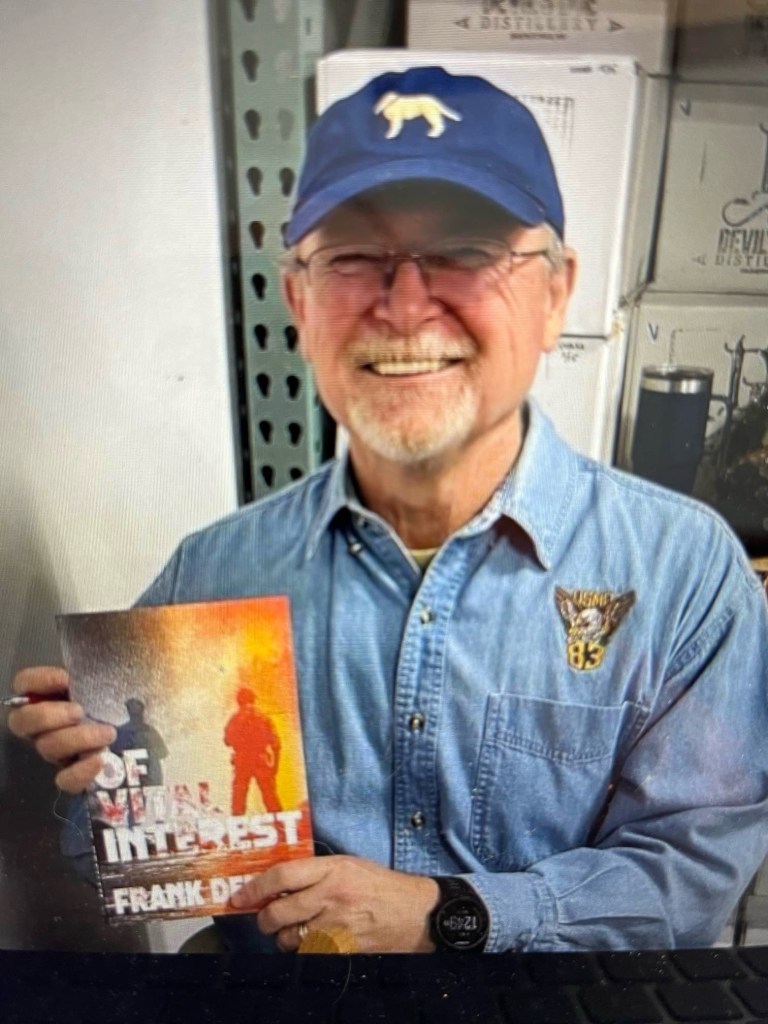
A1. My name is Frank Demith. I am an Army veteran having served twenty-eight years on active duty. I am also a 1983 graduate of the United States Military Academy. I currently live in Martinsburg, WV.
Q2. What were the key challenges you faced while writing your book “Of Vital Interest”?
A2. I wanted to make sure to make my book something that anyone could enjoy. That meant that I would have to add some detail about what was happening and limit the use of acronyms. I also wanted to make sure to include some strong secondary characters in addition to the main characters. There are many different story lines in the book, but I thought they were essential in telling the story and letting the readers have a deeper understanding of what our men and women in the Armed Forces go through when they deploy to a foreign country,
Q3. What books or authors have most influenced your own writing?
A3. I enjoy reading all books but am mostly interested in the classics and modern suspense/thrillers. My favorite authors have been Dickens, Tolstoy, Tom Clancy, Vince Flynn and Harold Coyle.
Q4. What’s your favourite spot to visit in your own country? And what makes it so special to you?
A4. That would have to be my Alma Mater, the United States Military Academy. It is packed with history and amazing views. I will always feel indebted to this institution for allowing me to become the person I am today. It was an amazing experience which has resulted in a wonderful life.
Q5. What inspired you to write the book ‘Of Vital Interest’?
A5. I wanted to share stories of the amazing people I had a chance to work with while in the Army. Each character in the book is a compilation of several individuals I came across while serving in the Army. Not much had been written about the contributions of immigrants to the war effort so I wrote this book for the more than 1500 individuals who joined the Army to serve as interpreter/translators.
Q6. How long did it take you to write your book ‘Of Vital Interest’?
A6. I wrote this book in 90 days.
Q7. On what platforms can readers buy your books?
A7. My book is available through a number of online sources to include: Barnes and Noble; Amazon; Target; Walmart and dozens of other utlets. Individuals who would like a signed copy can contact me through my website at http://www.frankdemithauthor.com
Q8. Tell us about the process of coming up with the book cover and the title ‘Of Vital Interest’?
A8. The title is taken from another program which also recruited individuals for their language and cultural expertise. That program was called Military Accessions Vital to National Interest. The book cover is my way of illustrating the conflict between the two main characters and highlighting the fact that there are different shades of reality in war depending upon an individual’s perspective but the one commonality is bloodshed.
Q9. When writing a book how do you keep things fresh, for both your readers and also yourself?
A9. I am a very structured writer. I spend several weeks developing an outline that covers main points for each chapter, and then I do short character sketches. That keeps me focused on writing and allows me to move through the storyline without leaving things out. I also like to use foreshadowing as I write to give the readers that “Oh yah” momement when they realize something had been said earlier about that topic.
Q10. What is the most valuable piece of advice you’ve been given about writing?
A10. That would be “write what you know”. It sounds so simple but it is so important for me. I enjoy writing fact based fiction, and I’m not really making things up, I am telling stories. Hopefully they willl continue to be stories that others can enjoy.



 Sassy Reviews