Interview with author Miriam Greenberg

Q1. Hello, can you please introduce yourself? Readers would love to know more about you.
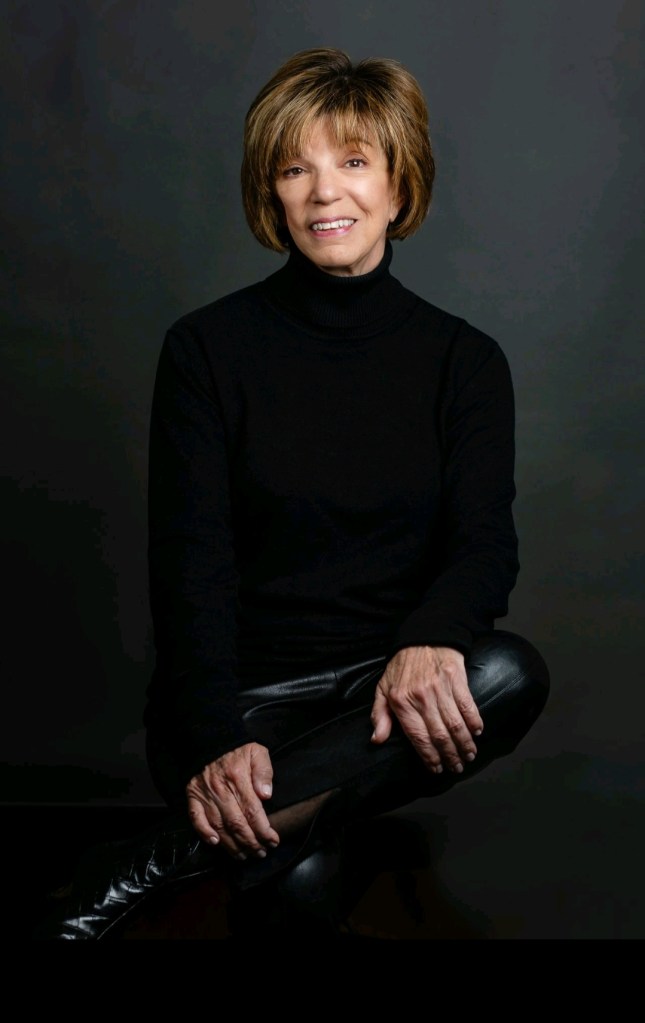
A1: Hi, I’m Mimi—short for Miriam. Born in Hartford, CT, and raised in the heart of West Hartford, I haven’t ventured far from my roots. My parents were proud descendants of Russian and Polish Jewish immigrants, and our neighborhood was a close-knit, predominantly Jewish community. It wasn’t until high school, when I was bussed across town that I encountered classmates who weren’t part of this shared culture. It was an eye-opening experience that shaped my perspective on the world.

Growing up, I worked alongside my siblings in my father’s manufacturing company. While my brothers were groomed to take the reins, my path differed. My family hoped I’d find a nice Jewish boy from a well-to-do family, settle down, and start a family. Spoiler alert: life had other plans for me.

Fast forward about 50 years, and here I am, happily nestled in my home, surrounded by the chaos and joy of my dogs, cats, and the ever-changing beauty of nature. Cooking and entertaining are my love languages, though my “guests” these days are often my daughter’s lively circle of friends. Young people are fascinating—I adore hearing their stories, sharing a laugh, and basking in their energy. It’s a mutually beneficial setup: they keep me entertained, and I make sure they’re well-fed. It’s a win-win!

Q2. What were the key challenges you faced while writing your book “If I Had Nuts, I’d Have Dates”?

A2: “If I Had Nuts, I’d Have Dates” is a hybrid memoir that weaves humor and heart into the story of my unexpected foray into online dating at the onset of the COVID-19 pandemic. Alone as the world shut down, I turned to the virtual world, curious to see what connections I might forge when bars and restaurants were no longer an option. It began as a playful experiment—a safe form of socialization—and soon evolved into a blog chronicling my encounters. The blog became the foundation of this book, a tapestry of online interactions interwoven with what I call “memoirettes”—vivid, reflective anecdotes from my past that often shed light on why I responded to certain men as I did. These glimpses into my history reveal the experiences, relationships, and missteps that shaped my perspective. Many of these stories involve real people and places, and I often worry about the fine line between humor and harm. While the imperfections of others may have been fertile ground for comedy, I was mindful of the impact my words could have. What felt funny or ironic to me might not land the same way for someone else, and my intention was never to wound but to explore, connect, and laugh at the human condition—including my own.

Q3. What books or authors have most influenced your own writing?

A3: My favorite author is Nora Ephron, whose wit and candor have always resonated with me. Her book I Feel Bad About My Neck captures a humor that feels like home—a perfect blend of self-deprecation and insight. Ephron had a gift for transforming life’s hardships into comedy, reminding us that even our darkest moments can be softened by laughter. That philosophy inspired my own writing. Yes, I began with the hope of finding a connection, but even when that hope fell short, I walked away enriched—with a collection of hilarious stories and unexpected, fascinating experiences.

Q4. What’s your favourite spot to visit in your own country? And what makes it so special to you?

A4: Although I don’t go very often now that I’m older, when my daughter, Elizabeth, was growing up, her passion was horses. Every year, we’d go to a different dude ranch and ride. She was the quintessential barn rat. She still rides. My favorite was HF Bar Ranch in Wyoming. The mountains are beautiful; the views, breathtaking. I told Elizabeth to go there when I die and spread my ashes among the trees. It’s so peaceful. Hopefully she’ll know enough not to stand downwind.

Q5. What inspired you to write the book ‘If I Had Nuts, I’d Have Dates’?

A5: While navigating the unpredictable world of online dating, I chronicled my adventures in a blog, The Time of Corona (www.thetimeofcorona.blog). The peculiar blend of humor and absurdity caught the attention of my writer friends, who urged me to transform it into a book. Inspired by their encouragement, I embraced the challenge—and thus, a memoir was born.

Q6. How long did it take you to write your book ‘If I Had Nuts, I’d Have Dates’?

A6: I began the blog in 2020 and embarked on the book in 2023. Along the way, I enlisted an editor who encouraged the inclusion of “memoirettes,” enriching the narrative with vignettes from my life. Though the journey spanned four years, it was far from continuous, marked instead by moments of inspiration, reflection, and deliberate pauses.

Q7. On what platforms can readers buy your books?

A7: This is a sample of what the cover “may” look like. The artist used a chapter title rather than the one I plan to use.

Q8. Tell us about the process of coming up with the book cover and the title ‘If I Had Nuts, I’d Have Dates’?

A8: My mother had a favorite joke she loved to tell—a playful pun that always left her laughing. It went like this: A woman approaches a fruit vendor and asks, “Do you have nuts?” He shakes his head and replies, “No.” So, she asks, “Do you have dates?” To which he answers, “If I had nuts, I’d have dates.” My mother found it endlessly amusing. For me, the joke resonated on a different level. Growing up female, the unspoken rules of courtship seemed equally laughable, though far less funny. My mother often reminded me that “nice girls didn’t call boys,” which meant I was expected to wait—an interminable, frustrating patience that often felt like a game rigged against me. Years later, at a few class reunions, I discovered an ironic twist: plenty of boys I’d secretly admired had wanted to ask me out but were too intimidated to try. I’ll never understand why. I liked some of them, too, but the silent rules of our generation—rules that dictated waiting instead of acting—kept us all in a strange, unspoken stalemate. Even now, that ingrained hesitancy lingers like an echo of a long-ago joke, one I can’t quite bring myself to laugh at.

Q9. When writing a book how do you keep things fresh, for both your readers and also yourself?

A9: I aim to weave a tapestry of diverse scenarios and experiences to captivate the reader, ensuring the narrative remains vibrant and engaging. Introducing new characters who bring depth and color to the story alongside intriguing and surprising settings keeps the momentum alive. For this book, crafting a cast of varied personalities came naturally—after all, online dating offers an endless parade of men, each with their own quirks and stories. Every encounter becomes a fresh adventure, and as long as the people are compelling or the situations unique, the reader is drawn in, eager to see what comes next.

Q10. What is the most valuable piece of advice you’ve been given about writing?

A10: The principle of “show, don’t tell” encourages writers to engage readers by creating vivid scenes and sensory experiences rather than simply stating facts or summarizing events. By showing, readers can interpret emotions, understand character motivations, and immerse themselves in the story’s world through their imagination. Hook them in, then keep them interested!


DARK MATTER: The Order of the Hidden Cross

𝗕𝗼𝗼𝗸: DARK MATTER: The Order of the Hidden Cross 📚
𝗔𝘂𝘁𝗵𝗼𝗿: Ian Bayly ✍️
.
.

🚀 𝐑𝐞𝐯𝐢𝐞𝐰:
“DARK MATTER: The Order of the Hidden Cross” by Ian Bayly is an enthralling tale filled with mystery and suspense. The protagonist, Joshua Carpenter, enters the world under extraordinary circumstances—his mother, Zivah, gives birth to him on the roadside. From the moment he is born, Joshua’s life is marked by the unusual, including the appearance of grotesque dark beings, one of whom is named Malleck.

Joshua has the ability to communicate with these shadowy forces. At the age of five, he reveals to his mother that Malleck came to see him on his birth—a revelation that baffles Zivah, as she has no memory of such events. Joshua’s insights and abilities make him a pivotal figure, connecting ancient, forgotten knowledge to an uncertain and chaotic future. The question remains: how will he navigate the battle between light and darkness?

The novel is a masterclass in atmospheric storytelling. The chilling backdrop and vivid descriptions pull readers into a world teetering on the edge of peril. Ian Bayly’s descriptive prose and seamless narration maintain an engaging pace throughout, ensuring there’s never a dull moment. The intricately crafted world-building adds depth, making this book an unforgettable read. Bayly’s craftsmanship truly shines in this exceptional work.

  • 𝗠𝘆 𝗥𝗮𝘁𝗶𝗻𝗴: 5/5

★ Book Is Available On Amazon

Interview with author Jordan E. Kristofer

Q1. Hello, can you please introduce yourself? Readers would love to know more about you.

A1. Hi, I’m Jordan E. Kristofer. I’m a new pulp fantasy author, though I’ve been writing for a long time.

Q2. What were the key challenges you faced while writing your book “Paladin of the State: Origins”?

A2. Getting to a final product that I was happy with. I made a lot of edits before I wound up with a draft that I said, “Yeah, this is good.”

Q3. What books or authors have most influenced your own writing?

A3. Henry James and Robert E. Howard. I like the Gilded Age writing style of Henry James, as well as his insights into his characters’ minds; and I like Robert E. Howard’s action and sort of utilitarian style of writing. With both, nothing is wasted, and I’ve tried to emulate my style in that way.

In terms of content, I’d say few books really influenced me in what I actually write; it was actually the movies I grew up with that did that: Star Wars, Errol Flynn’s Robin Hood, Zorro, as well as many 1950’s-era sci-fi movies. There were things that influenced me in writing “Paladin of the State,” but that’s for a different question.

Q4. What’s your favourite spot to visit in your own country? And what makes it so special to you?

A4. The US is a huge nation, and I admit I’ve not seen much of it. That being said, there are two locations I like to go to to think about things or clear my head: my backyard and the local park. I live on the water, and my dock overlooks a marsh; it’s serene, and it helps me clear my mind of issues and worries. The local park isn’t far from my house, and I’ll walk around it for a couple hours to exercise my body and my mind. Sometimes, if I’m stuck on an issue — writing or otherwise — I’ll head to the park and walk around it for a while, thinking. Generally, the fresh air is a huge help.

Q5. What inspired you to write the book ‘Paladin of the State: Origins’?

A5. Multiple things. I had a world in which Pel existed long before I came up with him. The character of Pel was largely based off of Father Mulcahey in MASH. He was originally a priest who had a military background. Then, I found the Merkabah Rider series by Edward M. Erdelac, and that really got me thinking about a more holy warrior-type Pel. Solomon Kane also influenced the character, but not a whole lot. The paladins existed, but I wondered what one would look like if he were to work for the government and not the Order. That generated some circumstances in which such a paladin would occur.

Dzokaya was based on an older character I had made years before; her name is a feminization of the original character’s name.

When it comes to the plot, I’m not sure where I came up with it; it sort of just appeared in my consciousness. Certain events were inspired by real world things which the astute will notice.

Q6. How long did it take you to write your book ‘Paladin of the State: Origins’?

A6. From inception to clickable link, about 2 years. When it came to actual work, it took significantly less time, maybe a year or less. It was mostly written when I had free time from work. Then, last year, I started working on other projects, which didn’t pan out. I was able to write the last half of the novel in about a month or 2, and editing took at least that long — a lot of late nights editing.

Q7. On what platforms can readers buy your books?

A7. Currently, it’s only available on Amazon; Kindle, paperback, and hardcover versions are available.

Q8. Tell us about the process of coming up with the book cover and the title ‘Paladin of the State: Origins’?

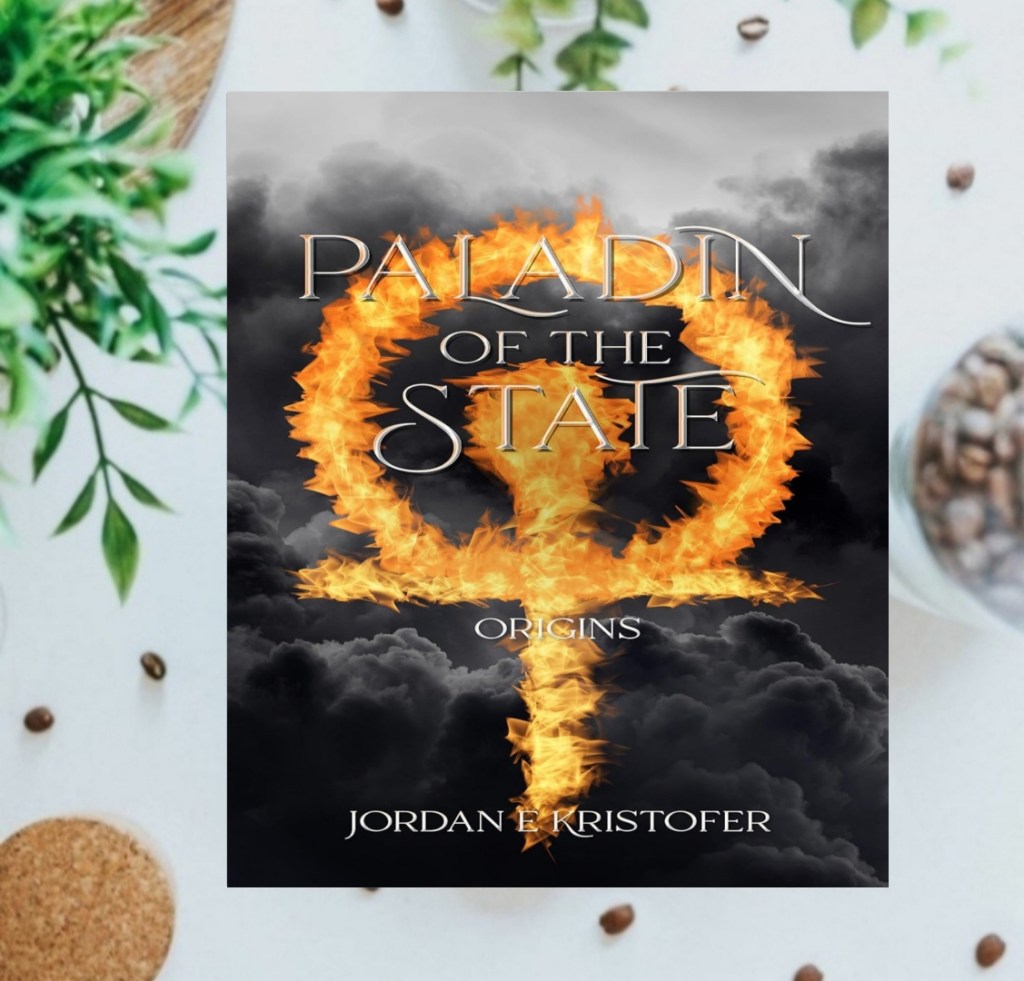
A8. The cover was easier to come up with than the title, to be honest. The symbol on the front is central to the paladins of Cormoria; it is the symbol of Qia Mora, their goddess, which is explained in a description in the beginning of the book. To put it on fire, well, that was to emphasize the paladins’ fire-based abilities. The smoke is a reference to the main villain of the story, which is the shid.

With the title, I spent a long time — a few months — trying to come up with it, and I’m not sure I’m truly happy with it. However, I’ll tell you how I came up with it anyway. Spoilers, but at the end of the novel, Pel winds up working for the Riahlish government. In the US, the government is sometimes referred to as “the State.” That led me to the phrase “ward of the state”; but Pel wasn’t a ward, he was a warden, which led me to “warden of the state.” However, I wasn’t happy with how close it was to the original phrase. Pel is a paladin, so I replaced “warden” with “paladin” to come up with “Paladin of the State.” Although, I knew “Paladin of the State” would refer to the series, not a singular book. I attached “Origins” because it is the origin story of two characters, those being Pel and Dzokaya.

Q9. When writing a book how do you keep things fresh, for both your readers and also yourself?

A9. I’m a little too green to talk about keeping things fresh, but I will say that, when it comes to this series, the types of shiden and situations and how they’re vanquished — varying those — would theoretically keep the stories fresh. Freshness is only so important; many readers come to a series because they like how the main character deals with similar situations in different ways. The protagonist in one story faces an enemy and defeats it in this way; in another story, the protagonist faces another enemy — perhaps similar to the first — but handles it differently, or perhaps the protagonist can’t handle it and he barely gets away with his life, which leaves it open for another/different story. As a writer, you basically mess with variables of a story like an equation — different values to these variables produce different products; perhaps you add a new variable, or take one away, which changes the product (by product, I mean of an equation, not an item to be sold).

Q10. What is the most valuable piece of advice you’ve been given about writing?

A10. I can’t remember where I heard it, but someone said, “Write like no one’s watching.” If you’re like me, you worry about getting it right the first time, but getting it right the first time is nigh impossible. This fact causes hesitation to write, sometimes paralyzingly so, and barely any writing, if any at all, gets done. It’s a sort of stage fright that live performers and athletes get, I’d say: performance anxiety. But when you hunker down and realize there’s no one watching you except God, and He doesn’t care if it’s perfect, the writing gets done, and it flows. The first draft is always just that — the first draft. It can be changed and altered. It’s when it’s published in hard-copy that the urge to change it and edit it suddenly comes back, and you have to say, “No. It’s done. Move on.” Even when you’re absolutely sure the final manuscript is the best version of itself, there’s always doubt and a desire to change it; a writer must fight it, and let the story be.

One word of advice for fiction writers, especially those writing a series, is to stick to canon. If it’s printed, it’s canon; don’t change it. Adhere to it. I vehemently despise retcons, and I work very hard to make sure I don’t do them or need to do them. A world bible comes in handy here.

Buy Paladin of the State: Origins on Amazon

Paladin of the State: Origins

𝗕𝗼𝗼𝗸: Paladin of the State: Origins 📚
𝗔𝘂𝘁𝗵𝗼𝗿: Jordan E. Kristofer ✍️
.
.

🚀 𝐑𝐞𝐯𝐢𝐞𝐰:
“Paladin of the State: Origins” by Jordan E. Kristofer is a captivating novel that transports readers to the storm-stricken city of Geth Rell, where intrigue and mystery lurk around every corner. For four days, the relentless storm has cast a shadow over the city, setting the stage for an unforgettable tale.

Amidst the tempest, a mysterious horned vedzryyf’len named Dzokaya seeks refuge in a local tavern. Her presence catches the attention of Pel, a curious priest, who is startled when she reveals her horns. Finding comfort in his company, Dzokaya confides in Pel about her quest for justice—she is determined to uncover the identity of her parents’ killer. Though she aims to stay under the radar in Geth Rell, her mission demands that she engage with its inhabitants. Intrigued and eager to unravel the truth, Pel offers his assistance, driven by his own desire to understand the cause of the unyielding storm.

Together, they embark on a journey filled with danger and revelations. What secrets will they uncover as their paths intertwine?

With an engaging narrative and a vivid cover that immediately draws the eye, this book keeps readers hooked from start to finish. The author’s writing style seamlessly blends action, emotion, and mystery, making it an enthralling read. If you’re seeking a story that will keep you turning pages, don’t hesitate to pick up this book!

  • 𝗠𝘆 𝗥𝗮𝘁𝗶𝗻𝗴: 5/5

★ Book Is Available On Amazon

Better Sex Better Life Better Man

𝗕𝗼𝗼𝗸: Better Sex Better Life Better Man 📚
𝗔𝘂𝘁𝗵𝗼𝗿: Steven Campbell ✍️
.
.

🚀 𝐑𝐞𝐯𝐢𝐞𝐰:
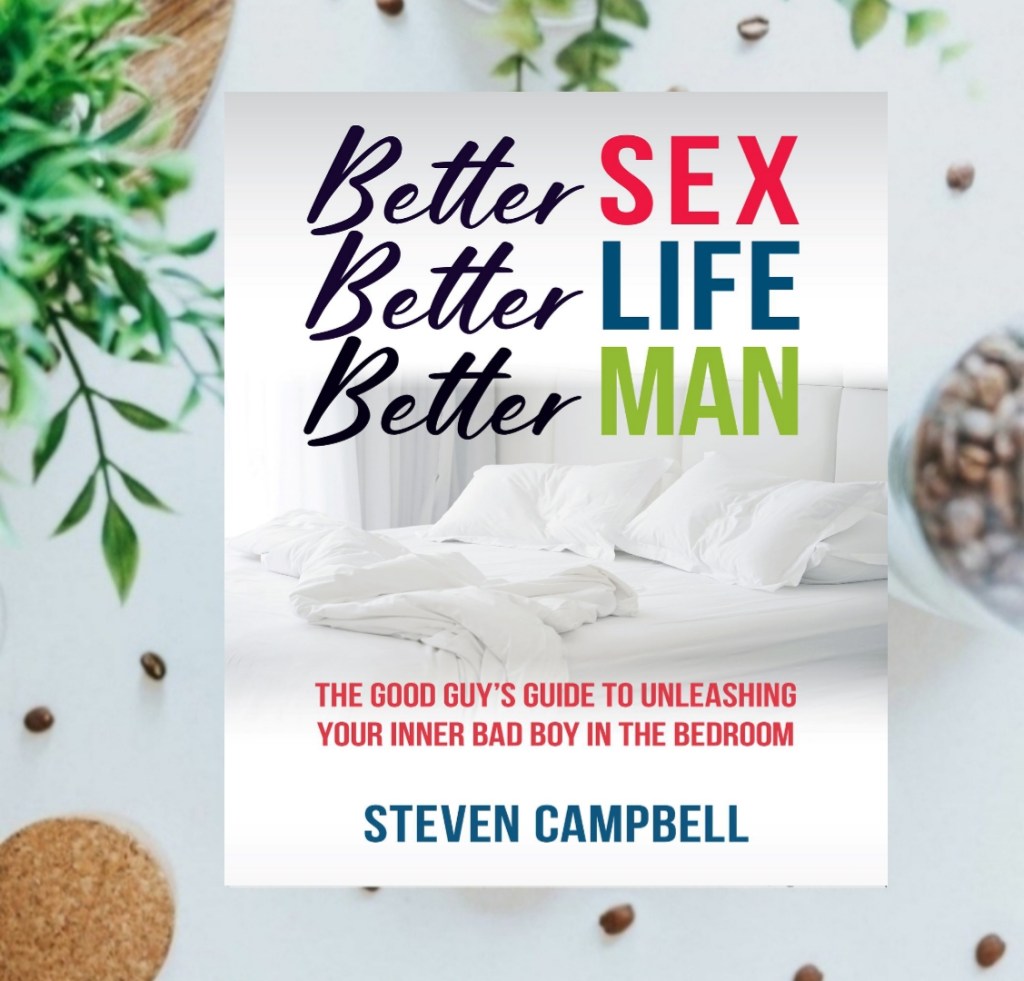
This book offers a fresh perspective on breaking societal norms that often hinder women from fully embracing their sexual potential. The author shares practical traits and strategies men can adopt to strike the balance between confidence and charm. Steven emphasizes the importance of leading with genuine knowledge, taking decisive action, being assertive yet respectful, being masterful in bed, and exuding boldness and authenticity.

The book also delves into personal presentation, encouraging men to invest in their appearance and develop a style that highlights their best features. According to Steven, projecting confidence and maintaining good manners are key to embodying the ideal “gentleman bad boy” persona.

Campbell further explores the art of seduction, guiding men to create a deeper connection with their partners and make them feel genuinely desired. This guidebook is highly recommended for men looking to prioritize their partner’s pleasure and build more fulfilling relationships.

Both men and women will find value in this thought-provoking read, as it fosters a better understanding of intimacy and mutual satisfaction. With actionable insights, this book equips readers with the tools to nurture stronger connections and prioritize their partner’s happiness in the bedroom and beyond.

  • 𝗠𝘆 𝗥𝗮𝘁𝗶𝗻𝗴: 5/5

★ Book Is Available On Amazon

Interview with author Craig A. Cooper

Q1. Hello, can you please introduce yourself? Readers would love to know more about you.

A1. Hi Craig A. Cooper author of “Road Rager’s Anonymous” and “Life Adrift” I grew up in a small village about 45 minutes North-east of Calgary Canada 🇨🇦  it was great we (siblings and friends) would go on tons of adventures. We built forts, homemade motor bikes, go karts and everything else you can imagine. My childhood was pretty cools.

Q2. What were the key challenges you faced while writing your book “Life Adrift”?

A2. I was stuck with the middle content. For example why was Zack Kold held captive. I couldn’t figure it out for the life of me. Years went by as it sat on the shelf till one day in the shower it just hit me. Then I was off to the races.

Q3. What books or authors have most influenced your own writing?

A3. C.S. Lewis and Randy Wayne White

Q4. What’s your favourite spot to visit in your own country? And what makes it so special to you?

A4. I love going to Spanish Banks. A beach in Vancouver and minutes from home. We stay all day and then watch the sunset.

Q5. What inspired you to write the book ‘Life Adrift’?

A5. I wanted to go on an Adventure with a friend and like the book my friend chickened out. So it was kind of based on reality until all hell breaks loose.

Q6. How long did it take you to write your book ‘Life Adrift’?

A6. Well that’s complicated. 20 plus years. I would start then stop like something I wrote then throw it away. Got stuck on the middle. I really got intrted in 2023 One morning I opened my laptop and opened the file read what I wrote scrapped some of it. Then really went for it beginning to end in 6 months.

Q7. On what platforms can readers buy your books?

A7. Right now its available on my website through a link. Cooper-author.ca or through Amazon.

Q8. Tell us about the process of coming up with the book cover and the title ‘Life Adrift’?

A8. It’s the second version of the cover. The first version is of the setting sun taken from Spanish Banks with a cargo ship at anchor. There’s only 10 of those proffs. The current cover I came up with this because I felt it portrayed more of the island feel that Zack finds himself in.

Q9. When writing a book how do you keep things fresh, for both your readers and also yourself?

A9. Ooh that’s tough, if I feel like something is dragging out. I stop re read it. Throw something out or create a spontaneous situation.

Q10. What is the most valuable piece of advice you’ve been given about writing?

A10. To not give up. That if you enjoy doing it then learn write, read, re-read write re-read but don’t give up. Also learn to hear no a lot. I must have gotten a hundred rejection emails while looking for an agent. Simply don’t give up.

Life Adrift on Amazon

Interview with author J.J. Doe

Q1. Hello, can you please introduce yourself? Readers would love to know more about you.

J.J. Doe was born into a hardworking Midwestern family during a time when children were sent outdoors after breakfast to roam freely until lunch—or dinner, depending on which mom on the block was serving lunch to the neighborhood gang that day. After family dinner and cleanup, we’d be back outside until the streetlights came on. Summers were even more adventurous: we slept in tents in the backyard and spent our nights exploring. No one worried about anything bad happening because we lived in a tight-knit community steeped in the American way—morning Pledge of Allegiance, prayer before meals and bedtime, and church every Sunday.

These formative years sparked my fascination with the true adventure of living and the profound responsibility that comes with freedom. I’ve spent my life pushing the boundaries of individual freedom while striving to be inclusive and respectful of the many elements it takes to succeed, lift others along the way, and embrace life in all its forms—the good, the bad, the beautiful, and the ugly.

Q2. What were the key challenges you faced while writing your book “And Then You Were There”?

The most difficult aspect of writing And Then You Were There was confronting the emotions that surfaced as I reviewed and edited the poems for the book. I had to calm myself and come to terms with the fact that the events which inspired these poems were an essential part of my life journey—unavoidable and absolutely necessary. Facing truths, accepting what is, and moving forward with dignity are what truly define us.

Q3. What books or authors have most influenced your own writing?

Charles Dickens, Mark Twain, and William Faulkner are the authors who have influenced me the most. Additionally, music lyrics have had a profound impact on my personal philosophy, particularly those of Chris Cornell, Pete Townshend, and Bob Dylan.

Q4. What’s your favourite spot to visit in your own country? And what makes it so special to you?

I love spending time in the mountains of Utah, United States, especially Little Cottonwood Canyon. The skiing is exceptional thanks to the incredible snowfall, and the views are unparalleled—truly hard to beat anywhere else.

Q5. What inspired you to write the book ‘And Then You Were There’?

A5. Love was my ultimate inspiration!

Q6. How long did it take you to write your book ‘And Then You Were There’?

A6. Each of the poems was written over the course of 12 months. After that, it took a couple of months to decide to publish them and to write the Dedication, Foreword, and Conclusion.

Q7. On what platforms can readers buy your books?

Readers can purchase our books on Amazon, our publisher’s bookstore, Barnes & Noble, and Indigo.ca.

Q8. Tell us about the process of coming up with the book cover and the title ‘And Then You Were There’?

I’m blessed to live on a beautiful lake where I spend much of my time during the summer months. The cover photo was taken during an evening boat ride, a time when I often capture the natural wonders around me—like the majestic, lifelong partnerships of swans. The title And Then You Were There felt perfect because I realized I hadn’t truly been living until she came into my life.

Q9. When writing a book how do you keep things fresh, for both your readers and also yourself?

I try to write whenever inspiration strikes, which happens quite regularly. Since I primarily write poetry, I focus on capturing the emotions I’m experiencing in the moment. Readers often find personal meaning in my work because J.J. Doe puts into words what many people deeply feel and believe but struggle to express themselves.

Q10. What is the most valuable piece of advice you’ve been given about writing?

Q10. Write from your heart, write what you know, and write often.

Life Adrift

𝗕𝗼𝗼𝗸: Life Adrift 📚
𝗔𝘂𝘁𝗵𝗼𝗿: Craig A. Cooper ✍️
.
.

🚀 𝐑𝐞𝐯𝐢𝐞𝐰:
Life Adrift by Craig A. Cooper is a compelling tale of adventure and danger. The protagonist, Zack Kold, dreams of exploring the world. He convinces his best friend, Mike, to join him on the journey. However, Mike backs out at the last minute, fearing the risks of abandoning everything to venture into the unknown. Left to travel solo, Zack embarks on a hitchhiking journey that quickly takes a dark turn.

Early in his travels, Zack meets a man named Ghram, who warns him about the dangers of trusting strangers and the perils of his plan. Zack mentions his stay at an Airbnb in a place ominously called Blood Alley. Ghram cautions him about the area’s sinister reputation, where tourists have been known to disappear. Meanwhile, Zack’s friend Francine becomes alarmed upon learning about his precarious situation. Urging Mike to take action, she convinces him to fly out and ensure Zack’s safety.

As the plot thickens, Zack finds himself captured and forced to work on a remote island, constructing a road to connect a village outpost to an airfield. His initial attempt at escape fails, and the suspense builds: will Zack ever find his way back home?

This riveting narrative, with its interwoven subplots and unpredictable twists, kept me hooked from start to finish. The story sheds light on the dangers of venturing into unfamiliar territories and the challenges of survival. Craig A. Cooper’s masterful storytelling has left me eager to explore more of his works in the future.

  • 𝗠𝘆 𝗥𝗮𝘁𝗶𝗻𝗴: 4.5/5

★ Book Is Available On Amazon

Under the Family Tree

𝗕𝗼𝗼𝗸: Under the Family Tree 📚
𝗔𝘂𝘁𝗵𝗼𝗿: Gary Feinstein ✍️
.
.

🚀 𝐑𝐞𝐯𝐢𝐞𝐰:
“Under the Family Tree” by Gary Feinstein is a captivating Teen & Young Adult Fiction novel. The story follows Dakota Lodi, a high school sophomore navigating a turbulent family history. With her single mother serving a four-year sentence at the Ohio Reformatory for Women, Dakota moves in with her grandmother, Lucinda, in Zionsville.

Determined to uncover the truth about her father, Dakota begins questioning the conflicting stories her mother shared over the years. With the support of her best friend, Rosario Peña, aka Rosie, she embarks on a journey to uncover her roots. However, her quest hits a snag when Lucinda refuses to support a DNA test. Undeterred, Dakota starts piecing together clues, including leads involving her mother’s friend Anika Powers and her possible father Jimmy Ray Coleman.

This book masterfully weaves family secrets and teenage resilience into a gripping narrative. Feinstein’s engaging writing, coupled with a fast-paced plot and well-developed characters, keeps readers hooked from start to finish. The title perfectly encapsulates the essence of the story, and the eye-catching cover adds to its charm. If you’re a fan of stories packed with emotion, intrigue, and self-discovery, this one is a must-read!

  • 𝗠𝘆 𝗥𝗮𝘁𝗶𝗻𝗴: 5/5

★ Book Is Available On Amazon

Ancestral Wisdom for Modern Healing

𝗕𝗼𝗼𝗸: Ancestral Wisdom for Modern Healing 📚
𝗔𝘂𝘁𝗵𝗼𝗿: Tracy Houle ✍️
.
.

🚀 𝐑𝐞𝐯𝐢𝐞𝐰:
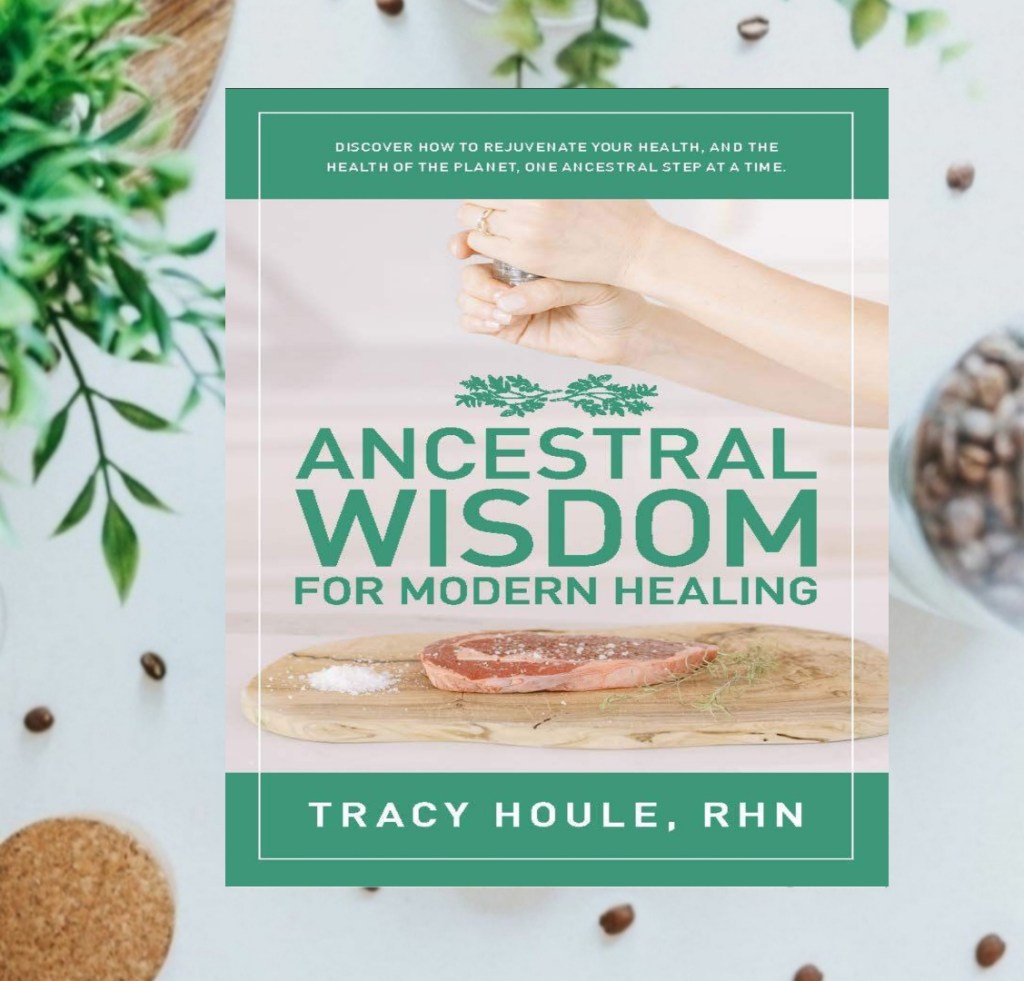
This year, I made a commitment to prioritize my health by adopting better eating habits, and Tracy Houle’s Ancestral Wisdom for Modern Healing has been a game-changer for me. It’s reassuring to know that improving our well-being doesn’t require a large budget—just intentional choices.

The author encourages us to value our health above fleeting indulgences, often requiring us to make mindful decisions in social settings. Her practical advice on using nutrition to protect and enhance our health is invaluable. Simple changes, like being more selective with the food we buy, can have a profound impact on our overall well-being.

I highly recommend keeping this book within reach, as it serves as a constant source of inspiration to make healthier choices. The ancestral insights shared in its pages have completely reshaped my approach to food and wellness. Tracy Houle presents her knowledge in an engaging and well-structured manner, making it an enjoyable and enlightening read.

If you’re looking for a guide to transform your health, don’t hesitate to pick up this book. You’ll be glad you did!

  • 𝗠𝘆 𝗥𝗮𝘁𝗶𝗻𝗴: 5/5

★ Book Is Available On Amazon

Design a site like this with WordPress.com
Get started