The Prophecy of Three

đ—•đ—Œđ—Œđ—ž: The Prophecy of Three 📚
đ—”đ˜‚đ˜đ—”đ—Œđ—ż: Jessie Bee ✍
.
.

The Prophecy of Three delivers an engaging blend of YA drama and slow-building fantasy that pulls the reader in from the very first dream sequence. Jessie Bee crafts a heroine who feels refreshingly real—Summer is sharp-tongued, funny, guarded, and deeply loyal. Her friendships with Kelli, Mallory, and Hayden bring an authenticity to the story that anchors the more magical, mysterious elements. The book shines whenever it explores the emotional complexities of growing up, balancing old relationships, and discovering new feelings.

Where the story really takes flight is in the eerie and vivid dream sequences that follow Summer. These visions show an alternate identity—Tiona—and a lush world that feels ancient and mythical. The back-and-forth between Summer’s normal life and her prophetic dreams creates a compelling tension, gradually revealing that something extraordinary lies beneath her everyday reality. Each dream deepens the intrigue and hints at a much larger prophecy that Summer is destined to unravel.

By the end of the early chapters, Bee successfully sets up a dual storyline: a relatable high-school narrative running alongside a rising fantasy arc filled with portals, ancient queens, and long-buried secrets. The writing style of the author is amazing. The book is well paced and it kept me on the edge of my seat throughout this book.

  • 𝗠𝘆 đ—„đ—źđ˜đ—¶đ—»đ—Ž: 5/5

Buy book on Amazon

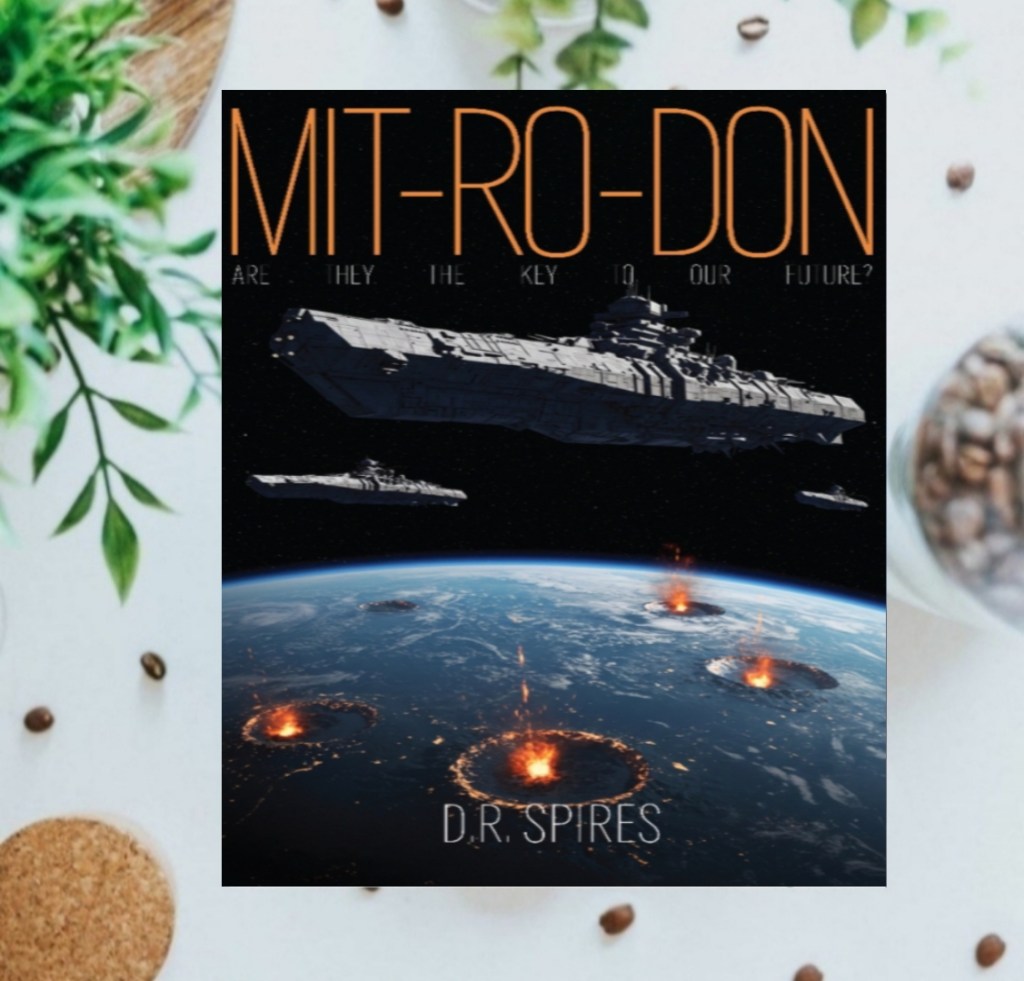
Interview with author D.R. Spires

Q1. Hello, can you please introduce yourself? Readers would love to know more about you.

A1. That is a tall order. You see, I’m old. I’ve been around for a while now and have at least once completely circumnavigated this amazing globe we all share 
 though I found that this sharing is divvied out in somewhat unequal proportions.

From my Amazon Writer’s page:

“Born in Columbus, Ohio, my spark for writing was lit while attending Reynoldsburg High School. Being severely dyslexic — a condition my teachers had apparently never heard of at the time — I could barely read and could almost write by the time I was eight years old. I had to knuckle down and teach myself how to get into those things called books. At the age of 14, I even copied an entire novel on my Remington typewriter, trying to get a feel for the author’s charismatic lure. It was one of the “Lucky Starr” young-adult sci-fi adventure stories by Paul French (aka the legendary Isaac Asimov). While attending high school, I fell in love with — of all things — English 101, though my mental condition continues to confound me to this day (thank you, spellcheck).”

After high school, I stepped into a pair of Army boots, met my unexpected wife-to-be in beautiful Panama, and we toured this world of ours for 14 beautiful years with three equally impressive sons. Following Desert Storm, my wife gave me the ultimate ultimatum, and I had to leave military service. If the choice was between her and anything else on the planet, she got what she wanted. That was inevitable. Having had enough of packing and unpacking, shipping and flying and walking and driving and roaming, she wanted a permanent home, so
 Well, taking up various technical occupations, I found time between working and sleeping to write another paragraph, a chapter or two. After 30 years together, my lovely wife passed away, and here do I sit, still pounding out these confounding stories.”

My usual genre is science-fiction, where I feel most at home, and always an adventure, a sure boon for readers, young and old. From Alpha Centauri A to Vega, from Andromeda to the Whirlpool Galaxy, across dimensions and universes, to all stars and countless worlds between. Let go and fly, my friend, for surely an adventure awaits, ‘second star to the right, and straight on ‘til morning.’ ”

Enjoy the written word, for nowhere else will you find such a variety of intrigue and adventure, love and hate, peace and turmoil, worry and relief, all in light-weight pages to fill the evening hours and lull you to a dream-filled sleep. I have been a warrior and a technician, a leader and a follower, a hater and a lover. As for my dyslexia, it remains here with me; still a bane, yet my current experiences include lauded publications, both creative and technical. My creative writing is generally science-fiction, now with three exciting publications available to you. My technical writing encompasses both military and civilian worlds, with hundreds of highly detailed documents.”

The details — it is there where my little demons thrive.”

Q2. What were the key challenges you faced while writing your book “Mit-Ro-Don: 1974”?

A2. Well, youth more than anything else. I started puttering around with it in high school, then shelved it and joined the US Army Infantry. I had a break in service three years later and looked over that manuscript. In all seriousness, It looked like it had been written by a child 
 and it had. After a year and a half of Army Reserve, I returned to Active Duty 
 they called me a ‘retread soldier.’ Fully 7 years Infantry, 7 years Signal, and Supply Clerk for my 1.5 years break to Reserve Duty. I finally departed military service in 1992 and dug deep into the “Mit-Ro-Don” story, eventually self-publishing it in 2000. The reworked manuscript is now getting set for a revised re-release, hopefully before Christmas.

Q3. What books or authors have most influenced your own writing?

A3. Well, I’m highly dyslexic, so motion pictures more than books, such as:

Stanley Kubrick’s and Sir Arthur C. Clarke’s “2001: A Space Odyssey” (1968)

Harry Kleiner’s, Jerome Bixby’s, and Otto Klement’s “Fantastic Voyage” (1966)

“Bantam Books obtained the rights for a paperback novelization based on the screenplay (for ‘Fantastic Voyage’) and approached Isaac Asimov to write it. Because the novelization was released six months before the film, many people mistakenly believed that the film was based on Asimov’s book.” Yeah 
 people like me
.
— Wikipedia

Irwin Allen’s and Charles Bennett’s “Voyage to the Bottom of the Sea” (1961)

H. G. “Herbert George” Wells’ “The Time Machine” (1960) and “The War of the Worlds” (1953)

Jules Verne’s “Around the World in 80 Days” (1956) and “20,000 Leagues Under the Sea” (1954)

William Shakespeare’s “A Midsummer’s Night Dream” (1935)

Thor Heyerdahl’s “Kon-Tiki”

I was drawn to read the books these films came from, which led me further through Edgar Rice Burrows’ books with the “John Carter of Mars” series and the “Tarzan” books, Isaac Azimov’s “Lucky Starr” series, “Foundation and Empire,” this sci-fi master’s comedic short story “PĂątĂ© de Foie Gras,” and of course Sir ACC’s “Rendezvous with Rama.” I got into a lot of Shakespeare, which drew me into the epic poetries of Greek classical plays and poems; “Odysseus,” “Argonauticus,” “Oedipus Rex,” and the like. In my youth, “The Adventures of Robin Hood” and Thor Heyerdahl’s book “The Kon Tiki Expedition” took me over, and the “12 Labors of Hercules” held me tight to those three marvelous books by Thomas Bulfinch:

“The Age of Fable” (1855)

“The Age of Chivalry” (1858)

“Legends of Charlemagne” (1863)

Of course there were also the old “Tom Swift,” “Brains Benton,” and the “Rick Brant” young reader adventure series of books 
 and comics of all sorts
.

Your next adventure begins with that first step into your future.

Q4. What’s your favourite spot to visit in your own country? And what makes it so special to you?

A4. Any local library, the Ohio State Fair, just because it’s the Ohio State Fair (the smells, the chatter, the machines of the midway, the food, all of it). I also like going to Blacklick Woods State Park for a quiet picnic table and some serious writing. Cup-A-Joe, Panera Bread—really, any nice, quiet place (with coffee) to iron out a story or kick off some unbelievable new adventure.

I don’t think I’m very good with places, I analyze quite a lot, so I probably have a pretty good idea of wherever I happen to be. I remember disappointing my wife on a visit to the Grand Canyon. We were on our way to a military assignment at White Sands Missile Range, NM, and crossed the canyon at the narrows of Marble, spotting a few small wild horse herds along the way. From Marble Canyon, we headed west to the wider Grand and stopped for a look from the grounds of a somewhat plush hotel. It was nearing Thanksgiving Day and I told her and the kids it was getting late, but all I could think about was signing in early at Sands that evening. She said we could spend the night and leave early the next day, but all I really wanted was to get into my new work at White Sands.

“Look at it, Honey. It’s a hole in the ground. C’mon.”

Yeah 
 today, I’m pretty sure we should have stayed.

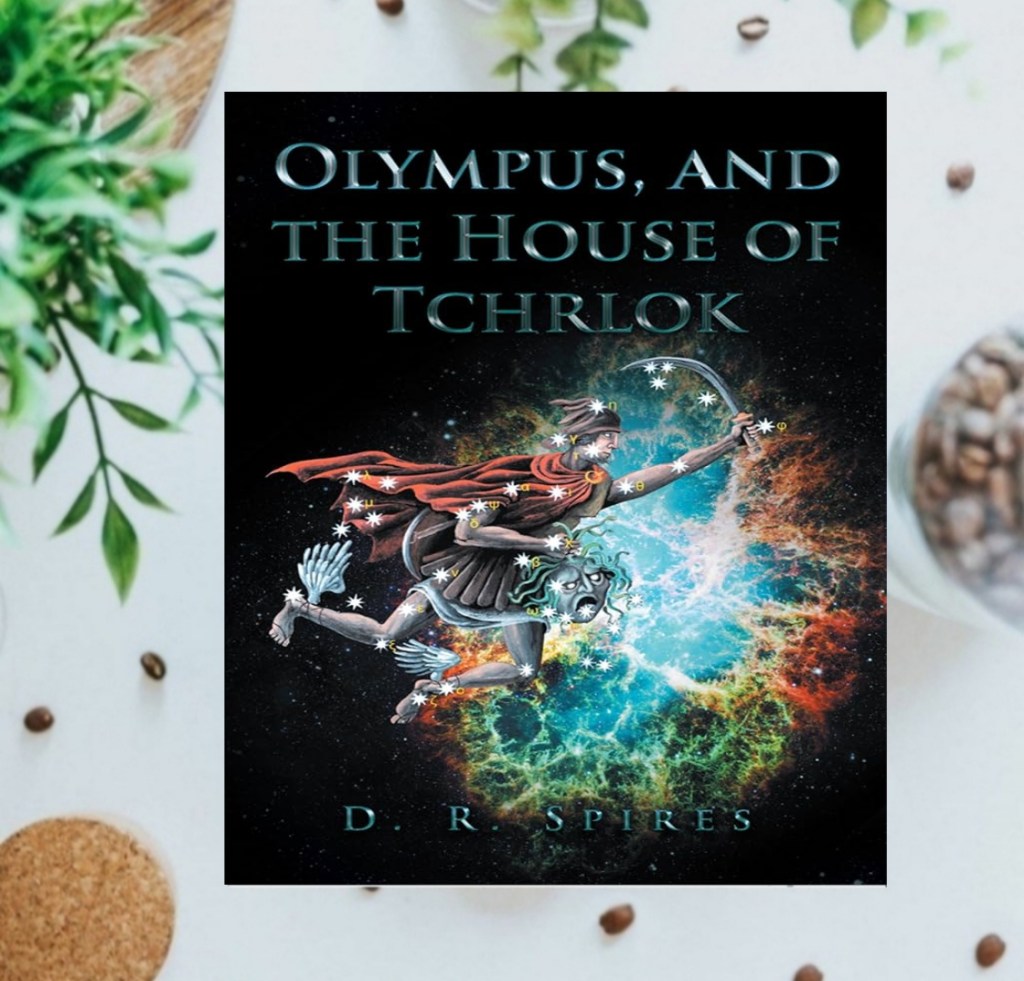
Q5. What inspired you to write the book “Olympus, and the House of Tchrlok”?

A5. That would have been my wife, Anita. Throughout the 1990s, Hollywood seemed of the mind to recreate all the classical mythologies to their liking—kinda like the misinterpretations that shouted down at audiences viewing Disney’s “Pocahantas”—with lame TV shows, multi-million dollar comic book flicks and the like. For some reason, my wife liked watching those portrayals, but the episodes drove me to write (angrily) at least a hundred short stories of how mythological persons and deities might actually interact with present day mere mortals 
 you know, you and I. Well, I caught my wife leafing through that mess of mythology one day and she told me that these needed to be published. 
And, as always, what Anita wanted, Anita got.

A Book of Traxis

A Book of Earth

A Book of Gods

A Book of Khaos

At the time, I was employed as a network software guru—coworker’s word, not mine—at MCI WorldCom over in Hilliard and took the pages to work with me. At the end of my workday, I found an unoccupied boardroom and spread the sheets out, rearranging my collection of short stories into a kind of plotline. I sat and thought about them for a while, coming up with the 4-book method of arrangement, with the first two—“A Book of Aliens” and “A Book of Earth”—starting approximately 5,000 years ago. Backstory stuff. Since there really were no Greek Olympian deities from mythology—hence the term ‘mythology’—I had them created by an alien race just 100 years before the main story’s timeline, which was just after World War II, a time that coincides with when these aliens began their flight of a few thousand light years to the invasion of Earth, traveling from the Perseus Arm of our Milky Way galaxy, as well as the date of an erred radio telescope signal recorded from 1946 as a starting point.

I even included a light sprinkling of deities from other religions of the period.

Had I researched a bit further, I could have pulled the story in a little closer to current time by using OSU’s now famous “WOW!” signal of August 15, 1977, as the second contact, rather than the imagined April 24, 1996.

https://en.wikipedia.org/wiki/Wow!_signal

Once I had the basic layout for the story, I just fussed it all out into a novel. Also, I had first published this tangle of ideas online while it was being created, in a somewhat volatile place called HabitableZone.com where I got a lot of suggestions, including the idea of adding a glossary of terms and characters to help members of this nation’s population that had been brainwashed away from the old Bulfinch textbooks. The site used to be a fairly habitable place to visit for scientific reckoning
. I haven’t been there in a while—of late, it’s gone quite political. I’ve posted a few very short stories on the site’s Science Fiction page, but nothing very recently. I used to be one of the HabitableZone moderators.

Anita passed away before I could get it published, and I shelved the whole thing, spending time just moping about and feeling sorry for myself over the loss of my one, true soulmate. I had been 21 when we met in Panama, and she was in her final year of high school. She wanted nothing to do with me


But all of that is recounted in my dedication pages for “Olympus, and the House of Tchrlok.”

Q6. How long did it take you to write your book “Mit-Ro-Don: 1974”?

A6. I started it in 1973. Its initial publication was not until 2000. Between those dates, I sort of tinkered around with it, trying for an angle of plausibility.

Q7. On what platforms can readers buy your books?

A7. Amazon.com would have to be my first choice, if only for the tidy arrangement of the various works. The newer books should also be available at Barnes and Noble, Google Books
. A person should be able to request a copy from any major outlet store.

Q8. Tell us about the process of coming up with the book cover and the title “Olympus, and the House of Tchrlok”?

A8. The book cover was all mine. I figured I would use the Crab Nebula’s neutron star, a pulsar at the core of that bubble of star debris. It’s surrounded by a very colorful, fairly symmetrical nova and always makes for a thought-provoking picture. My Traxian Empire would be located in the Perseus Arm of the Milky Way galaxy, and the Crab Nebula is situated far below that arm and approximately 7,000 light-years out from our Solar System. In the novel, the collapsed red giant star that created the pulsar and the accompanying nebula was referred to by my Traxian historians as Tractosk Prime. |The collapse into a supernova occurred approximately 7,850 years ago, which was visually recorded by Chinese astronomers back in the year 1154.

[If you do the math it won’t exactly add up, because the measurements used are estimates.]

Overlaying the Crab Nebula (in the Taurus constellation) with the constellation of Perseus was done simply because Perseus, as a new godling, was a main character in the novel.

Seemed okay to me. I have not yet seen what my publisher’s idea for a newer cover might be, but it should be quite interesting.

Q9. When writing a book how do you keep things fresh, for both your readers and also yourself.

A9. With some bit of conflict, a thought provoking dialog, or just a stroll along a quiet, dark, likely hazardous city street
.

It stays fresh because no one has read it yet. For many, my books are still a mystery.

When I was tweaking “Mit-Ro-Don,” I thought about how movies were made and I would read through a chapter slowly. If there was no new adventure in that chapter, I tossed one in and built upon it for the next chapter. I would build and build and build, until I just needed to end the war.

Q10. What is the most valuable piece of advice you’ve been given about writing?

A10. “Ah, you’ll never do it.”

That was from my older brother, Rick, a trucker who has now passed away. I miss him a lot, and I think he knew I was a determined soul. He pushed his protests almost daily, saying there was no way I could ever get published, but in 2000, I did it anyway.

From then on, Rick would introduce me as “My writer-brother Dan!”

He was proud of me—and I was proud of him.

Buy books on Amazon

Unseen Scars: The Battle Within

đ—•đ—Œđ—Œđ—ž: Unseen Scars: The Battle Within 📚
đ—”đ˜‚đ˜đ—”đ—Œđ—ż: JG ✍
.
.

Unseen Scars: The Battle Within, penned by JG, makes readers realize that survival is its own kind of strength.

In “The Voice Inside”, the author speaks of a tireless inner voice—one that grows louder when the world grows quiet. It pulls the narrator toward the darkest parts of himself, yet the scars it leaves behind become the story of who he is.

“Forgotten Self” is a striking poem that reflects how easily we lose ourselves in the world of social media, where everyone seems happier, prettier, and more accomplished. We start seeking approval to feel worthy, and slowly our happiness becomes tied to the validation of others. The narrator longs for the version of himself who never needed anyone’s approval.

Other favorites from the collection—The Hardest Goodbye, Forever Family, and The Long Return—stand out for their relatability. The writing throughout the book is raw and honest. It reassures readers that they are not alone on their healing journey.

This collection offers deep insight into the experiences of those battling invisible wounds. It takes readers on an emotional rollercoaster, filled with vivid, heartfelt moments. Above all, the author’s resilience shines through, inspiring readers to stay strong as they navigate their own paths toward healing.

  • 𝗠𝘆 đ—„đ—źđ˜đ—¶đ—»đ—Ž: 5/5

Buy book on Amazon

Interview with author Lynette Lindsay

Q1. Hello, can you please introduce yourself? Readers would love to know more about you.

A1. Hello! I’m Lynette Lindsay, a storyteller with a lifelong connection to the eerie, the emotional, and the unexplained. I write ghost-driven fiction with a strong human heart at its centre, blending horror with mystery and psychological depth. I was born in England but now live in Australia with my husband and our three boys. When I’m not writing, you’ll usually find me reading, drinking too much tea, or dreaming up the next story that insists on being told.

Q2. What were the key challenges you faced while writing your book “The Haunting of Little Maggie Smith”?

A2. One of the biggest challenges was balancing the supernatural elements with the emotional core of the story. I wanted the haunting to feel unnerving, but never at the expense of the very real human struggles at the centre of the narrative. Another challenge was managing the timeline and multiple perspectives—making sure each character’s voice felt distinct and that every thread tightened the tension rather than distracting from it. And, of course, there’s the ever-present battle with self-doubt that seems to accompany every writer!

Q3. What books or authors have most influenced your own writing?

A3. I’ve always been drawn to authors who blend the eerie with genuine human emotion. Shirley Jackson has been a major influence—her ability to build unsettling tension from ordinary moments is something I deeply admire. Stephen King also shaped my love of character-driven horror, reminding me that stories are most powerful when the people feel real. More recently, writers like C.J. Tudor and Simone St. James have inspired me with their ability to weave mystery, atmosphere, and the supernatural into something both haunting and heartfelt.

Q4. What’s your favourite spot to visit in your own country? And what makes it so special to you?

A4. That’s a really tough question because both England and Australia are full of amazing places. But if I had to choose, I’d say I’m most drawn to open green spaces. There’s something magical about feeling the breeze on your face, hearing birds and other wildlife all around, and just taking a moment to breathe it all in. Those moments remind me how incredible it is to simply be alive.

Q5. What inspired you to write the book ‘The Haunting of Little Maggie Smith’?

A5. As a child, I would see dark figures swirl around me, hear whispers in my ears, and feel the heavy breathing of shadows that could not possibly have lungs. Fear was always there, but so was something else—a quiet invitation to a world beyond sight, beyond touch, where beauty and serenity could exist. Writing The Haunting of Little Maggie Smith allowed me to share those experiences, where shadows and light meet, and the extraordinary quietly brushes against the ordinary.

Q6. How long did it take you to write your book ‘The Haunting of Little Maggie Smith’?

A6. Honestly, it took me a few years to finish the book, with lots of starts, stops, and moments where I convinced myself I was “researching” rather than writing. The last half came together surprisingly quickly once I finally faced the truth—I’d been procrastinating far too much and just needed to dive in.

Q7. On what platforms can readers buy your books?

A7. Readers can currently enjoy my book as an ebook on Amazon Kindle. For those who love holding a story in their hands, a paperback version will be available in January. I hope it’s a journey that captures your imagination from start to finish.

Q8. Tell us about the process of coming up with the book cover and the title ‘The Haunting of Little Maggie Smith’?

A8. The process of creating the book cover and choosing the title was a really special part of bringing the story to life. My niece designed the cover, and I couldn’t have been happier with her work—she captured the mood and mystery perfectly. The title, The Haunting of Little Maggie Smith, came naturally as the story itself unfolded. It felt like the perfect way to hint at both the eerie and the emotional heart of the book.

Q9. When writing a book how do you keep things fresh, for both your readers and also yourself.

A9. Keeping things fresh while writing is always a balancing act. I think it’s important to stay curious and open—explore new ideas, experiment with scenes, and even step away for a while to return with fresh eyes. For readers, I’ve focused on creating surprises, layering characters, and inserting moments of tension or emotion that they won’t see coming. The goal is to make the story feel alive for both of us.

Q10. What is the most valuable piece of advice you’ve been given about writing?

A10. The best advice I ever received about writing was to just keep showing up. Even on days when the words felt heavy or messy, writing a little bit every day made all the difference. It didn’t have to be on my book, just something to keep the momentum. It reminded me that stories grow not from perfection, but from persistence—and that every word brings you closer to the heart of your story.

Buy The Haunting of Little Maggie Smith on Amazon

The Power of Want and the Feeling of Need

đ—•đ—Œđ—Œđ—ž: The Power of Want and the Feeling of Need 📚
đ—”đ˜‚đ˜đ—”đ—Œđ—ż: Joshua Shuster ✍
.
.

“The Power of Want and the Feeling of Need” is an insightful work by educator and mentor Joshua Shuster. In this book, he guides readers through the transformative practice of distinguishing between what we want and what we truly need. Joshua emphasizes how practicality can significantly enhance human efficiency, reminding us that our desires often push us toward acquiring things that serve little real purpose—products of our endless longing.

The author encourages readers not to prioritize wants at the expense of their essential needs. The book sheds light on the importance of choice and responsible decision-making, showing how thoughtful actions can help us regain control over our lives and finances.

This book taught me to avoid purchasing items I already own. Its valuable lessons can help anyone who feels overwhelmed by their own impulses and desires. The author’s writing style is engaging, and the cover design is striking. Anyone looking to bring positive change into their life should definitely consider reading this book.

  • 𝗠𝘆 đ—„đ—źđ˜đ—¶đ—»đ—Ž: 5/5

Buy book on Amazon

Interview with author Lynette Lindsay

Q1. Hello, can you please introduce yourself? Readers would love to know more about you.

A1. Hello! I’m Lynette Lindsay, a storyteller with a lifelong connection to the eerie, the emotional, and the unexplained. I write ghost-driven fiction with a strong human heart at its centre, blending horror with mystery and psychological depth. I was born in England but now live in Australia with my husband and our three boys. When I’m not writing, you’ll usually find me reading, drinking too much tea, or dreaming up the next story that insists on being told.

Q2. What were the key challenges you faced while writing your book “The Haunting of Little Maggie Smith”?

A2. One of the biggest challenges was balancing the supernatural elements with the emotional core of the story. I wanted the haunting to feel unnerving, but never at the expense of the very real human struggles at the centre of the narrative. Another challenge was managing the timeline and multiple perspectives—making sure each character’s voice felt distinct and that every thread tightened the tension rather than distracting from it. And, of course, there’s the ever-present battle with self-doubt that seems to accompany every writer!

Q3. What books or authors have most influenced your own writing?

A3. I’ve always been drawn to authors who blend the eerie with genuine human emotion. Shirley Jackson has been a major influence—her ability to build unsettling tension from ordinary moments is something I deeply admire. Stephen King also shaped my love of character-driven horror, reminding me that stories are most powerful when people feel real. More recently, writers like C.J. Tudor and Simone St. James has inspired me with their ability to weave mystery, atmosphere, and the supernatural into something both haunting and heartfelt.

Q4. What’s your favourite spot to visit in your own country? And what makes it so special to you?

A4. That’s a really tough question because both England and Australia are full of amazing places. But if I had to choose, I’d say I’m most drawn to open green spaces. There’s something magical about feeling the breeze on your face, hearing birds and other wildlife all around, and just taking a moment to breathe it all in. Those moments remind me how incredible it is to simply be alive.

Q5. What inspired you to write the book ‘The Haunting of Little Maggie Smith’?

A5. As a child, I would see dark figures swirl around me, hear whispers in my ears, and feel the heavy breathing of shadows that could not possibly have lungs. Fear was always there, but so was something else—a quiet invitation to a world beyond sight, beyond touch, where beauty and serenity could exist. Writing The Haunting of Little Maggie Smith allowed me to share those experiences, where shadows and light meet, and the extraordinary quietly brushes against the ordinary.

Q6. How long did it take you to write your book ‘The Haunting of Little Maggie Smith’?

A6. Honestly, it took me a few years to finish the book, with lots of starts, stops, and moments where I convinced myself I was “researching” rather than writing. The last half came together surprisingly quickly once I finally faced the truth—I’d been procrastinating far too much and just needed to dive in.

Q7. On what platforms can readers buy your books?

A7. Readers can currently enjoy my book as an ebook on Amazon Kindle. For those who love holding a story in their hands, a paperback version will be available in January. I hope it’s a journey that captures your imagination from start to finish.

Q8. Tell us about the process of coming up with the book cover and the title ‘The Haunting of Little Maggie Smith’?

A8. The process of creating the book cover and choosing the title was a really special part of bringing the story to life. My niece designed the cover, and I couldn’t have been happier with her work—she captured the mood and mystery perfectly. The title, The Haunting of Little Maggie Smith, came naturally as the story itself unfolded. It felt like the perfect way to hint at both the eerie and the emotional heart of the book.

Q9. When writing a book how do you keep things fresh, for both your readers and also yourself.

A9. Keeping things fresh while writing is always a balancing act. I think it’s important to stay curious and open—explore new ideas, experiment with scenes, and even step away for a while to return with fresh eyes. For readers, I’ve focused on creating surprises, layering characters, and inserting moments of tension or emotion that they won’t see coming. The goal is to make the story feel alive for both of us.

Q10. What is the most valuable piece of advice you’ve been given about writing?

A10. The best advice I ever received about writing was to just keep showing up. Even on days when the words felt heavy or messy, writing a little bit every day made all the difference. It didn’t have to be on my book, just something to keep the momentum. It reminded me that stories grow not from perfection, but from persistence—and that every word brings you closer to the heart of your story.

Buy The Haunting of Little Maggie Smith on Amazon

Interview with author Eren Viau

Q1. Hello, can you please introduce yourself? Readers would love to know more about you.

A1. Hello, My name is Eren. I am a queer fantasy author from Rochester New York. I have been reading fantasy since I was a child and finished my first book, the first edition of War of Silence, when I was 17. I am now 31 and have created stories and characters I would have loved to see in fantasy growing up. I believe strongly that queer and disabled people can be in fantasy as more than a background character or a villain.

Q2. What were the key challenges you faced while writing your book “The Vanishing Prince”?

A2. Honestly for Vanishing Prince the biggest issue is that the story that I wanted to be told was not at all the story I plotted out. But that original idea for the book will be coming out later.

Q3. What books or authors have most influenced your own writing?

A3. Hands down fanfiction writers, I’ve read many that have sparked amazing ideas.

Q4. What’s your favourite spot to visit in your own country? And what makes it so special to you?

A4. Lake Ontario in New York. It just feels like home surrounded by the water and the woods.

Q5. What inspired you to write the book ‘The Vanishing Prince’?

A5. I had an idea for a completely different book. When an author says the story has a mind of its own, it’s true. Vanishing pretty much wrote itself.

Q6. How long did it take you to write your book ‘The Vanishing Prince’?

A6. It took me maybe 6 months to finish the writing portion. It is the editing and formatting that takes me longer.

Q7. On what platforms can readers buy your books?

A7. My website fantasyviaubooks.com has signed copies of the books but you can also get them on amazon, walmart, barnes and nobles, and a few indie books stores throughout the US for now.

Q8. Tell us about the process of coming up with the book cover and the title ‘The Vanishing Prince’?

A8. The title was actually what sparked the idea for the book. That’s where the original plot came from. The cover was the art done by my beautiful artist wife Korinn as I told her about the project. She does the covers and maps.

Q9. When writing a book how do you keep things fresh, for both your readers and also yourself.

A9. For me it is idea-hopping. It is why I never finish a book series all at once. I work on one part of a series then hop ideas with stand alones and then go back to a series.

Q10. What is the most valuable piece of advice you’ve been given about writing?

A10. Write the story that you want to see. Don’t worry about what you think the world wants, fans will come later. Your story is your own first and foremost and as long as you love it nothing else really matters.

Buy book on Amazon

The Kingdom: The Original Gospel

đ—•đ—Œđ—Œđ—ž: The Kingdom 📚
đ—”đ˜‚đ˜đ—”đ—Œđ—ż: Paul Wynne ✍
.
.

Through this book, the author invites readers to break free from religious confusion and step into the Kingdom life that Jesus intended.

The book helps readers understand the true meaning of sin — our self-centered desires and actions that lead us into disobedience and separate us from God. For restoration, the author emphasizes the need for a renewed world and a new Kingdom where Satan has no place. He also highlights the supreme importance of the resurrection in this divine plan.

The journey begins by listening to Jesus and embracing His teachings. This marks the birth of faith, conviction, and hope. Faith grows when we receive His words in our hearts and live by them.

For anyone seeking transformation, this book serves as a powerful guide. No matter where you are in your faith journey, The Kingdom: The Original Gospel will challenge, inspire, and equip you to step into the fullness of God’s plan. It’s time to say goodbye to religious confusion. I truly appreciate Paul for taking readers back to the original message of the Kingdom of God. This is an eye-opening read—hats off to the author for his remarkable work. I highly recommend this book to my fellow Christian readers.

  • 𝗠𝘆 đ—„đ—źđ˜đ—¶đ—»đ—Ž: 5/5

Buy book on Amazon

Dead Air

đ—•đ—Œđ—Œđ—ž: Dead Air 📚
đ—”đ˜‚đ˜đ—”đ—Œđ—ż: Jason Santa ✍
.
.

Dead Air by Jason Santa is a gripping industrial thriller that plunges readers into a world filled with courage, corruption, and danger. The story follows refinery inspector Jack Teller and federal investigator Maya Quinn as they uncover a chilling mystery.

While inspecting the Superior Gulf Refinery, Jack discovers two men dead in Tank 6-Delta—an incident eerily similar to the death of Danny Morales, who was found the same way. Haunted by his father’s warning that “sometimes accidents aren’t accidents,” Jack begins to suspect something sinister. He teams up with Maya, whose own brother was murdered under comparable circumstances after filing environmental reports about the systematic poisoning of air supplies.

Can Jack and Maya expose the truth and stop the killers before more lives are lost?

This is an engaging and fast-paced story with well-drawn characters and mounting tension. The cover design is appealing, and the title fits the plot perfectly. I thoroughly enjoyed reading this book and look forward to exploring more works by Jason Santa.

  • 𝗠𝘆 đ—„đ—źđ˜đ—¶đ—»đ—Ž: 5/5

Buy book on Amazon

REFLECTIONS OF A FUTURIST

đ—•đ—Œđ—Œđ—ž: REFLECTIONS OF A FUTURIST 📚
đ—”đ˜‚đ˜đ—”đ—Œđ—ż: Bob Chernow ✍
.
.

“REFLECTIONS OF A FUTURIST: It’s Hard to Read the Label When You’re Inside the Bottle” by Bob Chernow is a truly insightful read. In this book, the author teaches readers how to view the world through the eyes of a futurist.

Bob encourages us to adopt a fresh perspective—to see beyond the present and anticipate what lies ahead. By applying the ideas shared in this book, one can develop the ability to foresee trends and make informed, strategic investments. He explains that futurists are avid readers who excel at recognizing patterns, making keen observations, and asking the right questions. Interestingly, Bob also highlights how science fiction can serve as a creative tool to envision the future.

The author discusses possible transformations in food production and the challenges humanity might face in feeding a growing global population. Futurists, he notes, remain endlessly curious about the world around them. Through his thoughtful writing, Bob Chernow inspires readers to become more perceptive and visionary thinkers.

The author’s writing style is engaging and clear, and the book’s title itself is both clever and memorable. Reflections of a Futurist is a distinctive read that sharpens long-term strategic thinking. Pick up this book without hesitation—it’s an insightful and valuable addition to any reader’s collection.

  • 𝗠𝘆 đ—„đ—źđ˜đ—¶đ—»đ—Ž: 5/5

Buy book on Amazon

Design a site like this with WordPress.com
Get started