
Q1. Hello, can you please introduce yourself? Readers would love to know more about you.
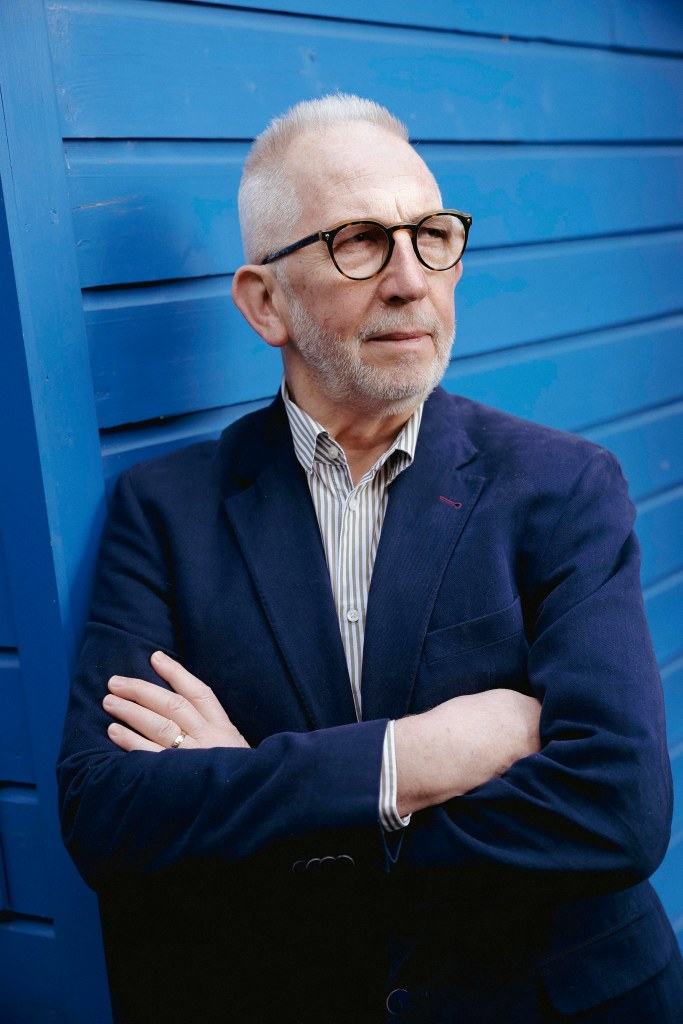
I was born in Northern Ireland and studied French and Spanish at Queens University Belfast. Following graduation, I spent a year in Paris before completing his Post Graduate Certificate in Education. I taught French in Belfast and then moved to Dublin where I worked for ten years as a Media Planner in one of Dublin’s leading advertising agencies. During this time, I also got involved with Amnesty International and was Chairperson of Amnesty Ireland for five years. I then joined the organisation on a full-time basis as Development Manager before taking on the role of Head of Media. I initiated groundbreaking research into Irish links to the arms trade and produced two major reports: “Ireland and the Arms Trade – Decoding the Deals” and “Claws of the Celtic Tiger.”
I was head hunted by Irish based international human rights organisation Front Line Defenders to take up the newly created role of Head of Media and Communications. Prior to my retirement I was responsible for setting up the Human Rights Defenders Memorial Project, a unique collaborative project involving leading national and international organisations to document the killings of human rights defenders. I was the author of ‘Stop the Killings’ a major report which analysed the patterns of violence that led to the killings of human rights defenders in: Brazil, Colombia, Mexico, Guatemala, Honduras and the Philippines. These 6 countries collectively account for 80% of the killings of human rights defenders annually. I was jokingly referred to in the office as, ‘Head of Killings.’
I live in Dublin with my husband. Since I retired, I have shifted focus from writing press releases and opinion articles to historical fiction. My first published work, ‘Ill Met by Moonlight’ is a short story published in October 2025 by Briar Press, New York, as part of ‘These Dark Things,’ an anthology of 12 gothic short stories. The Bratinsky is my first novel published by Sharpe Books. My second novel “Syracuse Must Burn” set in Sicily in 407BC is due out this year.
Q2. What were the key challenges you faced while writing your book “The Bratinsky Affair”?
The Bratinsky Affair revolves around the stories of two main characters: exiled Russian aristocrat Countess Irina Bratinsky and aspiring investigative reporter Tom O’Brien. Irina’s story starts in pre-revolutionary Russia and travels to Paris in the 1920’s, Paris during the German Occupation and the political turmoil of the 1970’s. On the other hand, Tom’s story starts in small town Ireland and reflects the choices he makes as a young gay man coming to terms with his sexual orientation at a time when homosexuality was still a criminal offence. The main challenge was to convey the complexity of both their journeys and be sympathetic to the choices they make while not getting bogged down in the detail.
Another challenge was that in the first iteration of the book Irina came across as a bit of a monster. I had to recalibrate her as a much more sympathetic figure. On the other hand, I wanted her to come across as a strong independent woman, not a victim. She is someone who has taken control of her life and that is what makes her relevant to a modern audience.
Tom’s journey is more of an emotional one and it also incorporated elements of my own story as a gay man. Both stories reflect how happiness depends on the choices we make and the need for moral courage in difficult moments.
Q3. What books or authors have most influenced your own writing?
Since I was a teenager, I have always been absorbed in history so that is the first area I would look at. Growing up in a small village in Northern Ireland the subject of the famine was not talked about that much. There is a certain category of books which I would describe as light bulb books in that they illuminate an unknown event with the force of revelation. The Great Hunger by Cecil Woodham Smith was one of those in that it described the horrors of the Irish famine in an objective way that left you feeling you had lived through it. He showed me the importance of well researched and well written history.
The Memoirs of the Duc de Saint Simon is essential reading for anyone interested in French eighteenth century history. They have everything that any novel has ever been written about: gossip, corruption and intrigue at court, snobbery and the lust for power, love and devotion. He wrote his diary every day for fifty years and the only break was on the day his wife died, which is recorded by a tear on the page.
Another ‘light bulb book’ is the twin volumes The Normans in the South and The Kingdom in the Sun by John Julius Norwich. The Norman kingdom of Sicily established by Roger 11 in 1130 was an amalgam of Arab, Jewish and Christian culture based on tolerance. He was a Christian king who spoke Arabic and Greek and brought the finest craftsmen from Constantinople to create the Palatine Chapel. To see the most spectacular Byzantine mosaics go to Palermo.
In terms of historical fiction there are so many inspirational writers. Mary Renault, of course is the writer who almost invented historical fiction as a genre and in books like “The King Must Die”, “The Persian Boy” and “The Bull from the Sea” she recreates the world of ancient Greece so that you feel you are reliving it.
CJ Sansom’s character, lawyer Mathew Shardlake, is a wonderful invention as he explores the dark corners of Henry V111’s reformation England. This of course brings us to Hilary Mantel who has set the bar very high for writers of historical fiction with her “Wolfe Hall” trilogy.
When I need some light relief there are the adventures of Commissario Guido Brunetti by Dona Leon. Set in Venice this is the antithesis of scandi noir. He is not a divorced alcoholic. He has a happy marriage, loves his children and navigates the politics of his job with skill. Finally, there is one book which I have read many times: “The Historian” by Elizabeth Kostova. It is a brilliant reworking of the Dracula legend, so embedded in history that it is entirely credible.
Q4. What’s your favourite spot to visit in your own country? And what makes it so special to you?
My favourite place in Ireland is Woodstown Beach, outside Waterford City. It is a shallow bay bordered with sand dunes and a discreet fringe of pine trees. Here and there you can catch glimpses of elegant villas sheltered from the wind among the trees. Due to some anomaly of the tide the beach is littered with tiny pink shells and if you close your eyes all you will hear is the sighing of the wind and the tinkling of the shells in the surf. I have gone there many times with my oldest friend, and it is a place of great comfort and peace. Woodstown House also happens to be the place to which Jackie Kennedy retreated after the assassination of JFK.
Q5. What inspired you to write the book ‘The Bratinsky Affair’?
In Irish history there are many stories about Irishmen who during the penal laws in seventeenth century Ireland fled repression at home to seek fame and fortune in the armies of Spain, France, Austria and Russia. At one point I met a descendant of one those families. Baron Brian de Breffny, Count O’ Rourke was the descendant of one such family. His ancestors had been generals during the wars against Napoleon and one of them even has his portrait in the Hermitage Museum. They survived in Russia until the revolution and ended up coming back to find refuge in Ireland three hundred years after their original departure. I thought there had to be a novel in that story! Years later, I discovered that there is a village in Wicklow called ‘The Russian Village’. It had been built by another Russian refugee whose family had fled to England. An architect, he married an Irish woman and ended up in Wicklow. This was the perfect place to start my story.
Q6. How long did it take you to write your book ‘The Bratinsky Affair’?
It took about three years though I wasn’t working on it all the time. It happened in fits and starts.
Q7. On what platforms can readers buy your books?
It is available on Amazon.
Q8. Tell us about the process of coming up with the book cover and the title ‘The Bratinsky Affair’?
I can claim no credit for the cover as this was designed by my publisher, Sharpe Books. The title was suggested by all those reports of scandals and crime such as ‘The Drefus Affair,” “The Profumo Affair” the “Affair of the Diamond Necklace.” Once I got that title stuck in my brain I couldn’t think past it. Nothing else quite worked, despite numerous attempts.
Q9. When writing a book how do you keep things fresh, for both your readers and yourself.
You have to be open to changes. For example, we were on holidays in the south of France and stumbled on an exhibition of the portraits of Suzy Solidor a controversial singer from the 1920’s who was painted by all the great artists of the day. She also ran the most fashionable night club in Paris in the 20’s and 30’s. She was also openly lesbian. Her story was so outrageous that I thought this is what we need to make Irina more human, and more fun. You also need to accept when something, a character or a section, simply doesn’t work. This stage of the process is not called ‘killing your darlings’ for nothing.
Q10. What is the most valuable piece of advice you’ve been given about writing?
I would quote Stephen King (and recommend his book on writing): ° keep reading, keep writing and keep submitting. The other piece of advice I got was get it finished rather than obsess on making it perfect, otherwise you will never get past the opening paragraph.
Buy book on Amazon
 Sassy Reviews