
Q1. Hello, can you please introduce yourself? Readers would love to know more about you.
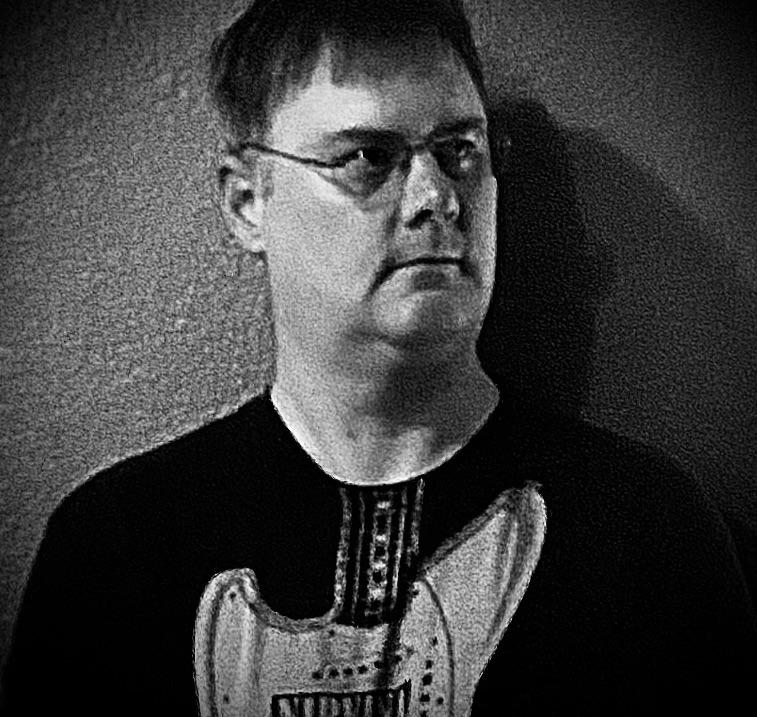
A1. My name is Jeremy Billingsley. I hold an MFA in creative writing. While in school, I studied under authors Barry Hannah, Ellen Gilchrist, Victoria Nelson, and Aimee Liu. After publishing short stories in the genres of the southern gothic and horror for nearly twenty years, and after one of my novels was picked up by two different small presses (each went out of business before my book went to shelves), I decided to start my own publishing house: Sley House Publishing. While I do publish most of my current work under Sley House, I’m just as interested in publishing other authors. I try to offer competitive rates and quality work, from our original, artistic covers to our interior layout and editing, from our novels to our anthologies.
Q2. What were the key challenges you faced while writing your book “Ristenoff”?
A2. I’ve had the characters in my head for years, going back to childhood. But I didn’t have the setting right. I knew it would take place in Arkansas. Specifically, I knew it would take place in South Arkansas. But I didn’t know when. Then the pandemic hit, and that piece fell into place. The pandemic, the Black Lives Matter movement, the civil unrest, all gave me a complete setting for the novel.
Another challenge was just finding a way to make the werewolf scary again. Nowadays, the werewolf, like the vampire, has been relegated, it feels, to the realm of dark fantasy. There’s nothing inherently scary about it. They’re more a type of superhero or a romantic figure. I wanted the tormented, angst-ridden monster. I wanted to scare people.
Q3. What books or authors have most influenced your own writing?
A3. I’ll mention the obligatory Stephen King, but beyond that, I loved reading classics. Jack London, Shirley Jackson, William Faulkner, Ernest Hemingway. In grad school, I read Harry Crews, Dan Simmons, more Barry Hannah and Ellen Gilchrist (because even my graduate instructors respected them), Molly Giles, Megan Abbott, JG Ballard, Laird Barron. I read Algernon Blackwood and Lafcadio Hearn and Borges and Bradbury and Morrison. Italo Calvino, the Bronte sisters, and Shakespeare. For RISTENOFF, I drew inspiration from Shakespeare’s MacBeth and from Guy Endore’s The Werewolf of Paris.
Q4. What’s your favourite spot to visit in your own country? And what makes it so special to you?
A4. Arkansas is beautiful because you have a lot of different climates in this small state. The north and west are mountainous with the Ozark and the Ouachita Mountains. In the west you have flat rice fields and farmland. South you have pine trees and lumber and a humid, swampy climate more associated with Louisiana.
Q5. What inspired you to write the book ‘Ristenoff’?
A5. I grew up watching horror. I started with the Universal classics. As I got older, I found the literary versions of Dracula and Frankenstein, but I was fascinated by werewolves. Why didn’t they have an eponymous work? Yes, King gave us Cycle of the Werewolf and there is the Guy Endore classic. I thought, as a kid, I could write the werewolf equivalent of those other works. As an adult, I look back at that obnoxious kid and want to slap him for his arrogance. But the story started growing in me back then and it is still with me today, and I’ve always known I would have to write it down. The cynical adult reminds me nightly that few people will probably read it, and that’s okay. The point is, I had to tell the story. Like when my family lost both my grandfathers and my stepdad in a three year period. I had to write that experience down, and what I wrote became Under the Churchyard in the Chamber of Bone. I think if we ignore the delusions we artists suffer from at times, sometimes we have to write simply because it is inside us. A painter must paint what is in them. A musician must play what they hear. A photographer must capture on film that image they already see in their eye, and a writer — hopefully I’m not sounding too pretentious — must write. Even if no one sees the painting, the words, the photograph, or hears the music. We must get these things out of us and into the world.
Q6. How long did it take you to write your book ‘Ristenoff’?
A6. Once I started? Eight months, plus two months of revisions with my editors. But from inception? 37 years. If a metaphor to be used is “like a dog with a bone,” then do not mistake my relationship to the book. The characters and story of RISTENOFF were the dogs, and I was the bone they would not release. Not until I wrote their story on the page.
Q7. On what platforms can readers buy your books?
A7. They can order off our website. They can order off Amazon. They can order from their local bookstore and they can get all Sley House titles in stock.
Q8. Tell us about the process of coming up with the book cover and the title ‘Ristenoff’?
A8. I had worked with the artist many times, and he knew what I was looking for with the novel. I wanted it to be decidedly scary and I wanted it to reflect the setting of the story. We talked specifics and he emailed me some drafts and it was really an easy process.
The name is something else. It has been with me, like a ghost, for years. For the longest time, I thought “Ristenoff” was the name of a fictional vampire for a story I’d yet to write. It was only very recently I realized it was best for this novel. I wanted the origins of the curse and of the character to be eastern european, and I wanted a name to reflect that. I also wanted a title that could be easily searched. I didn’t want a generic title as that would be lost in the sea of algorithms and similar names. Where the name actually came from I don’t remember. Something I heard or misheard and invented in childhood and its stuck with me all these years. I’ve googled it before but to no avail.
Q9. When writing a book how do you keep things fresh, for both your readers and also yourself?
A9. I take breaks. If I feel I’m writing myself into a corner, or I’ve lost sight of what a scene should be doing, I take a break. I also make sure I have fully developed characters. In fact, no matter what I’m writing, character comes first. I consider things like character archetypes and peacock details to be sure, but I’m more interested in who my characters are and what they are thinking/believing. If I know what my characters WANT and NEED, then I know how they’ll respond in any given situation. Even the most familiar of plots can be fresh once your developed characters start serving their own needs and wants.
Q10. What is the most valuable piece of advice you’ve been given about writing?
A10. Read outside your genre. Yeah, read as much horror as you can, but read other stuff as well. Read the hard to categorize stuff, the familiar stuff, the indie stuff, and the classic stuff. You’ll see how authors are doing things and you’ll latch onto it. And one more piece of advice: Plot is driven by conflict, and conflict is created through characters. Character 1 needs/wants Thing A; maybe character 2 has thing A, or maybe they also need it, or maybe they don’t want Character 1 to have it. Their needs/wants don’t mesh, so there is conflict. That will keep the reader coming back for more.
Buy Ristenoff on Amazon
 Sassy Reviews