
Q1. Hello, can you please introduce yourself? Readers would love to know more about you.
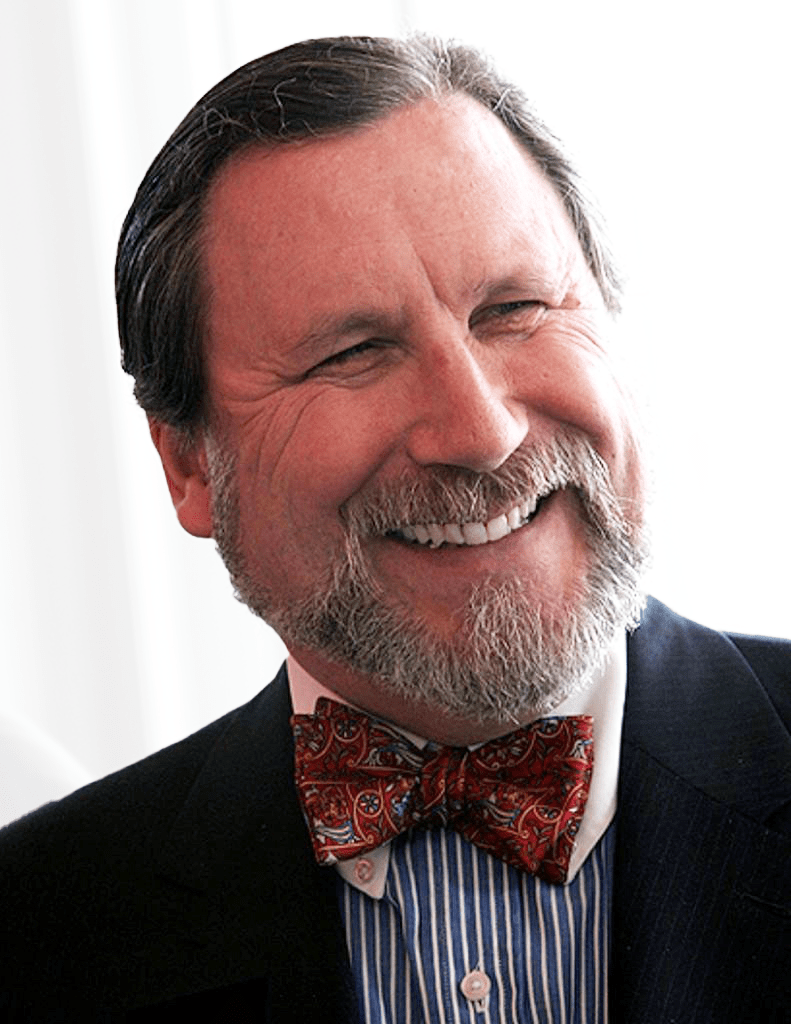
A1. I suppose I’ll start with my name, which is Pierre – although I was born Peter in Los Angeles. My family moved to Geneva, Switzerland when I was a toddler, where I became-and remained-Pierre. I moved back to the States in my late twenties and took on various jobs. None particularly intellectually challenging. I started to play chess fairly seriously. In 1975, I co-authored a book on chess openings. My publisher, knowing of my interest in math, asked me if I could write a book on, the then new-to-market, calculators. It did fairly well, picked up by some mathematical book clubs. I then approached McGraw Hill about publishing a book that would contain the major historical documents of the world. That idea came to me as the Watergate scandal was exploding and I wanted to read the U.S. Constitution for myself. The Internet wasn’t yet a thing and I couldn’t find the text in my (large) bookshelf. McGraw Hill immediately approved the project and that became my third book (although I am listed as Editor.) To help with my research, I needed to compile various databases. I built various personal computers from kits (ALTAIR, IMSAI, etc.) and immediately realized that I had to teach myself software programming. This got me sidetracked for decades! I eventually taught computer science at various universities. During these years, I also developed and patented new technologies for radio receivers that eventually became part of a U.S. national standard. But to be closer to my potential licensing clients (the big guys in Japan), I moved to Hong Kong, where I stayed for eleven years. Right after the start of the World Wide Web, I started a small website called the Classical MIDI Archives. Upon my return to the states in 1997, I moved to Silicon Valley, close to Stanford, and continued to develop the site which eventually became ClassicalArchives.com, one of the largest classical music sites in the world. As one of my passions is astrophysics and cosmology, I got involved with Stanford’s physics department. In my spare time, I try to visit as many labs and research centers as I can. This brought me to the deepest mines, the highest observatories and other fascinating locations around the world. I even spent time at the South Pole. Asteroid (32890) Schwob has been graciously named after me. I am one of longest serving member of the SETI Institute’s Board of Directors. Now that AWE: A technothriller (focused on climate change, AI, fake news, and international cooperation) is out, I am thinking of writing another novel, addressing the benefits and dangers of AI.
Q2. What were the key challenges you faced while writing your book “AWE: A technothriller”?
A2. As AWE is my first novel, I had to learn to “kill my children:” to remove characters, whole passages, even entire chapters. Serve the story. Another challenge was the immense amount of research I had to undertake. Particularly as the science and technology is so fast-moving in the areas the novel covers.
Q3. What books or authors have most influenced your own writing?
A3. A tough question as I read fairly voraciously. But my taste centers on science, foreign affairs, history (even older works like Edward Gibbon’s The Decline and Fall of the Roman Empire, Will and Ariel Durant’s The Story of Civilization), and thrillers. I can name Stephen Greenblatt’s The Swerve, Carl Sagan’s entire output, Stephen Weinberg’s The First Three Minutes, Lenny Susskind, Brian Greene, Sean Carroll, and many others. As to thrillers, I’ve read John Sandford’s Prey entire series twice(!), Daniel Sylva, Jason Matthews, and many others. Matthews’s Red Sparrow was an inspiration for my offering a playlist in my book (a classical music work to play at the beginning of each chapter), although that idea also sprang from an experience I had when I read a novel at fourteen while my gramophone was playing in the background–recounted on my website (www.prs.com).
Q4. What’s your favorite spot to visit in your own country? And what makes it so special to you?
A4. I am a Swiss/US dual citizen. I suppose that I have to mention Stanford University for its beautiful Romanesque campus and contagious intellectual ferment. Otherwise, I shouldn’t miss mentioning the Swiss Alps and their meadows. Gorgeous wild flowers in the spring and summer, and glorious snow in winter. (Learned to shoot down airplanes-on-a-wire from my troop carrier there, while in the Swiss Army.)
Q5. What inspired you to write the book ‘AWE: A technothriller’?
A5. While some will take offense, it was the deplorable response to COVID-19 from a previous administration, its reckless lack of interest in climate change, and the self-sabotaging China Initiative (thankfully ended but now rearing its ugly head again.)
Q6. How long did it take you to write your book ‘AWE: A technothriller’?
A6. About a year to write a complete draft. Another year to massage it into shape. And then three weeks to select and build the playlist, available on ClassicalArchives.com.
Q7. On what platforms can readers buy your books?
A7. Amazon, as a hardcover, paperback, or on Kindle–both in a flowing text, and as a print-replica. (The latter for those who wish to enjoy the author-selected fonts.) You can also find a link to Amazon’s AWE page on my website at http://www.prs.com, where readers can read more about the book, the playlist, contact me, or ask for a personalized signed bookplate.
Q8. Tell us about the process of coming up with the book cover and the title ‘AWE: A technothriller’?
A8. As the main themes of the book is climate change and rigorous science, I wanted the cover to be simple and direct. I selected an image of the Earth taken by a NOAA satellite. The title is an acronym for “Artificial Wisdom Engine” – an AI which becomes one of the novel’s protagonists.
Q9. When writing a book how do you keep things fresh, for both your readers and also yourself?
A9. I’ve never given a thought to this. The creative endeavor never seems to get stale. I find that developing a plot is very much like playing chess, when you have to think ahead many moves, offering hints that presage the action to come. The key is to continuously place unexpected obstacles that the protagonists must overcome. I get a lot of help from my characters as they evolve. As most authors will tell you, they do take a life of their own. And their personalities, likes and dislikes, strengths and weaknesses, particularly their sense of humor (when they have one), help keep things interesting.
Q10. What is the most valuable piece of advice you’ve been given about writing?
A10. I’ll repeat what I said earlier: learn to “kill your children!”
Buy AWE: A technothriller on Amazon
 Sassy Reviews