
Q1. Hello, can you please introduce yourself? Readers would love to know more about you.
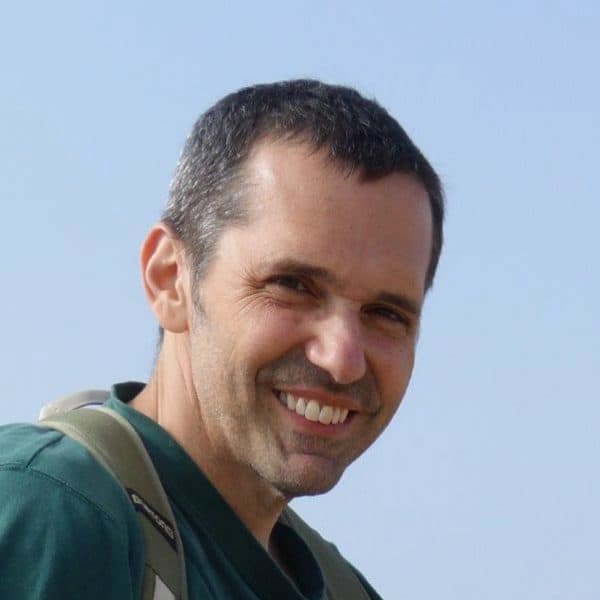
A1. Hello. My name is Elliott. I am a physician, a psychiatrist, a child psychiatrist, an addictions psychiatrist. I am the Director of Medical Psychiatry at a smaller community general hospital affiliated with a much larger Boston academic center. I am board-certified in general psychiatry, child and adolescent psychiatry, and addiction medicine. I am also an assistant clinical professor of psychiatry at Tufts University School of Medicine. I am also a forensics psychiatrist for the Boston Public Defenders’ Office, and I am the consulting psychiatrist for the Judge Rotenberg Center, a specialized educational center for kids and adults with severe developmental and/or intellectual disabilities. That said, a little less recently I have been a failed critical theorist – like some of you, I dropped out of graduate school, in my case, a doctoral program, and worse, immediately after passing my doctoral exams. (My graduate field was not in any science, by the way, nor was it psychology, but rather, Near Eastern Languages and Cultures.) I have also been a former high school teacher (I taught Latin and Greek) – I remember the awful conversation with my boss six months into my last teaching contract when I told him I was going to be quitting in order to attend medical school. He asked me where my sense of honor was. (I could only look at him and shrug. I console myself now in that at least I looked at him.) I have been an adjunct faculty college instructor. Enough said about that. Going way the f—k back, I am a former housepainter, bouncer (or ‘door-man’, depending on the cover charge), and ice cream slinger. I am a former security guard, a former secret shopper. I am a former line cook, airport courtesy van driver, and mover (not as in paired with ‘shaker’, but literally, a house mover). I am a failed poet and questionable writer. Yet these former identities are often somehow more real to me than my current professional life. Perhaps because I have been down and out. Because I have struggled from the bus station to the bus station. Because I can honestly answer ‘yes’ when my patients throw quasi-rhetorical questions at me, “Do you have any idea what it’s like, Doc?”
That said, despite multiple board certifications, and equivocal academic credentials, what I mostly do is specialize in crisis intervention. In sitting, or standing, face-to-face with those in the midst of struggle. ‘Hanging with’ them, as we used to say. I do my best to staunch the mental bleeding, to suture the emotional wounds, to stop up the incontinence of anguish. There are no real protocols or algorithms for what I do. Much of it, if not all of it at times, is based on instinct, impression, and feel. I size up the exam room and go from there. I have an advantage, I must confess, in that I work from a general hospital setting. I have backup, security, and a ready array of drugs and restraints at my back. And perhaps most importantly, I have the hidden office space to which to escape, to allow me to sit back, to take a deep breath, and to reflect. To write..
Q2. What were the key challenges you faced while writing your book “Reconceptualizing Mental Illness in the Digital Age”?
A2. The biggest challenge was presenting evidence, in a convincing way, that runs contrary to the accepted narrative of the moment. So much of how we think of mental illness is dictated by outdated manuals, outdated research methodologies, outdated party lines. So much is now dictated and manipulated as well by Big Pharma, Big Insura, and Big Academia, obviously the major players with major financial stakes in the game. And increasingly, mental illness is dictated, and created and nurtured, by mass and social media. The challenges have been to find effective methods of classifying and describing these newer illnesses, all the while drawing appropriate critical attention to our crumbling foundations, all the while walking a political tightrope. For psychiatry, more than the rest of medicine, has become a victim of the neo-Holy War politics here in the post-pandemic spirit of regressive self-loathing. The newer generation of practitioners, in fact, is doing its best to make the field fit a predetermined agenda/dogma of what ‘they’ want ‘it’ to be, i.e. life as it never was, or is, or should be. Unfortunately, as usually happens, reality keeps getting in the way. It is what it is, as the unassailable logic would have it, and perhaps the most challenging piece of all is that everybody knows a little bit about mental illness; rewriting these conceptions, demonstrating misconceptions, tearing down, at times, these deeply held edifices. though necessary, have been exceedingly difficult.
Q3. What books or authors have most influenced your own writing?
A3. This is an interesting question for a physician. Medical school was pure torture in that it did not allow much time for reading. I remember wanting nothing more than to read actual real books. Bound, paper books, with actual ideas and thoughts. With unapologetically critical philosophies. Literature, that is. So, what did I read? I read crazy stuff. I read Hamsun and Dostoyevsky. I read Laurence Durrell and John Fante. I read Bowles and Frisch. I read Anthony Burgess and Henry Miller. I read Nabokov and Katzantzakis. I read Yukio Mishima. I read Jean Genet and Jeanette Winterson. I read Kurt Vonnegut. (And shhhh, don’t tell…but I may be the only psychiatrist in history to have read all the novels and short stories of the Marquis de Sade.) I read chapters here and there of the Beat boys. I read Epicurus and Lucretius. Of philosophy, I read Spinoza and Bayle. I read William Godwin and Thomas Paine. I read Diderot, Helvetius, and d’Holbach. I read Kierkegaard and Nietzsche. I read Marx and Gramschi. I actually read Freud, the philosopher and sociologist, and a chapter or two of Bergson and Heidegger. I read the novels of Sartre and Camus. When I went into medicine and psychiatry I devoured all of Adorno’s and Horkheimer’s, all of Foucault’s and the other anti-humanists’ near-pathologic hatred of the field. And now that I am a full-fledged doctor? Along with my germ-infested collection of white coats, I have tossed most of the medical ‘literature’ aside once again in favor of the real thing. I continue to read the post-structuralists, the post-dialectics, the postmodernistas. Indeed, I’ve always been at least a generation, or more, behind, and so my bizarre doctor-training went on, and goes on. Textbook in one hand, ‘the Other’ in the other.
Q4. What’s your favorite spot to visit in your own country? And what makes it so special to you?
A4. I live in America. In Massachusetts. (The first state to legalize slavery, in 1641, and the last state to adopt universal male suffrage, in 1856.) My favorite spot to visit, however, is a place called Palace Playland in a town called Old Orchard Beach on the southern coast of Maine. Palace Playland is an old-fashioned, honkytonk amusement park right on the beach, complete with boardwalk and arcades, that reminds me, with nearly overwhelming nostalgia at times, of the New Jersey shore of my youth. My daughter loves it, too. There’s a Dairy Queen right across the street.
Q5. What inspired you to write the book ‘Reconceptualizing Mental Illness in the Digital Age’?
A5. The inspiration for the book was my own frustration, at times despair, as a doctor, as a psychiatrist, as I navigated my way through these major systems, Big Pharma, Big Insura, Big Academia, and saw with increasing clarity just how naked these Emperors are, just how inadequate the current standards and dogma are in our new digital era, yet how rigid and inflexible these have all become. We are in an age less of true psychopathologies and more of techno-psychopathologies that mutate so quickly, that are unlike anything else that has come before. Something had to be written.
Q6. How long did it take you to write your book ‘Reconceptualizing Mental Illness in the Digital Age’?
A6. Overall, probably two years or so. It was actually ready for publication in March of 2020. But then the pandemic hit, and illustrative of the points I make in the book, things changed so much and so fast, that I had to substantially revise the work, including the lengthy appendix describing the pandemic experience from a mental health perspective.
Q7. On what platforms can readers buy your books?
A7. It’s available on Amazon, Barnes and Noble, and other major book retailers. It’s also available directly through the publisher, Cambridge Scholars Press.
Q8. Tell us about the process of coming up with the book cover and the title ‘Reconceptualizing Mental Illness in the Digital Age’?
A8. The book cover design was meant to create an image that combined the connotations of the title and the subtitle. The title is ‘Reconceptualizing Mental Illness in the Digital Age’. The subtitle is ‘Ghosts in the Machine’, meant to reflect both the virtual milieu in which most of us now live and the mental consequences of such. I wasn’t sure, in fact, which should be the title and which should be the subtitle. I had a great book designer, Kerry Cronin, who created a wonderful design that leaves it ambiguous while also capturing the tension of negotiating our digital times.
Q9. When writing a book how do you keep things fresh, for both your readers and also yourself?
A9. I like to write in spurts. I grow stale quickly if I sit for more than an hour or two. By writing in shorter bursts I can quickly review the previous day’s work, fix it, and move on. For readers, I like to mix up topics, I keep the chapters broken into manageable sections, I try to use humor as best I can (for better or for worse), and I try to be as straightforward and honest as I can with my writing. I refer to outside sources frequently, ranging from Ancient Near Eastern texts to the latest Taylor Swift lyrics. I cite movies and television, as well as books and other media.
Q10. What is the most valuable piece of advice you’ve been given about writing?
A10. Rewrite. Writing is rewriting. Over and over till it’s right. The first draft is a great template, but the real writing occurs with the revisions. The next great bit of advice I have been given is to read your work out loud to yourself. This really helps you hear if you are making sense, if you are logical, if the words flow.
Buy Elliott Martin’s book on Amazon
 Sassy Reviews