
Q1. Hello, can you please introduce yourself? Readers would love to know more about you.
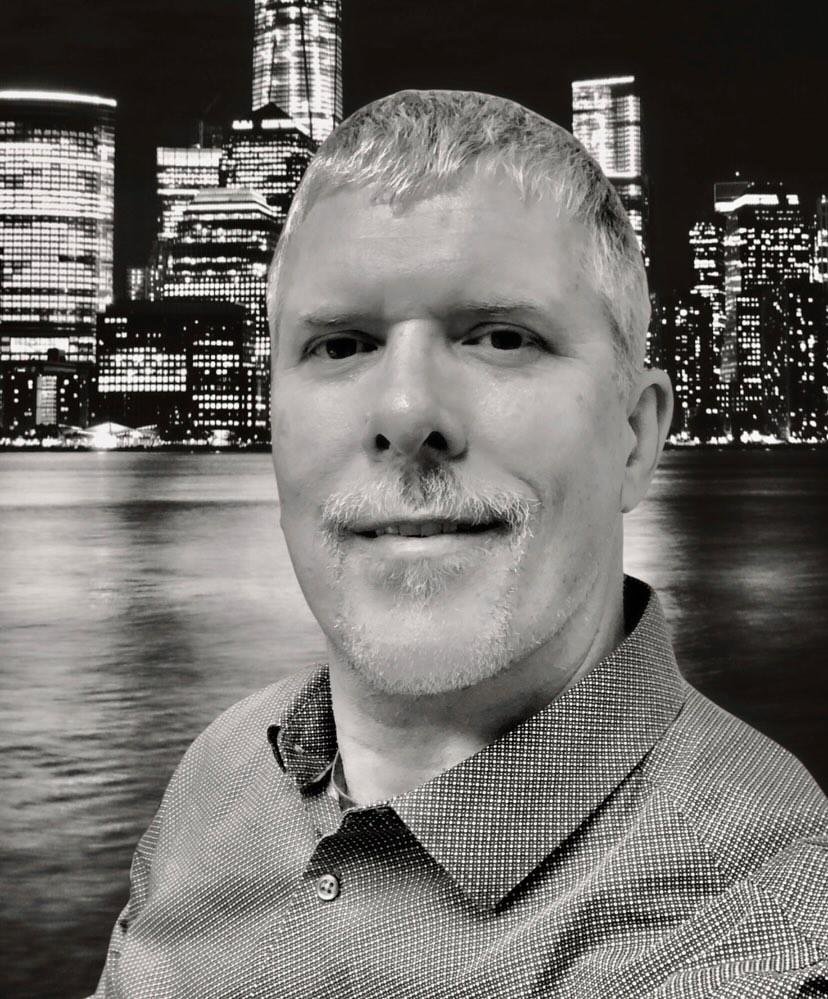
I’m David Gliniewicz, and this marks my first venture into the realm of writing. The desire to get down my thoughts has been with me for quite some time, fueled by an innate sense of writing talent that I’ve always felt. Despite this, I struggled with the confidence to embark on such a significant undertaking, especially one as substantial as a memoir.
Before venturing fourth into writing, my professional journey unfolded through diverse roles in radiology, where I conducted X-rays and CT scans. I also delved into the field of construction for almost 10 years, undertaking various jobs that added breadth to my experiences. Additionally, I dedicated a portion of my career to an unconventional school caring for disabled children. Beyond my professional gigs, I wear the hat of a musician, harbor a profound love for computers and technology, and possess a deep lifelong interest in the realms of spirituality and the paranormal.
Growing up as the son of an engineer, especially one who contributed to the Apollo missions, held immense significance for me. My father, Allen, embodied the essence of a Renaissance man, a trait I delve into extensively in the memoir. Witnessing him navigate through various domains, surmounting obstacles with a determination to do whatever was necessary, left a profound impact on me.
My admiration for my dad’s versatility, reminiscent of Da Vinci’s diverse pursuits, runs deep. Over my lifetime, his influence has shaped me into what I consider to be a Renaissance man as well. This perspective has manifested in the diversity of my career and my willingness to venture into any territory. It’s a quality I cherish about myself – the ability to intricately connect seemingly unrelated elements. I find joy in weaving together threads that, at first glance, may appear foreign, only to reveal an unexpected bond and at once they are then seen as intertwined. I also enjoy shocking people a bit with my inner diversity. As an illustration, during a visit with my stepdaughter, who my wife and I were both spending time with, she inquired about the music I played back in high school when I was in bands.
“Metal!” I enthusiastically responded.
In response, she made one of those gestures where the head slightly pulls back, and the chin tucks down—a classic expression of incredulity. I relish provoking such reactions in people; “Climbing the Glass Mountain” has perhaps a few instances like this, and I aim to create more.
If you glance at my picture, I don’t exactly fit the stereotype of a metalhead. Nonetheless, I was a fan of Motorhead and even managed to get Lemmy’s autograph at one point, despite him mistakenly writing the wrong name in the dedication.
Q2. What were the key challenges you faced while writing your book “Climbing the Glass Mountain”?
Challenges faced in writing the book were mostly technological. My father Allen lives on the East Coast and I’m more than 2000 miles away on the West Coast. And due to my father’s advanced age, he’s 88 now; coordinating with technological devices even in the hands of an engineer can be quite a challenge so we ended up having most of our conversations over face time because my dad’s cell service was so bad. It never seemed to work for any length of time, if my dad moved his arm the wrong way, the call would get dropped.
There were many iterations of devices in which we tried to give my dad the ability to record his voice but most of them were just too complicated for someone whose sight is not that great to be able to use.
And I wanted to give my dad his voice in the book as strongly as possible throughout the memoir. I didn’t want Allen’s voice to be filtered through my awareness so much. And although I do provide commentary in the book, I wanted my dad’s voice to be separate from mine. I think there’s a sort of unique vibration to each of us, and if we pay attention and receive that unique vibration then we truly heard, felt, and understood that person. I wanted others to be able to experience that kind of understanding with my dad, as I do.
Q3. What books or authors have most influenced your own writing?
I had visual anomalies in my eyes for most of my younger life, so I avoided reading for the longest time and then after puberty my body changed, and these went away. I wanted to read, but I just couldn’t keep my eyes focused on the lines of the page. So, it was in high school that I really became interested in reading and writing, and I was drawn to a book by Stephen King “The Stand”.
In his storytelling, which is so powerful, especially to me as a young guy, and the familiar sort of informal structure of his dialogue, it spoke to me with little effort it was a direct download to me. King’s yarns were also so beautifully structured, and they pulled me into his superb worlds. “The Stand” opened a completely new world for me.
While reading “The Stand,” another notable experience occurred in the breezeway of my high school. A teacher spotted me engrossed in the book, sparking a conversation that underscored for me the power of books to connect people—an element I deeply craved at that point in my life. This realization reshaped my perspective on books, viewing them as a means to bridge gaps with others.
This connection through literature became even more apparent when one of my first girlfriends introduced me to John Irving’s “The Cider House Rules.” As a young high school guy, her mention of an unusually explicit section in the book piqued my curiosity completely as a young man brewing with hormones, leading me to explore that aspect.
Spoiler Alert:
True to her words, the book did have the expected provocative content.
Later, someone with whom I was in a relationship introduced me to Milan Kundera, and the first book I delved into was “Immortality.” Describing the impact of this book almost defies words, given its profound philosophical underpinnings, spiritual facets, comedic elements, and its remarkable influence in literature.
Q4. What’s your favourite spot to visit in your own country? And what makes it so special to you?
Valley Forge Park, near King of Prussia, Pennsylvania, where my family and I grew up, holds a special place in my heart. I’ve visited it countless times throughout my life, each time in different contexts. It’s been a sanctuary where I’ve sought solace, a casual hangout with friends, a place to reach out for love, and an environment to enjoy in the company of a significant other.
One memorable experience was a Huckleberry Finn moment on the Schuylkill River, which runs through part of the park. A friend named Stuart and I had constructed a raft for a raft race that had been organized by a local radio station in Philadelphia the previous year. Unaware of the chaos and pollution caused by the previous event, we eagerly brought out our raft from my dad’s car, only to find it sinking shortly after entering the river. Little did we know that the previous year’s debauchery had led to the cancellation of the raft race.
In a more recent visit to Valley Forge after my mom’s funeral, when I felt heartbroken and stranded in Pennsylvania after the family had dispersed, the park became a place of healing. Even after the funeral, with a day to spare, my nephew Braden and I walked through the park, talked, and found some closure after my mom’s passing.
Subsequently, I returned with my wife to share the park’s wonders with her and brought my dad along, as it held significance for him too. Valley Forge Park, with its diverse memories, has been a constant source of comfort and connection throughout my life.
Q5. What inspired you to write the book ‘Climbing the Glass Mountain’?
Observing my dad living in a care home was mostly positive, but I sensed a disconnection from others that I wanted to address, this sad condition. Having experienced that feeling of disconnection since high school, I actively sought ways to communicate more effectively and not come across as distant. I recognized that individuals like my father, an engineer, often have a way of speaking that may sound foreign to many, as a result a distance can manifest, and in the face of COVID it can be unbearable.
My sister Leah, a journalist, came up with the idea of having our dad write down his memoirs. Due to her busy schedule, she couldn’t dedicate the time needed to write a memoir herself.
Q6. How long did it take you to write your book ‘Climbing the Glass Mountain’?
The first draft took 2 to 3 months and then I polished the draft for another, probably, 2 to 3 months beyond that. I was surprised how quickly it went. My editor Eeva Lancaster gave me great courage and faith in my own abilities and some good advice, this all went such a long way to helping me get through all the hurdles in writing a first book. For me most of these hurdles were mental blocks preventing me from finishing.
Q7. On what platforms can readers buy your books?
The book is accessible on Amazon, available in both Kindle Unlimited and a paperback print version. Additionally, signed copies of my books, authored by both Allen and me, are sold on my website, davidauthor.com. An audiobook version is currently in development on the Amazon ACX platform, with ongoing auditions for voice actors.
Q8. Tell us about the process of coming up with the book cover and the title ‘Climbing the Glass Mountain’?
That’s a funny story – the dream I had for the cover turned out to be precisely what you see on it now. Initially, my first concept pitched to the artist differed; I envisioned a play on words, incorporating a stained-glass treatment of the mountain, offering the impression of viewing a stained-glass version of the cover. However, the artist wasn’t enthusiastic about this idea, feeling it clashed with the serious themes of my book. Though initially disheartened, I trusted the artist and urged them to proceed with their vision.
To my surprise, the first image of the redesigned cover they presented was essentially my initial idea, only executed even better. Reflecting on it, I suspect I may have restrained myself from pursuing my initial concept, possibly thinking I could tackle it on my own. However, I acknowledged my limited technical expertise in creating such a cover and realized that my strengths lie in describing and guiding others in the artistic process. It seems I’ve evolved into more of an art director, learning to step back from tasks where my skills might not shine as brightly.
The book’s title was my father Allen’s idea, he had heard a folklore tale on the radio of this story, it spoke to him, and he realized it held a piece of his own family’s lineage, the interest in fairytales was one in which our family’s history was also steeped. Much of my family’s history is obscured and it is frustrating for both my dad and me. We have both turned to spiritual and metaphysical means to divine our primordial roots.
The title evokes innovation, perseverance, and a spiritual connection in the face of adversity and Allen, and I greatly admire these qualities!
Q9. When writing a book how do you keep things fresh, for both your readers and also yourself?
That’s a thought-provoking question as well. Throughout the book, there were instances where my dad, being an engineer, framed his dialogue in a rigid manner. In those moments, I sensed an underlying emotion that might be suppressed by the formality of his words. So, I delved into what he might be feeling, imagining how I would express those emotions in his shoes. It’s a skill I believe I possess – the ability to connect with others, engaging in a kind of dialogue even when unspoken.
In the book, my dad shares how he has dialogues with images from his dreams through meditation, evoking dream images and engaging in conversations with them. I find a similar ability within myself, where I meditate, focus on a person, and almost channel what they might want to convey.
I firmly believe that a story needs to evoke emotion or conjure vivid images to resonate with readers on an emotional level, tugging at their heartstrings.
When I initially began writing, I adopted a utilitarian, engineer-like approach, similar to my dad’s. Over time, I’ve dedicated myself to unlearning this style, seeking a more emotionally resonant and visually evocative storytelling approach.
Q10. What is the most valuable piece of advice you’ve been given about writing?
I’m someone who questions advice; I put it to the test to see if it genuinely benefits me. Many commonly suggested practices don’t resonate with me. For instance, the idea that one must write every day is often advocated by authors. Yet, in reality, we engage in writing daily through texts and emails. Sometimes, I feel the need to recharge, and when that happens, I allow myself to rest or take a nap. Surprisingly, during these moments, I find that my dreams can resolve problems and spark creativity in ways I hadn’t considered before.
I believe in embracing my dad’s advice to tap into the well of the unconscious and recognizing that what works for me might not work for everyone else. It’s about understanding ourselves and finding approaches that genuinely benefit our unique creative processes.
Buy Climbing the Glass Mountain on Amazon
 Sassy Reviews