
Q1. Hello, can you please introduce yourself? Readers would love to know more about you.
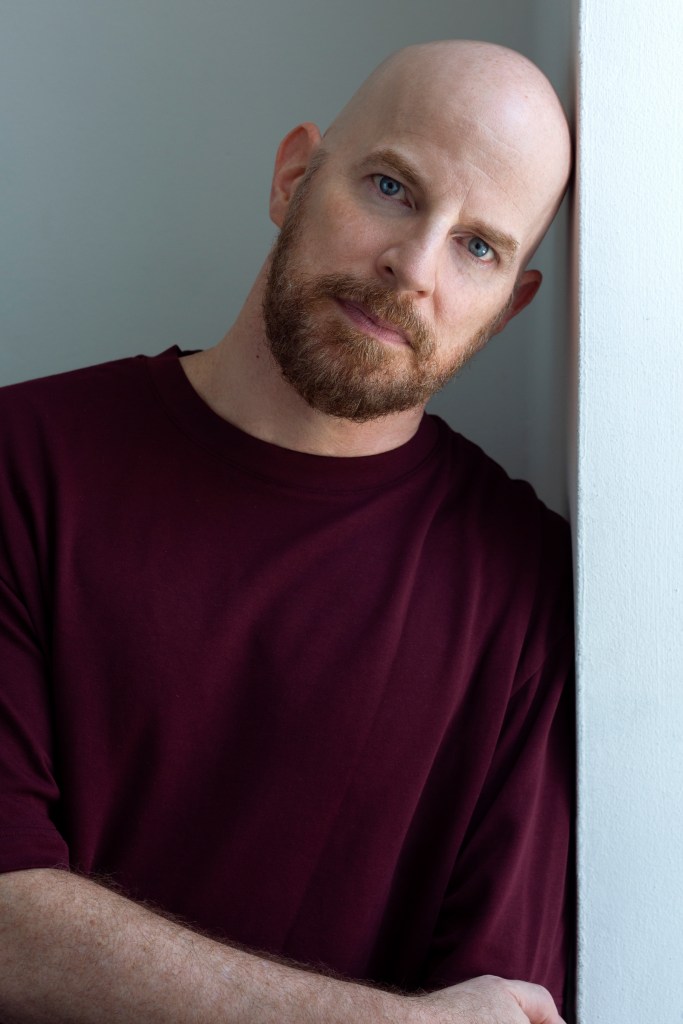
1. I taught literature for 30 years at the Brooklyn campus of Long Island University. Though I have a PhD in English, I never did what you might call “academic writing.” My work has always been narrative, whether fiction or non-fiction. I was born and raised in Reading, PA but have lived for most of my adult life in New York City. I love the energy, diversity, and cultural richness of New York.
Q2. What were the key challenges you faced while writing your book “American Scholar”?
2. The key challenge I faced when writing American Scholar was finding the critical distance needed from the subject matter to writer about it with lucidity. The book is based on personal experience, and that both fueled my creative energy but also made it difficult, sometimes, to stay focused on the essential story I was trying to tell. At times I had to alter the facts of what actually happened in order to get at the higher truth I was searching for.
Q3. What books or authors have most influenced your own writing?
3. The author that has most influenced my writing is Virginia Woolf. Her novels are puzzles that I love to solve, though they are so poetic and profound that they can never be totally solved. Woolf minimizes plot in favor of character. She mines the consciousness and unconsciousness of her characters even as she shows them going about their daily business. She creates characters who are engaged in the lifelong struggle to find meaning in existence, and she often depicts people who are disappointed with their lives. All of this I find enormously interesting, and it has influenced the way I write fiction. Perhaps the novel that is most important to me is Woolf’s 1925 masterpiece Mrs. Dalloway, about one day in the life of an upper-class wife and mother and, parallel to her story, the life of a shell-shocked war veteran.
Q4. What’s your favourite spot to visit in your own country? And what makes it so special to you?
4. My favorite spot to visit in the US might be The Metropolitan Museum of Art in New York City. The Met is an encyclopedic museum with more than 1.5 million objects spanning over 5000 years of art and culture. It contains the whole world. I particularly love looking at painting, and the Met has a stupendous collection of paintings from the Middle Ages up to the present. I feel sane and safe and free in the Met.
Q5. Is there lots to do before you dive in and start writing a book?
5. Before I dive in and start composing a book, I do a lot of reading and outlining. I write in my diary about my ideas for the project. I create mini biographies of my characters, which help me get to know them. I make timelines of characters’ lives, which also help me flesh out their stories in my mind before I start composing. Sometimes I travel to places that are relevant to the book I’m working on, taking photos to help me capture the spirit of the place.
Q6. How long did it take you to write your book ‘American Scholar’?
6. American Scholar started out as a memoir. I began working on it in the late 1990s. But I wasn’t entirely satisfied with it as a memoir, so I put it aside and turned to writing fiction. Then about eight years ago, I decided to tackle the project again, but this time as fiction. I completely reconceived and rewrote the book. So all totaled, I’ve been working on this book on and off for about 25 years.
Q7. On what platforms can readers buy your books?
7. Readers can buy my books on Amazon and through my website, www.patrickehorrigan.com. You can also ask your local bookstore to order it.
Q8. Tell us about the process of coming up with the book cover and the title ‘American Scholar’?
8. The title “American Scholar” was inspired by Ralph Waldo Emerson’s famous 1837 essay “The American Scholar,” which is referenced a couple of times in the novel. It’s often been called America’s “declaration of cultural independence” from Europe and the Old World. A brilliant, stirring essay. The title also refers to the novel’s protagonist, who is a professor and writer; it refers to the subject of the protagonist’s latest book, the real-life Harvard professor and American literature scholar F.O. Matthiessen (1902-1950); and it refers to the primary love interest of the protagonist, who is a budding scholar himself. So it works on multiple levels. As for the book’s cover: I supplied the book’s designer with a detailed description of the book along with some ideas for images (men reading books, brains, marginalia). He came up with a handful of designs, and I and the published made our choice. We then asked the designer to tweak it—to try it in different colors, to adjust the image, and so on. I’m really happy with the design we finally came up with!
Q9. When writing a book how do you keep things fresh, for both your readers and also yourself?
9. I keep things fresh for me as a writer and, I hope, for my readers by choosing subjects that I find challenging to understand. I hope by writing about them, I will reach a better understanding, and this intellectual and creative endeavor will communicate itself to readers and appeal to them. I try never to stay on the surface of things but to dig down deep into my subject. I create characters who on some crucial level do not know themselves, a psychological phenomenon that interests me and, I hope, my readers. Also, each of my books revolves around a specific artistic medium (film, painting, architecture, literature), and I do research on that medium as part of the composing process. I think this also communicates itself to readers. I am pushing myself up to and beyond my cutting edge.
Q10. What is the most valuable piece of advice you’ve been given about writing?
10. This isn’t exactly a piece of advice, but one of the most valuable lessons I’ve learned as a writer is that revision is always possible and it can really improve a piece of writing. Sometimes we fall in love with our words, with the way we write something on the first draft, but usually that’s not and cannot be the end of the story. There is usually a lot more work to be done. That work can be daunting, and you do have to cut things, get rid of things, change things, rethink things, but doing so almost always leads to a better outcome. I’ve come to love the process of revision. For me, that’s when the real pleasure kicks in.
Buy American Scholar on Amazon
 Sassy Reviews