
Q1. Hello, can you please introduce yourself? Readers would love to know more about you.
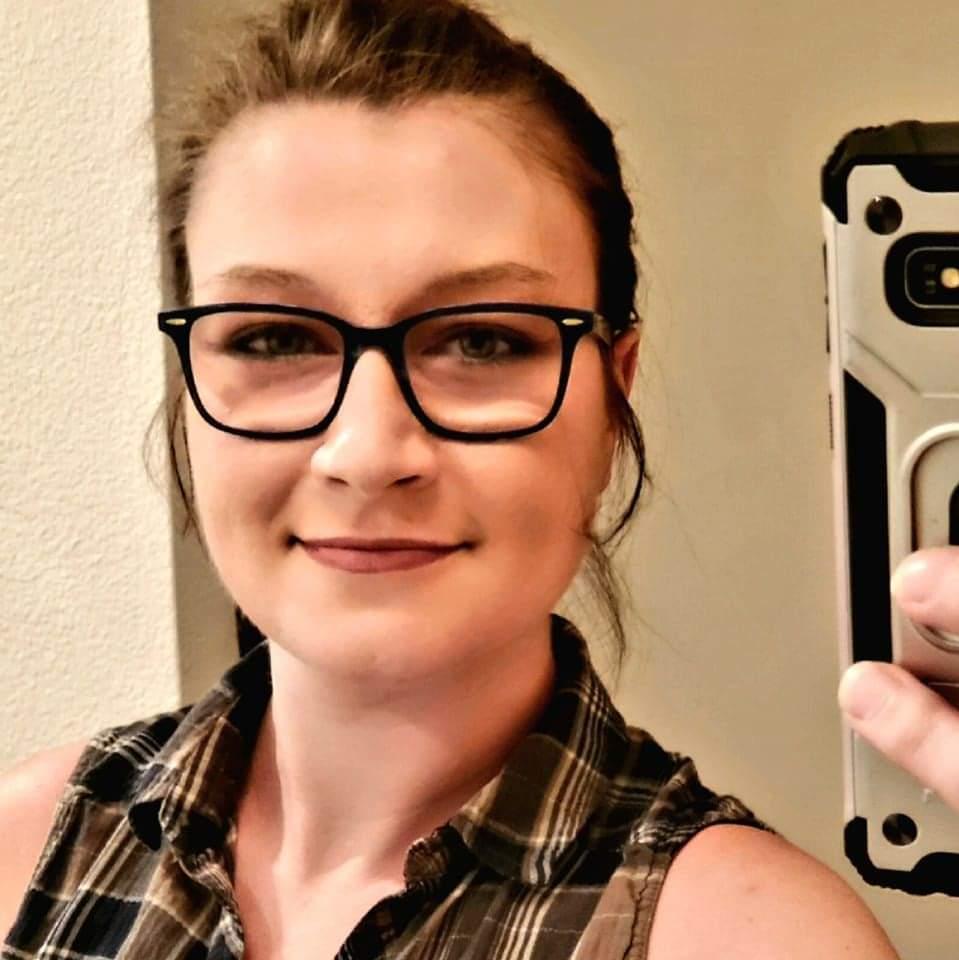
Hi there! The ‘C’ stands for Charis. To this day, I can count the people who’ve pronounced my name correctly on the first try with just one hand. So when it came time to choose a pen name, I decided to drop the ‘Charis’ and go with my middle name instead. Ever since I could talk, I’ve been telling stories. I used to sit my mum or dad down at our old typewriter and tell them what to type so I could bring my story to kindergarten for show-and-tell. When I got older, I started writing all my stories by hand in spiral notebooks (usually during school). I’m not sure exactly when I started drawing my characters, but I was heavily inspired by Japanese manga and anime. I think I’d always my characters in my head and eventually it felt right to see them on the page, too. I majored in Cinema Studies at University of Oregon for my Bachelor’s and made it about 2/3rds into a Masters in Film Production at the University of Central Florida.
Q2. What were the key challenges you faced while writing your book “PEROIA: The Cressidian Dhukarra”?
I think the biggest challenges I faced in writing “PEROIA: The Cressidian Dhukarra” were burnout and that sneaky bugger we call ‘imposter syndrome’. There were so many ideas I wanted to explore for this book and the rest of the series, and the research was as exhilarating as it was exhausting. And because I wanted to publish independently, all marketing and advertising fell entirely to me. I was fortunate enough to have an editor (thanks, Mum!) and a small crew of Beta readers (a thousand thanks, all!) on my team. When the time finally came to publish, my anxiety was out of control; was I good enough to be doing this? Would I accidentally offend someone I had no intention of hurting — or even worse, the very people I wanted to honour the most? Would anybody like it? Would anyone ever read it? At the end of the day, and after a lot of thought, meditation and prayer, I concluded that as long as I loved what I’d made, I should be proud of what I’d accomplished. What mattered most is that I faced my challenges and overcame them.
Q3. What books or authors have most influenced your own writing?
I’ve long admired the epic scale and world-building of authors like J.R.R. Tolkien, although the density and pace of most of his works made them a bit challenging (I recently learned that I have a lot of ADHD indicators). More recently, I’ve been fascinated by the “Dune” series by Frank Herbert, which are also a bit dense but much more easily consumed as audiobooks (so I can simultaneously draw or knit, to keep myself focused). As for my writing style, I like to think I’ve settled somewhere between the imaginative rhetoric of Terry Pratchett and the darker whimsy of Neil Gaiman (especially “Stardust” or “Good Omens”). Maybe a dash of Edith Pattou’s “East” and a whiff of Erin Morgenstern’s “The Night Circus”, for good measure.
Q4. What’s your favourite spot to visit in your own country? And what makes it so special to you?
It’s hard to pick a favourite spot because my idea of the perfect place is a little bit of a moving target. But I think my favourite place to be, in any country, is someplace surrounded by nature. I grew up in the Pacific Northwest of the U.S. and my memories are filled with mountains, high deserts and ancient river gorges, vibrant green forests and blustery coasts. Wherever I go, I am always happiest when I can hear the sound of water — especially rain. To me, rain means life. Standing in the rain, amongst nature, it feels like standing in the presence of God himself.
Q5. What inspired you to write the book ‘PEROIA: The Cressidian Dhukarra’?
Growing up, it felt like there were always a few stories missing from the world. I wanted to read about a girl like me — not just another pretty princess, but a girl with ambitions. I wanted a hero who was strong and smart, who could fight her own battles. And while I love the tension between attractive rivals, I wanted to write an adventure that didn’t necessarily have anything to do with romance. I wanted a story that rewrote the world, that shook up the dreary status quo that has become the human condition. So I dreamt up a story where the tomboy gets the limelight, people are free to be who they are and even the mundane is magical.
Q6. How long did it take you to write your book ‘PEROIA: The Cressidian Dhukarra’?
Technically, it has taken just over thirteen years to even get to ‘The Cressidian Dhukarra’ — originally, I think I called it ‘The Berserker”. It started as a sketch of the characters in a notebook at school, and then I’d write a few pages here and there. I didn’t have many serious intentions for it until about ten years ago, and elements of that draft still survive in the current version. During the pandemic, my therapist asked me what used to make me happy and I realised I hadn’t written a word of my book in over a year. Since then, I’ve devoted my energy to little else.
Q7. On what platforms can readers buy your books?
Currently, the ebook is available in English on Amazon Kindle, in all markets. The paperback will be available soon as well, either through Draft2Digital or Amazon (or both), release TBA.
Q8. Tell us about the process of coming up with the book cover and the title ‘PEROIA: The Cressidian Dhukarra’?
I’ve gone through several titles, most of them arguably more approachable; “Peroia: A Book of Days”,
“Berserker — A Peroian Book of Days”, “Peroia: A Chronicle of Lost Days”. But in the last couple of years, my ambitions for the series have grown and I wanted to come up with something more integral to the world of the story. In Peroia (and beyond), there is an order of esteemed bardic healers known as the Hearts; their ancient calling is to preserve their people’s culture through sustainable health and the recording of histories. These histories are given relevant names in the language of their culture. In this instance, “The Cressidian Dhukarra” refers to ‘tales of the journey’ as written by the Heart, Cressida (the protagonist). The sequel is named with the same convention: “The Cressidian Bunaburra”, or ‘tales of arrival’. For the cover, I originally wanted to feature my protagonist and major supporting characters; since I included several illustrations, I thought it would be a fun little sneak peek of what to expect inside. But every design I created turned out a bit too busy, especially once I added the titles. For someone susceptible to visual overstimulation like myself, it was a little disheartening. So I decided to try a more conceptual design with important colours and elements from the story. Honestly, I didn’t expect to love it as much as I do when I first opened that blank canvas on Photoshop, but here we are.
Q9. When writing a book how do you keep things fresh, for both your readers and also yourself?
I think the best way to keep a book fresh is with dialogue. Just because a writer uses stiff, proper language when they write doesn’t mean their character would, and hardly anyone uses real grammar in ordinary speech. And even if they did, a book is your world and its history has unfolded according to your rules; who’s to say they didn’t have contractions in the common tongue of the 10th century? In my opinion, dialogue that sounds natural when read aloud will always surpass dialogue that follows all the rules.
Q10. What is the most valuable piece of advice you’ve been given about writing?
The best advice I’ve ever received about writing was from a visiting filmmaker during my cinema undergrad at University of Oregon. Her name is Athina Rachel Tsangari, and during her interview she said she never just makes a film because it’s what she does for a living. She makes a film when she has a story that she feels deep down like she’ll die if she doesn’t share. So if you have an idea, but you’re not sure what to do with it yet, just give it time. Jot down your thoughts and sketch out your dreams so you don’t forget, but don’t rush yourself into telling a story that you don’t yet believe in whole-heartedly. Because someday, when it all comes together, you’ll feel that need and know that it’s time.
Buy Peroia – The Cressidian Dhukarra on Amazon
 Sassy Reviews