
Q1. Hello, can you please introduce yourself? Readers would love to know more about you.
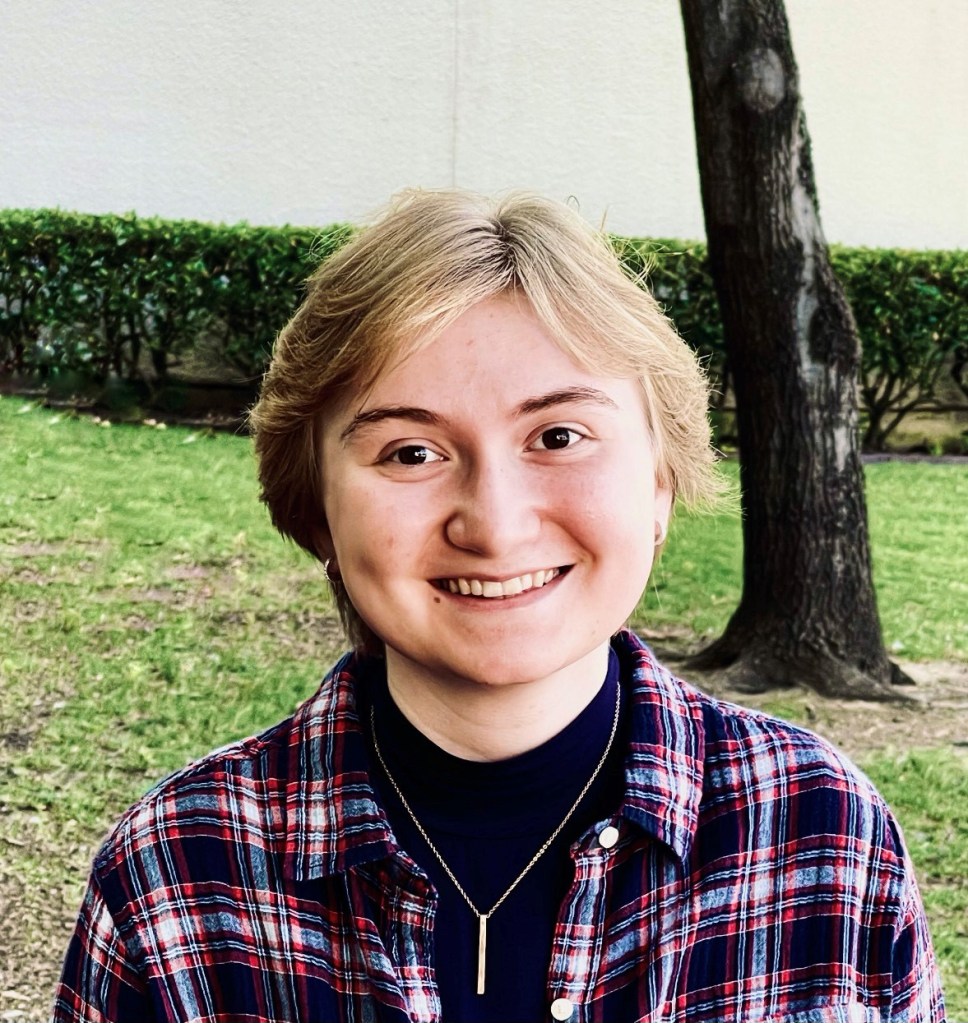
People seem most infatuated with the mundane details, so I’ll start there: My name is Margaret Beaver, I’m seventeen years old, and, occupation wise, I am an author, poet, novelist, memoirist, educator, photographer, artist, and self-proclaimed philosopher; at home, I’m the annoying little sister, frantic cat mama, and an average disaster with more books than wall space. I’ve lived in my hometown of Plano, Texas my entire life, and it was here I first hatched my creativity at the age of five, at which time I developed the fanatical habit of drawing with colored pencils on the walls, marking on furniture with Sharpie markers, and sketching the occasional illustration to accompany a fictional story I would swear to be true. At eight years old, I wrote my first semi- formatted novel, a forty-seven-page abomination about spontaneously dying butterflies, and I still keep the original manuscript shamefully tucked away in a drawer in my bedroom.
In February of 2020, just a month before I started seriously pursuing poetry, I exercised my impulsivity and submitted two of my very first poems ever written, which strangely enough elected me Topical Winner two consecutive times for the Live Poet Society of New Jersey’s “Of Love and Dedication” and “Inside of Me” publications (beginner’s luck). Featured in one publication would soon become the first poem of my collection and a fan favorite, “Sad boy.” After that, I submitted more poems for consideration and came up empty every time. The next month, I began the initial stages of composing inkwells. out of sheer boredom (and spite). I was fifteen years old when I received my first publishing contract with Pegasus Elliot MacKenzie Publishers, and inkwells., debut poetry collection chronicling my struggles with mental health, was published thereafter in June of 2022.
In terms of recency, my debut novel (excluding the dying butterfly incident), Flowers for Papa, is finally coming to a press near you in late 2023. Accompanying it is also my second poetry collection, Seasons: August’s Collection. While my editors are tackling those catastrophes, I’m attempting a student’s aspiration of graduating high school without incident.
Q2. What were the key challenges you faced while writing your book inkwells.?
For how sensitive the content is, writing inkwells. was easy. It was a very easy, smooth, deliberate process. I came up with a poem very few days—sometimes I wrote multiple poems in one day—and then once I began feeling better and my symptoms were more manageable, I collected all those pages and all those files on my computer and compacted them into one document. It was never my intention to actually do anything with the poems—I hadn’t meant to write as many as I did—but after I realized I had scrawled almost twenty thousand words of pure illness, I had to comprehend the fact that I had accidentally created something that was such a genuine, unaltered, and unrestrained demonstration of the realities of mental illness. I knew I had always wanted to be a writer, but I had wholly expected to enter the literary industry by way of some fiction novel I had completely made up; I never meant for any of this.
I’ve been asked so many times—by strangers, by friends, by publishing houses— “What is your reasoning for writing this?” “What are you trying to achieve?” And the answer is very simple. For people not dealing with mental health problems, particularly anxiety, depression, or PTSD, many of the poems in this collection can feel very dark and unsettling. But this is not a work restricted to one group of people; this is not a one-sided argument. For people who aren’t struggling, this collection is knowledge; for people who are struggling, this collection is validation. These poems can be very redeeming and comforting, in that they support the notion that that no one is ever alone in their condition and there are many others who are trying to cope as best they can. Of course, I can’t speak on behalf of the entirety of the mentally ill population, but I can provide you with the knowledge that this is what someone could be feeling.
The only real challenge of the work, outside of surviving myself, was the ordering of the poems. I couldn’t decide if I wanted to group them together based on their degree of darkness or if I wanted to leave them miscellaneous. All in all, I ended up leaving the order miscellaneous because this order reflects the fluctuations of mental stability—one day you’re fine and then you’re not. So don’t be surprised if you read this wonderfully optimistic poem and then you turn the page and suddenly you’re subjected to something comparable to hellfire. That is life with mental illness.
Q3. What books or authors have most influenced your own writing?
My writing, fiction or nonfiction, novel or poem, can technically be categorized as belonging to the Young Adult audience. Only, I struggle with that label because it has somewhat of a negative connotation. YA books are received as if they’re only meant for kids, as if they have nothing truly important to deliver besides empty entertainment, and that they are incapable of broadening your perspective on certain issues and having some sort of development or impact to your person. One book that comes to mind for this example is Looking for Alaska by John Green. It is a truly phenomenal novel that reaches incredibly intimate and universal depths, yet it’s restricted to the kids’ section where not many adults would venture to. For one, I really love being able to bring a sentimentality and a depth to a uniformly juvenile genre, and I much enjoy the fact that my work is rather a compound of elements amalgamated to craft a well-rounded piece suitable for the Young Adult genre, but also containing the knowledge and lessons relevant to older adults or those struggling with mental health, self-harm, or suicidal tendencies. As a sufferer of those things myself, I strive always to make my message true and genuine, and especially when it comes to circumstances I closely identify with. I want, always, to confront the great concepts of life—love, meaning, morality, family, death—and my intention for writing is for my audience to reconnect with those uncomfortable yet inevitable elements—elements that are responsible for making life whole.
That being said, my most influential writers have been restricted to the kids’ section, and particularly John Green, who is my favorite author. I’m talking Paper Towns; The Fault in Our Stars; An Abundance of Katherines; Will Grayson, Will Grayson. Dashing Through the Snow by Debbie Macomber, Everything I Never Told You by Celeste Ng, It Ends With Us by Colleen Hoover, Girl in Pieces by Kathleen Glasgow, All the Bright Places by Jennifer Niven, The Perks of Being a Wallflower by Stephen Chbosky—these are all novels I hold very highly and works which brilliantly defy expectation or restriction.
Q4. What’s your favourite spot to visit in your own country? And what makes it so special to you?
I’m not a very adventurous person simply because my condition has made me terribly paranoid and uncomfortable with the prospect of being in unfamiliar places, with unfamiliar people. I’m very outgoing if I’d simply let myself. Recently, for the first time, my mother and I had driven the absolutely gruesome eight-hour round-trip to Houston, Texas, and we were on the road by 6 A.M. Nighttime and early morning are very beautiful, with all the shops and signs lit up and headlights bounding off the bridges. Everything is so much more fascinating when you’re half asleep. By seven-thirty, we had made it to a place called Ennis and my mom, who is simply so much more exuberant than I am, insisted we stop by the Buc-ee’s we had passed. Long story short, after perusing around with my slippers on and my hands in my pockets, my mother bought us both a cream cheese kolache for the road. My special place will probably change, but right now I think of Ennis, the almost-sunrise, and my mother’s happiness over absolutely nothing.
Q5. Is there lots to do before you dive in and start writing a book?
I’d love to say I have an actual writing process I adhere to, but really, I’m a very disorganized person in general and I truly have no intentions of following any deliberate format. The truth of the matter is: I don’t plot books. At all. I get a very abstract and completely detail-void idea, I write a rough narrative surrounding the vague premise, and then I occasionally dapple in miniature descriptions and try to word it as if I knew what I was doing all along. There’s lots of frantic scribbling outside the margins of my journals with the new ideas I randomly get, and I try to make note of incorporating those details back into the narrative once I review and type up everything I’ve handwritten.
Basically, as I progress, I make more things up and get more ideas. And then I write those down. Nearly nothing is planned beforehand—I’m too eager and overly excited to write when I get a new idea that I bound in immediately—or the things I plan are very monumental and plot- altering events, and I get the vague impressions of things that I want to eventually happen somewhere down the line, but I have no details to patch the storyline together to effectively and realistically get to that point. This leads to me sitting on rather elementary plot points for weeks or sometimes months without writing anything; just purely speculating. But then, I’ll listen to a song, I’ll read a book, I’ll watch a film—and I’m inspired again. It’s a very unruly cycle, going through rapid writing sprees and then lying dormant for such extensive periods, but I’ve always been one to make things harder than they need to be.
There are some projects, also, where I have to do more notetaking than usual because of the potential intricacies in addressing a side scheme. Any notes I make in the very beginning of the process are typically scraped or adjusted later when I figure out what I’m doing. This, consequently, leads me to rewriting entire sections—entire beginnings—once I get a better handle and understanding of my character’s personalities and their ultimate aspirations or destinations. I sketch the initial beginning almost purely as a filler to build on the progress of and to motivate an early draft, and then once my understanding grows of what exactly is going on in my head, I scrap everything that doesn’t align anymore or things that could be better or more vividly explained.
As you can see, it’s a disaster.
And then there’s the processes of poetry, which aren’t necessarily processes either. When regarding the differences between writing poetry and writing prose, there’s, first, the fact that you have total creative control in poetry: you don’t have to use perfect punctuation or capitalization since poetry is more an art than a literature. All discrepancies are essentially excused, and you can format your stanzas and your lines however you please. Poetry, also, doesn’t require as much substance—that is not to say, though, that poetry is lesser. Novels are an entirety; they are a comprehensive and hole-less architecture founded on complete and detailed narratives, the construction of entire personalities and their backstories, and the creation of sometimes multiple converging plotlines. Everything mentioned or foreshadowed has to have a reason, and there is almost always something to be later uncovered. All of this must be thought through, which can be terribly distressing—or some things end up fitting together accidentally. In general, novels obtain a lot more requirements than poetry, and so they take more brain power and can be impenetrably exhausting. But I’ve always had a knack for having a lot to say.
Q6. How long did it take you to write your book inkwells.?
As previously mentioned, poetry generally requires less essence—or the essence is its entirety, and poems are typically rather small. As an art, I would perhaps categorize poetry as one of the less demanding entities—or at least it is for me. In terms of inkwells., the entire collection was more of a relief rather than a hindrance. For example, the situation of inkwells. was rather unique: the reason for its particular rawness and vulnerability is the fact that it was written during and the product of what I would confidently describe as the worst mental health relapse of my life, caused largely in part to the fact that I had been ignoring my symptoms for well over four years—and I take responsibility for that. inkwells. is me taking responsibility.
You see, it is only natural for humans, when they are tired of life, to return to what makes life worth living: art. So practically every time I was experiencing a breakdown, or got severely nauseous, or was feeling particularly suicidal, perhaps—and these symptoms were repetitive, daily events—I would translate that anguish onto the page and write how I was feeling in that exact moment. Every poem included in inkwells. was born amidst some form of chaos, which only adds to its authenticity, I think.
Since my symptoms were so erratic and persistent for the several months I endured the battles of trying to find an adequate medication or searching for a suitable therapist—things that seem a lot easier and more trivial than they really are—I would write. I wrote every day. And since I wrote so often, inkwells. was finished very quickly. I began writing in March of 2020—that same month I started on Lexapro, which practically did me in and I had to switch over to multiple other medications—and finished somewhere in August. I started the photography for inkwells.— I remember the dates exactly—on October 7, 2020, and that lasted until January 31, 2021.
Q7. On what platforms can readers buy your books?
There are multitudes of platforms, ranging from worldwide wholesalers to local depositories. Most notably, you can find inkwells. on the websites of Pegasus Publishers, Amazon Global Store, Books-A-Million, Waterstones, and Barnes & Noble. It’s also available on IndieBound, which is a great resource to use if you’d like to find out where a book may be located near you. More quaint locations would include SpeedyHen, Browns Books, Bookshop.org, PBShop, Booktopia, Wordery, Discover Books, Blackwell’s, Half Price Books, Interabang Books, Kennys Bookshop & Art Galleries Ltd., One More Page Books, Pretty Things & Cool Stuff, Hudson Booksellers, Patchouli Joe’s Books & Indulgences, The Dock Bookshop, A New Chapter Bookstore, Fabled Bookshop & Café, Black Pearl Books, BookWoman, The Book Nook, BookPeople, Better World Books, WHSmith, and ThriftBooks. I’ve also been in contact with a wonderful co-op located in Downtown Plano which sells vintage clothing and select novels, so it could be arriving there soon, too.
Q8. Tell us about the process of coming up with the book cover and the title inkwells.?
I came up with the title long before the poem ever existed. Not to spoil, but the final lines of the collection are “I drain myself inside these inkwells / We will overcome,” which essentially mean that I am draining the darkness from myself to create the ink inside the wells, and that from making the conscious decision to drain myself, I am overcoming my previous obstacles and finally returning to the truth that I deserve much better than how I was treating myself. I can’t tell you how I came up with that; I really enjoy vintage items and had recently been gifted a genuine Remington typewriter, and so perhaps I was thinking of ink and stumbled upon the word “inkwells.” Since I had the title picked out, the final operation of the collection, I had decided, was to write the title poem surrounding the word and its notion. I put the period at the end of the title simply because it’s very aesthetically pleasing to me and, like all humans, I am fickle.
As for the book cover, I really love digital design and often create my own random book covers with completely fictitious titles out of my own sketches. The font was easy enough: I had largely incorporated the use of my typewriter for the photography element of the book, so I knew I wanted the font to resemble that of a typewriter. (I dabbled with attempting to create the cover by typing the title directly on my typewriter, but that never came to fruition.) I knew for a long time I wanted the scheme to be primarily black and white—very minimalistic, as I much prefer book covers to be—and ended up inserting the image of a whim because it was, simply, a very beautiful clip of a photograph I had taken for “it doesn’t have to make sense,” a poem in the collection. I put a monochromatic filter over the image, and it was very beautiful. With some slight adjustments made by my publicity team, the cover was finalized. I always intended the cover to be simple yet refined, and I believe it turned out very well.
Q9. When writing a book how do you keep things fresh, for both your readers and also yourself?
Taking breaks—often. In all aspects of my being, I am a very obsessive worker; I’ve had teachers and counselors at my school tell me to calm down and walk slower at my own pace or else I’m going to give myself an ulcer. I can’t handle having things to do and knowing they’re sitting there, waiting for me to do them, and very often I go into panic attacks if I’m overwhelmed with tasks and don’t know where to begin. Needless to say, taking breaks is very difficult for me; I want to keep working until it is all finished, completely neglecting any of my own needs or my potential exhaustion, and then I will rest and then I will take care of myself only when the deed is done. There’s a very debilitating perfection that surrounds me as well: I don’t only want to get everything done, but I want to get it all done to the highest extent possible or else I’m remarkably disappointed and unfulfilled—for a long time, until I do well again. It’s been a significantly lengthy process for me to realize I can give myself permission to rest when I need it; grind culture can be very helpful in terms of motivation but also very injurious, too, and I urge everyone to listen to their bodies and, frankly, disobey the demands of others—including yourself. Exhaustion and burnout are genuine health issues, and you could be left recovering for the rest of your life.
The same goes for readers regularly consuming sensitive media. I’ve read very graphic and emotionally discomforting books over strenuous world issues or the horrific memoirs of amazing people I’m still attempting to fathom, and what you dump into your brain is also what you dump into your stomach, and it can make you very sick. inkwells., in particular, is very impressionable and perceptive and can incite distress at certain intervals. This is why I strive to always be aware of the wellness of my readers and put trigger warnings on all my books. As written, “Under no circumstances should any reader compromise their mental health to analyze or endure mine.”
Q10. What is the most valuable piece of advice you’ve been given about writing?
On Writing Well: The Classic Guide to Writing Nonfiction by William Zinsser. I received this novel as required reading during my time in AP Language & Composition in the eleventh grade, and I would refer to it as singularly the most fruitful nonfiction I’ve ever experienced. I read it all through the winter months and upon January second, my class was tasked with the assignment of dissecting out three primal quotes which we connected with in the text, and to analyze and expand upon them in our own writings. As a writer who specializes primarily in their area of optimal entertainment—romantic fiction, historical fiction, science fiction, just any fiction at all—I found myself at utter despair with having to read the devil of all book genres:
the memoir (which is highly coincidental considering my first publication was nonfiction). Some of the most intimate sentiments have come from pure logic, and that pure logic has come from Zinsser: “I don’t like to write; I like having written”; “I think they get that permission by being born”; “Writers who write interestingly tend to be men and women who keep themselves interested. That’s almost the whole point of becoming a writer. I’ve used writing to give myself an interesting life and a continuing education.” The narrative is composed on the entirety of making one feel less otherworldly, admitting the truths and realities of the completely condescending and mentally exhausting processes that is writing, and providing what could be largely considered as the Holy Bible of nonfiction writing: beneficial and substantial for any writer or reader across any genre. Even above that, Zinsser instates and emphasizes the comprehensive lessons of a student bent to the mold of traditional educational algorithms:
everybody loves to learn and create—but not for a grade or under a time limit or having to turn around and prove themselves to superiors. To students and anybody at all: You mustn’t be reduced, and you don’t have to prove yourself to anybody. And even more: just because you love your occupation or profession does not mean you are immune to the stress or the treachery of it.
Buy inkwells. on Amazon
 Sassy Reviews