
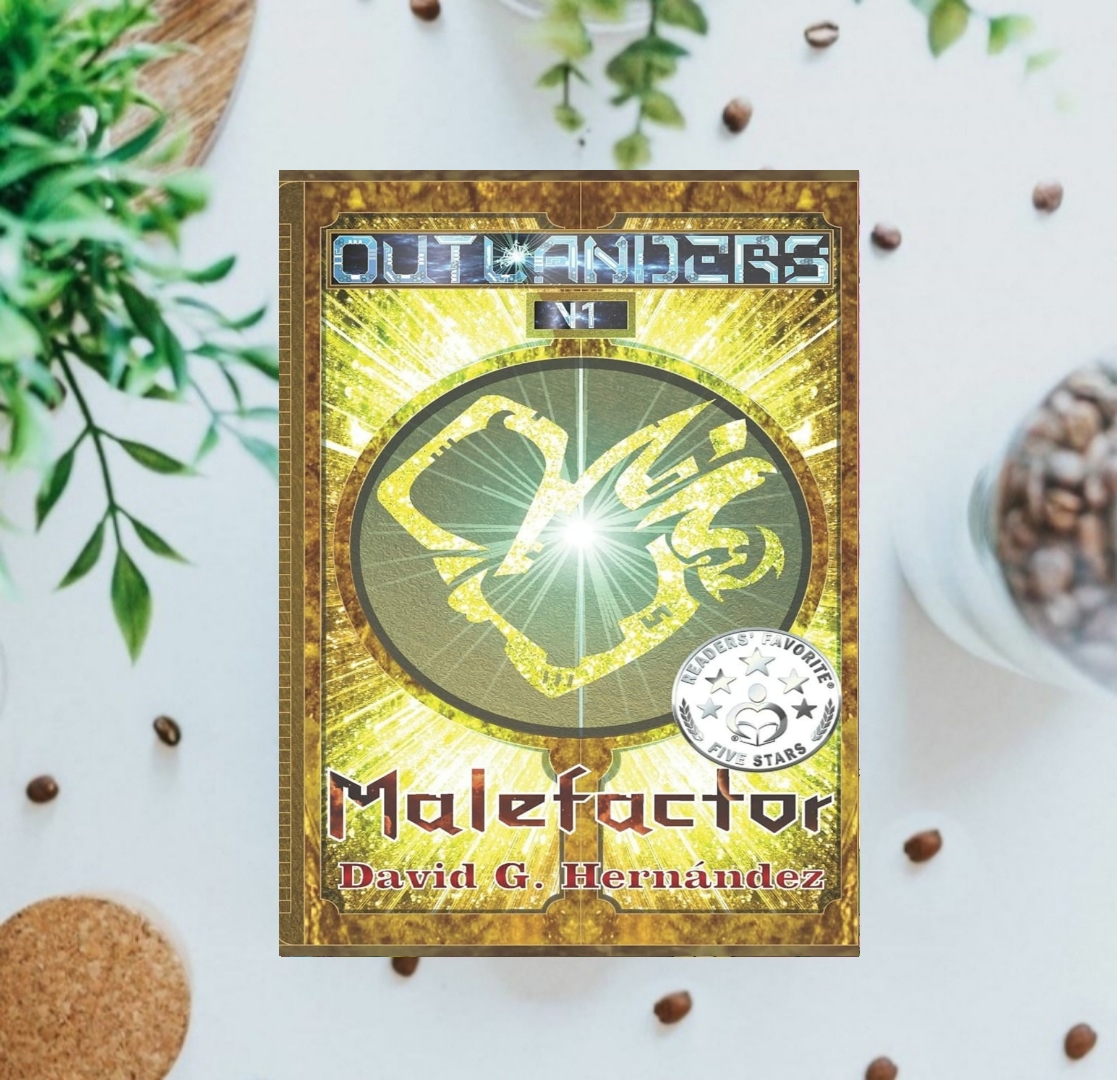
Book: Outlanders: Malefactor, The First Of The Fallen

Q1. Hello Sir, can you please introduce yourself? Readers would love to know more about you.
My name is David. I was born on the 4th of July in Aguadilla, Puerto Rico. After graduating from High School, I set out to college. However, after three years, I dropped out to secure a full-time job to help my family in light of economic struggles. But in those three years of college, I was able to flesh out the plot and characters that would be the protagonist of my first book. After working many years in the retail industry, I retook my studies. By luck, two of my professors were caring enough to notice errors in my work and suggested a list of possible learning impairments that had been previously undiagnosed. While working three jobs, and studying I was lucky to pen several comic books, including revisiting characters that were creations of my own. A position as a book store manager piqued my interest in pursuing a career as a book writer. My passion for science fiction, dark fantasy, suspense, and horror continues to be an outlet for my creativity. Although I consider myself introverted, I love to talk and encourage other people to pursue their dreams.
Q2. What were the key challenges you faced while writing ‘Outlanders: Malefactor, The First Of The Fallen’ book?
There are significant differences between writing a book and writing a comic book. When writing a comic, there are different approaches; you can give a plot to an experienced artist, and he or she will flesh out the book in a predetermined number of pages. Once the pencils are layout, you can begin to work on the dialog. The comic book panels establish the amount of space you have to include dialogue. In a way, half of the narrative rests on the artist’s shoulder. Creating a book changes your writing style as a whole. In comics, you avoid writing about the action the artist already portrayed, using the limited space provided by exploring the character’s mindset or something not featured on the page, whereas, in books, you need to create a clear portrait in the head of the reader using carefully crafted words. For me, the most challenging was writing about cosmic beings, which is entering the state of consciousness of creatures that are vastly superior to what a mortal being can comprehend. You will inevitably assign them flaws of the human condition so readers can establish a connection with them throughout the story. But in my mind, the interacting banter between them had to be professorial. I couldn’t fathom the idea that deities talk in a jargon akin to ours. You risk alienating some readers when you use that type of vernacular; however, introducing a character that surmises each chapter in a down-to-earth language that anyone can understand helped with that aspect.
Q3. What books or authors have most influenced your own writing?
H.P. Lovecraft, Edgar Allan Poe, Orwell, Kahlil Gibran, Tolkien, etc.
Q4. What’s your favourite spot to visit in your own country? And what makes it so special to you?
I’ve been fortunate to live in a town that is near the beach. Taking a stroll near the shore is where I usually come up with ideas.
Q5. Is there lots to do before you drive in and start writing a book?
Definitely. It depends on many factors, mostly the type of book you are writing. If your story develops in an existing place, fact-checking and an accurate depiction of said place is pivotal. If it is a made-up place, world-building is also essential. “Who are you, and why should I care?” So are often questions the reader asks when reading a book. There is no such thing as a throwaway character. It is important to add details to that character to make your story more solid, even if that character will interact briefly with your protagonist. Nothing occurs by happenstance. A well-developed character will not only resonate with the reader, but it will open an opportunity if you ever run out of ideas. Pay close attention to the people of your community. Chances are their quirks, the way they talk, what makes them who they are, might serve as an early draft of one of your protagonists.
Q6. How long did it take you to write ‘Malefactor #0: Malefactor’ book?
Fourteen months.
Q7. On what all platforms readers can find your books to buy?
For now, you can find the book in Amazon. https://www.amazon.com/dp/B08VVW1BMY
Q8. Tell us about the process of coming up with the cover and the title of your books?
It helps a lot when you have experience as a graphic designer and had worked in retail for as long as I have. Marketing is crucial to move a product. Some color combinations may not appeal to the demographic you are trying to reach. Sometimes a well intricate design can catch the eye of an unsuspected buyer, and sometimes a bit goes a long way. Most people are very picky when choosing a product. I should know because I’m one of them. As far as titles go, I like to choose one that apply to several of the characters involved. Those who had read the book might find that the title “First of the Fallen” could be bestowed upon “The Traveller”, “Daystar”, “Logos” “The aspect of Wrath”, and so on.
Q9. When writing a book how do you keep things fresh, for both your readers and also yourself?
Death is an aspect of life that is unavoidable. I have no qualms as far as removing a popular character that I feel has overstayed their time. Both the corruption and redemption of characters are fascinating aspects of the human condition to me. Moreover, introducing different characters that are interconnected to a story and yet bring something different to the said plot is always refreshing to see in a sequel.
Q10. Are there any secrets from the book (that aren’t in the blurb), you can share with your readers?
I wrote the book with the purpose to be open to interpretations. That way readers will have the chance to discuss it and give their respected interpretation of the events, incentivizing an urge to revisit it once more. There are several mentions to characters from books that I love and easter eggs of factual events that will seem outlandish. One event in particular place the character of Ru-Vi -Flo” (which is an amalgamation of the three names of the witches in Macbeth) on trial for murder. The judge put the pigs that cause the stampede to testify on trial. This was based on a reported actual trial recorded as having taken place in Europe in the thirteenth century.
Book Is Available On Amazon
 Sassy Reviews