

Q1. Hello Sir, can you please introduce yourself? Readers would love to know more about you.
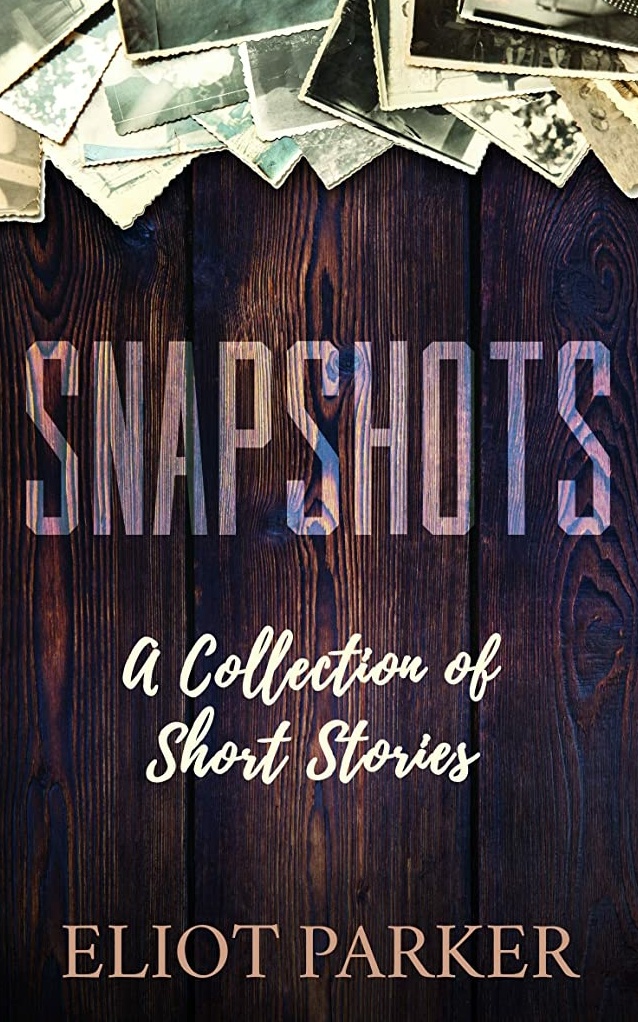
I am the author of the short story collection Snapshots, which won the 2020 PenCraft Literary Award for Short Story Anthology. I am also the author of four novels, most recently A Knife’s Edge, which was an Honorable Mention in Thriller Writing at the London Book Festival, and is the sequel to the award-winning novel Fragile Brilliance. I am a recipient of the West Virginia Literary Merit Award and Fragile Brilliance was a finalist for the Southern Book Prize in Thriller Writing. I recently received with the Thriller Writing Award by the National Association of Book Editors (NABE) for his novels.
I also host the podcast program Now, Appalachia, which profiles authors and publishers living and writing in the Appalachian region and is heard on the Authors on the Air Global Radio Network. I am a graduate of the Bluegrass Writers Studio at Eastern Kentucky University with an MFA in Creative Writing and Murray State University with a Doctorate in English, and I teach English at the University of Mississippi and live in Oxford, Mississippi and Chesapeake, Ohio.
Q2. What were the key challenges you faced while writing ‘Breakdown at Clear River’ book?
The key challenges I faced is trying to make the book more than a sports mystery. Football is an important component of the book because Dane Antonelli, the victim, is a member of the Clear River Cougars football team. However, I realized that every reader might not like or understand football, so I had to balance those game chapters with more traditional narrative. I also had to make sure that many of the characters in the book talked and acted like college students and not adults, which was challenging when I had them talking to adults. Despite those challenges, the book was fun to write.
Q3. What books or authors have most influenced your own writing?
John Steinbeck and Pat Conroy are two writers that have influenced my work. Steinbeck was wonderful at describing settings and his lush, ebullient prose about the Salinas Valley in California was a great inspiration to me. Steinbeck also had the ability to create villains in his fiction that you loved to hate as a reader. Pat Conroy wrote some of the most beautiful prose of any reader I’ve ever read. His command of language and tone could have you fawning over a place on one page and then mad at the behavior of another character on another page. Conroy was a master of language—he never wasted one word of prose in his fiction. My favorite thriller writer is C.J. Box for many of the same reasons I like Steinbeck and Conroy.
Q4. What’s your favourite spot to visit in your own country? And what makes it so special to you?
I like to visit lakes and rivers. For some reason, the calm of hearing water burbling down a lake or river is a soothing, calming sound. The sound of the trickling water makes you stop and just listen and be silent for a while. That’s a good thing, I think. Silence and stillness is okay. The United States is blessed with many great lakes and rivers, so there are plenty of ones to go visit.
Q5. Is there lots to do before you drive in and start writing a book?
I don’t begin writing a book until the idea of the book has been percolating in my mind for weeks or months. As a writer, I have lots of ideas for stories and books, but I’ve found that my best books and stories come from those ideas that are permeating my subconscious and, for some reason, won’t leave me alone. Then, I begin to outline. I write a loose outline of the story and I try to follow it, but I give myself the freedom to deviate from it if the characters or the plot takes me in a new direction. Then, I write and re-write and re-write some more before I am satisfied with the manuscript.
Q6. How long did it take you to write ‘Fragile Brilliance’ book?
I took me almost two years. That book was complex because it dealt with a dangerous drug called desomorphine. The street name of it is Krok. I had to spend a lot of time researching that story, so I researched the drug, how it is made, how it made its way to the United States from Russia, etc. Krok is also a drug addiction that impacts the user’s bloodstream, so I spoke to a couple of haematologists to find out what a drug like Krok could actually do to a person. In addition, I spoke to a number of law enforcement officers and asked them about what happens when an illegal drug creates a pandemic of users and crime and how the police would try and stop it. Writing that book was an intense experience for me. I was thrilled when it was a finalist for the Southern Book Prize in Thriller Writing. I shared a finalist list with writers like John Grisham and Greg Illes that year. It was an awesome experience that I’ll never forget!
Q7. On what all platforms readers can find your books to buy?
You can find my books at any local or chain bookstore in the United States and on Amazon. If you are interested in getting one of the books, please check out your locally independent book store first.
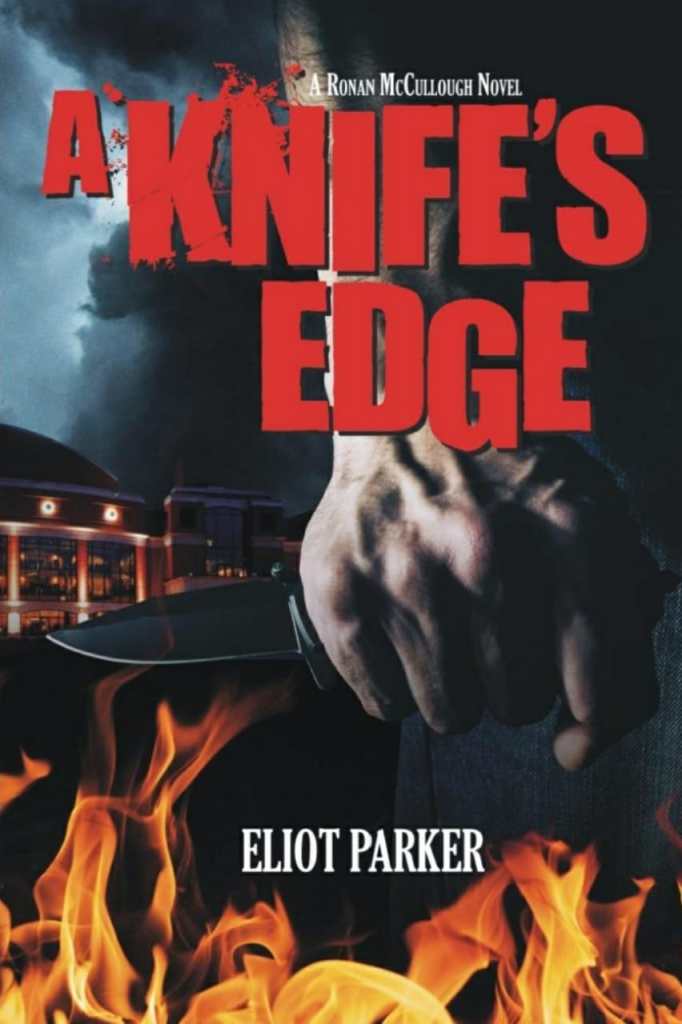
Q8. Tell us about the process of coming up with the book cover and the title ‘A Knife’s Edge’ & ‘Code For Murder’?
I didn’t have much input on the covers of either book. The publishers (Black Rose Press and Headline Books, respectively) designed the covers and they shared them with me. They basically sent me the computer files of the covers and said “this will be the cover of your book.” I was fine with it. Both covers look great and each cover has important elements of both stories featured on the front.
Q9. When writing a book how do you keep things fresh, for both your readers and also yourself?
I try to tell a story that hasn’t been told before. In my thriller novels, I want the plot to be something that could happen in real life. However, I try to find ways to tell a fast-paced thriller story in a new, refreshing way. Sometimes, that means bringing a strong element of science to the story, as I did in Fragile Brilliance and A Knife’s Edge. Sometimes, that means creating a police detective like Stacy Tavitt in Code for Murder who has a debilitating illness that is caused by her own carelessness. That illness constantly impacts her ability to be the best cop she can be. These are techniques that are not always featured in other thriller novels. Readers of thriller novels are smart and as a writer, you have to constantly give them a fresh, new angle to a story so they don’t roll their eyes because they have read your specific story a thousand times before.
Q10. Are there any secrets from the book (that aren’t in the blurb), you can share with your readers?
I would say that Ronan McCullough, my lead character in Fragile Brilliance and A Knife’s Edge has a secret that impacts everything he does as a cop and as a person. It’s a secret her frantically strives to protect, for good reason.
Author’s Profile
Books Are Available On Amazon
Snapshots
A Knife’s Edge
 Sassy Reviews