
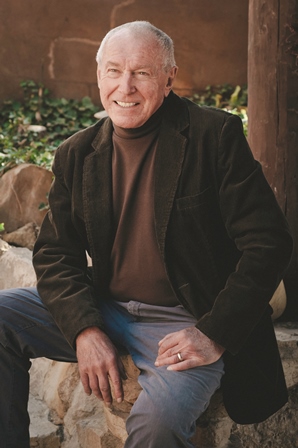
Q1. Hello Sir, can you please introduce yourself? Readers would love to know more about you.
I was a working journalist for 35 years, three newspapers, an investigative reporter for the Associated Press, and a Producer and Executive Producer for CBS News. Along the way there were three Emmys among the awards for investigative documentaries that I wrote, produced and directed. So it was time to move on, tackling serious writing as an author, only to be struck with macular degeneration which has left me legally blind for more than a decade. Yeah, you could say this would be an enormous handicap for an author wanna-be, and initially it was. Then I decided what the hell, let’s turn it into a strength. So with the help of state-of-the art computer, audio-visual devices and an assistant who has been with me for more than a decade. I have completed one non-fiction book and the first two books of my Passaic River Trilogy, “Father Divine’s Bikes” and ”Payback-Tales of Love and Revenge.”
Q2. What were the key challenges you faced while writing ‘Father Divine’s Bikes’ book?
We’ve already discussed the blindness issue. The main problem to be overcome was the slow rate of progress. As a former journalist, I quite often had to meet demanding deadlines, and if I didn’t, it would be “move on, buddy, this isn’t the job for you.” Now, I had to rely on technology and assistance to get my work done. It was not an easy transition.
Q3. What books or authors have most influenced your own writing?
Noir crime fiction has always been a magnet for me. Two authors with too many titles under their belt for me to list are James Ellroy and John MacDonald. Like me, both are minimalists who do very little moralizing and view adverbs and adjectives as necessary evils to be used sparingly.
Q4. What’s your favourite spot to visit in your own country? And what makes it so special to you?
It’s a toss-up. The mind boggling natural artistry that created the magnificent red rock mesas, cliffs and valleys in and around Sedona, Arizona have always captivated me. San Francisco, where for several years I was an Urban Affairs investigative reporter, is another magnet that draws me back every year.

Q5. Is there lots to do before you dive in and start writing a book?
Research, research, research. My Passaic River Trilogy rests squarely on the shoulders of characters entwined together more than 70 years ago. So you can imagine the work needed to authenticate dates, dialogue (especially urban slang), and the prevailing social-economic trends, good and bad, at that time.
Q6. How long did it take you to write ‘Payback-Tales Of Love,Hate and Revenge’ book?
From concept to final edited draft, it took about two and a half years.
Q7. As an author, what does success means to you?
I know this may sound strange, but wide notoriety as an author was never a prime consideration when I made the switch from journalism to literary writing. I never had an overwhelming drive to make big bucks on my books. Sure, it would be great but being realistic, as a first-time independent author-publisher, I never visualized snapping rubber bands around fat bankrolls. What has been rewarding is the large number of reviews, especially those from hard-nosed professional critics that convinced me that the message of the Passaic River Trilogy was clearly getting across.
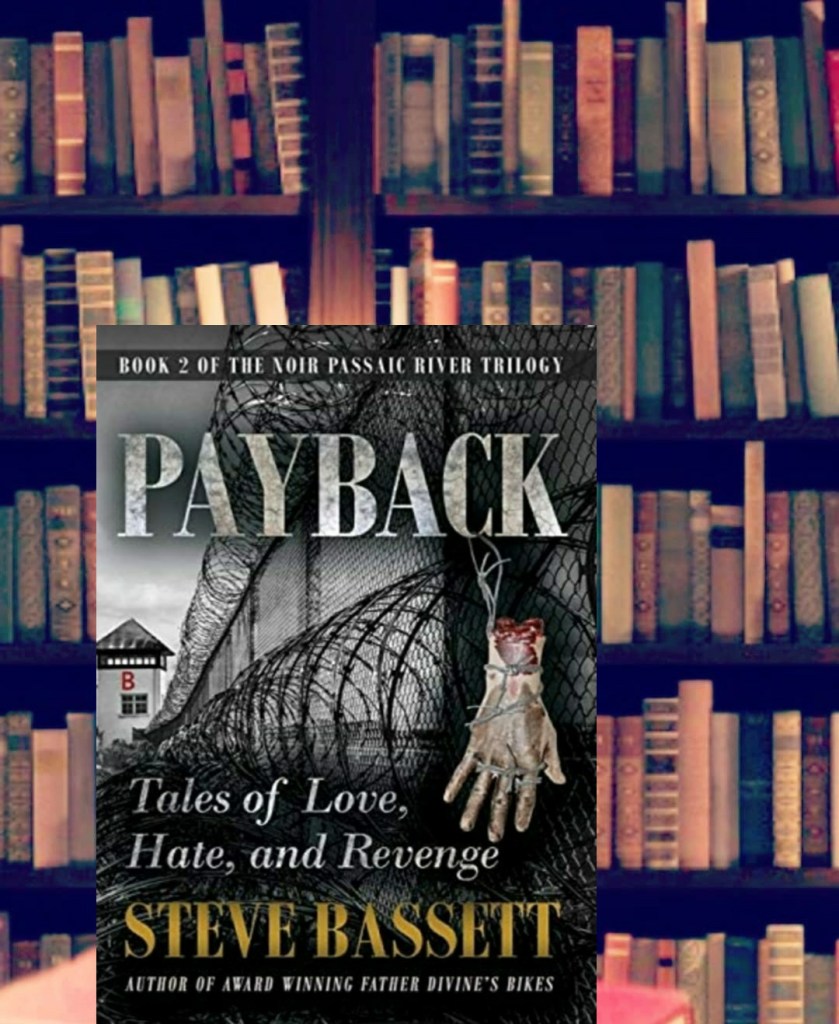
Q8. Tell us about the process of coming up with the book cover and the title ‘Payback-Tales Of Love, Hate and Revenge’?
The book is set in 1946, more than a year after the end of WWII. The euphoria of victory was gone and people from every social-economic class were beginning to question what had really been won. How could it be possible that the global carnage and human devastation originated in two of the most advanced countries in their regions, Germany in western Europe, and Japan in Asia. When Nazi and Neo-Nazi scientists, who had used slave labor drawn from nearby death camps for their research and development, were given Hollywood red-carpet treatment when they migrated to the United States, coast-to-coast anger erupted. I wanted the cover to be as graphic and yes, even gruesome enough, to depict the barbed-wire hell that was Germany for twelve years. Payback was necessary, along with all the ingredients that made it possible – love, hate and finally revenge.
Q9. When writing a book how do you keep things fresh, for both your readers and also yourself?
An easy answer would be to identify the reader not only with my characters, but with the settings as well. Except for a few obvious exceptions, there are no totally good or bad characters. We are all flawed. We rationalize our shortcomings, and in noir crime fiction, everyone has them. I try to push the reality envelope to the extreme while still making the characters’ actions plausible and believable. The setting for a character’s action must be believable while at the same time extraordinary enough to hold a reader’s interest.
Q10. Are there any secrets from the books (that aren’t in the blurb), you can share with your readers?
One character, who in fact has been called an unexpected plot presence, should be followed closely by the reader. Only six-years-old, Muriel has packed a lifetime into her childhood. The passages devoted to Muriel are highly autobiographical. I don’t know if it would be called revealing a “secret” or not, but as a kid I spent five years in two Catholic orphanages, and like Muriel, these years changed my life for the better.
Book Is Available On Amazon
 Sassy Reviews