
Q1. Hello, can you please introduce yourself? Readers would love to know more about you.
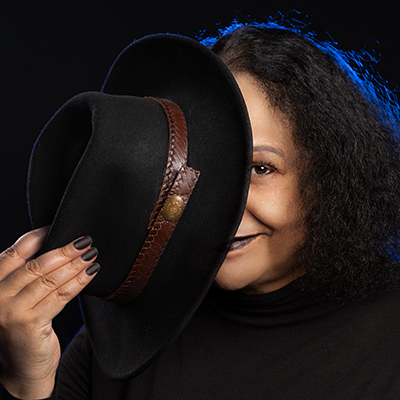
The most important thing to know is I’m a fugitive from reality. Despite my books being very much rooted in the real world, I’m still disappointed when I look out my window and there are no dragons. Or griffins. Or centaurs. Looking from the outside, I think most people would say I’m boring. I don’t go out much. I can take only so much peopling on a day-to-day basis. But if you could look inside my head? That’ll trip you right out. Which is why I write.
Q2. What were the key challenges you faced while writing your book “The Moreva of Astoreth”?
None, really. I knew the story I wanted to tell—a bigoted woman’s journey to redemption through the power of love. From the theme, you know it’s an enemies-to-lovers romance. I write speculative fiction, so I knew it was going to be set on an alien, but Earth-like planet. A place, except for some of its vegetation’s colors—bright purple grass—readers will find quite familiar. I think the only thing about the book that requires readers to suspend belief is the planet is part of a trinary star system. Very unstable. The stars’ gravities pull not only on each other but also on the planets that orbit them. You’ve heard people say they feel like they’re being pulled in all directions at once? That’s what we have here. Depending on the planets’ orbits, you might get all three stars blazing on the surface, which I’d think would be hellish. Or periods when there’s no light at all. Then we have a frozen wasteland. And, of course, the gravitational pull from the three stars could just tear the planet apart.
Q3. What books or authors have most influenced your own writing?
Authors who play with words, like Shakespeare, Chaucer, and so many others. Those who have a tongue-in-cheek, yet disturbing style, like James Thurber and Edward Gorey. Authors whose writing elicits genuine emotion, like Edgar Allan Poe. He’s my favorite. The horror in his works isn’t gore, but watching the character mentally disintegrate, like in The Tell-Tale Heart. Or his most famous, The Raven. A man trying to get on after the love of his life’s death. Or is he? Is the raven real, or is it a hallucination? So, in my own books, I focus on the characters and their emotions. Their actions and reactions. Finding out who they really are, which they themselves might not know, at least at the story’s opening.
Q4. What’s your favourite spot to visit in your own country? And what makes it so special to you?
That would be New Orleans, Louisiana. I attended graduate school there and fell in love. It’s an amazing place, and not just because of its rich history. It’s the people who live there. As I used to say, “they don’t think like the rest of us in the U.S.” I believe it’s partly because of the Spanish and French influences when it was a colony of those two nations. Then you have the Caribbean influences, and certainly the African. All that, plus the locale, has blended to create an outlook on life that’s not quite like anywhere else. If it wasn’t for climate change, I’d move there. The problem is the city is already below sea level. That’s the main reason Hurricane Katrina in 2005 was so devastating. The levees holding the Mississippi River at bay failed, and between the river and the rain, whole neighborhoods disappeared.
Q5. Is there lots to do before you dive in and start writing a book?
If you’re referring to constructing a plot, no. I write in the literary style of fiction, not genre. The difference? In genre fiction, as it’s usually written, the plot is the story. In literary fiction, instead of plot, the characters are the story. So, before I begin, I think about the story’s theme. My books are sociopolitical criticism. For The Underground, I thought about oppression and persecution of certain communities in a society who, in this case, happen to be paranormals. What are their lives like? How do they hide what they are? What happens to them if humans find out? These questions bring in the concept of morality, with the ultimate question being, is there room for morals when survival is at stake? When the question is to kill or be killed? In those circumstances, what is and what is not moral behavior? Once I’ve thought it through, I construct a general story arc—point A, to point B, to point C. In writing the story, how I get from A, to B, to C is anybody’s guess, including my own. I let the characters take over. It can get complicated. Like, is the villain really a villain? They do terrible things to individuals in the community, but what if they do it to protect the community from being slaughtered wholesale by humans? There are other considerations, but those are primary. I did the same type of thing with The Moreva of Astoreth.
I’ll add George R.R. Martin’s Song of Ice and Fire, is an example of a story written in the literary style. There’s no plot. It’s a political fantasy, how politics work in the fantasy world he created. The story is about his characters’ political machinations and their results. Make no mistake, though. Martin’s and my stories are still genre fiction. No self-respecting reader of literary fiction would be caught dead reading a book about vampires, aliens, and fantasy kingdoms.
Q6. How long did it take you to write your book ‘The Moreva of Astoreth’?
That depends on your point of view. From a reader’s perspective, about 18 months. From my perspective, over 40 years. In college, a friend and I collaborated on a story for fun. That’s the skeleton. Years later, I read Zechariah Sitchin’s The Earth Chronicles. The two ideas percolated for many more years until it came together as a story about bigotry. It’s the deeply personal story of the main character, sheltered and unworldly. She’s kicked out of the nest, so to speak, and after going through several experiences and intense self-examination, her eyes are opened.
Q7. On what platforms can readers buy your books?
Everywhere, really. The ebooks are available on just about every platform. Amazon, of course, Kobo, Vivlio, Bibliotheca, to name a few. They’re also available on library platforms like Overdrive. Print copies are available directly from Amazon, Bookshop.org, or order from your favorite book retailer.
Q8. Tell us about the process of coming up with the book cover and the title ‘The Moreva of Astoreth’?
The title wasn’t hard. The main character is a Moreva, or priestess, who serves Astoreth, the Goddess of Love. This is her story, so…The Moreva of Astoreth. The cover concept wasn’t hard, either. It’s a science fiction romance, so, in keeping with the genre’s conventions, the cover features the main character’s love interest, a shirtless man with a sizzling hot body. And her, of course. She’s clutching him, a nod to her dilemma of being in love with a man of the race she despises. It’s not always that easy, though. It took me two years to figure out a title for the book I’m writing now, and I’ve no idea what the cover will look like.
Q9. When writing a book how do you keep things fresh, for both your readers and also yourself?
My books are mixed-genre, and stories don’t have the same mix. I’ve written a paranormal urban fantasy/science fiction/romance. Other books in my queue include vampire space pirates. Whatever the mix, they all spring from my deviant imagination. But it also means I’m not writing for the same audience. Fans of The Underground series are not interested in science fiction romance, like The Moreva of Astoreth. They attract different audiences. That’s fine. The mixes keep me from getting bored. I can’t imagine writing a 20 or 30 book series with the same characters. Or even similar characters.
Q10. What is the most valuable piece of advice you’ve been given about writing?
Write stories that move you. If your heart’s not in it, readers will know because your lack of enthusiasm will come through in your writing. The other is something I figured out for myself. No matter what you write, no matter how brilliant, somebody, somewhere, isn’t going to like it, and will say so. Don’t be discouraged by bad reviews. After all, it’s only one person’s opinion.
Buy The Moreva of Astoreth on Amazon
 Sassy Reviews