
Q1. Hello, can you please introduce yourself? Readers would love to know more about you.
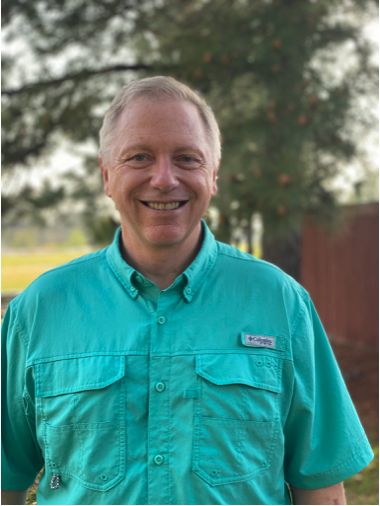
A1. Pat Daily here. I’m a former USAF Test Pilot and engineer who worked on NASA’s Space Shuttle and International Space Station programs. These days, I devote most of my professional time to writing and consulting on new aviation projects, such as hydrogen-powered aircraft. I’m a proud husband, father, and grandpa. In whatever free time is left, I love gaming, mostly on consoles. My favorites are role-playing games with expansive worlds where your choices have in-game consequences.
Q2. What were the key challenges you faced while writing your book “Fire”?
A2. When I started the series, I thought Spark would be a stand-alone novel. It wasn’t until I was writing the last paragraph that I realized there was much more to the story. That realization opened so many possible pathways for Fire that I had to spend a good deal of time deciding what would and wouldn’t be in the book. Later, while the book was in editing, I faced another challenge familiar to many writers: the book had grown too large. Something had to go.
It’s always hard to cut out things you are proud of in your writing. I agonized for a week or two before making the call. In the end, I cut about sixty pages. That decision triggered the third book, OrcLand.
Q3. What books or authors have most influenced your own writing?
A3. Robert Heinlein’s Glory Road, Arthur C. Clarke’s Childhood’s End, and Isaac Asimov’s Foundation Series were strong early influences. Later, Neal Stephenson’s Diamond Age and William Gibson’s Neuromancer gave me new energy.
Q4. What’s your favourite spot to visit in your own country? And what makes it so special to you?
A4. Yosemite National Park is visually stunning with it’s craggy faces and waterfalls. It’s a joy to hike.
Q5. What inspired you to write the book ‘Fire’?
A5. The Spark Chronicles were inspired by the game Pokemon Go. My daughters were playing, and I wanted to see what it was all about. The technical aspect – virtual constructs superimposed over a real-world background – got me thinking. What if we could build a theme park based on a world where the virtual and the real existed side by side and could interact? How could we control it all? That led me to introduce an AI with a personality. Her story and evolution became central to Fire and continued through the final book, Embers.
Q6. How long did it take you to write your book ‘Fire’?
A6. First idea to final draft took just over one year. Editing, covers, and publication added another six months, but gave me time to work on OrcLand.
Q7. On what platforms can readers buy your books?
A7. All of the books are on Amazon in both print and eBook formats. They are also available on audio via Audible.
Q8. Tell us about the process of coming up with the book cover and the title ‘Fire’?
A8. Great question. As soon as I knew there would be a second book, I saw it as a trilogy: Spark, Fire, and Ash. I started publishing Ash on a platform called Kindle Vella, which allowed authors to serialize their work. The platform didn’t take off, and Amazon shut it down in 2025. To avoid confusion (and because I was changing it significantly), I renamed it to Embers.
Jesh Art Studios did the cover for Spark. I connected with them through 99Designs. When it was time for Fire, I tried to find them again, but they had left that platform and I was unable to find where they had gone. So, I ran a contest for a new cover artist and selected The Busy Dee. She kept the theme consistent and also did the cover for OrcLand. By the time Embers came around, she was no longer in the business, but happily, I found Jesh again and they did the final cover.
Q9. When writing a book how do you keep things fresh, for both your readers and also yourself.
A9. I try to stay current on the sci-fi market and what’s trending. Then, mostly, I avoid that. If I pay too much attention to it, the ideas become blurred – what’s mine and what did I read elsewhere? It’s okay for books to have some similarities, but not too many.
Q10. What is the most valuable piece of advice you’ve been given about writing?
A10. Write fast, bad, and wrong. That sentence is a great example. “Bad” should actually be “badly.” It’s important to get the story out first, then go back and make it clean and proper in later drafts.
Buy a book on Amazon

