
Q1. Hello, can you please introduce yourself? Readers would love to know more about you.
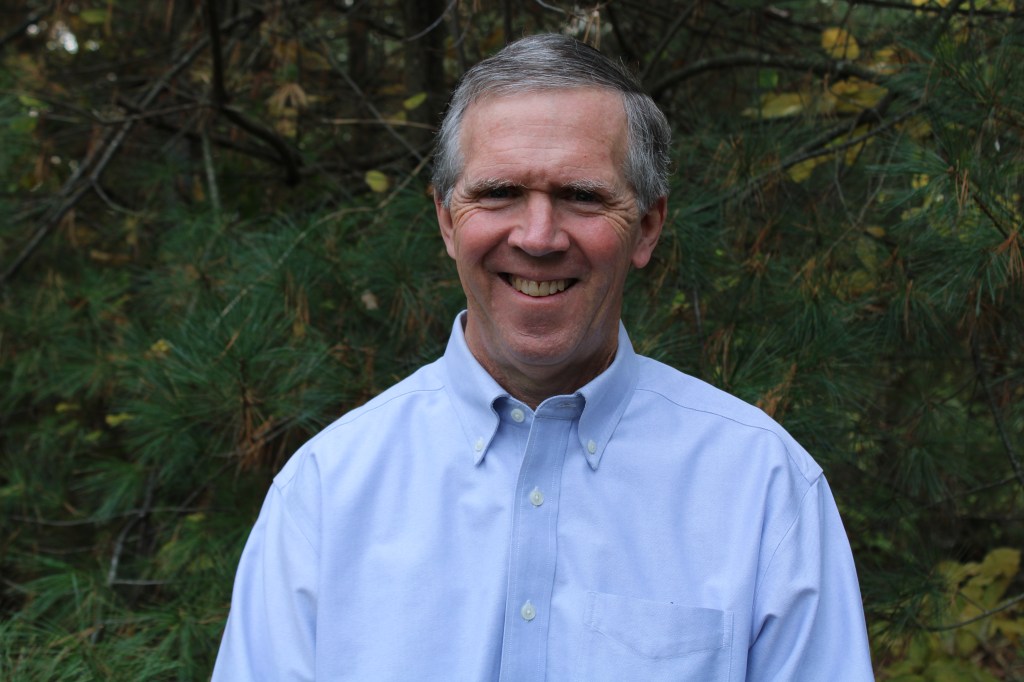
A1. I am a retired American History and World Geography teacher from the Brookline Public Schools, Brookline, MA. I have written seven magazines/journal articles on subjects ranging from the American Revolution to World War II. My latest book was John Quincy Adams, Reluctant Abolitionist and my third book, The Philadelphia Quakers and the American Revolution will be published next March to coincide with the birth of the country. I’m currently writing my fourth book, Closing the Ring: George Washington’s War in the North, 1778-1781. I am an outdoor person who enjoys mountain biking, fishing, and hiking from spring to fall and cross-country skiing and snowshoeing in the winter. I am married with nine children (all grown) and our 22nd grandchild is due on April 22 of this year.
Q2. What were the key challenges you faced while writing your book “John Quincy Adams, Reluctant Abolitionist”?
A2. John Quincy Adams left behind a diary that consisted of 51 volumes and 14,000 pages. Combing through that diary, looking for his references to slavery was a tall task. There were also numerous letters and speeches he made, especially during his congressional career that needed to be sifted through as well.
Q3. What books or authors have most influenced your own writing?
A3. David McCullough, Ron Chernow and Nathaniel Philbrick have been some of my favorites. I love the way they tell a story and weave primary source documents into the story so you really get the feeling you are there while events are unfolding. It’s not dry, it’s alive, and action abounds.
Q4. What’s your favourite spot to visit in your own country? And what makes it so special to you?
A4. I have two favorite spots. Concord is my favorite. From the American Revolution to the literary center of the country, it holds the most for me. The literary giants like Ralph Waldo Emerson, Henry David Thoreau, Hawthorne, always fascinate me, particularly the Transcendentalist movement. My second favorite is Gettysburg. Walking those fields, you get a sense of the enormity of what happened there. Walking the area of ground that was Pickett’s Charge is amazing, as well as standing at Little Round Top imagining the intensity of that battle is an awesome experience.
Q5. What inspired you to write the book ‘John Quincy Adams, Reluctant Abolitionist’?
A5. After reading several biographies of John Quincy Adams, I never got a sense of what his relationship to slavery was earlier on in his life. I wanted to know more about that, and I wanted to expand on his experiences in the 1830s and 1840s while he was a congressman. It was all worthwhile to me to write this book as you begin to see the influences on his life begin to shape him, and his own evolution on the subject.
Q6. How long did it take you to write your book ‘John Quincy Adams, Reluctant Abolitionist’?
A6. It took me a little over three years to write that. The research part was intense. Before I started writing, I had 250,000 words of notes that I had to whittle down to 105,000 words.
Q7. On what platforms can readers buy your books?
A7. Amazon and Barnes and Noble, as well as the publisher McFarland & Company, Inc.
Q8. Tell us about the process of coming up with the book cover and the title ‘John Quincy Adams, Reluctant Abolitionist’?
A8. I knew what I wanted for the book cover early on. The 1843 photograph captures the essence of JQA’s personality. He was distant, and some thought cold, and his personality was offset by that of his wife, Louisa Catherine Adams, who was the opposite of him in the public sphere. The title reflects his feelings about abolitionists, and the fact that he was evolving and moving in that direction toward the end of his life. He never joined the abolitionists, but he revealed in his private papers about the annexation of Texas that he was one.
Q9. When writing a book how do you keep things fresh, for both your readers and also yourself?
A9. Keep the narrative moving. Don’t get bogged down in excessive and unnecessary detail. I also use the words of my subject extensively wherever possible. It keeps people engaged in the subject. I prefer paraphrasing their words. I also don’t sugarcoat my subject. Every public figure’s life has the good, the bad, and the ugly, and I think it is important to provide a complete picture, not just their heroic exploits.
Q10. What is the most valuable piece of advice you’ve been given about writing?
A10. The best advice I’ve received yet is to avoid writing long books. Most of the general history reading public is interested in getting to the point so I’ve been told to keep my books between 95,000 and 105,000 words. Secondly, finding stories that are not generally told, are good ways to fill a niche. My first book (co-authored) about Nathanael Greene and Charles Cornwallis was a good example. Many northerners are not familiar with the southern campaign, and few know that at the end of his life, Greene, a Rhode Islander and a former Quaker, had a plantation and held slaves!
 Sassy Reviews