
Q1. Hello, can you please introduce yourself? Readers would love to know more about you.
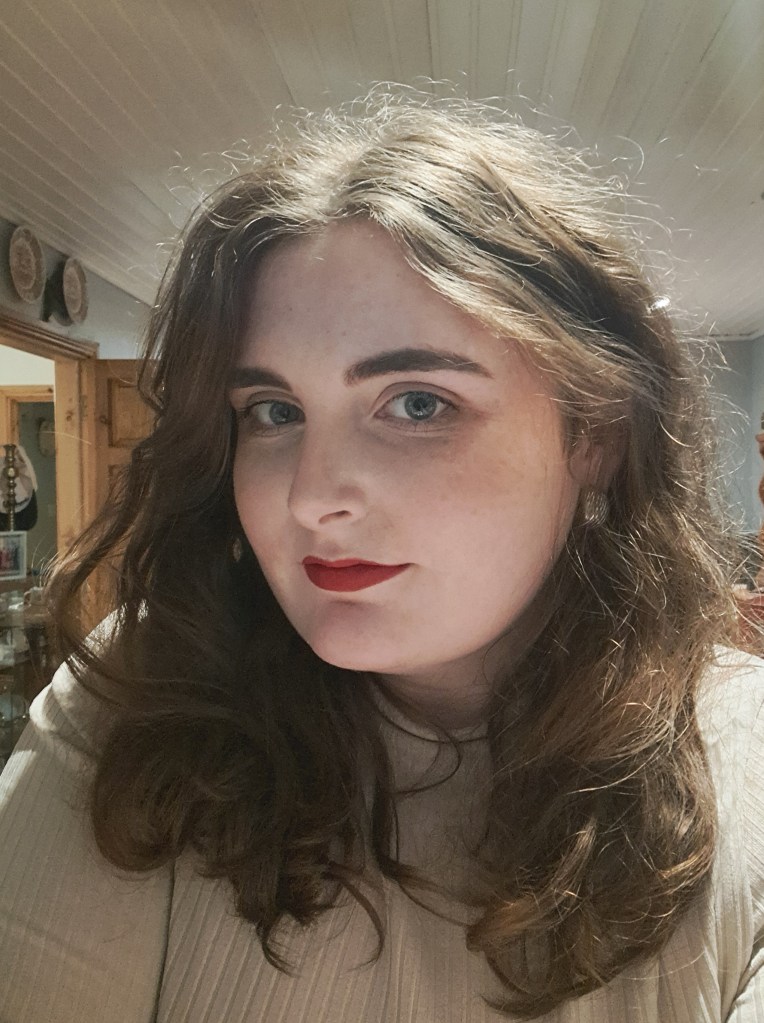
A1. Hi! I’m Aoife, I’m 40% Tea and the other 60% Fantasy addict. I was born and raised in County Donegal, Ireland. I’ve a Bachelor’s degree in Law, and a Masters in Psychology which I’m beginning to think was just an excuse to spend time tapping away at my laptop! Though I will say I do believe they’ve helped me create a tempered writing style that doesn’t yank you out of the story for the sake of world building.
Q2. What were the key challenges you faced while writing your book “The Woman who Belonged to Stone”?
A2. I’m a nightmare for editing what I’ve already written before finishing. Honestly, a fiend for it. Which is alright for a last minute essay for College but when writing a novel all it does is hinder you. I remember slogging through the third chapter and thinking what am I at?
So, I was procrastinating as you do, and I came across an article that said point blank there is no point editing before the first draft has even been written or you’ll never finish. I took that as words to live by, and It’s done right by me so far. I’ve found it allows me to enjoy writing my book and not only can you see progress being made, but it also allows the story to develop into something tangible before getting particular with the fine details.
Oh and Names, I don’t know what I’ll do if I ever have kids, I’ll be changing their name twice a week!
Q3. What books or authors have most influenced your own writing?
A3. Watch me list every book I’ve ever read! But in all seriousness, until I was in my twenties I read only Fantasy, and even though now there is very little I wouldn’t at least attempt to read, Fantasy is without a doubt my favourite. When writing I was really inspired by the whimsy of books like “Howl’s Moving Castle,” by Dianna Wynne Jones and “The Raven Cycle,” by Maggie Stiefvater. I’ve always loved the feelings these books evoke.
Within my book there’s a lot of mysticism throughout and that aspect was really inspired by “Vitra Nostra,” by Marina and Sergey Dyachenko as well as “The Earthsea Cycle,” by Ursula Le Guin particularly “The Tombs of Atuan,” which is one of my favourite books. Not to mention I am obsessed with Le Guin’s magic system where things have a true name and that true name has power. That balance of a soft magic system with still an essence of structure has definitely inspired mine.
Slightly off topic there is a lot of influence from myths and legends, I’ve grown up those stories and I do share a name with the witch from the Children of Lír, I think it was inevitable that they’d creep in too.
Q4. What’s your favourite spot to visit in your own country? And what makes it so special to you?
A4. I’m very lucky, Ireland is one of the most beautiful places. I remember, one time, coming home on the bus, on one of the three days of sunshine we have, and as we drove through the gap, the two mountains on either side were so green you’d think someone had come along and painted every single blade of grass.
My favourite place, and I am biased, is not too far from where I grew up. There’s a beach. Sand dunes to the back, the sea in front and if you walk far enough along the shore you can see the village and a wee bit further on from that there’s an old historical graveyard. If you’re lucky, catch it when it’s empty. It’s the most peaceful, and beautiful place.
Q5. What inspired you to write the book ‘The Woman who belonged to Stone’?
A5. I’ve been dancing through Fantasy worlds my whole life and slowly I was daydreaming in my own world. A story started to unfold and with its characters, whose story I wanted to tell. I must have written five different versions of the first chapter of this story before it fell into place, and I got it right. I’d been missing two key elements that the story just didn’t function without. The first a character, Rowen who much of the story relies on and the second the manor. Which is actually based on an old building, which has a really interesting, and haunting past, an inspiration that added interesting depth to the world of Iridium.
Q6. How long did it take you to write your book ‘The Woman who belonged to Stone’?
A6. It took about three months to write but I was editing it off and on for about three years. Finding the courage to publish it!
Q7. On what platforms can readers buy your books?
A7. The Woman who Belonged to Stone is currently available on Amazon, as a hardback, paperback and a kindle edition. It’s also available free with Kindle unlimited!
Q8. Tell us about the process of coming up with the book cover and the title ‘The Woman who belonged to Stone’?
A8. For the title there must have been five or six different names but ultimately none of them fit and still had the fantasy vibes I was looking for. It became a case of throwing everything at a wall, and seeing what stuck and let it evolve from there.
The cover was a similar thing except where the name evolved over the three years I was sitting on the book. The cover was I’m going to self publish it; let’s see what I can come up with. I wanted something that reflected the story but meshed really well with the name. I had six different mockups, and my parents, brothers and sister all voted, and it was unanimous. Looking back at all the options I had even now I’m really pleased with the one we chose because it was the obvious choice.
Q9. When writing a book how do you keep things fresh, for both your readers and also yourself?
A9. I have one rule for each Chapter, it has to do one of three things. Either a question must be posed, an answer given or something has to happen; like an attack or a fire. I like this method, as for me it gives the chapter a purpose and I found even reading it back when editing it helps with engagement and makes for a really fun way to do world building. I like being able to develop the world slowly throughout the novel and this makes it really accessible.
Q10. What is the most valuable piece of advice you’ve been given about writing?
A10. Apart from the wonderful don’t edit as you go, that I’ve already talked to death. I think without a doubt it was: don’t be precious about what you write. Everything is up to be changed, removed or adapted. There’s a whole prologue for The Woman who Belonged to Stone that will probably never see the light of day but being able to adapt the story and refine it is massively beneficial. It was advice taken with a heavy heart but was incredibly valuable advice. Besides, it can always be copied and pasted out into a new document and adapted for something else or even used as a measure of progress.
Buy The Woman who belonged to Stone on Amazon
 Sassy Reviews