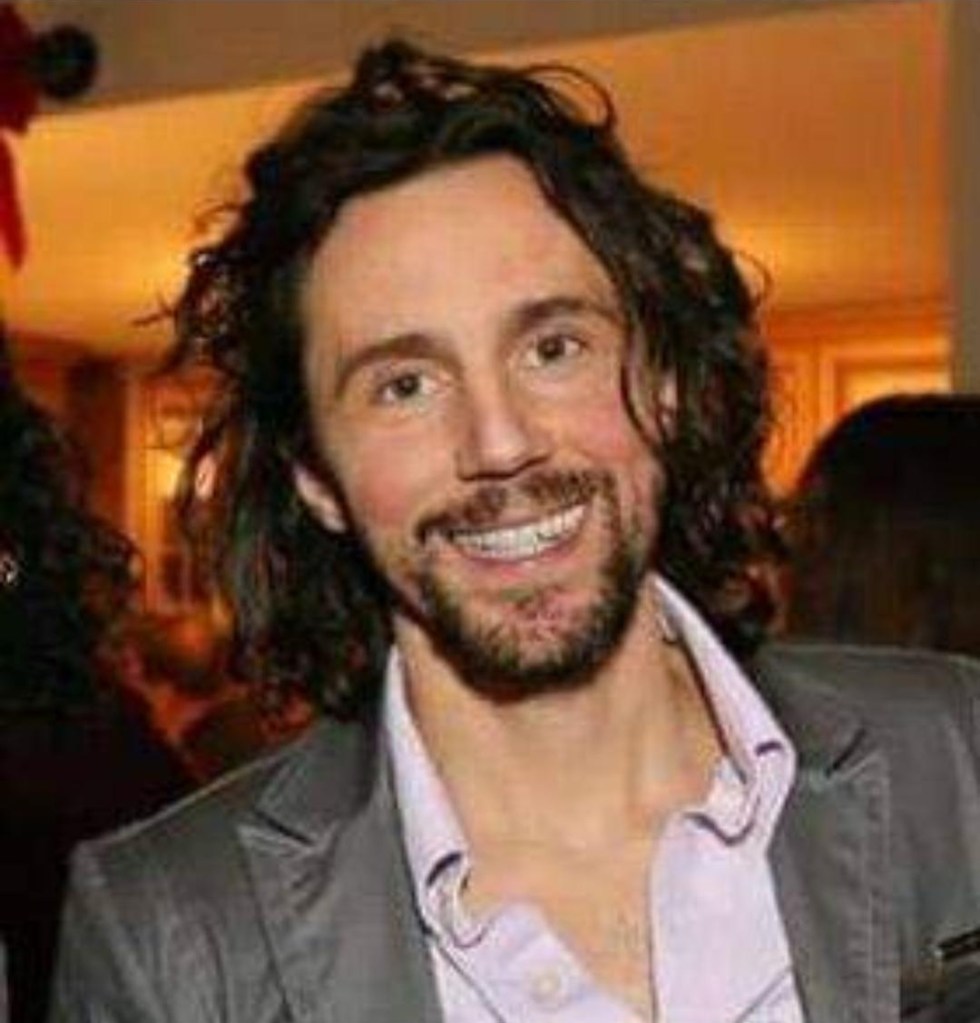
Interview with author A.M. Burke

Q1. Hello, can you please introduce yourself? Readers would love to know more about you.

A1. Hi! I’m Aoife, I’m 40% Tea and the other 60% Fantasy addict. I was born and raised in County Donegal, Ireland. I’ve a Bachelor’s degree in Law, and a Masters in Psychology which I’m beginning to think was just an excuse to spend time tapping away at my laptop! Though I will say I do believe they’ve helped me create a tempered writing style that doesn’t yank you out of the story for the sake of world building.

Q2. What were the key challenges you faced while writing your book “The Woman who Belonged to Stone”?

A2. I’m a nightmare for editing what I’ve already written before finishing. Honestly, a fiend for it. Which is alright for a last minute essay for College but when writing a novel all it does is hinder you. I remember slogging through the third chapter and thinking what am I at?

So, I was procrastinating as you do, and I came across an article that said point blank there is no point editing before the first draft has even been written or you’ll never finish. I took that as words to live by, and It’s done right by me so far. I’ve found it allows me to enjoy writing my book and not only can you see progress being made, but it also allows the story to develop into something tangible before getting particular with the fine details.

Oh and Names, I don’t know what I’ll do if I ever have kids, I’ll be changing their name twice a week!

Q3. What books or authors have most influenced your own writing?

A3. Watch me list every book I’ve ever read! But in all seriousness, until I was in my twenties I read only Fantasy, and even though now there is very little I wouldn’t at least attempt to read, Fantasy is without a doubt my favourite. When writing I was really inspired by the whimsy of books like “Howl’s Moving Castle,” by Dianna Wynne Jones and “The Raven Cycle,” by Maggie Stiefvater. I’ve always loved the feelings these books evoke.

Within my book there’s a lot of mysticism throughout and that aspect was really inspired by “Vitra Nostra,” by Marina and Sergey Dyachenko as well as “The Earthsea Cycle,” by Ursula Le Guin particularly “The Tombs of Atuan,” which is one of my favourite books. Not to mention I am obsessed with Le Guin’s magic system where things have a true name and that true name has power. That balance of a soft magic system with still an essence of structure has definitely inspired mine.

Slightly off topic there is a lot of influence from myths and legends, I’ve grown up those stories and I do share a name with the witch from the Children of Lír, I think it was inevitable that they’d creep in too.

Q4. What’s your favourite spot to visit in your own country? And what makes it so special to you?

A4. I’m very lucky, Ireland is one of the most beautiful places. I remember, one time, coming home on the bus, on one of the three days of sunshine we have, and as we drove through the gap, the two mountains on either side were so green you’d think someone had come along and painted every single blade of grass.

My favourite place, and I am biased, is not too far from where I grew up. There’s a beach. Sand dunes to the back, the sea in front and if you walk far enough along the shore you can see the village and a wee bit further on from that there’s an old historical graveyard. If you’re lucky, catch it when it’s empty. It’s the most peaceful, and beautiful place.

Q5. What inspired you to write the book ‘The Woman who belonged to Stone’?

A5. I’ve been dancing through Fantasy worlds my whole life and slowly I was daydreaming in my own world. A story started to unfold and with its characters, whose story I wanted to tell. I must have written five different versions of the first chapter of this story before it fell into place, and I got it right. I’d been missing two key elements that the story just didn’t function without. The first a character, Rowen who much of the story relies on and the second the manor. Which is actually based on an old building, which has a really interesting, and haunting past, an inspiration that added interesting depth to the world of Iridium.

Q6. How long did it take you to write your book ‘The Woman who belonged to Stone’?

A6. It took about three months to write but I was editing it off and on for about three years. Finding the courage to publish it!

Q7. On what platforms can readers buy your books?

A7. The Woman who Belonged to Stone is currently available on Amazon, as a hardback, paperback and a kindle edition. It’s also available free with Kindle unlimited!

Q8. Tell us about the process of coming up with the book cover and the title ‘The Woman who belonged to Stone’?

A8. For the title there must have been five or six different names but ultimately none of them fit and still had the fantasy vibes I was looking for. It became a case of throwing everything at a wall, and seeing what stuck and let it evolve from there.

The cover was a similar thing except where the name evolved over the three years I was sitting on the book. The cover was I’m going to self publish it; let’s see what I can come up with. I wanted something that reflected the story but meshed really well with the name. I had six different mockups, and my parents, brothers and sister all voted, and it was unanimous. Looking back at all the options I had even now I’m really pleased with the one we chose because it was the obvious choice.

Q9. When writing a book how do you keep things fresh, for both your readers and also yourself?

A9. I have one rule for each Chapter, it has to do one of three things. Either a question must be posed, an answer given or something has to happen; like an attack or a fire. I like this method, as for me it gives the chapter a purpose and I found even reading it back when editing it helps with engagement and makes for a really fun way to do world building. I like being able to develop the world slowly throughout the novel and this makes it really accessible.

Q10. What is the most valuable piece of advice you’ve been given about writing?

A10. Apart from the wonderful don’t edit as you go, that I’ve already talked to death. I think without a doubt it was: don’t be precious about what you write. Everything is up to be changed, removed or adapted. There’s a whole prologue for The Woman who Belonged to Stone that will probably never see the light of day but being able to adapt the story and refine it is massively beneficial. It was advice taken with a heavy heart but was incredibly valuable advice. Besides, it can always be copied and pasted out into a new document and adapted for something else or even used as a measure of progress.

Buy The Woman who belonged to Stone on Amazon

Interview with author Gary Cobbin

  1. Please introduce yourself so that the readers will get to know you better.

My name is Gary Cobbin. I live in the Blue Mountains to the west of Sydney, Australia. I am a husband, gardener, poet, red wine drinker and an educator working full-time in a large High School in Sydney. I am also importantly, both a father and grandfather. I have a vivid imagination along with being a bit of a dreamer. Both these qualities which can frustrate my spouse at times. To date, I am the author of one book.

  1. What is the inspiration behind your book “Georgina the Cat”?

I have been writing poetry for the last twenty years which has been a great outlet for my imagination. Over most of that time I didn’t really share my writing with anyone. However, I eventually felt the need to share some of my ideas and writing. So, I began experimenting with writing poems for children which eventually lead me to try writing picture books. As well, over the years, we as a family have had numerous cats and dogs as pets, which also gave me the opportunity to observe a range of very interesting animal behaviour. This then led to the writing of the poem, Georgina the Cat.

  1. When did you realize you wanted to be an author?

I think I felt my first impulse or urge to write when I was very young and immature at university. I was very shy and lacked any real emotional experiences, so my urges drifted into the great unknown. With maturity, those same impulses returned beckoning me to pick my pen and express my thoughts, feelings, attitudes and emotions in poetry. Since that time, I have continued to write.

  1. Please tell us something about your book “Georgina the Cat”?

I love rhyming poetry. I love its music, its predictability, the tightness of the rhyming and of course, the rhythm. I know many children love rhyming verse as well as often you hear children singing little rhymes and songs. Georgina the Cat is written as a rhyming poem.

The story revolves around an inquisitive and adventurous cat who is often envious of others. She lives near a dog. She regularly watches what the dog but soon begins to feel envious of the dog’s fun life and so, she decides to become a dog. But as we all know, the grass is not always greener so eventually Georgina finds that living as dog isn’t quite what she had imagined. This leads to some very sad and unfortunate events which help her to realise that being a cat isn’t so bad after all.

  1. For which age group is your book “Georgina the Cat” suitable for?

The target audience for my book are children aged 3 to 6. However, I have read it to teenagers and adults who have enjoyed the story.

  1. What is your favourite Quote?

“The rat had no morals, no conscience, no scruples, no consideration, no decency, no milk of rodent kindness, no compunctions, no higher feeling, no friendliness, no anything.”

The above quote, a description of the rat Templeton, from the book Charlotte’s Web by E B White, is one that has remained with me years after having first read it. It clearly demonstrates the power of language to shape memory, the power to paint indelible and vivid images, to create lasting impressions of characters not easily forgotten and finally, to open up your mind to fantastic worlds.

  1. What do you like the most about your country?

What do I love about Australia? It is home. Home to me, my family and my extended family who play a very important part in my life. I also love the blue sky, the noisy and mischievous array of birds, the colours of sunset, its beautiful coastline and my beautiful mountain home. Ultimately, I love Australia because its home.

  1. What suggestion do you want to give to parents of little readers regarding a reading habit?

Regularly read to your children. Make reading time fun, make it a time to bond, a time to share and a time to giggle and laugh. Read a range of books and especially books with a plot that build excitement.

However, these ideas a worthwhile and fun but realistically, not all children will enjoy reading equally.

  1. What does literary success look like to you?

To me literary success would be if young readers, or older readers, regularly choose a book, my book to read time and time again. So often in fact, that they repeat many parts of the book from memory. To me as a writer, that would be the greatest accolade.

  1. Lastly, who is your inspiration in life and why?

This is a difficult question but two people come to mind.

The first is the late Barry Humphries, the Australian/British comedian and entertainer and the second Stephen Fry.

What I find inspirational is their wit, their humour, their quick thinking, their intellect, their understanding of the English language and their self-confidence. I always hoped that some of those qualities would rub off on me. There is always hope.

However, I can’t forget animals particularly cats and dogs. They are always inspirational. I love their friendliness, playfulness, their accepting natures and their quirky and humorous ways and mannerisms.

Buy Georgina the Cat on Amazon

Interview with author Iohamil Navarro Cuesta

Q1. Hello, can you please introduce yourself? Readers would love to know more about you.

A1. I am from Cuba but I currently live in Miami. I’ve been a film producer most of my professional life and lately I’ve started writing my own projects. Besides this book, I am developing a TV series and a film project. I am married and I have two sons.

Q2. What were the key challenges you faced while writing your book “The Drop”?

A2. Breaking that first line is always a challenge. I’d love to entertain my audiences, make them part of the story so they can easily identify with any character.

Q3. What books or authors have most influenced your own writing?

A3. I am a big fan of John Le Carre.

Q4. What’s your favourite spot to visit in your own country? And what makes it so special to you?

A4. I’d love the sea so I miss a lot Cuban beaches, particularly on in the south of Cuba called Playa Sirena. 

Q5. What inspired you to write the book ‘The Drop’?

A5. The actual reason that inspired me was an attempt of an assault we experienced in the south of Spain, right like its described at the beginning of the book. 

Q6. How long did it take you to write your book ‘The Drop’?

A6. One year.

Q7. On what platforms can readers buy your books?

A7. Every available platform. 

Q8. Tell us about the process of coming up with the book cover and the title ‘The Drop’?

A8. The book cover pretends to serve a first lead into the story. A good friend of mine who is a designer proposed it to me after reading the book. He was right on the mark. The title is a term used by intelligence services around the world.

Q9. When writing a book how do you keep things fresh, for both your readers and also yourself?

A9. I am always rereading the book as a reader, not as a writer. It helps me find the weak spots. 

Q10. What is the most valuable piece of advice you’v e been given about writing?

A10. Be yourself. 

Buy The Drop on Amazon

Interview with author Joe Wdowski

  1. Hello, can you please introduce yourself? Readers would love to know more about you.

A1. I identify as a philosophy king trapped in a peon’s body.

Born in the Bronx, I grew up in Westchester County New York, on the Long Island Sound.

I have a B.F.A. in Cinema, minors in Political Science and History (5 years in undergraduate studies.) I have a M.S. Ed. in Education (secondary social studies,) finished all my course work for a Master in History (focusing on Recent Chinese and American.) Afterwards I went to Taipei to study Mandarin Chinese at Taiwan National Normal University for 13 months. I have what I call “survival level” Chinese. Meaning if I am in an only Chinese speaking nation I won’t die.

My education has affected my writing style greatly. My cinema background helps me make my stories entertaining and visual. My Chinese , political science, and history are important tools in my stories by making it deeper and more believable.

My education background makes me not want to only tell an engaging story, but to also give my readers something to “chew on,” to think about what they have read long after they put the book down.

I call my narrative style “3rd person Fog-of-War” It lets the reader discover things with the main character, yet not limiting them only in the thoughts of the main character as 1st person narrative does. My narrative style adds to the mystery and tension of the stories, but gives more than 1st person. The reader, like the main character does not always know the intentions or other characters, or what is around the corner until the protagonist does.

I have taught university most of my life. I have taught over 5000 students in the United States as an adjunct professor and a full-time professor at a Taiwan university of eight years, and at a Medical University in Chongqing China for Three years. I have always written my own lessons. I had a textbook published in Taiwan to teach English at the University level along with academic papers of teaching methods. I have taught the following courses: History of Invention and Technology, American History, Intro to Western Civ., European History 1500 – 1815, Cinema History, Media Literacy, Speech Writing and Public Speaking, English Communications I and II, and Medical English.

Q2. What were the key challenges you faced while writing your book “Not For Boys”?

A2. In the story the main character Nathaniel, a 12-year-old boy, moves into a renovated New England factory on a small river that he is told by the locals is haunted. He is warned by the landlord not to enter the south wing of the building. That it is “Not For Boys.” He learns of Her the ghost of a girl that had worked and died on the waterwheel of the factory.

It took me years to discover what was made in the factory over 150 years ago. I wanted to be something that realistic for the times, but may cause negative judgment from the modern reader. One theme of the book is not to judge the past from our modern lens. It is important to better understand those before us, to understand the times they lived in.

Q3. What books or authors have most influenced your own writing?

A3. The writers I have enjoyed the most have been Asimov, Welles, Tolkien, George Orwell, Harry Turtledove, Hemingway, and Rod Serling.

Film directors have also been a major impact on my writing, such as John Ford, Federico Fellini, Sergio Leone, Kubrick, Hitchcock, John Huston, Orson Welles, Ridley Scott, and Akira Kurosawa. Many that have read my stories say they can imagine them on the big screen. I want my stories to be visual.

I also read a lot of non-fiction; history, philosophy, cultural studies, tactics, political science, biographies, autobiographies, and hard science. It is very important that my stories are solid, logical, and believable. I want my readers, especially for my hard Sci-Fi stories, to feel they have entered a living breathing world.

Q4. What’s your favourite spot to visit in your own country? And what makes it so special to you?

A4. I really like New England and the Long Island Sound area. I love the water and the change of seasons. Having lived in subtropical places for so many years, like Chongqing, China and Taipei, Taiwan, I missed the change of seasons.

Q5. What inspired you to write the book ‘The Strange Monkey of Dot Island’?

A5. It is actually a story I first wrote for classmates when we were in elementary school. I was inspired by ‘Curious George’ and my friends seemed to like the strange monkey more so I wrote more. Decades later I rewrote it with my experiences of living in Asia. The story makes a strong contrast between the individual vs. the group, tradition vs. innovation, and learning from nature.

Q6. How long did it take you to write your book ‘The Girl That Never Washes her Hair’?

A6. I first got the premise when my daughter was arguing with my granddaughter to wash her hair. I had been thinking about it for years. It is a short piece meant to be a children’s picture book. When I finally decided to put it down on paper it took less than two weeks.

Q7. On what platforms can readers buy your books?

A7. At the moment I am not selling my books.
If readers would like they can read me for free.
I produced free read along audio books of several of my completed stories and of one that is progress ‘The Last of the Twenty.’ on my YouTube channel (J. N. Wdowski @joewdowski7806) https://www.youtube.com/@joewdowski7806 My longer works are presented in easily digestible 8-to-10-minute segments.

I hope readers will come and enjoy my works and subscribe, comment, like, and share. I am looking into turning my stories into EPUB and MOBI versions, and want to make them into hard print books. Until then if readers would like free PDF versions of any of my stories they can email me at jwdowski@hotmail.com I would be very happy to share.

Q8. Tell us about the process of coming up with the book cover and the title ‘The Wolf and the Little Pig’?

A8. The story is of a little pink pig who transforms a hungry wolf into a “gentleman wolf.” The story highlights the importance of true romantic love vs. animal argues. To advocates for us to better ourselves from our primal instincts in a fun way. So the cover is of a cute little pink pig.

Q9. When writing a book how do you keep things fresh, for both your readers and also yourself?

A9. I write what I enjoy reading. I like entertaining stories, believable characters, thought provokes works, and something I can learn from (I do a lot of research for my stories,) and love twist endings that are surprising, but logical within the frame work of the stories.

For my science fictions, four short stories ‘A.S.,’ ‘My Name is Robert,’ ‘The Days Before Landfall,’ and ‘Ambassador Ford,’ along with my novels ‘For Whom the Gods Fear,’ and my work in progress ‘The Last of the Twenty,’ is very important to me that they are original and creative, yet founded in believable worlds. I feel it makes my stories interesting and fun to read.

Q10. What is the most valuable piece of advice you’ve been given about writing?

A10. “Keep writing.” Which I am doing, there is a lot more to come from me. I have several psychological thrillers and romances that I will be turning into short stories and novels.

Interview with author Edwin O. Paña

Q1. Hello, can you please introduce yourself? Readers would love to know more about you.

A1. My name is Edwin O. Paña, and I am an author, essayist, and poet with a passion for exploring wisdom, fraternity, and purpose through writing. As a lifelong learner and observer of human experiences, my work often reflects on themes of enlightenment, brotherhood, and environmental sustainability. I am also an Upsilonian, a proud member of Upsilon Sigma Phi, which has deeply influenced my perspectives on leadership, service, and camaraderie. My latest book, Echoes of Light: Essays and Reflections, is a collection of thought-provoking pieces that illuminate the many facets of life, knowledge, and shared experiences.

Q2. What were the key challenges you faced while writing your book Echoes of Light?

A2. One of the biggest challenges was curating and refining decades of reflections into a cohesive collection that resonates with both new and seasoned readers. Since my essays touch on a wide range of topics—from philosophy to fraternity, from personal growth to sustainability—I had to carefully balance diversity of themes while maintaining a unifying voice throughout the book. Another challenge was ensuring that my insights remain timeless yet relevant, bridging wisdom from past experiences with the evolving realities of today’s world.

Q3. What books or authors have most influenced your own writing?

A3. My writing has been deeply influenced by a blend of literary, philosophical, and thought-provoking works. Ralph Waldo Emerson’s essays on transcendentalism and self-reliance have shaped my reflective approach. José Rizal, the national hero of the Philippines, instilled in me the power of words in shaping national consciousness. Kahlil Gibran’s The Prophet and Mitch Albom’s works also influenced my ability to weave wisdom into poetic and narrative forms. Additionally, my fraternity’s motto, “We Gather Light to Scatter,” has always inspired me to use writing as a medium for enlightenment.

Q4. What’s your favorite spot to visit in your own country? And what makes it so special to you?

A4. The Banaue Rice Terraces in the Philippines hold a special place in my heart. Beyond their breathtaking beauty, they are a testament to the ingenuity, resilience, and harmony of the ancestors with nature. Standing atop those terraces, I am reminded of the interconnectedness of past, present, and future—a theme that echoes in my writing. The terraces are not just a UNESCO heritage site; they are a metaphor for how wisdom, much like the terraces, is built layer by layer over time.

Q5. What inspired you to write the book Echoes of Light?

A5. The inspiration for Echoes of Light stems from a deep desire to preserve and share insights gathered over the years. It is a tribute to the mentors, fraternity brothers, and life experiences that have shaped my journey. The book is also an extension of my belief that knowledge and wisdom should not be hoarded but shared—like light being scattered to illuminate others. In many ways, the book is my legacy in written form, one that I hope will guide, challenge, and inspire others.

Q6. How long did it take you to write your book Echoes of Light?

A6. While the actual compilation and refinement process took several months, the thoughts and reflections within Echoes of Light have been decades in the making. Many of these essays were written over years of contemplation, personal experiences, and interactions with thought leaders, mentors, and fellow fraternity brothers. The final stages—editing, structuring, and publishing—took about a year to complete.

Q7. On what platforms can readers buy your books?

A7. Echoes of Light: Essays and Reflections is available on Amazon in paperback, hardcover, and eBook formats. Readers can also visit my official book website, TheEchoesOfLight.com, for more information, excerpts, and reviews.

Q8. Tell us about the process of coming up with the book cover and the title Echoes of Light.

A8. The title Echoes of Light was inspired by the Upsilon Sigma Phi motto, “We Gather Light to Scatter.” It represents the idea that wisdom and knowledge should not remain stagnant but should be passed on, reverberating like echoes across time. The book cover was designed to visually capture this essence, featuring elements of light, reflection, and depth, symbolizing the illuminating power of thoughts and insights shared within the book.

Q9. When writing a book, how do you keep things fresh for both your readers and yourself?

A9. The key to keeping writing fresh is constant exploration and reflection. I draw from personal experiences, current events, and historical insights, blending them in a way that remains engaging. I also challenge myself to ask new questions, rethink perspectives, and infuse storytelling into essays to keep them relatable. Engaging with diverse readers and fraternity brothers also helps keep my perspectives dynamic and evolving.

Q10. What is the most valuable piece of advice you’ve been given about writing?

A10. The best advice I received is: “Write with authenticity, not for approval.” Readers can sense when writing is forced or insincere. True impact comes when you write from a place of passion, wisdom, and truth. Another piece of advice that resonates with me is from Ernest Hemingway, who said, “There is nothing to writing. All you do is sit down at a typewriter and bleed.” Writing, at its core, is about pouring oneself onto the page—vulnerably and truthfully.

Buy Echoes of Light on Amazon

Interview with author Robert Echols

Q1. Hello, can you please introduce yourself? Readers would love to know more about you.

A1. Mr. Echols grew up in Exeter, NH and was educated at the prestigious Phillips Exeter Academy. He received his B.A. from New York University and his J.D./M.B.A from Emory University.

Mr. Echols served in the U.S. Army as an enlisted man from 1973 to 1976, subsequently as an active duty Army attorney (JAG Corps) at the United States Military Academy at West Point from 1982-1986.

Mr. Echols later served as an attorney and ethics/compliance officer for several Defense contractors, ultimately retiring in that capacity as Director of Business Conduct for Monsanto.

Thereafter, Mr. Echols served as Founder and President of the For Our Friends the Animals Foundation, an eleemosynary entity he created and funded that constructed animal shelters and rescues.

A cancer survivor, Mr. Echols now frequently blogs on a reverence for life on LinkedIn and is authoring a four-volume treatise on that topic under the title: For Our Friends the Animals.

Q2. What were the key challenges you faced while writing your book “For Our Friends the Animals”?

A2. The most difficult obstacle was overcoming a worry that I was not worthy of attempting to carry on Albert Schweitzer’s tradition. In the end, while admitting and coming to grips with my status as mere epigone, I came to the conclusion that picking up the torch and doing my best would be exactly what Dr. Schweitzer would want me to do, would want each of us to do.

Q3. What books or authors have most influenced your own writing?

A3. All books by Albert Schweitzer; The Divine Milieu by Teilhard de Chardin; everything by Arthur Conan Doyle.

Q4. What’s your favourite spot to visit in your own country? And what makes it so special to you?

A4. I enjoy my home state of New Hampshire. Though having been “discovered”, it still remains an unparalleled locale of serenity, a blessed mixture of human history and natural beauty.

Q5. What inspired you to write the book ‘For Our Friends the Animals’?

A5. While growing up I was vaguely aware of Albert Schweitzer, but as an adult I read a detailed article about the man and was most impressed by his erudition, academic accomplishments, literary skills, and most of all his compassion, a compassion he evidenced all through his life. That article detailed his ethos of a reverence for life, the firm tenet that all life is possessed of innate worth and value, that no life may be downgraded in worth to serve as a mere means to some human end, that our sacred duty as mankind is to embody a reverence for life by serving as stewards to all nature, all life, all God’s creation. Bringing that idea to as wide an audience as possible became my life’s work and shall remain so until I pass on.

Q6. How long did it take you to write your book ‘For Our Friends the Animals’?

A6. The book required one year from start to finish, as the spirit of Jesus moved me to write, emend, and rewrite until I thought I had done the best I could. There are three more volumes coming, and their gestation periods are likely to be of the same length, depending on whether I can keep my lymphoma in remission.

Q7. On what platforms can readers buy your books?

A7. As far as I know the book is available from all e-tailers, including but not limited to Amazon and Barnes and Noble. Some editions have also turned up on eBay!

Q8. Tell us about the process of coming up with the book cover and the title ‘For Our Friends the Animals’?

A8. The title stems from a prayer attributed to Dr. Schweitzer entitled: A Prayer for the Animals. Here are the first two lines: “ Hear our humble prayer, O God, for our friends, the animals,…”

I wanted the cover to reflect that prayer, that sentiment pictorially. I also love the Latin language, so used the Latin for reverence for life, i.e. reverentia vitae, at the top of the animals.

Q9. When writing a book how do you keep things fresh, for both your readers and also yourself?

A9. I pray for the spirit of Jesus to infuse itself in me and guide my heart and brain. With Jesus as my coach, freshness is assured.

Q10. What is the most valuable piece of advice you’ve been given about writing?

A10. Be yourself and write from your heart and soul. No matter how long it takes, if you comply with that dictum somebody will seek the words of wisdom you’ve penned.

Buy For Our Friends the Animals on Amazon

Interview with author Tony Kessel

Q1. Hello, can you please introduce yourself? Readers would love to know more about you.

A1. Of course! My name is Tony Kessel, author of It’s All In The Lyrics: How Music Helped Me Heal and Find My Voice. I currently live in Albuquerque, NM with my wife and 5 children. Writing (and other artistic endeavors) are a side gig to my full-time job with the New Mexico Army National Guard. As I discuss in my book, my biggest hobby is music: listening to it, playing it, writing, and recording.

Q2. What were the key challenges you faced while writing your book “It’s All In The Lyrics”?

A2. Writing this book was cathartic. It was a large part of my journey to better mental health. Unfortunately, I had to open some old wounds to provide the level of artistic honesty this project required. I like the process of breaking a bone to ensure that it heals correctly. It’s painful, but in the long run, what your body needs for recovery.

Q3. What books or authors have most influenced your own writing?

A3. For this project, I gleaned inspiration from the nostalgic vibes of The Wonder Years and A Christmas Story. My writing was more influenced by lyricists than anything else: Kurt Cobain (Nirvana), Jesse Hasek (10 Years), Kevin Matisyn (Evan’s Blue/Parabelle), Ryan Clark (Demon Hunter), Justin Furstenfeld (Blue October), and Elliott Smith. There were several times during the writing process that I had to scale back my use of lyrical devices.

Q4. What’s your favourite spot to visit in your own country? And what makes it so special to you?

A4. If I’m honest, I really miss being back home in North Dakota. There’s this small lake near where I went to college that I would visit during my developmental years that brought me peace. There’s a part of me that wishes I could go back to Patterson Lake when I need to do some deep soul searching.

Q5. What inspired you to write the book ‘It’s All In The Lyrics’?

A5. I grew up a huge Garth Brooks fan. After attending one of his concerts in 2017, I had a three hour car drive. The nostalgia of listening to his music as a kid caused me to reflect back on life and the musical journey I’ve taken since. To process the feelings, I built a song a day playlist from May 2017 to April 2018, putting a blog entry together for every song. Once the project ended, I decided to copy/paste the entries into a Word document and read it. It was really rough, but I decided that with a little work it could be worthy of publication.

Q6. How long did it take you to write your book ‘It’s All In The Lyrics’?

A6. It’s All In The Lyrics took me a year to write. To bring it to its current form, I edited it 7 times over a 6-year period. Throughout that time, I wasn’t just editing the book. I was getting healthy from a mental health standpoint and trying to establish the identity that I so desperately sought for many years.

Q7. On what platforms can readers buy your books?

A7. It’s available in most places: Amazon, Barnes & Noble, Apple, Google Books, Kobo, etc. in ebook format, print, and hard cover. I’m currently in the middle of recording the audiobook, which will go out on all major audiobook platforms, as well.

Q8. Tell us about the process of coming up with the book cover and the title ‘It’s All In The Lyrics’?

A8. I designed the cover during the pandemic while I was activated for COVID relief efforts. The word cloud on the left side of my body was generated using the lyrics of some of my favorite songs. It took a really long time due to having to learn Adobe PhotoShop and InDesign.

As for the title, It’s All In The Lyrics is quite literal. I’ve spent most of my life searching for greater purpose through the lyrics blaring from my various media players. While the book discusses the impact of each piece, there is an accompanying playlist that comes with the book. There are several occasions where I don’t go into depth about certain emotions, but let the song I refer to fill in the gaps. Kinda like an Easter egg hunt of sorts. I really want to give readers an interactive experience that causes them to reflect on their own soundtrack.

Q9. When writing a book how do you keep things fresh, for both your readers and also yourself?

A9. For this project, I just kept consuming music like I always do. The teleportive quality music possesses stirred up emotions that allowed myself to dwell in to capture the sentiment I was aiming for. Like I said before, it was very painful at times; however, it never lacked a fresh perspective.

Q10. What is the most valuable piece of advice you’ve been given about writing?

A10. The “show, don’t tell” nightmare is real. There is a fantastic TedTalk entitled “The Clues to a Great Story” by Andrew Stanton that was immensely helpful during the editing phase. Stanton says, “The audience wants to work for their meal. They just don’t want to know that they’re doing that.” Any time I caught myself in the deep tracks of mansplaining, I leaned heavily on this concept.

Buy It’s All In The Lyrics on Amazon

Interview with author Jeff Pedigo

Q1. Hello, can you please introduce yourself? Readers would love to know more about you.

A1. I began a career as an advertising copywriter in my early 20s then eventually became a creative director and now small ad agency owner. CITY ZOO is my first novel.

Q2. What were the key challenges you faced while writing your book “CITY ZOO: an unfairy story”?

A2. I wanted the City Zoo in CITY ZOO to represent the United States of America in terms of our country’s foundational history and character, as well as its recent history as filtered through the U.S. news media. However, I did not want to simply retell that history with animals in place of historical figures. Instead, I made the zoo more of a funhouse mirror version of the U.S. — which I thought was really hard.

Q3. What books or authors have most influenced your own writing?

A3. George Orwell’s politcal writing is the obvious inspiration. For CITY ZOO, I borrowed the “beast fable” technique Orwell used to write his famous allegory, ANIMAL FARM. Originally, I thought CITY ZOO could serve as a sequel to that book, but then I thought it best to let it stand alone. It’s much more of a farce than ANIMAL FARM is—with far more humor. As for other influences, I find it hard to get into fiction that doesn’t do anything interesting with the prose. I like the prose in Alan Moore’s comics and fiction work a lot. I love Chuck Palahniuk’s whacko plots and writing style. Richard Adams’s WATERSHIP DOWN has always been a favorite. Perhaps another reason I gravitated toward writing a novel about (sort of) “real” animals.

Q4. What’s your favourite spot to visit in your own country? And what makes it so special to you?

A4. Washington DC is a place that everyone should visit to understand what it means to be an American. It may also help one understand the symbolic or allegorical value of CITY ZOO.

Q5. What inspired you to write the book ‘CITY ZOO: an unfairy story’?

A5. Orwell’s ANIMAL FARM was one of my favorite books from high school. I remember thinking that someone should write a sequel to it — but that it should be set in a zoo (seemed like the obvious “level up”). Of course I had no intention or inkling of writing whatever-the-story-would-be myself. Then fast-forward to the Trump era. I was not a Trump supporter; I did not watch his Apprentice show or any “reality” shows. All I knew of him came from the skits on SNL and all the cameos he made in those movies set in New York. That said, it was really disconcerting to witness virtually the entire news media so blatantly misrepresent him after he announced his candidacy for President. I would watch a speech—unfiltered, straight from his mouth—and then I would watch the news act like the speech was completely different from what I had heard, and altogether offensive, racist, and objectively terrible, evil and all of the synonyms for those words. Moreover, according to the news — I was a bad racist terrible stupid idiot for even giving Trump a fair hearing. It was—and continues to be—absolutely bizarre. Perfect fodder for an allegorical fable.

Q6. How long did it take you to write your book ‘CITY ZOO: an unfairy story’?

A6. I’d say I thought about it and made notes for about a year, and then took about six months of fairly regular writing.

Q7. On what platforms can readers buy your books?

A7. I recommend getting the hardcover of CITY ZOO on BookBaby, but it’s also available on Amazon and anywhere else books are sold. Alas, the paperback and ebook are available exclusively on Amazon. We are now working on the ebook, which will likely be for sale everywhere. After that, I would love to translate CITY ZOO into a graphic novel.

Q8. Tell us about the process of coming up with the book cover and the title ‘CITY ZOO: an unfairy story’?

A8. The title was just kind of an obvious thing from the beginning—including the “unfairy story” subtitle. That bit came from Orwell’s original title for ANIMAL FARM which was ANIMAL FARM: A Fairy Story. I briefly considered calling the book ANIMAL KINGDOM, but decided it was too similar to Orwell’s title to successfully stand alone. The cover of the hardcover is a typewriter that’s supposed to be evocative of a monkey’s face—but I’m afraid it’s just too subtle. Of course now that I’ve clued you in, you can see the eyes, the flat nose, a big grin, but…yeah, too subtle. I love the softcover where we leaned into the classic elephant and donkey political silhouettes with the addition of a monkey (obviously this time) to represent the news media.

Q9. When writing a book how do you keep things fresh, for both your readers and also yourself?

A9. For better or worse, I like to have fun with the prose, both as a reader and a writer. I like puns—bad puns and good puns and allusions and non-sequitors and everything in between. When you write ads and commercials like I have for so many years, you learn to come up with clever, often humorous, headlines with light, punchy copy to get attention and encourage memorability. That’s what I leaned into to write CITY ZOO.

Q10. What is the most valuable piece of advice you’ve been given about writing?

A10. Finish writing it. Complete it, THEN revise it. No, don’t go back and change it over and over again—write the next part, and then keep going and FINISH IT. You can revise the parts when you have the whole.

Buy City Zoo on Amazon

Interview with author Maximiliano Moreno Sastre

Q1. Hello, can you please introduce yourself? Readers would love to know more about you.

A1. Hello, I am Maximiliano Moreno Sastre. But, recently I started going by my Hebrew name, Meir-Gedalya. I was born into a family of Colombian immigrants in London, Ontario. Ever since infancy, I grew up in British Columbia as a proud Colombian, Gay, Jewish man.

Q2. What were the key challenges you faced while writing your book “Ain’t No Way This Is Real”?

A2. I think when it comes to writing “Ain’t No Way This Is Real”, you have to take it into consideration that this was inspired by a personal experience of mine. Thus, going through all those former memories and thinking back to the trauma I faced wasn’t easy.

Q3. What books or authors have most influenced your own writing?

A3. I don’t really have authors who have influenced me or books in this sense. I think when It is something personal to you, you don’t truly need other authors or books to influence a personal piece of yours.

Q4. What’s your favourite spot to visit in your own country? And what makes it so special to you?

A4. Here in Canada, I have two special spots. I go to my synagogue, Temple Shalom, almost every Saturday, and my Jewish community has lifted me and carried me. My Rabbi, my friends, the bonds I made there saved me. I never was a religious person, but since the summer of 2024, I found my way to have such a stronger connection with God, again. My second special place is a little cafe in White Rock called “Five-Corners Cafe”. Every time I go in and visit, the owners, the Honeywell family, have become such good friends. They treat their customers and family and I have never met such amazing and talented people like them.

Q5. What inspired you to write the book ‘Ain’t No Way This Is Real’?

A5. I wrote ‘Ain’t No Way This Is Real’ shortly after I went through a brutal friendship breakup with my best friend. I had just arrived in Colombia in August of last year and my other best friend, Chaya, called me to see how I was doing. She then asked why I don’t turn my experiences into a book. I also wrote ‘Ain’t No Way This Is Real’ because when we look at the media, what do we see represented more? Romantic relationships and breakups. In my opinion, friendships, and friendship breakups are just as equally important and harmful. And I want to be able to bring comfort to someone out there who Is going through what I went through, and is felt seen.

Q6. How long did it take you to write your book ‘Ain’t No Way This Is Real’?

A6. Honestly, 5 hours. After my friend, Chaya, suggested the idea of turning my experiences into a book, I was hesitant at first. Until I talked with my therapist, Dr. Sandra Alvarez. And she told me this: “Writing isn’t just a gift, it’s a healing tool. It takes your pain and creates something beautiful.” That phrase alone, when I returned home, I sat down and within 5 hours, I had written the first draft of “Ain’t No Way This is Real.” The writing process was hard, I had to stop and take a break or cry. But at the end, it felt like such a giant weight was lifted.

Q7. On what platforms can readers buy your books?

A7. There are multiple platforms available. Amazon, Indigo, Booktopia, Waterstones, Abebooks, Better World Books, Alibirs, Walamrt and BAM (Books-A-Million).

Q8. Tell us about the process of coming up with the book cover and the title ‘Ain’t No Way This Is Real’?

A8. The cover, I decided to make it a bit of an illustration of both of us, in a way as if we were both moving away from each other, yet looking back. To represent the years going by, yet whenever we look back, we will see each other.

When it came to deciding to pick a title, it was hard due to not really knowing which one would be a good fit and connect with the story and its content. Until, at the sametime, Aretha Franklin’s ‘Ain’t No Way’ played in my headphones. That song talked about how someone went through the heartbreak of being left by a partner. And if you listen to the lyrics, you can see that the song not only connects with relationships, but on the aspect of friendships, too. ‘Ain’t No Way’ came from the Queen of Soul, and ‘this is real’ came from me, as I still find it hard to believe our (Me and my friend) friendship ended.

Q9. When writing a book how do you keep things fresh, for both your readers and also yourself?

A9. When I think about how I keep things fresh, I don’t really have a specific method. I write what I feel, what I think, what I picture, what I imagine. And when it comes to books, I try to think: will this story be entertaining for a large audience, or can it help/connect with a lot of people at this time?

Q10. What is the most valuable piece of advice you’ve been given about writing?

A10. I will restate what my therapist told me: “Writing isn’t just a gift, it’s a healing tool. It takes your pain and creates something beautiful.” If you’re going through a hard time in your life, and want to find a way to heal. The best way is through your craft. Any form, writing, painting, photography, sculpting, taking what you love and healing your scars.

Buy Ain’t No Way This Is Real on Amazon

Interview with author Niyi Olujobi

Q1. Hello, can you please introduce yourself? Readers would love to know more about you.

A1. I am Niyi Olujobi, a husband, father, leader and preacher of the Word of God. I love preaching and demonstrating the uncompromising word of faith.

Q2. What were the key challenges you faced while writing your book “The Faith Dimension”?

A2. I had so much in my spirit to write. It is about choosing the right content for this book without making it extraordinarily large. I believe books like this should be about the size everyone can digest.

Q3. What books or authors have most influenced your own writing?

A3. Authors such as Kenneth Copeland, Jerry Savelle, and Kenneth Hagin. These are teachers of faith that have written books which has made tremendous impact on me as a Christian.

Q4. What’s your favourite spot to visit in your own country? And what makes it so special to you?

A4. Hythe its a beautiful coastal town in Kent.

Q5. What inspired you to write the book ‘The Faith Dimension’?

A5. My core ministry is “Teaching and Preaching the message of faith” like Apostle Paul in Romans 10:8b and although I had written other books, I have not written on faith. I have also met many Christians who are struggling when it comes to standing in faith to receive what God has for them, therefore, I thought writing a book that can equip believers around the world in this area. This book can go to where I cannot go and can minister to people I perhaps, cannot reach in person.

It takes faith to please God. It takes faith to receive from God. Everyone are in need of one thing or another from God therefore, I wrote this book to assist everyone in their walk of faith.

Q6. How long did it take you to write your book ‘The Faith Dimension’?

A6. It took about 4 months to write this book.

Q7. On what platforms can readers buy your books?

A7. Primarily, on Amazon. It is available on Amazon in every country.

Q8. Tell us about the process of coming up with the book cover and the title ‘The Faith Dimension’?

A8. The book title was influenced by my family as I was debating various titles for this book with them. It started with my son, Tomiwa, then my wife, Gloria, and the rest of my family. My spiritual son, Seyi designed the book cover. What a brilliant book cover this is.

Q9. When writing a book how do you keep things fresh, for both your readers and also yourself?

A9. By focusing on what the word of God says about faith and testimonies I have experienced in my walk of faith. I could only share some testimonies in this book. However, I believe this book will bring many into their testimonies.

Q10. What is the most valuable piece of advice you’ve been given about writing?

A10. I can’t think of any. However, from my experience of writing, it is about the moment of inspiration and quality time given to dealing with a chapter or topic at a time.

Buy The Faith Dimension on Amazon

Design a site like this with WordPress.com
Get started