Q1. Hello Ma’am, can you please introduce yourself? Readers would love to know more about you.
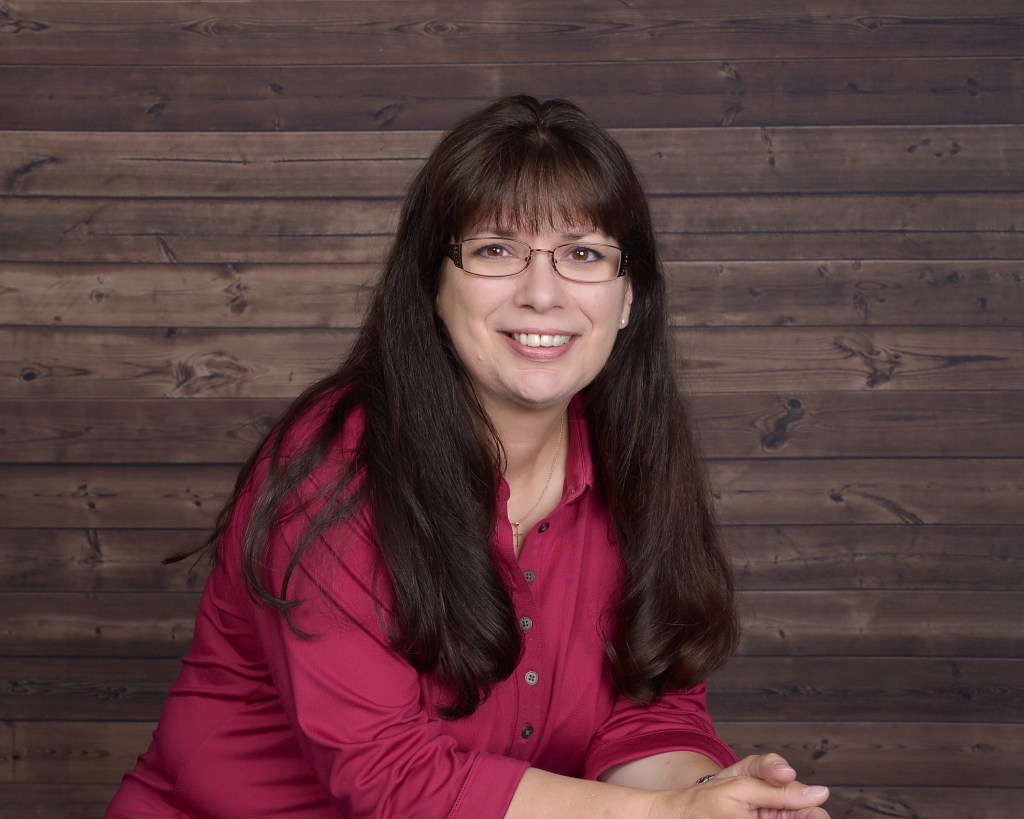
My name is Lynne Armstrong-Jones. My first published novel, On the Trail of the Ruthless Warlock, is currently on the market and has had several positive reviews. This is a sword and sorcery, fantasy novel.
Q2. Tell us about the process of coming up with the book cover and the title ‘On The Trail Of The Ruthless Warlock’?
I wrote the first drafts of this novel about 25 years ago, when I was at home raising my kids. When the kids were napping, I was writing! I honestly don’t remember where the title came from. It was originally titled something else, but then I discovered that there was already a novel with a very similar title, so I changed mine. As for the cover, I liked the idea of preparing a cover the old-fashioned way — having an artist prepare an illustration that depicted a scene from the book. The cover shows one of the young men of the escort, in the act of protecting the sorceresses who are on the trail of the warlock.
Q3. What books or authors have most influenced your own writing?
When I wrote the first drafts of this novel, I was also writing short stories. At the time, Marion Zimmer Bradley was editing her well-known anthologies — the Sword & Sorceress and Darkover series, as well as her Fantasy Magazine, and she published several of my stories. This is what got me started. I have also enjoyed the writing of Stephen King and Dean Koontz. Today, I am most impressed with the writing of George R. R. Martin, author of the Game of Thrones novels.
Q4. What’s your favourite spot to visit in your own country? And what makes it so special to you?
There are many, many, wonderful spots in my country. I live about a two-hour drive from Toronto, Ontario,Canada. Canada is an awesome place to live! We enjoy the conveniences of large cities, yet we are also close to very picturesque and beautiful areas.
Q5. What were the key challenges you faced while writing ‘On The Trail Of The Ruthless Warlock’ book?
Challenges which I faced during the writing of this novel include the fact that it was one of the very first novels which I wrote! Because of this, there was a lot of trial and error involved. But that was just fine, because I felt like the characters were my friends, and we were going through this tremendous adventure together, trying different things to see what worked best in different situations.
Q6. Are you working on anything at the present you would like to share with your readers about?
I am excited to say that the sequel to this book is in the process of being prepared for publication, and should be available sometime this winter! It is entitled On the Trail of the Wind’s Tears, and takes readers inside of the characters more than the first book did. I also have another novel written, which is totally unrelated to the ‘trail’ books. This one is a modern-day fantasy/science fiction which I hope to have on the market in a year or so.
Q7. On what all platforms readers can find ‘On The Trail Of The Ruthless Warlock’ book to buy?
On the Trail of the Ruthless Warlock is available on Amazon, as well as Indigo Books/Chapters and Barnes and Noble, as well as others. It is available both in ebook form and print.
Q8. Is there lots to do before you drive in and start writing a book?
When I am considering writing a book, I start with the characters. I like to give my creativity free rein. A lot of this part is subconscious … I get the feel of a character and come up with situations which will challenge him or her and go along on the adventure with him/her. When I am considering beginning a new book, I take a bit of time to make sure that I am totally prepared for this journey. When I start something, I finish it, so I have to be sure I’m ready to make the commitment. Once I have committed to it, the process kind of takes over entirely. I am constantly thinking of ideas for the book, choosing some and discarding others. When I was in the process of writing On the Trail of the Wind’s Tears, I would keep a pen and paper handy in the middle of the night so that if an idea hit me — perhaps in a dream — I could jot it down.
Q9. When writing a book how do you keep things fresh, for both your readers and also yourself?
I don’t have a problem with ‘keeping things fresh’. I am constantly considering various possibilities and trying them out.
Q10. Lastly, do you want to give any advice to someone wanting to write and publish a book?
To someone who wants to write a book, I would ask them what the purpose of the book is. Why do they want to write it? If they want to do this, they should go ahead and do it — see how it feels. Does the process feel right to them? I would caution people not to focus too much on how many words they write per day. It’s not the number of words that’s most important — it’s the impact which those words make.
Nish Amarnath is a New York-based journalist, author and poet whose latest book, Victims for Sale has enabled her to share her voice on various social, cultural and human rights issues at many platforms including U.S. State Department affiliates and United Nations associations. Nish has worked under the guidance of Writers House NYC founder and literary agent Al Zuckerman who groomed and launched various novelists ranging from Ken Follett to Nora Roberts. Nish was contributing editor at the Big Thrill Magazine, where she profiled other prominent novelists like Christina Dodd. She holds a full-time editorial post in New York and is additionally a part-time faculty member at the New York Writers Workshop. She was previously managing editor of one of Europe’s most prolific magazine publishing groups. Her writings have appeared in the Wall Street Journal, Medium, the Washington, D.C.-based literary journal, Del Sol Review, the Radical Humanist, The Thrill Begins Magazine, BookTrib, Yahoo!, TheStreet.com and India Today, among others. Her website is www.nishamarnath.com About Victims for Sale Victims for Sale, couched as a psychological thriller and crime suspense novel set in London, delves into the sexual and reproductive rights of mentally challenged women in a milieu fraught with conceptions of family honor among South Asian communities worldwide. The book, published by HarperCollins to considerable success in India, was nominated for the Mumbai Film Festival Word-to-Screen Award. Outside India, it has been endorsed by literary figureheads like British author Adam Hamdy, American mystery writer John Dobbyn, and Shamus Award-nominated author Charles Salzberg who described it as “reminiscent of the prose of Megan Abbott.” You can learn more about Victims for Sale here Nish speaks about Victims for Sale, her publishing journey, mental health, and more.
1. If your novel were to come true, would your decisions match those of Sandy, or would you make a different choice?
Nish: Perhaps, I wouldn’t have fallen for the trap and would have decided my response differently, because Sandy is probably far more naïve than I am. That said, it’s hard to say! That’s because I, as an author, had control over Sandy’s circumstances and the reality of the situation she was unraveling, as also the outcomes of her decisions. We do not have a similar control over our own reality, in terms of matters of life and death as well as decision-related outcomes that tend to depend on the situations, preferences, whims and psyches of countless other people. The only aspect where we do have control lies is our attitude. But, more broadly speaking, yes – I do believe in justice, respect, and love. So, I would certainly stand up for people who are treated unfairly, discriminated against, defenseless to stand up for themselves, and/or unable to access the resources they need to function effectively. I also do not believe in categorizing people, based on their emotions, capabilities, skill sets, gender, sexual orientation, race, geography, etc.
2. What was your favorite moment in the entire journey of publishing Victims for Sale?
Nish: Victims for Sale grew out of my fieldwork as a journalist. Research for this book included site surveys at many crucial locations in London and interviews with at least 50 subjects across London, Mumbai and New York. One of my most favorite moments was my interview with former Metropolitan Police Service officer, Jackie Malton who’s a UK TV script consultant and a muse for the character of Jane Tennyson in the British drama series, Prime Suspect. Jackie actually mapped out a blueprint delineating various possible outcomes of varying permutations and combinations of options for many scenes that involved police procedural elements. It was one of the most enthralling conversations, by far, and her insights helped make aspects of my scenes more authentic and intriguing. Another favorite occasion is a musical video I did for the book once I signed with my literary agent. This video, shot in London and New York, features a trailer-like narrative sequence against the backdrop of song called Fallen Angels, which I’d composed, written, sung and recorded. Fallen Angels became Victims for Sale’s theme song through this video. The entire creative process behind it was fun!
3. For your upcoming novels, would you be interested in exploring a different genre, or staying in the same genre? Why?
Nish: For me, genre is secondary. My approach to storytelling is one of exploring varying degrees of inner and/or outer conflict. So, I believe that the story has to be told well and the genre that does the story most justice is the one that’ll stick. Victims for Sale started out as a literary thriller when I began writing it. It evolved into a plot-driven psychological thriller, which is how my literary agent pitched it. And ultimately, HarperCollins couched it as a crime thriller and suspense novel. My upcoming novel is a character-driven romantic drama infused with literary overtones and strands of magical realism. It can fall in the ambit of upmarket fiction, commercial fiction, romance, women’s fiction and/or magical realism. Other future titles brewing in the alcoves, include a financial thriller, an adult fantasy, a romantic suspense novel and a social satire. So, I certainly hope to write across genres, because emotional voltage is what I do best as a writer. There has been a growing market for mixed and blended genre novels in recent times, and I see this as a trend that can encourage more quality fiction.
4. What is a crucial tip of advice you’d like to give to authors who are yet to start with the publishing process?
Nish : Be intellectually curious, read voraciously, and practice not only writing, but also storytelling in any form across multiple genres, formats and media. These help you find your voice. And voice is a huge component of how agents, editors, readers and audiences relate to one’s work as a writer. Further, have a realistic sense of what you can and can’t do, and have faith in yourself and your work. Publishing is a slow and subjective business that mostly abounds with rejections, ghosting, restructurings and other unexpected developments that can set authors back if they do not have connections in high places or the backing of a powerful celebrity. That said, there’s always room for true talent. So, rest assured that the work you’ve done with honesty from the depths of your heart and soul, will find a way sooner or later. True talent cannot be hidden forever.
5. What were your favorite reads as a teenager?
Nish: I read different authors and genres. In my tweens, it was Sweet Valley High and Sweet Valley University! In my teens, some of the books that I especially loved were Danielle Steele’s The Long Road Home, Rage of the Angels by Sidney Sheldon, King of Torts by John Grisham, Jeffrey Archer’s Kane and Abel, Erich Segal’s Prizes, Robin Cook’s Invasion and Flora Schrieber’s Sybil. In terms of classics, I enjoyed Charles Dickens’ A Tale of Two Cities, Thomas Hardy’s Tess of the d’Urberville, and A Flower in Season by Audrey Howard.
6. What’s your take on the talk about mental health these days? Do you think it has reached a point where mental health concerns have been normalized?
Nish: The root cause of poor mental health today is our failure to accept ourselves, and one another, for who we are. Right from TV ads dishing out weight loss products and skin fairness creams to YouTube videos that claim to teach how you can get your ex back, we’re made to feel inadequate. Commoditization of people is the main reason for this problem. Women contend with various social, cultural, religious and familial expectations as an offshoot of patriarchal constructs. Likewise, men have been conditioned to rein in their emotions and refrain from expressing themselves or showing any sign of vulnerability. Combine this backdrop with today’s growing ethos of impersonal interactions with bots and other forms of technology, not only to resolve a simple problem like a phone not booting up, but also for more serious and pressing concerns such as a health emergency. Unsurprisingly, in the last 30 years, the incidence of depression has increased by about 53.5% globally to 264 million people worldwide in 2020, according to the World Health Organization, compared to 172 million in 1990, according to a Global Burden on Disease study that appeared in the Journal of Psychiatric Research. Nearly 1 million people die by suicide every year. The WHO lists depression and anxiety as among the top ten causes of serious illness and/or disability among young people. Human beings are intrinsically compassionate and caring creatures driven by love and bonding at the core, so I think many systems and practices are counter-productive and counter-intuitive to our natural state of being. Such systems and practices include communicating only through social media, text, IM or email rather than through phone and face-to-face interactions, soaring drug prices, lack of access to proper medical care without a good health insurance, the need for instant gratification and success without much patience or effort, and at-will employment clauses, which are the norm in the U.S., meaning companies can fire you at will, with or without any cause of notice.
7. What can we do to improve the current mental health scenario?
Nish: I would suggest starting with simple things. This includes finding some ‘me’ time, so that we can give back to ourselves the energy we put out in the world. Empathy can go a long way in boosting mental health, both individually and collectively. Being non-judgmental is helpful. In the current pandemic, this could be something as simple as not yelling at a stranger who requests for room to pass by an aisle in a crowded supermarket, not barging into an elevator without wearing a mask, especially when a person inside is trying to step out. You don’t know what this person is grappling with. This person could have cancer or other pre-existing conditions that make him/her more susceptible to contracting the virus. We never know what someone else is going through. So, let’s not criticize others unless we want to provide feedback that will help them improve. Let’s be kind to strangers and friends alike, or at least civil. Let’s truly listen to people, rather than treating one another like robots or money machines. Let’s choose to trust one another a lot more. Let’s share more. Let’s laugh more often. Let’s not categorize ourselves and others, based on race, gender, body size, financial status, or millions of other factors. Let’s not compare ourselves with others. Let’s drop out of the cog-in-the-wheel rat-race and make time for those we care about. Let’s appreciate and try to see the good in others. Let us let go of the illusion of “normalcy.” Let’s simplify our lives, All of this can go a long way in strengthening your own emotional health and that of the society, at large.
Q1. Hello Ma’am, can you please introduce yourself? Readers would love to know more about you.
I am a grandmother who has lived long enough to know that reality is more than anyone can see. Everyone has to search for the spiritual truths of the universe but they are knowable and constant.
Q2. What were the key challenges you faced while writing ‘Hawk McCoy: The Penthiads’ book?
I was challenged by the blending of the fantastical and the reality of my character, Hawk McCoy.
Q3. What books or authors have most influenced your own writing?
I was a literature major in my undergraduate studies. I’ve read the English classics and they were some of my influences. I read many different things today, current events, fantasy, science fiction. I love exploring the different ideas about reality.
Q4. What’s your favourite spot to visit in your own country? And what makes it so special to you?
I go to the beach for renewal. I explored the Georgia coast for a town to become the setting for the Penthiads, Izlet Bay. This town, not its real name had everything I needed: access to the ocean, and many local customs and businesses.
Q5. Is there lots to do before you drive in and start writing a book?
I research my ideas before I start my stories. Now I have Hawk McCoy and the five Penthiad sisters and plans to develop a story for each one of the sisters. I research the general topic that I want to use for each one. Hawk McCoy: The Penthiads was the book to introduce them.
Q6. How long did it take you to write ‘Hawk McCoy: The Penthiads’ book?
I worked on The Penthiads for about five years before I settled on the final form.
Q7. On what all platforms readers can find ‘Hawk McCoy: The Penthiads’ book to buy?
I am on Amazon where the book can be purchased. Mary T Kincaid, there are several Mary Kincaids on Amazon.
Q8. Tell us about the process of coming up with the book cover and the title ‘Hawk McCoy: The Penthiads’?
The book cover was drawn by an Italian artist who read the book. I wanted the boy on the cover demonstrating his interest in mystery.
Q9. When writing a book how do you keep things fresh, for both your readers and also yourself?
I look for the humor in my ideas and the interaction between my characters. Life is full of moments that make you laugh.
Q10. Are there any secrets from the book (that aren’t in the blurb), you can share with your readers?
I am not sure the stories are continuing to develop.
Q1. Hello Sir, can you please introduce yourself? Readers would love to know more about you.
Hello, my name is Cori J. Williams MSW LCSW and I am a author and licensed psychotherapist.
Q2. What were the key challenges you faced while writing ‘Thriving While Black’ book?
Some of the key challenges was keeping my emotions at bay. What I mean by that, is we are experiencing an increase in racial tension and divide in the U.S. These events were taking during the writing process of my book. Emotionally, I was very drained, and I wanted to ensure that I was able to maintain a relaxed emotional state of mind during the writing process, but this was extremely hard.
Q3. What books or authors have most influenced your own writing?
Ralph Ellison “The Invisible Man”, “The Autobiography of Malcolm X,” and “The One Thing” by Gary Keller
Q4. What’s your favourite spot to visit in your own country? And what makes it so special to you?
Martha’s Vineyard in Massachusetts would be my selection, and this is because this is a place where my family typically comes together for the summers and fellowship and simply enjoy one another’s company.
Q5. Is there lots to do before you dive in and start writing a book?
Typically, I find myself simply writing my first thoughts without editing. I allow my emotions and experiences dictate the writing prior to proofreading.
Q6. How long did it take you to write ‘Thriving While Black’ book?
From start to finish, it took me six to nine months to fully complete the writing of the book.
Q7. On what platforms can readers find ‘Thriving While Black’ book to buy?
Readers can purchase the paperback copy via my main website http://www.thrivingwhileblack.net, also readers can obtain digital copies via Amazon, Kobo, Barnes & Nobles, Apple iBook’s in addition to other digital platforms where books are sold. Paperback copies will be available on the mentioned digital platforms on October 5, 2020.
Q8. Tell us about the process of coming up with the book cover and the title ‘Thriving While Black’?
To be honest, the title and cover of the book, was inspired by a spiritual conversation that I had with my mother and father. They are very inspirational to me and work.
Q9. When writing a book how do you keep things fresh, for both your readers and also you?
As I stated, when I am writing, the source of my writings comes solely from my perspectives and experiences. I try not to limit myself nor censor my emotions when navigating through this world in effort to not limit my writing inspirational vibe.
Q10. Are there any secrets from the book (that aren’t in the blurb), you can share with your readers?
During this time of COVID-19, this has allowed many of us to sit and be reflective in our thoughts. As a therapist, I have sat with patients, and what do you think my clients are talking about? Having the opportunity to be their authentic self. To add an additional layer to this complexity cake, we find ourselves in a space where there has been an increase in acts of violence against our culture. We have watched almost ¼ of a million people die, in the last 6 months, so imagine having to be a black person and not receiving acceptance and experiencing consistent violations of simply being who you are. As an African American we continue to be given this raw deal and except to simply compartmentalize all of this and operate in these spaces effectively with this heavy burden that we all bear.
Q1. Hello Ma’am, can you please introduce yourself? Readers would love to know more about you.
I’m a creative soul. My art has taken many routes through the years, but I’ve always loved writing. Journaling and writing poetry have helped me through some very difficult times. I started writing fiction seriously when I had to retire from my work as a floral designer due to continued disability from multiple sclerosis. Even though I have limitations and wrote most of my books on an iPad with one finger, I poured myself into writing my series, By the Light of the Moon. In a way, it’s been therapeutic. The fourth book, Harvest Moon, releases this November. I have a background in library science, cultural missions, music, and psychology. I am also a wife, mom of two grown sons, and a grandma. My husband and I, along with our pet Yorkie, Ruby, live in Wisconsin in the U.S.
Q2. What were the key challenges you faced while writing ‘SILVER MOON’ book?
I knew next to nothing about Canada’s involvement in WWI. Using some valuable websites and books, I researched as the story of the characters unfolded. My impared physical abilities are always a challenge, as well.
Q3. What books or authors have most influenced your own writing?
Being a voracious reader, I have encountered many styles of writing, but I’d have to say that it goes back to my reading as a girl with the Anne of Green Gables series, by L.M. Montgomery, which touched my heart and inspired me in many ways.
Q4. What’s your favourite spot to visit in your own country? And what makes it so special to you?
My favorite location in the U.S. is by Lake Superior. My love affair with the Great Lake began when I was a girl and visited my uncle, who lived by the lake. I would join him, strolling along the shore, searching for agates, which he made jewelry from.
Q5. Is there lots to do before you drive in and start writing a book?
I establish the point of view and a premise and begin. After that, it’s all about listening to the characters as they present themselves and researching as necessary.
Q6. How long did it take you to write ‘SILVER MOON’ book?
I finished the rough draft in a few months and after did some major editing and chopping of scenes. Initially Silver Moon was over 500 pages.
Q7. On what all platforms readers can find ‘SILVER MOON’ book to buy?
At this time, on Amazon in both paperback and Kindle. You can also purchase by request at independent book stores. In November 2020, I plan on going wide with distribution for the ebook, and readers should be able to find it wherever ebooks are sold.
Q8. Tell us about the process of coming up with the book cover and the title ‘SILVER MOON’?
I had the idea of three soldiers in silhouette with poppies, to represent WWI remembrance, and my book cover designer put it together. The orangish-gray sky represents a depiction of the ravages of war and what the gas clouds may have looked like during some of the battles. The moon is part of the series name but also represents a constant in many of the scenes throughout the book and a story told by a character, which highlights the title, “Silver Moon”.
Q9. When writing a book how do you keep things fresh, for both your readers and also yourself?
Momentum plays a big part in writing. When I can hear the characters and keep asking myself where the story is going, writing rolls along smoothly for me. When I’m tired or don’t have time to write like I want to, it can be a challenge. I think of myself as a reader when I write and try not to duplicate anything that I’ve read but give afresh what I can, to the best of my ability as a writer to my readers.
Q10. Are there any secrets from the book (that aren’t in the blurb), you can share with your readers?
Well, I can’t give anything away, but it does have a twist at the end.
Q1. Hello Sir, can you please introduce yourself? Readers would love to know more about you.
Dear Readers: It is a pleasure to be able to introduce myself to you. What you may find interesting is that for me, becoming a spiritual writer and author was not something I had initially planned on or expected as part of my original life’s plan. Over time my career has evolved, and one of the most fulfilling roles I’ve had is my work as an educator. I enjoy helping to nurture the growth and development of students as they work on their academic goals. I thought this was going to be the primary focus of my writing and publishing. I discovered over the past few years this was going to change. I have been on a life-long journey of self-discovery, learning about my own spirituality and a natural ability I have to understand life from a different perspective. It is because of this ability, along with the challenges faced throughout my life, which led me to a new turning point in my life. While I still work as an educator, as time goes on I’m finding I am becoming more involved with my spirituality practice.
Q2. What were the key challenges you faced while writing ‘Discover Laws of the Universe’ book?
The only challenge I faced was my own mindset concerning how this work would be received. I am not attached to any religion and I am not a traditional spiritual teacher in any manner. I do not refer to any of the traditional religious references, when I’m explaining the order of the universe, and I am not following in the same path as mediums or Law of Attraction teachers. I have my own, unique approach and method of teaching.
Q3. What books or authors have most influenced your own writing?
My journey of self-discovery has been influenced by the New Thought Movement from the early 1900s, along with quantum physics, Law of Attraction, and New Age teachings. I studied each to help me better understand alternative ways of viewing the meaning of life and the order of the universe. What I discovered was an interest in each of the subjects for a short time, but then I moved on as I could not connect with any of these ideals, as I still could not find the truths I was seeking.
Q4. What’s your favourite spot to visit in your own country? And what makes it so special to you?
I’ve lived in the Midwestern United States most of my life. The most beautiful place my spouse and I have travelled to was Alaska during a cruise. While the Pacific Northwest holds a great deal of natural beauty, for us, there is nothing like seeing Alaska. The ocean is calm and the nature is breath-taking. It was there in Alaska that I felt renewed and made a decision to take the next step into work as a spiritual teacher.
Q5. Is there lots to do before you dive-in and start writing a book?
The process of writing a book is ongoing for me. Each of my books is based upon a collection of my blog posts. I try to write a blog post each week to keep the writing process going, especially for the unique method I’ve established. Then after approximately two years, I take the collection of blog posts, organization them, and begin to work on the new book. I don’t re-use the blog posts word-for-word. Instead, the blog posts serve as a launching point and most get re-written for the book. In other words, writing the book requires extensive editing, with new sections added.
Q6. How long did it take you to write ‘Discover Laws of the Universe’ book?
This was a process of approximately two years, from writing weekly blog posts to editing the final book and writing new sections.
Q7. On what all platforms readers can find ‘Discover Laws of the Universe’ book to buy?
It is available on Amazon, Barnes and Noble, Scribd, Kobo, Apple, and directly from Bruce J, the publisher. Its available in paperback (signed by the author) and eBook formats.
Q8. Tell us about the process of coming up with the book cover and the title ‘Discover Laws of the Universe’?
As to the book cover, I had a specific image in mind and I wanted it to be a reflection of me as a new spiritual teacher, someone who is connected to the energy of the universe. It took some time to find the image and once I did, I hired a professional cover art designer to create the cover for me. For the title, I wanted to reflect what I had learned up to this point in time, for my own spiritual self-discovery, and I wanted to help expand upon the field of spirituality. This was my first book as a spiritual author and I was sharing a new perspective. The purpose of denoting “Laws of the Universe” was also meant to show there is more than just one law, as I found Law of Attraction has been over-utilized to explain answers to life’s challenges and questions.
Q9. When writing a book how do you keep things fresh, for both your readers and also yourself?
I typically write each week by starting with a question, often about something I want to know about for my life or my family. I can also start with a question from a reader as a starting point. In other words, I am always writing about something current and relevant to what will help inspire and empower readers.
Q10. Are there any secrets from the book (that aren’t in the blurb), you can share with your readers?
The book shares a personal perspective about my journey, allowing readers to get to know about me. In addition, there’s more than Laws of the Universe explained within the chapters. There are writings designed to help provide inspiration, self-discovery, and self-empowerment. It’s also important to know that I do not ask readers to subscribe to any doctrine. Instead, I only ask readers to read and learn, and believe what they connect with as they read. Also, I haven’t made a formal announcement yet; however, my next book will be coming out by November 2020. It will be a new book based upon the next two years of writings and growth as a spiritual writer.
Q1. Hello Ma’am, can you please introduce yourself? Readers would love to know more about you.
Hello to your Lovely Readers, I am an indie author based in the Hunter Valley, a beautiful area of rural New South Wales Australia. I live a simple live that includes my two Jack Russel puppies, Missy (15) and Little Man (13). I spend my days either writing or making jewellery in my workshop. The two motto’s I live by are “Life is too short for bad Coffee, bad Chocolate and bad Men” and “Always leave a place or person better than you find them.”
Q2. What were the key challenges you faced while writing ‘The Tempest of Eerikki’ book?
‘The Tempest of Eerikki’ is the first book of the fantasy action adventure series ‘The Panacea Quest’. The real challenge with this book and subsequent books of the series is in keeping track of all the details. The adage “the devil is in the detail” is true with a good fantasy novel. Nothing worse than reading in one book the character has a couple of sons only to read in the next book or even worse the same book that the character has both sons and daughters. While some readers may not pick this up immediately it can be disconcerting on a subconscious level. A great Editor can help with this, but I keep copious amounts of character notes that include full bio’s and backstories. I am creating this world so I should be able to keep it all straight.
Q3. What books or authors have most influenced your own writing?
I have a secret obsession with reading Sci-Fi Alien Romance so writers like M.K. Eidem, Anna Hackett and S.E. Smith are who I read most, and I suppose have the greatest influence over my style. They weave tales that are entertaining and fast paced. I very much enjoy writing to this style. I have always found it is not the amount of words I write, its about if I am telling the story and does it entertain or touch my readers.
Q4. What’s your favourite spot to visit in your own country? And what makes it so special to you?
Oh well that is a hard one, I am an Aussie born and breed. We have amazing places all over and I am very fortunate to now reside in a small hamlet in the Hunter Valley an area renowned for its Vineyards and Wineries. It may sound very strange but If I need to say one place it would have to be my workshop. It is a beautifully converted garage that offers a perfect view of farmland with a mountain vista in the background. It is peaceful and perfect for writing and allows for my other passion, making jewellery.
Q5. Is there lots to do before you dive in and start writing a book?
Not usually, I seem to have large spurts of inspiration, that give me a good story outline. These outlines have most of the basics a catchy beginning, part of the journey and drama as well as a possible ending. From this I do like to start detailing my main characters which includes creating some of their backstory which helps me to give the characters depth.
Q6. How long did it take you to write ‘CHRYSALIS of the Creator’ book?
It was about 12 months; the book outline came to me at the same time as ‘The Tempest of Eerikki’ but there was a lot more involved with the characters and story line. Unlike ‘The Tempest of Eerikki’ I was not sure if it was going to be a stand-alone book or part of a series. So happy its part of a series I ended up falling in love with the characters and wanted to write more about each one of my Galactian Hero’s.
Q7. On what platforms can readers find your books to buy?
The books are on multiple platforms including Amazon Kindle, Apple, Googleplus, Barnes and Noble just to mention a few in both electronic and paperback. I am in the process of doing audiobooks and can not wait to have them available on Audible. We can always catch up at my author website www.mariekejtreloar.site
Q8. Tell us about the process of coming up with the book cover and the title ‘Rowland, The Senator’s Son’?
I am very fortunate to have a friend who is a great photographer Peter Tyrrell. I always had a vision that the cover should have a mysterious almost tantalising edge and of course I needed a male model with a massive set of shoulders (very fortunate that I found this in my “Secret Senator”). We took approximately 300 photos to get the right one and then there was at least twelve versions of the cover before I was satisfied with it. Unfortunately, today the cover is the first step that will entice a reader to delve between the pages and emerge themselves in the story. The book itself came from a ‘what if’ conversation with a friend as in – What if a respected Politician dies, leaving his eldest son with a task to protect a mysterious woman. Who unbeknown to all is the Politian’s secret Mistress and the son falls for the woman? The title sort of wrote itself from that story outline, hence “Rowland, The Senators Son.” The next book in the series is “Oryan, The Governor’s Man” the cover will have a similar look and feel except with a little more of a military slant.
Q9. When writing a book how do you keep things fresh, for both your readers and yourself?
I am a total genre hopper while I love writing raunchy action adventures, I always make sure there is some fairly substantial twists and turns I can never promise they will all end as happily ever after tales. As a writer, I love the freedom that writing offers. At any one time I usually have at least two or three stories on the go and the opportunity to switch between them is how I keep things fresh for myself.
Q10. Are there any secrets from the book (that are not in the blurb), you can share with your readers?
Ah now let me think, “Rowland, the Senator’s Son” – I love the character of Rowland, Alexia offers him the opportunity to broaden his sexual experiences. These encounters not only broaden his mind they strengthen his spirit giving him the courage to pursue his true destiny.
Q1. Hello Ma’am, can you please introduce yourself? Readers would love to know more about you.
Hi there. I’m Romona. I’m the author of a new cross-genre series that includes suspense, dark romance, and horror, starting Her Eyes Underwater.
Q2. What were the key challenges you faced while writing ‘Her Eyes Underwater’ book?
Finding time to write was a challenge. I am often busy with my other job and had to write on the side.
Q3. What books or authors have most influenced your own writing?
I didn’t really think about other authors when I wrote the book. I was just doing my own thing.
Q4. What’s your favourite spot to visit in your own country? And what makes it so special to you?
Any place close to a lake is very peaceful for me.
Q5. Is there lots to do before you drive in and start writing a book?
If I can find the time and stop myself from procrastinating, there is not much else keeping me from writing.
Q6. How long did it take you to write ‘Her Eyes Underwater’ book?
About 3 months.
Q7. On what all platforms readers can find ‘Her Eyes Underwater’ book to buy?
It is available on Amazon in two formats right now (ebook and paperback) and on Barnes and Noble in two formats (paperback and hardcover). At the end of September, it will also be available as an audiobook at any retailer that sells audiobooks.
Q8. Tell us about the process of coming up with the book cover and the title ‘Her Eyes Underwater’?
The title is a reference to a phrase used in my favorite chapter of the book. The cover was designed by an artist after I told her a little bit about the book.
Q9. When writing a book how do you keep things fresh, for both your readers and also yourself?
Since I planned to write a series, I simply planned things out in my mind so that I would have enough material for a series.
Q10. Are there any secrets from the book (that aren’t in the blurb), you can share with your readers?
This isn’t really a secret, but people should think of each book sort of like an episode. Each book will build on the one before it until the whole story is told. Everything people want answers to will be explored eventaully.
Q1. Hello Ma’am, can you please introduce yourself? Readers would love to know more about you.
Hi there! My name is Rene’ Schultz from NH USA! I’m so grateful to live in a beautiful state w so much nature all around. I live here w my husband of 25 years and my two adult daughters. I suffered w childhood sexual and physical abuse but always tried my best with what I knew, volunteering and working w elder care and special needs. I’ve made it through a life of struggles with CPTSD and now want to teach kids before the going gets really tough
Q2. What were the key challenges you faced while writing ‘A Million More Kisses’ book?
Key challenges, we’ll first of all I’m an accidental writer. I haven’t taken classes and had to be taught as I went, about how to set up paragraphs etc. them the tech stuff, I am $10k into this book as I had to hire and beg everyone I could find for the answers to everything. I don’t learn very well so this project has been arduous for me and the many people I bugged incessantly. I am so, so grateful for so many people along my journey
Q3. What books or authors have most influenced your own writing?
Honestly, I haven’t read children’s books in 20 years. I have tried on my journey to not read any kids books, afraid I would get someone else’s idea in my head and be frozen. I’m not super creative so I’ve been super sensitive to not letting others influence any ideas I may come up with
Q4. What’s your favourite spot to visit in your own country? And what makes it so special to you?
I honestly have not been far. I would have to say again, I’m so grateful to be in NH, I have mountains, cities and beaches all within an hour of me.
Q5. Is there lots to do before you drive in and start writing a book?
Is there a lot to do before diving into books? Well I have 2 series coming, both based on my life experiences so I had to live almost 50 years of trauma lol One is on my chihuahua, pretty basic and I know him well. The other series is set in the woods w animals so reading up in nests, dens, animals and what they eat is a lot of fun
Q6. How long did it take you to write ‘A Million More Kisses’ book?
It took almost 3 years from beginning to end. I went through a few publishers who scammed me, an illustrator and several editors. I finally got a great team around me and have been able to put out a spectacular product.
Q7. On what all platforms readers can find ‘A Million More Kisses’ book to buy?
Readers can find my book on IG at woody Knoll Publishing or my personal account, _that_wicked_smaht_chick. Facebook Rene Pelletier Schultz, my website woodyKnollPublishing.com, TikTok, Rene Schultz And I’ll be on Goodreads this week.
Q8. Tell us about the process of coming up with the book cover and the title ‘A Million More Kisses’?
Around 2017 I took a photo of my chihuahua standing at the top of my mother in laws outdoor stairs looking down. It looked like he was saying goodbye for the last time and I got the idea to write about it. The cover, I initially just wanted an outline of a lady’s face so the book would be relatable to more kids. My illustrator ended up doing this and I went with it. I trusted her skill and the process of what the book would become
Q9. Are there any secrets from the book (that aren’t in the blurb), you can share with your readers?
My book has so many secrets! 1. I had a very difficult relationship w my in-laws esp my mother in law. She is on the cover and I wrote a gorgeous story around her. Around the woman she was to others. Her cruelty for 30 y literally drove me to suicide. The passion for my book came from loss of self, grieving what will never be, keeping faith, hope and boundaries in order to find freedom in forgiveness. The black and red checker jacket hanging in the nurse scene is a shout out to my father in law whom I did hospice for. Kelley library is our real library where Nonnie, my mother in law always went, and her niece Audrey who really worked there! In one of the scenes there is a sign way out in the yard, in real life it says “Schultz conservation land”. When Nonnie died in July, 2019, the little sign outside the library had one of her quotes on it “the best thing about books, no commercials”. The nurses are my daughters. Emmy is Emily and Ellie is Rachel Elizabeth. Yes, I had so much fun writing this for everyone. The story you’ll hold in your hands is for the kids, my story of overcoming is to hold in your heart. God bless us all as we fight darkness with light.
Q1. Hello Sir, can you please introduce yourself? Readers would love to know more about you.
My name is Corey Croft, I live in Vancouver, Canada. Besides story-telling I enjoy exercise and travel. It should be important to differentiate travel with vacation, or as the Brits call it ‘holiday.’ Everyone loves not working and spending leisure time in varying degrees of luxury and pomp. Not working is most people’s idea of a great time, even if it is just staying at home and watching movies on the couch or staring idly at a plain wall. When many people say they enjoy travelling, they really mean they enjoy merely not working and adding a tropical destination to the pot for spice. Yeah, that rant more-or-less sums me up.
Q2. What were the key challenges you faced while writing ‘Becoming Buddha’ book?
Buddha was a shock to the system because it was both the first book I had ever written and the first attempt that I had ever taken to write something that wasn’t purposely built for academia. It was a good instructor in regimentation and discipline. It proved a greater influence in what ended up becoming a borderline-obsessive necessity from then-on. I hadn’t formulated a strategy or a blueprint beyond some primal urge to write. It turned out there was more in my head than I’d thought and it just kept coming, and coming, and… When the first draft was completed, the whale weighed-in at more than 200,000 words. Even crazier, I roped in a few poor souls to read it. The biggest obstacles to overcome were all those that amateurs and first-timers encounter: doubt, fear of failure, the overwhelming feeling of putting a tempest into a tea-cup, and more.
Q3. What books or authors have most influenced your own writing?
The big two have been Dostoevsky and Kafka. The Russian’s Crime and Punishment was written in a way that seemed to pierce directly into the centre of my heart and I was able to relate entirely. The same goes with the latter’s works, who also added a sense of absurdity that opened a door to my mind which has stayed ajar. Some others, for reasons of eloquence, creativity prose, or narrative have been Nathaniel West, Philip K. Dick, Hunter S., Gogol and many more.
Q4. What’s your favourite spot to visit in your own country? And what makes it so special to you?
My country is enormous. I live on the west coast, which has mountains and ocean and is visually stunning as well as yields a very agreeable climate in comparison to the rest of the country. I like the Eastern Maritime provinces, the Islands off the coast of my province and Toronto. My favourite place is Montreal. It is in the francophone province of Quebec and is quite unique for that and other cultural reasons. I lived there for a spell and look forward to returning when the pandemic loosens its jaw.
Q5. Is there lots to do before you drive in and start writing a book?
Depends on the story. For a shorter story, especially one of my more absurd pieces, I dive in with a loose metaphor and let it unravel. I don’t hold back, anything. It feels good. It can be confusing and overly convoluted, but, that’s half the fun of the dissection. For a standalone novel, I tend to map it out as much as it needs. Most importantly, I want to know the character bases very intimately and develop theme and plot points. Oftentimes, I do this through key events and interactions. I use the characters as a means to have conversations with myself; they usually take far ends of the spectrum and speak towards the middle. As a result, I have to plan out the dialogue. Not in the sense of actual script, but what the characters represent to the story and theme and what they ultimately stand for in the larger scope. I could go on for too long about this, so, let’s just say that planning is important and varies depending on the message and its profundity.
Q6. How long did it take you to write ‘Becoming Buddha’ book?
Buddha took, if I recall, 6-9 months to write a rough draft. I realize that three months is decent-sized gap, however it was a while ago. It really came together at a certain point, somewhere around midway through part 2. The long part was the editing process and my own confidence behind the project. It was long and personal. I knew that it had some very touchy subject matters and needed someone that I could trust. The editing and evisceration of that beast took a while. During the edit, I damn-near rewrote the entire thing, top-to-bottom. There was a point when I ‘got it.’ More than the nakedness of the piece, I knew what it meant, why it was important, and, with some help from Bukowski and his vulgar prose, I was comfortable in letting my true voice ring-out.
Q7. On what all platforms readers can find ‘Becoming Buddha’ book to buy?
Buddha is available through Amazon and its long-ass arms on print and e-book. It is also available through Ingram Spark and their sellers, but I am unsure if it is solely e-book or if some representatives have a print-on-demand service as well. In reality, if you don’t have the money or the ability to utilize one of the outlets, holler at me and I’ll email a copy. I just want my books read and enjoyed.
Q8. Tell us about the process of coming up with the book cover and the title ‘Becoming Buddha’?
The original title, which I won’t say for the same reason I didn’t go with it, is a dead giveaway and spoiler for the last two parts of the book. The actual title came to me while I was listening to a song. I’d heard it a while before I’d written the book and then heard it again as I was writing it. I remembered the effect the lyrics (which are also used for the epigraph) and changed them around. The cover, done by my brother Spencer, was an idea that I had when putting everything together. I think it all fits perfectly, even if people seem to read the book as one or both a self-help book and memoir. Truthfully, I don’t know what it is beyond a story.
Q9. When writing a book how do you keep things fresh, for both your readers and also yourself?
I have a stellar bull-shit/anti-corny meter. One of my mutant abilities is to rebel against commonplace trends and make my weird whatevers seem cool. I jest, but I don’t. If something is significant enough to impress me, it has already passed through several layers of tough security. There is no one maneuver to keep things fresh. Recognizing gaps of what is not being done and doing the opposite are good yardsticks, and my brain does this reflexively. What is most important is that I (or you) make something your own. Show respect to the story and characters but keep them in a wound fist.
Q10. Are there any secrets from the book (that aren’t in the blurb), you can share with your readers?
That’s too vast of a question to answer. All of my writings, everything I do is saturated with hidden meaning and lade with Easter eggs. It’s one of the ways I keep it fresh and hope to make potent connections with my readers. Some of the things are for my own amusement. Some are near-microscopic details in descriptions or locations or characters that have been picked up and brought back to my attention. While a story can entertain, educate, enlighten or any number of words that start with E, a link is forged between the author and the reader through the strength of the connective tissue and what is being said and how. That is woven in the style and the descriptive minutiae of the story and is akin to idiosyncrasies in a relationship. We may have jobs and interests in common but it’s how we jive and get-on that really makes or breaks our future together.