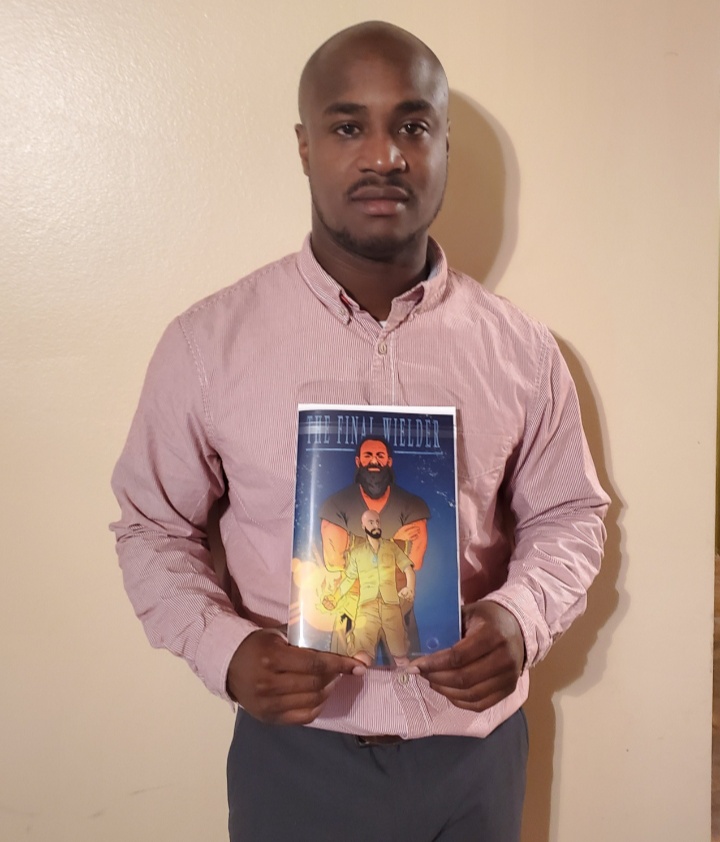
Interview with author Daniel Cano

Book: Mercenaries Of Destiny

Q1. Hello Sir, can you please introduce yourself? Readers would love to know more about you.

I’m currently a student of Providence College going for a major in Literature. I’ve lived in Rhode Island and focused a good portion of my education into literature and history. My favorite thing to do is write Dungeons and Dragons campaigns that I could hopefully one day use with a group of friends.

Q2. What were the key challenges you faced while writing ‘Mercenaries Of Destiny ’ book?

A major challenge I faced when writing Mercenaries of Destiny was the continuity of everything and how every event and aspect work together to make an engaging and complex world. I find that elements like the rules of magic, different world wide organizations and the motivations of gods and mortals not only make the world more interesting but also make it believable. The story that I plan to write should feel like one of many that could happen in the world that I’ve created.

I’d also argue that another major challenge is description. The few who read my book in its early stages enjoyed the imagery I used. However, I felt that I needed to find the right words for everything, not just important plot points. If I did that, the story would have held the reader’s hand like a tourist only pointing out the important landmarks. I wanted my imagery to feel like a world trotting hike, letting the reader take in everything and marvel at what they saw was important.

Q3. What books or authors have most influenced your own writing?

I can’t say there are certain books and authors that have influenced me since there are so many that have shaped my mind and beliefs. I’d argue that one genre has done a lot for my writing style, philosophy. Although I’ve only read to enjoy it, philosophy has helped me create characters that evolve naturally and express ideas that make sense with each other. Since I can only be one kind of person, reading philosophy helps me understand how a pragmatist would think, or how an existentialist would argue. It makes my writing a good deal easier.

Q4. What’s your favourite spot to visit in your own country? And what makes it so special to you?

The best spot I’ve visited in the Lincoln Forest. Beside breathing fresh air and the open space, the best part about the area is the tranquility it offers. It’s nice and quiet when I visit and it helps bring in ideas so I can ponder on them and see what works and what doesn’t.

Q5. Is there lots to do before you drive in and start writing a book?

When I go to write my book, I like to have a clear idea of what the scene I want to work on is and how I want it to play out. I don’t like to see the book have every chapter be independent in what the focus is. Instead I write the arc that I’m working on and then see where it can be divided into chapters.

Q6. How long did it take you to write ‘Mercenaries Of Destiny’ book?

It took me a good 3 months during my Senior year of high school to write my book. I didn’t want Seniroitis to hit me after all the stories I’ve heard from my older friends. So I decided to write for fun and see what I could come up with along the way. From there, the exercise started to turn into a full fledged book that I began to invest a lot of time in.

Q7. On what all platforms readers can find ‘Mercenaries Of Destiny’ book to buy?

Mercenaries of Destiny can be found on Amazon but if you’d like to support the people who helped me get my work on paper, you could buy it from Stillwater Books.

Q8. Tell us about the process of coming up with the book cover and the title ‘Mercenaries Of Destiny’?

The cover was easy, the people at Stillwater helped design the book cover and gave me ideas based on what the book was about. The title on the other hand was a real chore to come up with. I had to rewrite the title so many times I think Mercenaries of Destiny is the 10th revision that I settled on.

Q9. When writing a book how do you keep things fresh, for both your readers and also yourself?

When I want to keep things fresh, I take a break and read about anything to help me reinvigorate my ideas. Sometimes I look back on some books I’ve read like Odyssey for refreshing my memory on how stories like those were written. However, diving into Wikipedia has introduced me to so many cool things about the cultures of the world that I would be lying if I haven’t incorporated some of the stuff I’ve learned into my own stories.

Q10. Are there any secrets from the book (that aren’t in the blurb), you can share with your readers?

If there is one secret that I think will take readers time to warp and understand is The Oracle isn’t able to foretell the future or read the destiny of heroes.

Author’s Profile

Book Is Available On Amazon

Mercenaries Of Destiny

Interview with author Megan Sotelo

Book: Late Night Might As Well Be Drunk Writing

Q1. Hello Ma’am, can you please introduce yourself? Readers would love to know more about you.

Yes, I am from Dallas, Texas. I got my Bachelor’s degree in Literary Studies from the University of Texas at Dallas, but now work in the education field and hold my Master’s in Educational Administration from Tarleton State University. However, I still love writing and do it in my free time. I also advise for my sorority, Sigma Lambda Gamma National Sorority, Inc.

Q2. What were the key challenges you faced while writing ‘Late Night Might As Well Be Drunk Writing’ book?

I struggled a lot with the content and whether it was too mature to publish. There are a lot of explicit words and mature topics included and because I put a lot of my own emotions in my main character, at times I became very hesitant to publish the book.

Q3. What books or authors have most influenced your own writing?

Before I started writing the book, I read a book called “Constantly Constance” which is written in blog format. This inspired me to also write a book this way, so in this book, my main character is writing to her fanbase through a blog. I like the way it flows and how much of the her voice you can hear in her writing. Another book that influenced my writing is Stephen King’s “On Writing”. One big takeaway for me was to not be afraid to be explicit and just express yourself the way you need to. It gave me the push I needed to publish this book without cutting a lot of the mature content.

Q4. What’s your favourite spot to visit in your own country? And what makes it so special to you?

I’ve only been a couple of times, but I fell in love with New Orleans when I first went to visit. It has a very rich and unique history and culture. As a foodie, it’s also a lot of fun for me to try all the restaurants when I go.

Q5. Is there lots to do before you drive in and start writing a book?

No, normally when I get an idea, I just start writing immediately with very little planning. I have a horrible habit of not outlining my books before diving into them. It makes the process a lot of fun for me, but I do have to go back through and clean up a lot of plot holes and make sure the timeline of the story runs smoothly. I’m sure there are a few plot holes I missed (lol).

Q6. How long did it take you to write ‘Late Night Might As Well Be Drunk Writing’ book?

It took me about seven years to complete. I started writing the book while I was in college and took a break while I was starting my career and going to graduate school. Right before everything shut down due to COVID, I joked that if I had one more week at home I could finally finish. I ended up finishing the book during the first week of quarantine and spent the following months editing and putting the finishing touches on it.

Q7. On what all platforms readers can find ‘Late Night Might As Well Be Drunk Writing’ book to buy?

Late Night Might As Well Be Drunk Writing is currently available through Barnes and Noble and Amazon. The audio version will be out by early 2021 and will be available through Amazon, Audible, and iTunes.

Q8. Tell us about the process of coming up with the book cover and the title ‘Late Night Might As Well Be Drunk Writing’?

I think the title is funny. I originally wrote a lot of the entries as a way to vent and explore my feelings, which often occurs late at night when I was so tired I almost felt drunk. It was a working title that I put as a joke. One of my friends actually liked the title, so I stuck with it. I worked with a friend and colleague of mine, DeMarcus Tucker, who took my very vague cover idea and turned it into a beautiful cover. I love it because it grasps the tone of the book and the juxtaposition of trying to work diligently under pressure while trying to hold onto your sanity.

Q9. When writing a book how do you keep things fresh, for both your readers and also yourself?

When I’m writing, I like to harness how I’m feeling and pour that into my protagonists. As I learn and experience new things, my perspectives and feelings often change, so in many ways my characters mature as I do.

Q10. Are there any secrets from the book (that aren’t in the blurb), you can share with your readers?

Since this book was so personal and special to me, I took some of my interest and made them interests of Leyna as well. They’re small details, so I think of them as little “Easter eggs”. People can stumble upon them and see the parts of me that I hid in the story.

Author’s Profile

Book Is Available On Amazon

Late Night Might As Well Be Drunk Writing

Interview with author Jym Brown

Book: #Life

Q1. Hello Sir, can you please introduce yourself? Readers would love to know more about you.

I am a 36 year old guy that lives in Peterborough in the UK. I am a University lecturer by trade and focus largely on coaching, development, psychology and education. I hold a BSc and an MSc and am currently a PhD researcher in ‘Epistemological Philosophy, Target Reflective Practice and the Development of Leadership’.
I have far too many hobbies, including art (I draw and have taken commissions), music ( I play the guitar), sport and exercise, and of course I read voraciously.

Q2. What were the key challenges you faced while writing ‘#Life’ book?

This book is me bringing together the two disciplines of psychology and philosophy, which ordinarily sit side by side. So I had to try and bring both together in a way that people would both understand and relate to. The fact that this is my first book provided more than enough challenge, but I also had to decide on what life-based topics to include and what to leave out.

Q3. What books or authors have most influenced your own writing?

There are almost too many to mention. Perhaps if I split them up that might help. Within the world of psychology the likes of Jordan Peterson, Jonathan Haidt and Carol Dweck. In philosophy I would probably say the eastern philosophers such as Lao Tzu and Confucius and the western philosophers such as Marcus Aurelius, Friedrich Nietzsche and Immanuel Kant.
In terms of general writing and rational inquiry, the likes of Thomas Sowell have been a huge influence.

Q4. What’s your favourite spot to visit in your own country? And what makes it so special to you?

This would probably be either the nature reserve that I am fortunate to live very near in Peterborough, or the small country villages of East Sussex which is where my family and I are originally from. Both are very natural places, with Sussex seeming like it is stuk in some sort of time warp. It reminds me of simple times and a simple life.

Q5. Is there lots to do before you drive in and start writing a book?

I think this depends on what kind of book you want to write. If you are looking to write a non-fiction booked that is well researched, then obviously a great deal of time is spent on conducting that research beforehand. If it is narrative non-fiction, then less so.
However, I think that everyone considering writing a book should contemplate what it means to try and produce something you are proud of and what level of work is associated with that goal. Having an understanding of the publishing process is definitely an advantage!

Q6. How long did it take you to write ‘#Life’ book?

From start to finish it took 18 months, but that includes editing and re-writing. In terms of a first draft it was roughly 12 months, with the first 6 months mainly research-based. The editing process is actually very lengthy and combined with understanding how to publish takes longer than people generally think.

Q7. On what all platforms readers can find ‘#Life’ book to buy?

#Life is only available on Amazon, but can be purchased in paperback and kindle versions.

Q8. Tell us about the process of coming up with the book cover and the title ‘#Life’?

The title is a bit of a satirical take on modern life being so social media focused and hashtag driven. It is a reminder to actually live life rather than just view it on your phone. I am not trying to offend anyone of course, but I want people to realise the wisdom that exists in the words of these great philosophers and how valuable they can be for living life.

The book cover was a difficult thing to come up with. How do you encapsulate a book that uses move quotes, song lyrics and literary references along with ancient wisdom and modern psychological research? Or more importantly, how do you make a cover for a book that is about life? I just went with designs from other books that I liked and went from there. The circular design on the front then represents the cyclical nature of life, entropy etc, along with a metaphoric target of living a better life.

Q9. When writing a book how do you keep things fresh, for both your readers and also yourself?

I have used an array of quotations from really unexpected sources (movie, TV and so on) in order to help people understand the content, but also break up the monotony of the same voices. I actually use Homer Simpson as my ‘anti-hero’, who regularly voice the opposite of what I am trying to say (in his usual comedic fashion). Hopefully this has helped add some humour and life to the text, lightening the mood on what are very deep topics.

Q10. Are there any secrets from the book (that aren’t in the blurb), you can share with your readers?

That the wisdom we need in life is all around us. It is in our movies, in our TV shows and in our children’s books. It is even in the often simple but poignant words of our parents, children and friends. All we need do is pay attention and try to understand the deeper meanings of these words and how they bring value to our lives. #Life is an attempt to do that, by making the complex words of the greatest minds in history a little easier for everyone to absorb.

Author’s Profile

Book Is Available On Amazon

#Life

Interview with author Jym Brown

Book: #Life

Q1. Hello Sir, can you please introduce yourself? Readers would love to know more about you.

I am a 36 year old guy that lives in Peterborough in the UK. I am a University lecturer by trade and focus largely on coaching, development, psychology and education. I hold a BSc and an MSc and am currently a PhD researcher in ‘Epistemological Philosophy, Target Reflective Practice and the Development of Leadership’.
I have far too many hobbies, including art (I draw and have taken commissions), music ( I play the guitar), sport and exercise, and of course I read voraciously.

Q2. What were the key challenges you faced while writing ‘#Life’ book?

This book is me bringing together the two disciplines of psychology and philosophy, which ordinarily sit side by side. So I had to try and bring both together in a way that people would both understand and relate to. The fact that this is my first book provided more than enough challenge, but I also had to decide on what life-based topics to include and what to leave out.

Q3. What books or authors have most influenced your own writing?

There are almost too many to mention. Perhaps if I split them up that might help. Within the world of psychology the likes of Jordan Peterson, Jonathan Haidt and Carol Dweck. In philosophy I would probably say the eastern philosophers such as Lao Tzu and Confucius and the western philosophers such as Marcus Aurelius, Friedrich Nietzsche and Immanuel Kant.
In terms of general writing and rational inquiry, the likes of Thomas Sowell have been a huge influence.

Q4. What’s your favourite spot to visit in your own country? And what makes it so special to you?

This would probably be either the nature reserve that I am fortunate to live very near in Peterborough, or the small country villages of East Sussex which is where my family and I are originally from. Both are very natural places, with Sussex seeming like it is stuk in some sort of time warp. It reminds me of simple times and a simple life.

Q5. Is there lots to do before you drive in and start writing a book?

I think this depends on what kind of book you want to write. If you are looking to write a non-fiction booked that is well researched, then obviously a great deal of time is spent on conducting that research beforehand. If it is narrative non-fiction, then less so.
However, I think that everyone considering writing a book should contemplate what it means to try and produce something you are proud of and what level of work is associated with that goal. Having an understanding of the publishing process is definitely an advantage!

Q6. How long did it take you to write ‘#Life’ book?

From start to finish it took 18 months, but that includes editing and re-writing. In terms of a first draft it was roughly 12 months, with the first 6 months mainly research-based. The editing process is actually very lengthy and combined with understanding how to publish takes longer than people generally think.

Q7. On what all platforms readers can find ‘#Life’ book to buy?

#Life is only available on Amazon, but can be purchased in paperback and kindle versions.

Q8. Tell us about the process of coming up with the book cover and the title ‘#Life’?

The title is a bit of a satirical take on modern life being so social media focused and hashtag driven. It is a reminder to actually live life rather than just view it on your phone. I am not trying to offend anyone of course, but I want people to realise the wisdom that exists in the words of these great philosophers and how valuable they can be for living life.

The book cover was a difficult thing to come up with. How do you encapsulate a book that uses move quotes, song lyrics and literary references along with ancient wisdom and modern psychological research? Or more importantly, how do you make a cover for a book that is about life? I just went with designs from other books that I liked and went from there. The circular design on the front then represents the cyclical nature of life, entropy etc, along with a metaphoric target of living a better life.

Q9. When writing a book how do you keep things fresh, for both your readers and also yourself?

I have used an array of quotations from really unexpected sources (movie, TV and so on) in order to help people understand the content, but also break up the monotony of the same voices. I actually use Homer Simpson as my ‘anti-hero’, who regularly voice the opposite of what I am trying to say (in his usual comedic fashion). Hopefully this has helped add some humour and life to the text, lightening the mood on what are very deep topics.

Q10. Are there any secrets from the book (that aren’t in the blurb), you can share with your readers?

That the wisdom we need in life is all around us. It is in our movies, in our TV shows and in our children’s books. It is even in the often simple but poignant words of our parents, children and friends. All we need do is pay attention and try to understand the deeper meanings of these words and how they bring value to our lives. #Life is an attempt to do that, by making the complex words of the greatest minds in history a little easier for everyone to absorb.

Author’s Profile

Book Is Available On Amazon

#Life

Interview with author John ‘Karneios’ Auletta

Book: The Orgia Khronicles

Q1. Hello Sir, can you please introduce yourself? Readers would love to know more about you.

Of Course.. Yet I would like to say I’m many people in One, but as for a basic introduction. My name is John Phillip Auletta also known as ‘Karneios’ by Dionysus and the gods. I am a distinguished Dionysian Pagan and initiate of The Way Of The Satyr. A modern Patron of the Technitai Dionysus and a original founder of ATD (Auric Of Transcendent Divinity ) which is now a small community of eclectic Witches, Wiccans and Dionysian Pagans whose Transcendence is based on Dance, Music, Psychedelic Ritual and Ecstatic Sex. My most widely known works include ‘Loyalty is Everything (an Amazon E-Book which was a fiction memoir based on some actual events of my youthful life). My aim in writing it was to teach of the dangerous manipulation and violence within gangs. To sum it up clearly, I am not who I use to be but yet have become what I aim to be. I am just ebbing and flowing.

Q2. What were the key challenges you faced while writing ‘The Orgia Khronicles?’

The main key challenge I faced during the creation of ‘The Orgia Khronicles ‘ was MYSELF. This book is basically my spiritual and physical journey which are One in my eyes. And within any journey of life, the self becomes the main challenge. Where is your Self to be found is the question. In this book you’ll find my answer, ‘ within the deepest enchantment that you have experienced’. Is the answer you’ll find. However, the more indepth the enchantment, the more intense the challenge of Self becomes.

Q3. What books or authors have most influenced your own writing?

Those who truly inspired my writing were ancient Pagan philosophers. Those who were inspired by the gods and Mother Nature. But as for the ones who inspire me in these times, are mainly Dionysian authors ‘ Vikki Bradshaw’, ‘H. Jeremiah Lewis’, and ‘ Denise Major -Dodge ‘.

Q4. What’s your favorite spot to visit in your own country? And what makes it so special to you?

This may sound crazy but my favorite spot in my country are new lands I’ve yet to explore. My favorite thing is to go where I’ve never been. There is a peculiar pleasure in riding out into the unknown. A pleasure which no second journey on the same trail ever affords.

Q5. Is there lots to do before you dive in and start writing a book?

I wouldn’t say a lot to do however I do like to meditate before writing. I always make the most of every sense before writing, glorifying in all the pleasure and beauty which the world reveals to me.. That helps my writing to flow.

Q6. How long did it take you to write ‘The Orgia Khronicles’ book?

It took a total of 7 years. This project couldn’t be done quickly, the book is the manifestation of a journey.. That takes time, actually that is timeless.

Q7. On what platforms can readers find ‘The Orgia Khronicles’ book to buy?

The Orgia Khronicles E-Book is found on Amazon Kindle and the Paperback is available on Amazon.

Q8. Tell us about the process of coming up with the book cover and the title, ‘The Orgia Khronicles’?

As for the process of my book cover, I wanted to merge and blend the complexity of my Dionysian spirit into one cover. The grapes symbolize my god Dionysus, the wine being poured in the glass represents the many offerings I poured forth to Him. The hidden goat head itself within the image of my face symbolizes an experience that words cannot define. Mysterious initiates will understand.
Now as for the book title,’ THE ORGIA KHRONICLES (My Reminiscent Dionysian Journal )’.The word ‘Orgia’ is the name of an ancient celebration of the Greek god Dionysus. And the very essence of Dionysus represents the way a person seeks ecstacy through direct experience or passion through experience with Him, He shows us how to have blessed enthusiasm for life. And by reading my quotes, poetry, and adages, you will begin to understand my direct experience with my passion for Dionysus. These quotes and adages are an ecstatic journey towards my blessed enthusiasm of Him. Now as for the word ‘Resipiscent’, it means to be made wise by experience. My goal is to share the wisdom I gained by experience in hopes that your experience as you read it is one that evokes your own power and wisdom. And remember, experience is not what happens to you, it is what you do with what happens to you. Nothing ever becomes real until it is experienced-even a motto is no motto to you until Dionysus (Life) has illustrated it. And that is the wisdom of The Way Of The Satyr ….

Q9. When writing a book, how do you keep things fresh for both your readers and also yourself?

How I keep things fresh between me and my readers is actually simple. I continuously give new births to old ideas yet with my own Dionysian twist. There’s nothing more fresh then a new birth..

Q10. Are there any secrets from the book (that aren’t in the blurb) you can share with your readers?

There are many secrets within the book that I have yet to expose here. I’ll give you a good one, I am incarcerated… Yet prison hasn’t closed or incaged my mind and spirit.

Author’s Profile

Book Is Available On Amazon

The Orgia Khronicles

Interview with author Jabe Stafford

Book: Ales, Agents And Alchemy

Q1. Hello Sir, can you please introduce yourself? Readers would love to know more about you.

I’m a writer of heart-and-snark-filled fantasy and science fiction! Stories are the best way I know to help others, and books got me through the toughest times in my life. That’s one big reason I started writing. To give back. I earned my BA in English Literature from the University of Wisconsin – Madison, and I earned a 1st degree black belt in Tae Kwon Do.

Q2. What were the key challenges you faced while writing ‘Ales, Agents And Alchemy?’

The two biggest challenges were representing LGBTQ characters with respect, and researching beer brewing to weave in with the alchemy. There are three LGBTQ characters in the novel. Kelly, Madison, and Ryne. I worked closely with several beta readers and critique group partners to make sure these characters were sincere and genuine. Research for the beer alchemy was fun, and required a lot of double-checking to make sure the right step of beer brewing was involved with the right piece of alchemy.

Q3. What books or authors have most influenced your own writing?

I can think of three authors who influenced my writings. Kevin Hearne because his writing has the action-packed pacing and snark I like. Victoria Schwab because she tells beautiful stories about characters of many gender identities (and her super-villains rock). John Scalzi because he is a master of dialogue and of writing stories that get you seeing the setting vividly with only a few descriptions.

Q4. What’s your favorite spot to visit in your own country? And what makes it so special to you?

My favorite spot to visit is State Street in Madison, Wisconsin. There are used book stores on that street downtown, as well as fantastic and eccentric restaurants. There’s a breakfast restaurant open 24hrs, and a smokeshop with silly action figures and college humor types of products. Always entertaining to walk in there and see how many products with puns are for sale. Plus – Wisconsin ice cream down on State Street is #1 for a reason.

Q5. Is there lots to do before you dive in and start writing a book?

Of course there is! I outline each chapter beforehand using one paragraph to represent a chapter. That way I can keep the story on track AND allow the characters to solve the problems I lay out in the outline in their own ways. It’s half-organized, half-improvisational.

Q6. How long did it take you to write ‘Ales, Agents And Alchemy’ book?

The novel took two years to write and edit. I wrote it between other projects like writing short stories and converting a screenplay into a fantasy novel. That’s actually short for me. Usually it takes two-and-a-half or three years to write AND edit one novel.

Q7. On what platforms can readers find ‘Ales, Agents And Alchemy’ book to buy?

Ales, Agents And Alchemy is available on Amazon. Search the title and you’ll find it. The book is also available on Kyanite Publishing’s website under new releases. You can download the book there using code FAREWELL and get 40% off! The book’s available in e-book, paperback, and hardcover!

Q8. Tell us about the process of coming up with the book cover and the title, ‘Ales, Agents And Alchemy’?

This was such a fun process! I showed my publisher examples of other book covers that did attractive things with the text and the images of characters, then we designed our own together using things like angled text, a smoky background, and characters with whiskey and slinky dresses. The book’s original title was ‘The Magician’s Ales’ but the publisher and I talked and felt the word ‘Magician’ is too common in book titles. So we mulled over about ten other titles and came up with the alliterative ‘Ales, Agents And Alchemy’ because it tells exactly what the book is.

Q9. When writing a book, how do you keep things fresh for both your readers and also yourself?

It’s tough to do that, but there many ways to keep the pace and tension mounting. Each chapter starts with the character’s goal for that chapter on the first page or so. Then by the end of the chapter, I make sure the character has either failed, OR has succeeded and caused another problem or two because of that success. For example, the villain Lawrence Grant burns down a library in his first scene. He succeeds, but that gets Kelly the ATF agent involved because explosives are part of the ATF’s responsibility to investigate. Each chapter ends with something worse going wrong, and only SOME things get fixed before things go wrong even worse. You don’t have a story at all if everything goes right for the characters!

Q10. Are there any secrets from the book (that aren’t in the blurb) you can share with your readers?

I can share two! First, the main characters’s sexuality is Asexual. (Ace) He notices when people are behaving in a flirty or sexual way, but he’s never interested. He doesn’t enjoy that kind of relationship. He would rather have connections that aren’t sexual in nature. He can still experience love, care, romance, etc. That kind of casual representation is important in story telling because people are people and their feelings and sexualities are relevant. The other secret is I’m writing a sequel with Kelly as the protagonist!

Thanks so much for interviewing me! I’m active on social media like Twitter (@OculusWriter), Instagram (OculusWriter) and Facebook (Jabe Stafford, Writer). You can find free downloadable stories and a monthly newsletter at my author webpage http://www.jabestafford.com

Author’s Profile

Book Is Available On Amazon

Ales, Agents And Alchemy

Interview with author R.A. Schwartz

Book: The Legacy Commencement

Q1. Hello Ma’am, can you please introduce yourself? Readers would love to know more about you.

Hey folks! My name is Autumn and my pen name is R.A. Schwartz, which is an acronym that pays homage to my favorite Slytherin, Regulus Black AKA R.A.B. I’m a queer nonbinary nerd and I am from South Carolina.

Q2. What were the key challenges you faced while writing ‘The Legacy Commencement’ book?

Writer’s block! There were times where I knew exactly what I wanted to write and other times it just wasn’t coming to me. I spent three years writing and rewriting it.

Q3. What books or authors have most influenced your own writing?

Shakespeare, Tolkien, the creators of Tomb Raider, The Elder Scrolls Oblivion and Skyrim, and Harry Potter fanfic writers. J.K. Rowling did inspire me at one point, but not anymore. I still love Harry Potter, but I can’t stand her or her transphobia.

Q4. What’s your favourite spot to visit in your own country? And what makes it so special to you?

Folly Beach which is in Charleston, South Carolina. It’s so peaceful and quiet and it’s thst place to get away from it all! I love it!

Q5. Is there lots to do before you drive in and start writing a book?

I outline the main plot and my characters. I wrote this book in order. One of the sequel s that I’m currently working on I wrote the ending before I did the majority of the rest of the book. It will change but only slightly so.

Q6. How long did it take you to write ‘The Legacy Commencement’ book?

Three years! It was truly one of the hardest things I’ve ever done, but definitely worth the effort!

Q7. On what all platforms readers can find your books to buy?

Amazon. Kindle subscibers can read it free.

Q8. Tell us about the process of coming up with the cover and the title of your books?

My publisher created the cover art. I’m definitely no DaVinci. The title is tied into the villian. He has a vision for a specific type of legacy he wishes to create. One that will make the world an awful place. This book shows how this legacy began. The second will show how someone tries to bring it back and the third will show this legacy ending and a new, better one beginning.

Q9. When writing a book how do you keep things fresh, for both your readers and also yourself?

I’m good at finding a story within popular stories and making them my own. That way my readers get originality and nostalgia.

Q10. Are there any secrets from the books (that aren’t in the blurb), you can share with your
readers?

On my blog accordingtorory.net I’ve shared and will be continuing to share creation secrets for everyone! The category is called All About My Novel.

Book Is Available On Amazon
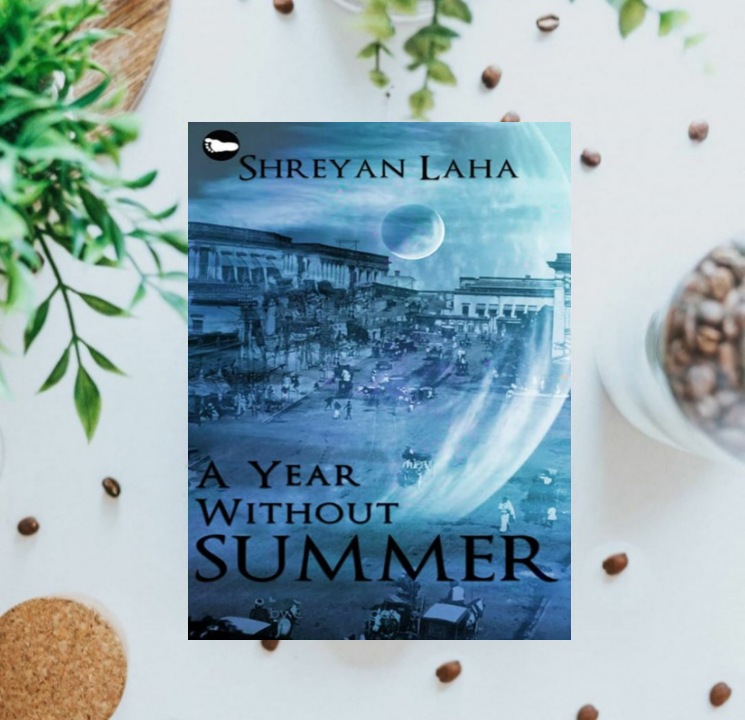
The Legacy Commencement

Interview with author Bill Hellman

Book: Fly Girl

Q1. Hello Sir, can you please introduce yourself? Readers would love to know more about you.

I was born and primarily raised in the State of Montana in the USA. I joined the Navy when I turned 18 and within a year I completed training to be a Navy SEAL. I remained in that job for the next 23 years. As a SEAL I travelled the world extensively which was great! As a part of that job I was able to participate in several sports if you will, that most people do for fun such as SCUBA diving, skiing, climbing, skydiving and many other outdoor activities. I am an instrument rated Private Pilot with more than 1500 hours and an avid sailor. Since 2000 I have travelled to 38 countries working primarily as a diving/instructor for Special Forces. Everything I have done in my life can be found in my writing whether its travel or the various adventures and activities my characters are involved in.

Q2. What were the key challenges you faced while writing ‘Fly Girl’ book?

The biggest challenge was getting started. The story resided in my head for a few years. My characters were well known to me as was the plot. But since I have a full time job it was a challenge to sit and actually take the time to write. Once I started it was virtually impossible to stop. The conversations were going on in my mind constantly. When a I felt something wasn’t perfect I consulted with my wife and we would talk through the issue until the way forward was clear.

Q3. What books or authors have most influenced your own writing?

Clive Cussler was a huge influence. His style of writing action adventure appealed to me. I found his stories easy to read and imagine. I wanted to write that same way so readers could see what was happening as they read.

Q4. What’s your favourite spot to visit in your own country? And what makes it so special to you?

There is a highway that runs through the Rocky Mountains from Denver Colorado to Southern Utah. It is called Interstate 70. That particular stretch of road should be a Wonder of the World! The scenery is spectacular. The wildlife you see along the way is amazing! Americas greatest ski resorts are all along the route as well as Moab Utah. Someplace anyone reading this should google. The grave site of Colonel William F, Buffalo Bill Cody is just off I70 on Lookout Mountain. These are the kinds of experiences that cause my imagination to run wild. I feel it’s a must see for anyone visiting the American West!

Q5. Is there lots to do before you drive in and start writing a book?

To be honest. I have a pile of unfinished works that I started and abandoned prior to Fly Girl primarily because I didn’t understand the process. I had taken a few creative writing classes and that was the extent of my education. That said. I always knew in my heart I could and would write a novel. I will say with Fly Girl I literally learned as I went. I researched the requirements for a novel such as the one I was writing to learn the expected word count. I read about character development and other aspects of novel writing but beyond that I would just say I was extremely lucky to have such a well developed story in my mind waiting get out. And I was extremely lucky for someone so uneducated in the process of writing.

Q6. How long did it take you to write ‘Fly Girl’ book?

Once I started writing in earnest it took about six months to write and another four months to finalize. At various times I would sit and write 8000 words in a day. Other times I would write as few as 1000. I spent a tremendous amount of time rereading and editing my work. Especially if I didn’t like a conversation or if I felt something wasn’t descriptive enough. Or if my wife read it and she wasn’t moved by it. Her input was invaluable especially when it came relationships within the story.

Q7. On what all platforms readers can find your book ‘Fly Girl’ to buy?

The book is available on Amazon in paperback and Kindle version.

Q8. Tell us about the process of coming up with the cover and the title of your book ‘Fly Girl’?

The cover is a composite of a young woman who represents the main character, pilot Rawley West, The Grand Teton Mountains directly behind the Jackson Hole Wyoming Airport and an aircraft that is widely used around the world for the same purposes it is used in the story. A friend who has the requisite skills put the cover together for me. The title was just in my head from the beginning. It was always meant to be used in the story in a conversation. That’s how far ahead I was thinking before I wrote the first word.

Q9. When writing a book how do you keep things fresh, for both your readers and also yourself?

In the case of Fly Girl I tried to keep the story moving forward constantly and I tried to make the characters and action believable. I used locations around the world that I knew well and had visited. The subplots are ironically subplots in my current and past life. I quite honestly wrote about what I know from life experiences so that made it easy. Many of the vignettes I used are loosely based on actual events. The readers should feel like they have been around the world.They should feel anxious. They should learn some actual history. They should feel invigorated by the action. They should like some characters and dislike a few. I’m sure it’s a medical condition well known to some doctors but while writing the characters were very real to me. Their conversations were like a movie in my mind. I should say I’m back to normal now.

Q10. Are there any secrets from the books (that aren’t in the blurb), you can share with your readers?

The biggest secret is that most of the event’s in this work of fiction are based on stories from military friends or things that my wife or I experienced during our military careers. I credited my wife Sali Gear as a Co-Author for her technical contributions and her insight as a former Navy Pilot during a time when women were not as accepted as they are today. In the novel our hero, Rawley reads a letter she had sent to her mother during her Navy flight training. That letter is an actual correspondence my wife sent home verbatim. My wife’s mother had returned every letter Sali sent home during that period and we read through them looking for inspiration. In the end we felt that specific letter had to be used word for word. It’s a fictional story but so much of it is real to us. Fly Girl is about an inspirational young woman who when challenged steps up and saves the day! If readers think she is too perfect, too calm, too skilled it’s because she is supposed seem that way. Real life women flying for the military are all that and much more. That’s what I wanted to convey with this story.

Author’s Profile

Book Is Available On Amazon
Fly Girl

Interview with author Jack Sloat

Book: The Standing Cemetery

Q1. Hello Sir, can you please introduce yourself? Readers would love to know more about you.

Hello, I am Jack. 30 years young. I’m a Libra and my day job is a hair stylist. I come from a large and supportive family. I have been playing tabletop games for a little over 10 years now.

Q2. What were the key challenges you faced while writing ‘The Standing Cemetery’ book?

Time. Time was the most challenging thing for me as I was still doing my day job during this pandemic, because people still want to look good.

Q3. What books or authors have most influenced your own writing?

To be honest it wasn’t really a book by itself it was D&D, over the years of playing I learned how to roleplay better and started thinking of my own adventures. Sometimes, when I create character backstories I try to build what makes them Human: Likes, Dislikes, Fears, Family, Sexuality, and put them into little stories for the Game Master.

Q4. What’s your favourite spot to visit in your own country? And what makes it so special to you?

I’m a fan of water, so beaches and areas that overlook those areas are nice, though a nice walk in the woods is good as well.

Q5. Is there lots to do before you drive in and start writing a book?

Not particularly, as I stated previously my character bio’s tend to be bigger than needed and sometimes i just think of characters for the simplest of terms. One character im currently writing about was just a basic farmer in his home town and figured he would leave for adventure, where most D&D characters tend to have these devastating backgrounds.

Q6. How long did it take you to write ‘The Standing Cemetery’ book?

From what i can remember roughly Two and a half Months.

Q7. On what all platforms readers can find your book ‘The Standing Cemetery’ to buy?

Right now Kindle and Paperback through Amazon

Q8. Tell us about the process of coming up with the book cover and the title ‘The Standing Cemetery’?

The book cover was laziness and just trying to get it out, ha. But the Title comes from the main area inside the book, the story is based around a ‘Standing Cemetery’ of sorts.

Q9. When writing a book how do you keep things fresh, for both your readers and also yourself?

Depending on what I’m talking about I either give just enough detail for the imagination to work itself or I delve deep into description so others understand what I’m describing should look like in full.

Q10. Are there any secrets from the books (that aren’t in the blurb), you can share with your readers?

Most people who have experienced loss should be able to relate to the story, others I hope to inspire imagination

Book Is Available On Amazon
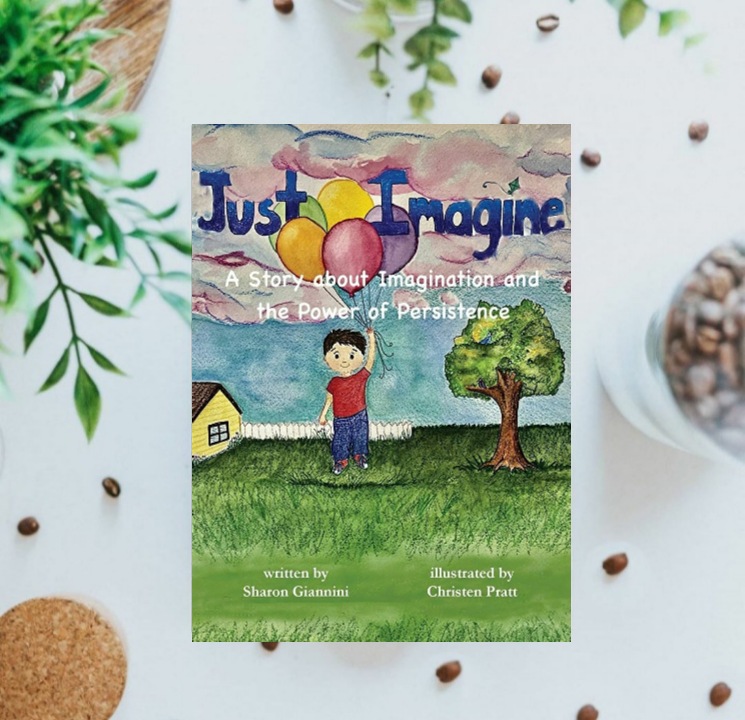
The Standing Cemetery

Interview with author Eliot Parker


Q1. Hello Sir, can you please introduce yourself? Readers would love to know more about you.

I am the author of the short story collection Snapshots, which won the 2020 PenCraft Literary Award for Short Story Anthology. I am also the author of four novels, most recently A Knife’s Edge, which was an Honorable Mention in Thriller Writing at the London Book Festival, and is the sequel to the award-winning novel Fragile Brilliance. I am a recipient of the West Virginia Literary Merit Award and Fragile Brilliance was a finalist for the Southern Book Prize in Thriller Writing. I recently received with the Thriller Writing Award by the National Association of Book Editors (NABE) for his novels.
I also host the podcast program Now, Appalachia, which profiles authors and publishers living and writing in the Appalachian region and is heard on the Authors on the Air Global Radio Network. I am a graduate of the Bluegrass Writers Studio at Eastern Kentucky University with an MFA in Creative Writing and Murray State University with a Doctorate in English, and I teach English at the University of Mississippi and live in Oxford, Mississippi and Chesapeake, Ohio.

Q2. What were the key challenges you faced while writing ‘Breakdown at Clear River’ book?

The key challenges I faced is trying to make the book more than a sports mystery. Football is an important component of the book because Dane Antonelli, the victim, is a member of the Clear River Cougars football team. However, I realized that every reader might not like or understand football, so I had to balance those game chapters with more traditional narrative. I also had to make sure that many of the characters in the book talked and acted like college students and not adults, which was challenging when I had them talking to adults. Despite those challenges, the book was fun to write.

Q3. What books or authors have most influenced your own writing?

John Steinbeck and Pat Conroy are two writers that have influenced my work. Steinbeck was wonderful at describing settings and his lush, ebullient prose about the Salinas Valley in California was a great inspiration to me. Steinbeck also had the ability to create villains in his fiction that you loved to hate as a reader. Pat Conroy wrote some of the most beautiful prose of any reader I’ve ever read. His command of language and tone could have you fawning over a place on one page and then mad at the behavior of another character on another page. Conroy was a master of language—he never wasted one word of prose in his fiction. My favorite thriller writer is C.J. Box for many of the same reasons I like Steinbeck and Conroy.

Q4. What’s your favourite spot to visit in your own country? And what makes it so special to you?

I like to visit lakes and rivers. For some reason, the calm of hearing water burbling down a lake or river is a soothing, calming sound. The sound of the trickling water makes you stop and just listen and be silent for a while. That’s a good thing, I think. Silence and stillness is okay. The United States is blessed with many great lakes and rivers, so there are plenty of ones to go visit.

Q5. Is there lots to do before you drive in and start writing a book?

I don’t begin writing a book until the idea of the book has been percolating in my mind for weeks or months. As a writer, I have lots of ideas for stories and books, but I’ve found that my best books and stories come from those ideas that are permeating my subconscious and, for some reason, won’t leave me alone. Then, I begin to outline. I write a loose outline of the story and I try to follow it, but I give myself the freedom to deviate from it if the characters or the plot takes me in a new direction. Then, I write and re-write and re-write some more before I am satisfied with the manuscript.

Q6. How long did it take you to write ‘Fragile Brilliance’ book?

I took me almost two years. That book was complex because it dealt with a dangerous drug called desomorphine. The street name of it is Krok. I had to spend a lot of time researching that story, so I researched the drug, how it is made, how it made its way to the United States from Russia, etc. Krok is also a drug addiction that impacts the user’s bloodstream, so I spoke to a couple of haematologists to find out what a drug like Krok could actually do to a person. In addition, I spoke to a number of law enforcement officers and asked them about what happens when an illegal drug creates a pandemic of users and crime and how the police would try and stop it. Writing that book was an intense experience for me. I was thrilled when it was a finalist for the Southern Book Prize in Thriller Writing. I shared a finalist list with writers like John Grisham and Greg Illes that year. It was an awesome experience that I’ll never forget!

Q7. On what all platforms readers can find your books to buy?

You can find my books at any local or chain bookstore in the United States and on Amazon. If you are interested in getting one of the books, please check out your locally independent book store first.

Q8. Tell us about the process of coming up with the book cover and the title ‘A Knife’s Edge’ & ‘Code For Murder’?

I didn’t have much input on the covers of either book. The publishers (Black Rose Press and Headline Books, respectively) designed the covers and they shared them with me. They basically sent me the computer files of the covers and said “this will be the cover of your book.” I was fine with it. Both covers look great and each cover has important elements of both stories featured on the front.

Q9. When writing a book how do you keep things fresh, for both your readers and also yourself?

I try to tell a story that hasn’t been told before. In my thriller novels, I want the plot to be something that could happen in real life. However, I try to find ways to tell a fast-paced thriller story in a new, refreshing way. Sometimes, that means bringing a strong element of science to the story, as I did in Fragile Brilliance and A Knife’s Edge. Sometimes, that means creating a police detective like Stacy Tavitt in Code for Murder who has a debilitating illness that is caused by her own carelessness. That illness constantly impacts her ability to be the best cop she can be. These are techniques that are not always featured in other thriller novels. Readers of thriller novels are smart and as a writer, you have to constantly give them a fresh, new angle to a story so they don’t roll their eyes because they have read your specific story a thousand times before.

Q10. Are there any secrets from the book (that aren’t in the blurb), you can share with your readers?

I would say that Ronan McCullough, my lead character in Fragile Brilliance and A Knife’s Edge has a secret that impacts everything he does as a cop and as a person. It’s a secret her frantically strives to protect, for good reason.

Author’s Profile

Books Are Available On Amazon

Snapshots

A Knife’s Edge

Design a site like this with WordPress.com
Get started