Q1. Hello, can you please introduce yourself? Readers would love to know more about you.
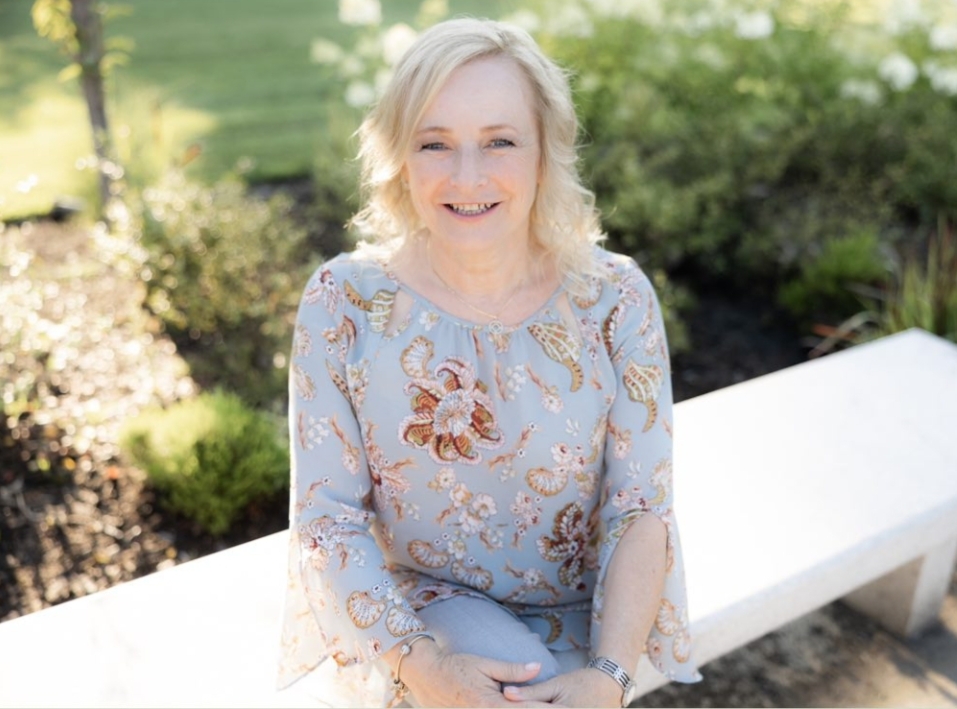
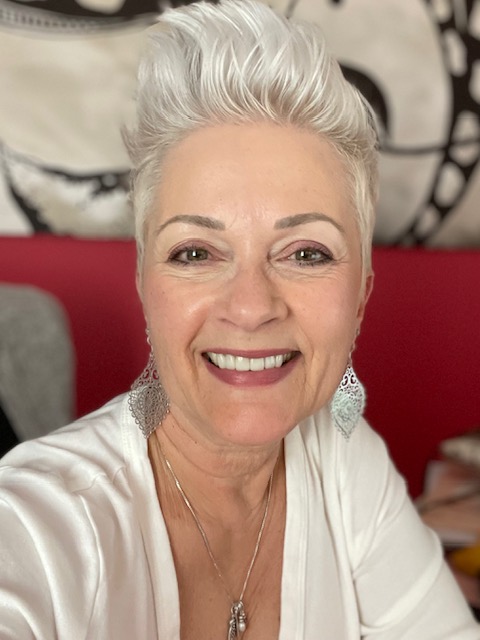
I am a wife, mother and grandmother who is now retired and enjoying spending time with my little treasures along with writing down thoughts that come to me which I’ve now published into my book A LIFE in VERSE…these thoughts are a part of me which I must now set free…
Q2. What were the key challenges you faced while writing your book “A Life in Verse”?
The key challenges I faced while writing ‘A LIFE in VERSE’ were primarily finding the time to write down as other priorities took hold of my time. Determining when to end the book was another challenge along with allowing myself to let go of the work that I had held onto for 5 years.
Q3. What books or authors have most influenced your own writing?
Having written an anthology of Poems which were thoughts that came to me, my influence was my life. Life’s struggles, love, work, family, illness, inspirational thoughts, and a longing for home…wherever that may be.
Q4. What’s your favourite spot to visit in your own country? And what makes it so special to you?
My favorite place to visit in my Country, Portugal, is the Beach town of Nazare.
I grew up going here in the Summers and make this a priority visit/stay whenever I am back home. I find the beach spectacularly beautiful, with a rich culture, wonderful people and it also has on the North Beach the biggest waves which are a huge draw year-round to this area.
Q5. Is there lots to do before you dive in and start writing a book?
For me, the requirement for research was not necessary. It was a matter of calming my mind and some solitude to allow the words to flow.
Q6. How long did it take you to write your book ‘A Life in Verse’?
This project for me took 5 years from start to finish. I did take a few years off when my Grandchildren were born and like I mentioned, had a difficult time letting it go to the Universe.
Q7. On what platforms can readers buy your books?
My book, ‘A LIFE in VERSE’…these thoughts are a part of me which I must now set free (hardcover, paperback, e-book) and is available on Amazon, Barnes & Noble, Indigo/ Chapters.
Q8. Tell us about the process of coming up with the book cover and the title ‘A Life in Verse’?
The process of coming up with the book title was quite simple as these poems are literally about everyday day life. So, A life in verse seemed fitting.
With respect to the book cover, this I was happy to give over to the Team at Tellwell Publishing and they came up with the cover, which I loved from the moment I saw it!
Q9. When writing a book how do you keep things fresh, for both your readers and also yourself?
In order to keep things fresh, I draw on different experiences, thoughts, events, seasons, careers, drama, trauma, and inspirational verses.
My poems meander through all these and more…
Q10. What is the most valuable piece of advice you’ve been given about writing?
Be patient, persistent, do your research if your book requires it and find a great team to work with. They will be a source of support and inspiration during difficult times.
The words will come to you in their own time, enjoy the process!
Q1. Hello, can you please introduce yourself? Readers would love to know more about you.
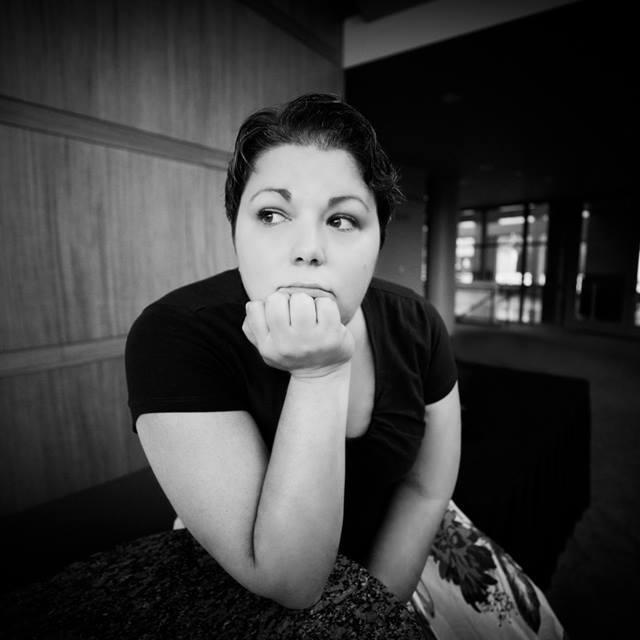
My name is Jesse René Gibbs and I am the author of Girl Hidden. I am an artist, designer, dancer and survivor. I am a stepmother to four, Amma to four more and blessed beyond measure with the family that I chose.
This book is based on the true story of my life, gleaned from years of my mother’s writings, my grandmother’s journals and my own experiences. I did my best to showcase the depth of damage that growing up with a narcissistic parent can have on a person, and how hard it is to come to terms with the amount of gaslighting that comes with that life. My siblings all have their own stories of being played against each other, bullied and even emotionally tortured by our parents. We were trained to not trust our own intuition, raised in a life of poverty, a lack of privacy and the endlessly traumatizing purity culture.
I was hunted in my own home by the man my mother married and escaped at nineteen only to land in an intentional community in Chicago that did nearly as much damage. My best friend in the book is also real, and she did more to walk me through my trauma, and she is the main reason that these stories were finally published.
My new life in Seattle didn’t start until well into my thirties, and I’m still working on deconstructing my life up to that point. I wrote this book to organize my life in my own mind and to undo years of lies. I also wrote it because others need to know that they are not alone.
Q2. What were the key challenges you faced while writing your book “Girl Hidden: A Memoir”?
Girl Hidden is a book written when I had space to walk through the memories, do research or interviews and write. It took nearly twenty-five years, and I would write the version of my story and my memories that I knew to be true, then I would page through my mother’s letters, my grandmother’s journals or just do online research until I was able to nail down the full truth.
Part of it was just struggling to put my story on the page and part of it was not wanting to sort through my memories. I went through a lot of therapy during the writing of the book which forced me to face some of the awful experiences and abuse that I experienced which would allow me to finally get back to writing. I also had my best friend, June, to help carry me through. She is my rock, and I don’t know what I would have done without her daily encouragement.
Q3. What books or authors have most influenced your own writing?
I’m a huge fan of Robert Fulgum’s writing (if you haven’t read All I Ever Need to Know I Learned in Kindergarten, stop what you’re doing and go read it). I was also very influenced by the way that The Glass Castle by Jeanette Walls made me feel.
Q4. What’s your favourite spot to visit in your own country? And what makes it so special to you?
I travel a lot and while I’m a huge fan of a good adventure, I’m a homebody by nature. My favorite spot in the world is my garden. It brings me an inordinate amount of peace.
Q5. Is there lots to do before you dive in and start writing a book?
For this book, I had a metric ton of research to do. My grandmother sent me all her journals, court documents, FBI files, my mother’s letters and much, much more to wade through. I did interviews with people who were involved in the story, and I have my own collection of letters from Momma. It was trying, to say the least.
Q6. How long did it take you to write your book ‘Girl Hidden: A Memoir’?
It took nearly twenty-five years. I write from the heart, from my emotional core. Which means, for me to tell a good story I must feel that story in nearly every way. Which is one of the reasons that Girl Hidden took so long to be released. It was exceptionally hard to dive into the emotions of the abuse that I endured just to tell my story.
I would start with a story that I wanted to add to the book. Start writing from my experience and my memories and get it all down on paper. I would rewrite, cry, write again and repeat. Then I would dive into the myriad of boxes that my grandmother collected over the years that were filled with documentation about my experiences: court documents, my mother’s letters, my grandmother’s journals. And often I would find that my version of the events had multiple layers and extended stories that I knew nothing about.
I would meet with my therapist to walk through the pain of rewriting my history in my own mind, talk with my wonderful bestie, June, and usually cry again. Then it was back to writing, rewriting, or adding to the story until it made sense on the page and matched both my experiences and the truth of the documentation.
For example, my mother gave birth to me while in the Navy, stationed in Rota, Spain. Which is already an interesting story, but finding out through my mother’s letters just how little she wanted a child and through the doctor’s notes that she was trying to starve me to death for the first three months of my life was devastating. She stated in her letters that I, a newborn baby, was overwhelming demanding and shouldn’t be able to “demand that I feed her on her timeline.” So, back to the drawing board with that chapter.
It was a challenge every step of the way, but through the writing process I began to find healing and closure. June held my hand and cried with me and helped me sort through all the research that needed to be done to make Girl Hidden a reality.
Q7. On what platforms can readers buy your books?
It’s available in online, paperback and audiobook form. You can find it on Amazon, Google, Goodreads and you can request it from your favorite bookstore.
Q8. Tell us about the process of coming up with the book cover and the title ‘Girl Hidden: A Memoir’?
The book cover is a photograph of the farmhouse taken by my best friend, and the back cover is the water tower from the Liledoun house, also taken by June. After the second kidnapping I was in hiding for more than two years, and I was constantly hiding from my narcissistic mother and abusive stepfather, so the title just fit.
Q9. When writing a book how do you keep things fresh, for both your readers and also yourself?
Girl Hidden is the story of my life, and it was written first and foremost for me. It was important to stay true to myself and my story. You’ll notice that the book is written in third person and that’s because I don’t personally enjoy reading stories written in first person. It was much more of a challenge, but I wanted to write a story that I would want to read. Over the course of the writing, I realized that this story was becoming a survivors guide for others who have experienced and survived abuse or narcissistic relationships.
Q10. What is the most valuable piece of advice you’ve been given about writing?
I think the best advice I ever got was to just get it down on paper; organize it later, but for heaven’s sake, get it written. And honestly, the worst advice I was given was given in kindness; the lady said, “write it in first person, it doesn’t make sense in third person.” And I tried, I really did. I rewrote entire chapters in first person, but I didn’t like it. And at the end of the day, I needed to be happy with my book. So, it got switched back.
Q1. Hello, can you please introduce yourself? Readers would love to know more about you.
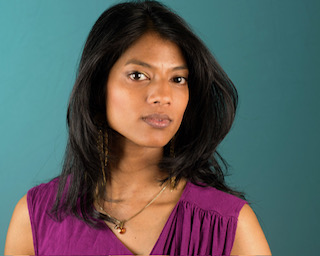
My name is Matrika Hay, I was born in India but I was adopted at 4 months old, where I spent my first several years growing up in Hawaii before moving to Arizona. My mother was in the Air Force so we moved around. I originally wanted to be a paleontologist, but fell in love with the theatre. I went to NYU for college for Film and Television. I’m a professional singer, stunt and have training in various weapons. I have studied theatre for over 20 years both stage and film. I also have a podcast called The Foley Chronicles, that you can find on apple podcast, Amazon, podbean, and spotify.
Q2. What were the key challenges you faced while writing your book “Not What Meets the Eye”?
The biggest challenge I’ve faced writing this book, or any others have been to overcome my dyslexia. Not just the issues with words and numbers, but also sometimes the industry itself, where some people will try and take advantage for having a disability.
Q3. What books or authors have most influenced your own writing?
I grew up reading distinguished works like, Sherlock Holmes, The Lord of the Rings, and The Odyssey. Those stories have stayed with me to this day. Several years ago a friend introduced me to an epic fantasy series by Tad Williams called Memory, Sorrow, and Throne, and needless to say I devoured it. I am so happy that he’s since returned to that world in his latest trilogy. The building of worlds in a book is much more challenging then it is in a screenplay or stage play. Even the simplest details can’t be overlooked if the world you’re building is going to be believable.
Q4. What’s your favourite spot to visit in your own country? And what makes it so special to you?
There’s a spot called Abrams Lake in Maine. Peaceful and picturesque. The sky is never the same from day to day. It is far enough away to escape from the everyday. The weather is perfect in the summer.
Q5. Is there lots to do before you dive in and start writing a book?
Yes, there is. The main thing is having a strong plot formed from start to end. Not just a synopsis. Many other writers I know will sometimes make character outlines detailing the way the characters change throughout the story. Overall plot points of major incidents that will effect the story. If it’s fiction or sci/fi and you want the reader to believe that what they are reading depending on the technology or history of the world there is usually a lot of research involved. If it’s science based, does the science hold up to what we know exists today?
Q6. How long did it take you to write your book ‘Not What Meets the Eye’?
I first had the general idea for the story back in the year 2000. But I didn’t start writing it until about eight years later. Then I put it on the back burner when another idea for a book came to me. So officially it took me about three years of actual focused dedication of the work, that’s with the edits and rewrites before I felt it was good enough to send into a publisher.
Q7. On what platforms can readers buy your books?
Through my publisher, Olympia, Amazon, Barnes and Noble (online only), and anywhere else books are sold online.
Q8. Tell us about the process of coming up with the book cover and the title ‘Not What Meets the Eye’?
I didn’t really have an idea of what I wanted the cover to look like. A few thoughts had come to me, but they just didn’t seem right. But with the help of my publisher we were able to find the right feel and fit for the cover art. One of the most important things that I’ve learned is that the cover is also a huge selling point to potential readers; so an eye catching unique cover is a must.
As for the title, it just kind of stuck with me from the beginning. ‘More than meets the eye’, just didn’t seem to have the right ring to it given the intensity of the story I was telling. It kind of reminded me of the old saying ‘never judge a book by its cover.’
Q9. When writing a book how do you keep things fresh, for both your readers and also yourself?
This is a hard one, due to all the sanitation of ideas being used over and over again; both in books, movies, and TV shows. I have fallen back on my acting experience and think and ask myself often, ‘would I want to read or see this?’ Or, ‘what makes this idea different than all the rest out there?’ And ‘How can I make this better, where’s the twist? The hook that just suddenly takes you by surprise?’ I think also allowing the book to evolve as you write it. If it takes things in a different direction naturally, why fight it? It may turn out to be better than you originally planned.
Q10. What is the most valuable piece of advice you’ve been given about writing?
Never give up! I know that sounds like a complete clique and it is. But after being told numerous times by countless people that I’ll never make it, due to my dyslexia, or gender, or how competitive the industry is- that just made me want to push harder to prove them wrong. You will get more nos and or just no replies at all than you will get a yes. The thing is to just keep trying. If self publishing is the way for you than go for it. It is easier now to self publish then it was only a decade ago. I wanted to prove all the neigh-sayers wrong, and reach for a major publishing house. I consider myself extremely fortunate to have had two houses reach out with an appreciation for my work. Don’t give up. There’s a great site that I keep handy, author struggles, to just remind myself if I ever get down on myself where many if not all the house hold authors tell of their rejections. Crazy to think that at one point they were just like us.
1 Please introduce yourself so that the readers will get to know you better.
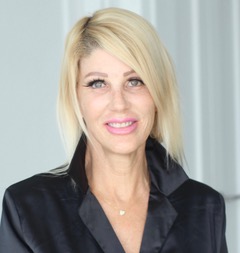
My name is Susan Marie Chapman. I am an award winning Children’s book author who started writing Children’s books in 2017. I grew up on a farm in southern Pennsylvania. I am the eldest of eight children which comes with a lot of responsibility. The experience of being around many different animals, spending my days in nature, and taking care of my siblings, gave me much to write about. My dad was an electrician and my mom stayed at home with us. We had a huge garden which covered over two acres. Here, we grew every vegetable imaginable. We also had fruit trees, grape vines, over one hundred chickens, twin piglets, geese, and litters of collie pups every six months, which were descendants of the very famous dog, Lassie. We did not have cows, but our neighbor, Mr. Thomas, had one cow and her name was Daisy. Mr. Thomas always had extra milk to share with us. He would fill up a big glass jug with fresh milk straight from the cow, it was still warm with the cream slowly rising to the top. We would then very carefully carry the milk back to our house and pour it into our hand crank ice cream maker along with ice, fresh eggs from our chickens, a lot of sugar and either strawberries from our garden or peaches from our peach trees. I don’t think that I have ever tasted Ice cream that good since then.
In sixth grade, I wrote a short story and my English teacher stayed after school to help me with the grammar and spelling. We entered my story in a magazine contest for young readers and I won. I still have the tiny award medal that the magazine sent to me. In high school, I was the Sports Editor of our school newspaper, and then Editor in Chief during my senior year. I did not attend college right away. I worked in a local bank for three years. This experience was very helpful when I finally interviewed for college. My parents could not help me financially, so I had to work my way through school, working three jobs at a time. When I finished, I had a Bachelors degree in Economics, an Associates degree in Business and a Certification in Interior Decorating. After school, I met my husband and we raised two amazing children together. I was a stay at home mom, just like my mother was. Presently I live in Naples, Florida with my two Pomeranian dogs, Sugar and Cookie. You will find me in a park, under a palm tree, working on my next book with Sugar and Cookie right by my side.
What is your inspiration behind your book, “Grumpy The Iguana”?
This is a great question and one that I am never asked. This is my very first story in the Grumpy the Iguana and Green Parrot Adventure series.
On January 1st, 2017, on a very beautiful and sunny day in Florida, I was hit by a car while walking. The person driving the car was backing up and did not see me. I should have been killed but a good samaritan shouted, “STOP” and saved my life. After months of physical therapy and almost losing my leg, I started to heal. I was still limping but I forced myself to keep moving every day. Sometimes I would meet a friend at Flamingo Park to do some much needed stretching. This is where I met Grumpy the Iguana. He was in the same spot every day when I arrived and alway doing the same thing. He had a routine. My friend, who was also my trainer, noticed that Grumpy was not his usual self. “Our iguana looks grumpy today. Looks like someone cut down his tree. No wonder he is upset.” We both watched as Grumpy stared at the place where his tree home once stood. It turned out that the park was making some changes and started to cut down all of the older trees. Apparently these trees were not indigenous to the area. People from the neighborhood started to gather outside of the park in protest. Some held signs that said “Murderers”. Many animals lost homes that day.
When did you realize that you wanted to be an author?
I have always loved my English classes in school and reading books. When I was twelve years old I had Scarlett Fever and I was very sick for about a month. I started reading books that I found in our attic at the farm house. They were all classic novels, “Jane Eyre” by Charlotte Bronte, “Gone With The Wind” by Margaret Mitchell, “Wuthering Heights” by Emily Bronte. I also read a few Charles Dickens novels, “A Tale Of Two Cities”, “Oliver Twist”, “David Copperfield” and “A Christmas Carol”. Vanity Fair by William Makepeace Thackeray was another book that I enjoyed. “The Count of Monte Cristo” by Alexandre Dumas was also very good. I read every one of Nancy Drew’s Mystery series books and Cherry Ames, Student Nurse series too. I still love detective shows to this day.
Whenever I had to write a book report or a true story in high school, I always got an A for a grade. I enjoyed writing, but never thought of it in as a career. My parents wanted me to take Advanced Placement courses in school. English and Art were not something that my parents encouraged. This was funny since my dad majored in English in college. As soon as I graduated from college myself, I met my husband and became a stay at home mom. I never really used my degrees in Economics and Business and I did not think about writing again until twenty years later. I was divorced and living by myself in Florida. I wanted to write a book about my Pomeranian dogs for children. I published “Love, Sugar & Cookie” in 2018 and I now have sixteen books published to date. You always hear stories about people that do amazing things later in life. I wrote my first book at age sixty.
Please tell us something about your book, “Grumpy The Iguana”.
I wrote this story on the way home from Flamingo Park on the very day that Grumpy’s tree was chopped down. I think it took me about fifteen minutes to write this story. The words kept pouring out of my head and onto a piece of paper, I think it was a flyer for the specials at the grocery store. I had stopped there to write down everything that I was thinking before I forgot it. After “Grumpy The Iguana” was published, people would cry when they read it. I did not understand why at the time but now I know that everyone can relate to what happened to Grumpy, adults and children alike. It is a very emotional book, especially the part where the Green Parrot helps Grumpy and shows him that a little compassion goes a long way.
For which age group is your book “Mr. squirrel finds a treasure” suitable for?
“Mr. Squirrel Finds A Treasure” is a book about taking care of our environment and how litter affects animals and humans. It is suitable for ages 3yrs to 7yrs or Preschool up until second grade. It really depends on your child’s reading level. I know that my children still enjoyed Picture books until they were in fourth grade. I think they just enjoyed me reading to them and looking at the illustrations.
What is your favorite quote?
I am not sure if you mean in life or in my books.
My favorite quote is, Take The Road Less Traveled. This comes from a Poem by Robert Frost titled, “The Road Not Taken”. Don’t take the easy way. Always challenge yourself. You will have more stories to tell that way.
My favorite quote from “Mr. Squirrel Finds A Treasure” would be, “Stop the littering”.
What do you like most about your country?
Our Freedoms that we have are the most important.
What suggestion do you want to give to parents of little readers regarding a reading habit?
I think reading to your children is one of the greatest gifts you can give to them. So many things are happening all at once when you are reading books to your kids. The child’s imagination is being stimulated. They are listening to your voice and learning how to pronounce words. The illustrations or pictures help the child to link the words to an image and when you read the book over and over again, night after night, you will see how excited the child is as each page is turned and how they can point to everything thing they remember and even finish the sentence on the page for you. That is a memory skill. So make it a nightly routine to read to your children.
What does literary success look like to you?
Getting books into the hands of as many children as possible is a success story for me because reading fuels imagination, expands vocabulary, it helps a child’s character development and it also teaches them how to form ideas and organize these ideas. The biggest plus is the bonding moment between child and parent, child and sibling, child and grandparent and child and aunt/uncle. All of these variations add to a young child’s mental growth.
All of these scenarios look like literary success to me.
What is your inspiration in life and why?
This is such a great question. My inspiration for my first book was my dogs, Sugar & Cookie. Their chemistry is magical and although they are already nine years old, they still attract a lot of attention each and every day when I take them for a walk. People of all age groups stop to say hello and pet them.
My passion for writing and to see how children and parents react to my books inspires me to keep going. I love what I do and I cannot wait to wake up each day and work on my stories.
Q1. Hello, can you please introduce yourself? Readers would love to know more about you.
My name is Mal and I’ve been in healthcare for nearly 30 years. Prior to that I worked in marketing and advertising where I designed marketing materials and NHL and NFL memorabilia. I’m married and have two fur babies. In 2006 my only child Brittany passed away at the age of 17. This changed the trajectory of my life and I had to make a choice to live a life of loss or live a life that honors my daughter. I’m a blogger and for the most part the topics have been about my own personal grief journey.
I love football, both college and professional. My favorite teams are the Indianapolis Colts and Tampa Bay Buccaneers.
Q2. What were the key challenges you faced while writing your book “Grief Blessings”?
Because this is a memoir about my personal grief journey, I had to revisit moments that were painful. The memories were hard to face at times and I found I had to deal with some of the feelings such as anger and forgiveness in order to move forward.
Q3. What books or authors have most influenced your own writing?
Susan Duke and Hope Edelman both inspired me to write about my own experience. Susan’s book Grieving Forward resonated with my own personal experience and I’ve sent that book to many people I’ve met along the way. Hope’s book helped me tremendously after the death of my mom.
Q4. What’s your favourite spot to visit in your own country? And what makes it so special to you?
Florida is my favorite spot to visit. Specifically the beach as for me, I find it spiritually healing to sit and meditate or just simply enjoy the peace and quiet and the way the waves sound as they crash the beach.
Q5. Is there lots to do before you dive in and start writing a book?
Yes, while my book is based on my blog, My Soul Speaks, I researched other books on grief and explored grief support groups to find out how others managed their own grief.
Q6. How long did it take you to write your book ‘Grief Blessings’?
For signed copies, I’m happy to provide a signed copy if a reader would like.
Q8. Tell us about the process of coming up with the book cover and the title ‘Grief Blessings’?
I designed four versions and had friends and family choose which one they like. I created the book cover designs so that my readers/followers from my blog My Soul Speaks would quickly identify it as it is similar to the blog. The name is also from the blog.
Q9. When writing a book how do you keep things fresh, for both your readers and also yourself?
I infused the story of my daughter and the experience of losing her with my personal journey through the grief process. Providing resources and how I used them to help heal my broken heart. That is still a work in progress for me. I learn something new every day from many people I meet.
Q10. What is the most valuable piece of advice you’ve been given about writing?
I found that over time keeping a journal would come to be the very thing I needed to record my thoughts and feelings and get them out of my head/heart and onto paper where I could measure my progress. It became the foundation of my book. The thoughts and feelings I was having at any particular moment or holiday were written without regard to punctuation or writing style – it was purely me pouring out my heart and pain onto paper.
I recommend journaling as a means to “clean out” the thoughts and help define the future and purpose of your life.
Q1. Hello, can you please introduce yourself?Readers would love to know more about you.
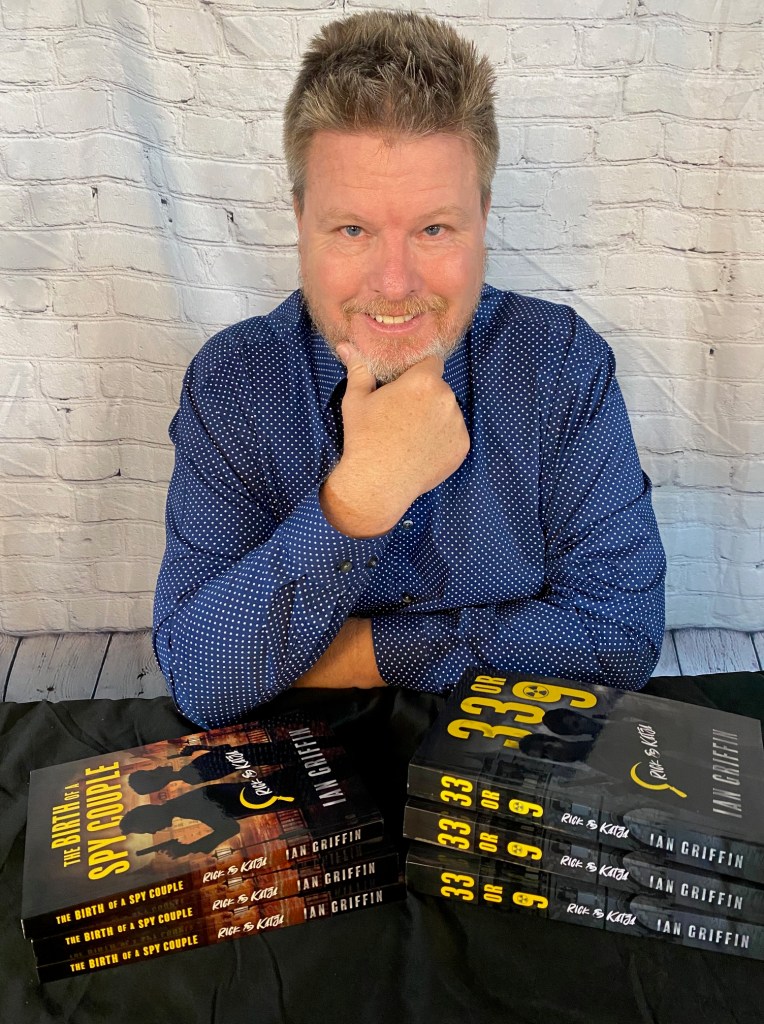
My name is Ian Griffin. I grew up in East Texas and served 31 years in the United States Army. Those 31 years took me across the world. This adventure provided me with insight into numerous countries. I got to see the good and the bad in multiple cultures. I deployed eight times to support our nation’s interests and spent nine years in Germany alone. This cross-culture experience gave me a unique perspective that every culture and country has its own way of doing things, and it works for them. Understanding various cultures is engrained in my writing, and I take pride in that. I have several degrees up to the Graduate level, but none are in English or Writing. Instead, my Undergraduate Degree is in Global Business and Public Policy, and my Graduate Degree is in American Military History.
Q2. What were the key challenges you faced while writing your book “The Birth of a Spy Couple”?
For “The Birth of a Spy Couple” was my first book. Truthfully, I never saw myself writing a book or becoming an author. I was attending a Community College working towards a Communications Degree and finished my coursework for the semester. So, I decided to write about where I spent five years of my life. As I did, I thought, I have to make this a story. There were numerous challenges with this. I am not an English Literature guy or an English major. I knew how to tell a story verbally but wasn’t confident I could put that in a manuscript. Next was how to articulate a common nuance in another country so that a reader in America could understand or relate to it. There are challenges there. When I started, I wanted two things. Produce a book over 200 pages and sell it to at least one person that didn’t know me. It was a struggle at times to get over 200 pages. I laugh now because once you achieve it, you are more confident in your writing, and 200 pages is now easy. Another big challenge after writing it was not putting enough time into editing. I have an editor, but there is also a personal perspective of editing that needs some serious devotion to bringing out a great product. I missed that. You can never edit enough, and you will always miss something. As I look back at writing the first book, I realize I should write about ¼ of the time, and ¾ of the time should be devoted to editing, restricting, cleaning it up, etc.
Q3. What books or authors have most influenced your own writing?
Wow, so this is a broad spectrum for me. First, with my History degree, I naturally gravitate to historical stuff, factual things, or non-fiction, and here I am writing fiction. So, I have a few authors and their books that I cherish. I like how Dan Brown tells the story in The De Vinci Code. The whole time you read the book, you are clinging to it. There is no time in the book that you tell yourself, “I want to put this down and read it later.” To me, that is important. He keeps the characters interesting enough that you want to know more about them. I also have to mention Ian Fleming, who served in the British military and put his thoughts into spy books. That sounds a lot like me. Then there is Wolfgang W. E. Samuel and his book The German Boy. He weaves his incredible story that has you holding onto every word. I will mention three other writers: Mark Twain, Ernest Hemingway, and Stephen King. Each is a hero in American literature, yet each vastly differs in how they spin a yarn. There is a guy named Frederick Jackson Turner, a historian that was recognized at Chicago’s World’s Fair in 1893. He wrote numerous things, and most of his writing I initially did not gravitate to. He had this one paragraph in The Significance of the Frontier in American History that captivates you. That one paragraph pulls me into his work. It just demonstrates the power of a well-crafted paragraph. Lastly T.D. Krupp, a personal friend, and author, provided me with much insight into writing. When faced with naysayers, he would ask, “But did you have fun writing the book?” Dang, right, I did. That is all that matters.
Q4. What’s your favorite spot to visit in your own country? And what makes it so special to you?
Well, being from Texas and the United States. In Texas, that would be my hometown of Pittsburg. The reason is that it is a modern-day version of Mayberry. It doesn’t get more Americana than that. Everyone knows you, and they are polite.
Regarding the United States, it happens to be Yellowstone. It is so peaceful and beautiful there. Now what I consider my second home is in Germany. There I would say Kitzingen or anywhere in Bavaria, Germany. Kitzingen, for my children, was their version of Mayberry. I still have friends there today.
Q5. Is there lots to do before you dive in and start writing a book?
Everyone writes differently. For me, I have to map it out in my head. At least 2/3rds of it, I have thought out. I am not a person that puts things down in a structured outline. I will take notes, but I have the story in my head. Now I will also go into the research part. I want to make sure that anything that I refer to is accurate. Even if the slightest detail may have no real relevance, I will research it for hours or even days. I want the reader to know that I have done my due diligence on the research and not just made things up. If I write about a concussion, I will consult with a medical person and research all the symptoms, extreme cases, medication, and treatment for someone with a concussion could be. If I refer to day-to-day life in Germany, I want to lean on my experience and ensure that is precisely how their everyday life is. Once I have done my research and have 2/3rds of the story mapped out in my head, including the ending, I start writing.
Q6. How long did it take you to write your book ’33 or 9′?
It took about two months to write 33 or 9. I had about 110 pages written over three weeks. Then I went to Germany for vacation for almost two months. On the airplane ride, I had 13 hours to myself. During that time, I mapped out the rest of the book. I spent about ten days on the back porch of the in-laws writing the rest of the book. Then a few weeks, chopping and cleaning it up. I think I reviewed this book about six times before sending it to the editor. I feel my ability to articulate myself in writing grew tremendously from the first book.
Q7. On what platforms can readers buy your books?
My books are available on Amazon, Amazon Kindle, BookBaby Bookshop, Barnes & Noble, Rakuten Kobo, Scribd, e-sentral, and one can go to my webpage www.rickandkatja.com, to access any of those venues.
Q8. Tell us about the process of coming up with the book cover and the title ‘The Birth of a Spy Couple’?
For the book cover of The Birth of a Spy Couple, I wanted the backdrop to have the town of Kitzingen in it since that is where the story takes place. I also wanted the couple, Rick and Katja, to be on the front of the book. Katja with her pixie cut and Rick being a little taller. As for the title, I read that you should write the book first and then come up with the title. I had a list of 40 titles and wasn’t sure where to go with the title, to be honest. I printed out the list, gave it to four friends, and asked them to pick two names. Everyone had selected The Birth of a Spy Couple, which is how the title came about. The second book, 33 or 9, was different because the title is crucial to the story. So, I had that title from the start. Book three, Betrayal from Within, I did a similar thing as in The Birth of a Spy Couple, that is how I came up with the third book title, which I am shooting to release in November.
Q9. When writing a book how do you keep things fresh, for both your readers and also yourself?
That is a tough one. After the first book, I focused on slowly revealing unknown things about the key characters. Character building this way draws the reader closer and closer to the characters. For me, the two key points in writing are the story and character building. Everything else is just icing on the cake.
On a personal level is keeping up with the things relevant to the story or research. My first two books are in the 2005-2007 timeframe. Well, I can’t put a specific technology regarding phones we have today that didn’t exist then. So I have to do my homework.
Q10. What is the most valuable piece of advice you’ve been given about writing?
That is simple. Just write. You will have your critics, don’t worry about them, just write. After I released my first book, I had a Professor sit me down. She pulled me aside, handed me a book by Stephen King, and said, “I should read this book so I could write like him.” I thought to myself, but you haven’t even read my book. I may already write like that, or I want to write like Ian Griffin, not Stephen King. That’s not a knock-on Stephen King, I hold him in the highest regard, but I want to be Ian Griffin and no one else. So, trust your instincts and just write. Too many will give you advice, and many have never pushed a book across the finish line. With each book I write, I have grown more and more as a writer. So, just write.
Q1. Hello, can you please introduce yourself? Readers would love to know more about you.
This question hard for me because I don’t remember a lot. Hello my name is Berandine A. Ziegler, I have Brown hair, smokey blue eyes, I am going to be 58 soon born on D-Day, I live in a town called Barberton, Ohio, I was born here. I live with my husband going on 16 years, everyday a challenge, but I love marriage life, I am a fur mom no human children. I always worked when I was younger in age but I always got laid – off so I always had to find another one, they seemed to fall into my lap. I am very disabled now because of two of my jobs from the past, so is my husband for almost the same reason. I always came back to writing, never knew why.
Q2. What were the key challenges you faced while writing your book “His Ultimate Path”?
I really didn’t have to much of a challenge, when someone would say a word a thought vision would travel through my head and by my eyes. My husband found all my written journals you think I would be mad but when he said why don’t you finish and publish them? I always have problems with spelling because of my Epilepsy, which I don’t have now. Just poor is all.
Q3. What books or authors have most influenced your own writing?
When I was being told I would never be able to read or write. So I never knew what my health issue was I went to the schools library. I always read Edgar Alan Poe, Robert & Elizabeth Browning, Emily Dickerson, but most of all my most favorite St. Francis De Sales, which is also my favorite Church. I also read old poems from the old days.
Q4. What’s your favourite spot to visit in your own country? And what makes it so special to you?
My favorite places in my country is all of the Roman Catholic Churches, I am so at peace In God’s House, just being there at mass or my Adoration Hours, I feel so cleansed from the outer world, I also love to go cruising on the open sea waters, I feel free to be my true self, I feel so a live, one with God’s Creations.
Q5. Is there lots to do before you dive in and start writing a book?
There is a lot of work but for certain piece of “His Ultimate Path.” I did have to do some research just to make sure I am on the right path, so I don’t end up using someone else’s words. Since I am disabled I just make sure all my chores are completed for the day, so I don’t have any interruptions.Once I my hand and thoughts get going there is no stopping.
Q6. How long did it take you to write your book ‘His Ultimate Path’?
This is kind of hard to say because some of the pieces were written way before I met my husband and I was was still fight through my Epilepsy, and some are from a child who is not with us and her poems are about 54 years old, I taught my husband how to write poems until the year 2006. I took a few years to get published, it stalled in the middle of processing for at least 3 more years, while it was stalled I did more research on a few more poems and short stories. When my husband and I finally won our disability cases back in 2018.
Q7. On what platforms can readers buy your books?
Well all of my books have different publishing companies: “The many Wonders Of Deanie” is from Page Publishing, in New York. “His Ultimate Path” is from Dorrance Publishing from Pittsburg Pennsylvania, My audio book is in New Jersey, a company called audio book network, but all can be found books-a-million barnes & noble, goodreads, I can’t name them all but everywhere you can find books and anywhere you can download e-books.
Q8. Tell us about the process of coming up with the book cover and the title ‘His Ultimate Path’?
The title I am not sure if that was an accident because I was working on some research a story called “His Ultimate Path” Then a e-mail came through from my publisher, the next step was the title and cover. I didn’t have a title for it then as I was typing God must of been using my hands because “His Ultimate Path” is what was written. The cover was from a vision I was seeing through my eyes for many years.
Q9. When writing a book how do you keep things fresh, for both your readers and also yourself?
For my reader’s I guess things are always fresh because I make some things funny in both of my books I make some funny, sweet, and thought provoking always about everyday things in a persons life, but they are all messages of hope, written by people who in a public’s eye didn’t have any hope. As for keeping things fresh for myself well every time I write and complete something my husband does the editing for me and after he is done and God approves he erases it from our minds even though our names are there and so is the date and time we still don’t remember any of them.
Q10. What is the most valuable piece of advice you’ve been given about writing?
I actually have never been given any advice about writing, I did a lot of research and going to many different English classes, to try and understand or figure out what I needed to learn to self teach I tried many different writing school in the mail and they didn’t help, so I went back to looking for more books. I also tried to enter some writing contest didn’t work. This was long before my husband, I also took some typing classes at night school, some poetry classes from libraries many classes many libraries no advice along the way it just clicked one day.
Q1. Hello, can you please introduce yourself? Readers would love to know more about you.
People seem most infatuated with the mundane details, so I’ll start there: My name is Margaret Beaver, I’m seventeen years old, and, occupation wise, I am an author, poet, novelist, memoirist, educator, photographer, artist, and self-proclaimed philosopher; at home, I’m the annoying little sister, frantic cat mama, and an average disaster with more books than wall space. I’ve lived in my hometown of Plano, Texas my entire life, and it was here I first hatched my creativity at the age of five, at which time I developed the fanatical habit of drawing with colored pencils on the walls, marking on furniture with Sharpie markers, and sketching the occasional illustration to accompany a fictional story I would swear to be true. At eight years old, I wrote my first semi- formatted novel, a forty-seven-page abomination about spontaneously dying butterflies, and I still keep the original manuscript shamefully tucked away in a drawer in my bedroom.
In February of 2020, just a month before I started seriously pursuing poetry, I exercised my impulsivity and submitted two of my very first poems ever written, which strangely enough elected me Topical Winner two consecutive times for the Live Poet Society of New Jersey’s “Of Love and Dedication” and “Inside of Me” publications (beginner’s luck). Featured in one publication would soon become the first poem of my collection and a fan favorite, “Sad boy.” After that, I submitted more poems for consideration and came up empty every time. The next month, I began the initial stages of composing inkwells. out of sheer boredom (and spite). I was fifteen years old when I received my first publishing contract with Pegasus Elliot MacKenzie Publishers, and inkwells., debut poetry collection chronicling my struggles with mental health, was published thereafter in June of 2022.
In terms of recency, my debut novel (excluding the dying butterfly incident), Flowers for Papa, is finally coming to a press near you in late 2023. Accompanying it is also my second poetry collection, Seasons: August’s Collection. While my editors are tackling those catastrophes, I’m attempting a student’s aspiration of graduating high school without incident.
Q2. What were the key challenges you faced while writing your book inkwells.?
For how sensitive the content is, writing inkwells. was easy. It was a very easy, smooth, deliberate process. I came up with a poem very few days—sometimes I wrote multiple poems in one day—and then once I began feeling better and my symptoms were more manageable, I collected all those pages and all those files on my computer and compacted them into one document. It was never my intention to actually do anything with the poems—I hadn’t meant to write as many as I did—but after I realized I had scrawled almost twenty thousand words of pure illness, I had to comprehend the fact that I had accidentally created something that was such a genuine, unaltered, and unrestrained demonstration of the realities of mental illness. I knew I had always wanted to be a writer, but I had wholly expected to enter the literary industry by way of some fiction novel I had completely made up; I never meant for any of this.
I’ve been asked so many times—by strangers, by friends, by publishing houses— “What is your reasoning for writing this?” “What are you trying to achieve?” And the answer is very simple. For people not dealing with mental health problems, particularly anxiety, depression, or PTSD, many of the poems in this collection can feel very dark and unsettling. But this is not a work restricted to one group of people; this is not a one-sided argument. For people who aren’t struggling, this collection is knowledge; for people who are struggling, this collection is validation. These poems can be very redeeming and comforting, in that they support the notion that that no one is ever alone in their condition and there are many others who are trying to cope as best they can. Of course, I can’t speak on behalf of the entirety of the mentally ill population, but I can provide you with the knowledge that this is what someone could be feeling.
The only real challenge of the work, outside of surviving myself, was the ordering of the poems. I couldn’t decide if I wanted to group them together based on their degree of darkness or if I wanted to leave them miscellaneous. All in all, I ended up leaving the order miscellaneous because this order reflects the fluctuations of mental stability—one day you’re fine and then you’re not. So don’t be surprised if you read this wonderfully optimistic poem and then you turn the page and suddenly you’re subjected to something comparable to hellfire. That is life with mental illness.
Q3. What books or authors have most influenced your own writing?
My writing, fiction or nonfiction, novel or poem, can technically be categorized as belonging to the Young Adult audience. Only, I struggle with that label because it has somewhat of a negative connotation. YA books are received as if they’re only meant for kids, as if they have nothing truly important to deliver besides empty entertainment, and that they are incapable of broadening your perspective on certain issues and having some sort of development or impact to your person. One book that comes to mind for this example is Looking for Alaska by John Green. It is a truly phenomenal novel that reaches incredibly intimate and universal depths, yet it’s restricted to the kids’ section where not many adults would venture to. For one, I really love being able to bring a sentimentality and a depth to a uniformly juvenile genre, and I much enjoy the fact that my work is rather a compound of elements amalgamated to craft a well-rounded piece suitable for the Young Adult genre, but also containing the knowledge and lessons relevant to older adults or those struggling with mental health, self-harm, or suicidal tendencies. As a sufferer of those things myself, I strive always to make my message true and genuine, and especially when it comes to circumstances I closely identify with. I want, always, to confront the great concepts of life—love, meaning, morality, family, death—and my intention for writing is for my audience to reconnect with those uncomfortable yet inevitable elements—elements that are responsible for making life whole.
That being said, my most influential writers have been restricted to the kids’ section, and particularly John Green, who is my favorite author. I’m talking Paper Towns; The Fault in Our Stars; An Abundance of Katherines; Will Grayson, Will Grayson. Dashing Through the Snow by Debbie Macomber, Everything I Never Told You by Celeste Ng, It Ends With Us by Colleen Hoover, Girl in Pieces by Kathleen Glasgow, All the Bright Places by Jennifer Niven, The Perks of Being a Wallflower by Stephen Chbosky—these are all novels I hold very highly and works which brilliantly defy expectation or restriction.
Q4. What’s your favourite spot to visit in your own country? And what makes it so special to you?
I’m not a very adventurous person simply because my condition has made me terribly paranoid and uncomfortable with the prospect of being in unfamiliar places, with unfamiliar people. I’m very outgoing if I’d simply let myself. Recently, for the first time, my mother and I had driven the absolutely gruesome eight-hour round-trip to Houston, Texas, and we were on the road by 6 A.M. Nighttime and early morning are very beautiful, with all the shops and signs lit up and headlights bounding off the bridges. Everything is so much more fascinating when you’re half asleep. By seven-thirty, we had made it to a place called Ennis and my mom, who is simply so much more exuberant than I am, insisted we stop by the Buc-ee’s we had passed. Long story short, after perusing around with my slippers on and my hands in my pockets, my mother bought us both a cream cheese kolache for the road. My special place will probably change, but right now I think of Ennis, the almost-sunrise, and my mother’s happiness over absolutely nothing.
Q5. Is there lots to do before you dive in and start writing a book?
I’d love to say I have an actual writing process I adhere to, but really, I’m a very disorganized person in general and I truly have no intentions of following any deliberate format. The truth of the matter is: I don’t plot books. At all. I get a very abstract and completely detail-void idea, I write a rough narrative surrounding the vague premise, and then I occasionally dapple in miniature descriptions and try to word it as if I knew what I was doing all along. There’s lots of frantic scribbling outside the margins of my journals with the new ideas I randomly get, and I try to make note of incorporating those details back into the narrative once I review and type up everything I’ve handwritten.
Basically, as I progress, I make more things up and get more ideas. And then I write those down. Nearly nothing is planned beforehand—I’m too eager and overly excited to write when I get a new idea that I bound in immediately—or the things I plan are very monumental and plot- altering events, and I get the vague impressions of things that I want to eventually happen somewhere down the line, but I have no details to patch the storyline together to effectively and realistically get to that point. This leads to me sitting on rather elementary plot points for weeks or sometimes months without writing anything; just purely speculating. But then, I’ll listen to a song, I’ll read a book, I’ll watch a film—and I’m inspired again. It’s a very unruly cycle, going through rapid writing sprees and then lying dormant for such extensive periods, but I’ve always been one to make things harder than they need to be.
There are some projects, also, where I have to do more notetaking than usual because of the potential intricacies in addressing a side scheme. Any notes I make in the very beginning of the process are typically scraped or adjusted later when I figure out what I’m doing. This, consequently, leads me to rewriting entire sections—entire beginnings—once I get a better handle and understanding of my character’s personalities and their ultimate aspirations or destinations. I sketch the initial beginning almost purely as a filler to build on the progress of and to motivate an early draft, and then once my understanding grows of what exactly is going on in my head, I scrap everything that doesn’t align anymore or things that could be better or more vividly explained.
As you can see, it’s a disaster.
And then there’s the processes of poetry, which aren’t necessarily processes either. When regarding the differences between writing poetry and writing prose, there’s, first, the fact that you have total creative control in poetry: you don’t have to use perfect punctuation or capitalization since poetry is more an art than a literature. All discrepancies are essentially excused, and you can format your stanzas and your lines however you please. Poetry, also, doesn’t require as much substance—that is not to say, though, that poetry is lesser. Novels are an entirety; they are a comprehensive and hole-less architecture founded on complete and detailed narratives, the construction of entire personalities and their backstories, and the creation of sometimes multiple converging plotlines. Everything mentioned or foreshadowed has to have a reason, and there is almost always something to be later uncovered. All of this must be thought through, which can be terribly distressing—or some things end up fitting together accidentally. In general, novels obtain a lot more requirements than poetry, and so they take more brain power and can be impenetrably exhausting. But I’ve always had a knack for having a lot to say.
Q6. How long did it take you to write your book inkwells.?
As previously mentioned, poetry generally requires less essence—or the essence is its entirety, and poems are typically rather small. As an art, I would perhaps categorize poetry as one of the less demanding entities—or at least it is for me. In terms of inkwells., the entire collection was more of a relief rather than a hindrance. For example, the situation of inkwells. was rather unique: the reason for its particular rawness and vulnerability is the fact that it was written during and the product of what I would confidently describe as the worst mental health relapse of my life, caused largely in part to the fact that I had been ignoring my symptoms for well over four years—and I take responsibility for that. inkwells. is me taking responsibility.
You see, it is only natural for humans, when they are tired of life, to return to what makes life worth living: art. So practically every time I was experiencing a breakdown, or got severely nauseous, or was feeling particularly suicidal, perhaps—and these symptoms were repetitive, daily events—I would translate that anguish onto the page and write how I was feeling in that exact moment. Every poem included in inkwells. was born amidst some form of chaos, which only adds to its authenticity, I think.
Since my symptoms were so erratic and persistent for the several months I endured the battles of trying to find an adequate medication or searching for a suitable therapist—things that seem a lot easier and more trivial than they really are—I would write. I wrote every day. And since I wrote so often, inkwells. was finished very quickly. I began writing in March of 2020—that same month I started on Lexapro, which practically did me in and I had to switch over to multiple other medications—and finished somewhere in August. I started the photography for inkwells.— I remember the dates exactly—on October 7, 2020, and that lasted until January 31, 2021.
Q7. On what platforms can readers buy your books?
There are multitudes of platforms, ranging from worldwide wholesalers to local depositories. Most notably, you can find inkwells. on the websites of Pegasus Publishers, Amazon Global Store, Books-A-Million, Waterstones, and Barnes & Noble. It’s also available on IndieBound, which is a great resource to use if you’d like to find out where a book may be located near you. More quaint locations would include SpeedyHen, Browns Books, Bookshop.org, PBShop, Booktopia, Wordery, Discover Books, Blackwell’s, Half Price Books, Interabang Books, Kennys Bookshop & Art Galleries Ltd., One More Page Books, Pretty Things & Cool Stuff, Hudson Booksellers, Patchouli Joe’s Books & Indulgences, The Dock Bookshop, A New Chapter Bookstore, Fabled Bookshop & Café, Black Pearl Books, BookWoman, The Book Nook, BookPeople, Better World Books, WHSmith, and ThriftBooks. I’ve also been in contact with a wonderful co-op located in Downtown Plano which sells vintage clothing and select novels, so it could be arriving there soon, too.
Q8. Tell us about the process of coming up with the book cover and the title inkwells.?
I came up with the title long before the poem ever existed. Not to spoil, but the final lines of the collection are “I drain myself inside these inkwells / We will overcome,” which essentially mean that I am draining the darkness from myself to create the ink inside the wells, and that from making the conscious decision to drain myself, I am overcoming my previous obstacles and finally returning to the truth that I deserve much better than how I was treating myself. I can’t tell you how I came up with that; I really enjoy vintage items and had recently been gifted a genuine Remington typewriter, and so perhaps I was thinking of ink and stumbled upon the word “inkwells.” Since I had the title picked out, the final operation of the collection, I had decided, was to write the title poem surrounding the word and its notion. I put the period at the end of the title simply because it’s very aesthetically pleasing to me and, like all humans, I am fickle.
As for the book cover, I really love digital design and often create my own random book covers with completely fictitious titles out of my own sketches. The font was easy enough: I had largely incorporated the use of my typewriter for the photography element of the book, so I knew I wanted the font to resemble that of a typewriter. (I dabbled with attempting to create the cover by typing the title directly on my typewriter, but that never came to fruition.) I knew for a long time I wanted the scheme to be primarily black and white—very minimalistic, as I much prefer book covers to be—and ended up inserting the image of a whim because it was, simply, a very beautiful clip of a photograph I had taken for “it doesn’t have to make sense,” a poem in the collection. I put a monochromatic filter over the image, and it was very beautiful. With some slight adjustments made by my publicity team, the cover was finalized. I always intended the cover to be simple yet refined, and I believe it turned out very well.
Q9. When writing a book how do you keep things fresh, for both your readers and also yourself?
Taking breaks—often. In all aspects of my being, I am a very obsessive worker; I’ve had teachers and counselors at my school tell me to calm down and walk slower at my own pace or else I’m going to give myself an ulcer. I can’t handle having things to do and knowing they’re sitting there, waiting for me to do them, and very often I go into panic attacks if I’m overwhelmed with tasks and don’t know where to begin. Needless to say, taking breaks is very difficult for me; I want to keep working until it is all finished, completely neglecting any of my own needs or my potential exhaustion, and then I will rest and then I will take care of myself only when the deed is done. There’s a very debilitating perfection that surrounds me as well: I don’t only want to get everything done, but I want to get it all done to the highest extent possible or else I’m remarkably disappointed and unfulfilled—for a long time, until I do well again. It’s been a significantly lengthy process for me to realize I can give myself permission to rest when I need it; grind culture can be very helpful in terms of motivation but also very injurious, too, and I urge everyone to listen to their bodies and, frankly, disobey the demands of others—including yourself. Exhaustion and burnout are genuine health issues, and you could be left recovering for the rest of your life.
The same goes for readers regularly consuming sensitive media. I’ve read very graphic and emotionally discomforting books over strenuous world issues or the horrific memoirs of amazing people I’m still attempting to fathom, and what you dump into your brain is also what you dump into your stomach, and it can make you very sick. inkwells., in particular, is very impressionable and perceptive and can incite distress at certain intervals. This is why I strive to always be aware of the wellness of my readers and put trigger warnings on all my books. As written, “Under no circumstances should any reader compromise their mental health to analyze or endure mine.”
Q10. What is the most valuable piece of advice you’ve been given about writing?
On Writing Well: The Classic Guide to Writing Nonfiction by William Zinsser. I received this novel as required reading during my time in AP Language & Composition in the eleventh grade, and I would refer to it as singularly the most fruitful nonfiction I’ve ever experienced. I read it all through the winter months and upon January second, my class was tasked with the assignment of dissecting out three primal quotes which we connected with in the text, and to analyze and expand upon them in our own writings. As a writer who specializes primarily in their area of optimal entertainment—romantic fiction, historical fiction, science fiction, just any fiction at all—I found myself at utter despair with having to read the devil of all book genres:
the memoir (which is highly coincidental considering my first publication was nonfiction). Some of the most intimate sentiments have come from pure logic, and that pure logic has come from Zinsser: “I don’t like to write; I like having written”; “I think they get that permission by being born”; “Writers who write interestingly tend to be men and women who keep themselves interested. That’s almost the whole point of becoming a writer. I’ve used writing to give myself an interesting life and a continuing education.” The narrative is composed on the entirety of making one feel less otherworldly, admitting the truths and realities of the completely condescending and mentally exhausting processes that is writing, and providing what could be largely considered as the Holy Bible of nonfiction writing: beneficial and substantial for any writer or reader across any genre. Even above that, Zinsser instates and emphasizes the comprehensive lessons of a student bent to the mold of traditional educational algorithms:
everybody loves to learn and create—but not for a grade or under a time limit or having to turn around and prove themselves to superiors. To students and anybody at all: You mustn’t be reduced, and you don’t have to prove yourself to anybody. And even more: just because you love your occupation or profession does not mean you are immune to the stress or the treachery of it.
Q1. Hello, can you please introduce yourself? Readers would love to know more about you.
A: Hello, Everyone! I am a woman who wears multiple hats with grace and excellence–an adjunct professor, entrepreneur, writer, wife, and mother.
My passion for education and writing has led me to become a respected university professor, where I inspire and empower students to achieve their full potential in becoming exceptional leaders.
As an entrepreneur, I have founded and am growing a successful business, demonstrating my entrepreneurial spirit and business acumen.
Many of my writings have been published in notable publications, showcasing my exceptional talent for crafting engaging and thought-provoking content. And I am exceedingly proud of my accomplishments for authoring my current memoir, Naked Truth, which is no different.
As a devoted wife and mother, I balance my personal and professional life with ease, while setting an example for others to follow. Whether in the classroom, boardroom, or at home, my unwavering dedication and unwavering commitment to excellence have made me an inspiration to all who cross her path.
Q2. What were the key challenges you faced while writing your book “Naked Truth”?
A. The challenges I faced while writing my book was to put into writing the pain and difficult experiences I encountered in the workplace based on discrimination and retaliation. The reason being is that writing about discrimination and retaliation can be challenging for many reasons: Firstly, these are sensitive and emotionally charged topics that can evoke strong reactions from readers. Hence, as a writer, I needed to navigate complex and nuanced issues surrounding my experience with discrimination and retaliation. Secondly, writing about discrimination and retaliation can be emotionally draining and psychologically taxing, particularly if you have experienced these issues personally. Therefore, I needed to confront my painful memories, feelings of anger, frustration, and helplessness, and the fear of retribution or further discrimination.
Finally, it can be challenging to strike the right tone and balance when writing about discrimination and retaliation. I needed to convey the seriousness and urgency of the issue while also being sensitive to the experiences and perspectives of different groups of people. I also needed to avoid stereotypes, generalizations, or assumptions and ensure that my writing is inclusive, respectful, and empathetic.
Overall, writing about discrimination and retaliation requires bravery, empathy, and a deep commitment to social justice. It is a challenging but necessary task for those who seek to promote equality, fairness, and human dignity.
Q3. What books or authors have most influenced your own writing?
A. The books or authors influencing my own writing include: The white Wall by Emily Flitter; Becoming by Michelle Obama, and Finding Me by Viola Davis
Q4. What’s your favourite spot to visit in your own country? And what makes it so special to you?
A. At this point in my life, I don’t have a favorite place to travel. I love traveling, and I want to travel the world. Hence, every year I choose a place that I have never been before to gain new experiences and meet new people and culture. This experience excites me.
Q5. Is there lots to do before you dive in and start writing a book?
A. There was lots to do before diving in and starting writing my book. After organizing the material to be used in the book, it all came together smoothly.
Q6. How long did it take you to write your book ‘Naked Truth’?
A. The process of writing my book Naked Truth took me about six months to develop a rough draft. However, the process of editing the draft took exactly two-and-a half years to complete. In the end, I declared it a masterpiece because of the help of my exceptional editors and reviewers. For this, I am grateful.
Q7. On what platforms can readers buy your books?
A. Readers’ are able to purchase my book on various platforms such as: Amazon, Ingram, and Barnes and Nobles.
Q8. Tell us about the process of coming up with the book cover and the title ‘Naked Truth’?
A. The process of coming up with the book cover was easy. There were two covers to choose from, one with my photo and the other with the scale of justice. After a cover poll created by my publisher, Koehlerbooks, the cover with my photo was highly preferred. I concurred.
Regarding the title, I thought “Naked Truth” was a good fit because of the lies that were launched against me at my workplace in retaliation for filing multiple complaints about discrimination and retaliation. My naked truth would be to address the lies and speak truth to power in getting to results.
Q9. When writing a book how do you keep things fresh, for both your readers and also yourself?
A. When writing my book, I keep things fresh for both my readers and myself by doing a few things. One, I read newly published memoirs that are best sellers to gain insights for enhancing a certain chapter or phrase for my book. Second, I step away from my desk and travel to free my mind, learn new things, and relieve the stress of writing–but I never forget to come back to the writing process. Finally, I keep reminding myself on a daily basis why I was writing my book. And when I focused on my “whys” I was motivated daily to continue my writing, complete my manuscript, and share my story to the world to motivate and inspire others to tell their truth. I am glad I did.
Q10. What is the most valuable piece of advice you’ve been given about writing?
A. The most valuable piece of advice I’ve given about writing was from Les Brown when he stated that “The graveyard is the richest place on earth, because it is here that you will find all the hopes and dreams that were never fulfilled, the books that were never written, the songs that were never sung, the inventions that were never shared, the cures that were never discovered, all because some was too afraid to take the first step, keep the problem, or determined to carry out their dream.” In this regard, I decided that I would never be in this category. So, I took the first step, wrote my book and shared my story to make a positive impact, not only in my local community, but the world. My prayer is that I have done just that.
Q1. Hello, can you please introduce yourself? Readers would love to know more about you.
I was born and raised in Knoxville, Tennessee, where I’m a career librarian and a semi-professional storyteller. For almost twenty years, I did cat rescue—specializing in the rescue, rehabilitation, and socialization of feral cats. I currently share my life with Blackberry—a feral kitten I rescued in 2005, Clover—a feral kitten adopted from a fellow rescuer in 2013, and Rumblewick—the nine-month-old feral I rescued in 2017.
I grew up surrounded by strong female role models, who nurtured my imagination and imbued me with a love of reading, writing, and storytelling. My favorite book is Harper Lee’s “To Kill A Mockingbird,” which I’ve read almost every year after being introduced to it by Deborah Taylor-Battles in a ninth-grade contemporary literature class.
I was married to the love of my life for almost 38 years. My husband was an ardent supporter of my writing, but he passed away in 2017—never seeing any of my works published. Ironically, on the first anniversary of his death, I received a publication inquiry that resulted in my first book contract.
Q2. What were the key challenges you faced while writing your book “The Faithful Dog’’?
Research validation. As a career librarian, I believe in getting the facts right—meaning I use original source materials when they are available. I also verify my information, by checking multiple sources and vetting my writing with experts in the field.
It’s frustrating to encounter materials where writers have not done their due diligence, and I encountered two of these authors who failed in their research regarding Lieutenant Pfeif’s dog.
Q3. What books or authors have most influenced your own writing?
Harper Lee’s “To Kill A Mockingbird.” I’ve been told by those who have read my manuscript “Red and Me,” that the character of Marlene reminds them of Scout.
Q4. What’s your favourite spot to visit in your own country? And what makes it so special to you?
I’m not a person given to traveling, but my favourite spot as a child was Blowing Rock, NC. My paternal grandmother and aunt loved to go there in the 1960s and early 1970s. It was a quaint, quiet little mountain town back then. I loved the atmosphere and the auction house, where we spent many an evening being entertained by the auctioneers.
Q5. Is there lots to do before you dive in and start writing a book?
That depends on the book. Some require lots of research—like “The Faithful Dog,” while others require none at all—like my forthcoming book, “Red and Me” slated for publication in 2024.
On July 4, 2018, I was awakened at 6:00 a.m. by the voice of a ten-year-old girl named Marlene Reynolds, screaming in my head—demanding her story be told. I wrote for about 18 hours that day, transcribing what Marlene was telling me. The book was completed in two months, and my picture book publisher, Star Bright Books, contracted it in 2022.
Q6. How long did it take you to write your book ‘The Faithful Dog’?
While doing research on a project in 2011, I encountered a mention of Lieutenant Louis Pfeif and his dog. The reference intrigued me. Believing the account would make an interesting story, I tucked it aside in my WIS—my Writing Ideas Stash.
In 2013, I began writing what would be the first version of the book, finishing it in 2015. I started submitting it to publishers that fall. In October of that year, the editors of Lucky Marble Press wrote that they were impressed by its historical accuracy and the true story the tale was based on. While they rejected my submission, they did mention they liked the chapters that had told the story through the dog’s point of view—calling my concept ‘fresh’ and ‘clever.’ That comment continued to nag at me, and I couldn’t help but wonder if they might be interested in the book if I rewrote it from the dog’s perspective.
I began the rewrite in 2016, finishing it in 2019. After this new version was critiqued in 2020, I resubmitted it to Lucky Marble Press. While the editor remembered the previous submission and liked this new version, the company had ceased publication. I then submitted it to Black Rose Writing who had published my YA novel “Vivie’s Secret,” and they gave me a contract on it.
So, from concept to publication, “The Faithful Dog” took eleven years!
Q7. On what platforms can readers buy your books?
“The Faithful Dog” is available at most online booksellers—Amazon, Barnes & Noble, etc., as well as directly from my publisher—Black Rose Writing.
Q8. Tell us about the process of coming up with the book cover and the title “The Faithful Dog”?
David King of Black Rose Writing designed the book cover for “The Faithful Dog,” so that credit goes to him.
As for the title, the story of Louis and his dog inspired it.
I was shocked when I finally located the actual newspaper article about the pair that was published in “The Daily Missouri Republican” on May 24, 1862, for it was titled “A Faithful Dog.”
Q9. When writing a book how do you keep things fresh, for both your readers and also yourself?
Creating characters readers can identify with, root for, empathize with.
I can’t wait for the world to meet Marlene in “Red and Me.” My publisher fell in love with her on the first page.
Q10. What is the most valuable piece of advice you’ve been given about writing?
Participate in an in-person critique group. Sitting down with other writers, reviewing and discussing your work as a group, is invaluable. The interchange of multiple opinions and ideas helps a writer clarify what’s working and what’s not. You don’t always have to take their advice, but the feedback is beneficial.
I been in one for eleven years and am a better writer because of it!