Interview with author Marie Nadine Gaston

Q1. Hello, can you please introduce yourself? Readers would love to know more about you.
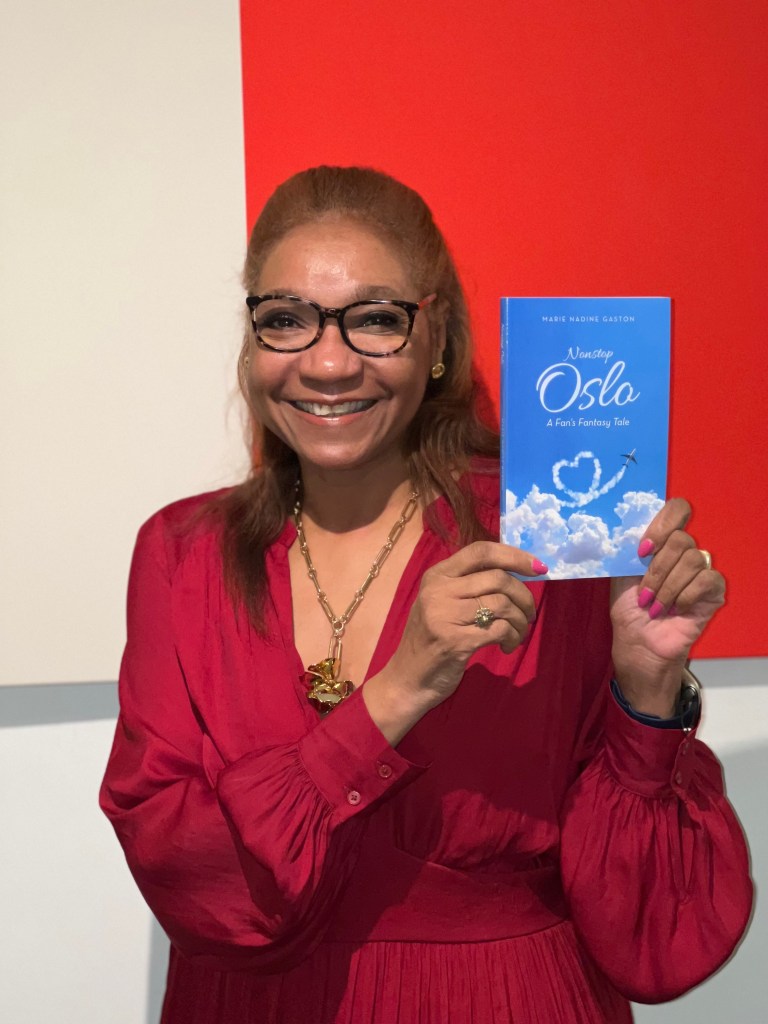
My name is Marie Nadine Gaston, and I was born and raised in Haiti. I have a bachelor’s degree in psychology from the University of Miami and spent the first decade of my professional life in South Florida working in a community mental health setting improving the lives of the mentally ill.  I returned home to Haiti years later to do communications work with international development organizations empowering impoverished communities and strengthening systems in governance, justice, and health in developing countries like Haiti.  

I still do consultation work in project communications as I explore a new opportunity as an affiliate marketer.  I started this new venture last year and am having a great time getting to know my followers.  I target women empty nesters, like me, who want to rediscover and pursue their lifelong (or new) dreams now that the kids have left the nest.  After all, I’m pursuing mine, which is to become a respected and established author of stories that make people happy. “Nonstop Oslo” is my first published book.

I am a hopeless romantic and an avid reader of historical romances. I have enjoyed writing since junior high school.  I write stories and poetry. I have two beautiful adult daughters and recently became a grandmother to a darling little boy, Sacha.

Q2. What were the key challenges you faced while writing your book “Nonstop Oslo”?

“Nonstop Oslo” was never meant to be a book, so I can’t really speak of challenges when writing most of it.  It was just my imagination at play as I was anticipating a trip to Oslo to see my favorite band play at home, and the entire process was just pure fun!  However, when it became apparent that this story was going to be published (at the insistence of my friends) and I was researching some publishers’ requirements, I was challenged to add about 8,000 more words to my manuscript so that I could have at least 50,000 words.  That was the frustrating part for me because as a personal fantasy, the story, as it was written, seemed perfect to me, so why ruin it?  I really didn’t know what direction to take the story at that point.  I already had the perfect ending, so I was wondering where I would add those thousands of words.  In the middle of the story?  What would I add?  Should I ruin my perfect ending with some drama?  I really didn’t want to do that.  So, I suddenly came up with the idea of writing a really long epilogue.  In the end, I am glad that I took up the challenge because I am really happy with how that last part turned out.  It truly makes the story complete and simply beautiful.

Q3. What books or authors have most influenced your own writing?

I used to read a lot of Harlequin Romance books from authors from the United States, England, Scotland, and New Zealand when I was a teenager up until my young adulthood.  This is how I built my English vocabulary (I’m a native French speaker).  In later years, I discovered historical romances from authors like Kathleen Woodiwiss, Johanna Lindsey, and Lisa Kleypas, and I was hooked.

Q4. What’s your favourite spot to visit in your own country? And what makes it so special to you?

There was a time when Kenskoff was my favorite place to visit.  It’s a small town up in the hills just above Port-au-Prince, and the temperature there is much cooler than that of the city, especially during what is considered winter months in North America and Europe.  We had our summer home there and we used to spend part of every summer and Christmas vacation there throughout my entire childhood.  It was a beautiful, cool, verdant environment with wild berries all over the place.  Kenscoff meant lots of fresh air, horseback riding (I sucked at it, by the way, but boy, was it fun!), long walks with cousins and other vacationing kids from the neighborhood, berry picking, roasted corn on the cob, picking snails, tending a small vegetable garden in our back yard, eating plums and apples off our trees, and playing Pokeno for pennies.  Blissful times…

Q5. Is there lots to do before you dive in and start writing a book?

Far from me to speak as a seasoned author, but I don’t really have a ritual like lots of authors do.  When I was writing “Nonstop Oslo”, I felt kind of giddy and giggly inside and just grabbed my laptop and started pounding away at the keys, completely engrossed in my fantasy.  It helps to put some music on and drink a glass of wine to create the mood that I want so I can immerse myself better in the story.  There is a fair amount of research that goes into writing because you want to be as genuine as you can.  Most people never get to travel, so it’s great to do justice to them by describing faraway places with as much detail and accuracy as possible.

Q6. How long did it take you to write your book ‘Nonstop Oslo’?

It didn’t take that long to write the first part of the book, maybe four to five months.  It was back in October/November 2015, so I don’t really remember.  Then when I traveled to Oslo in April 2016, I did some editing while I was there to correct some of my assumptions.  Then, I thought I was done with the story until late 2016/early 2017, when my friends encouraged me to publish the story and I went on to add the epilogue to bring it up to over 50,000 words.  That last part took maybe a month or two.

Q7. On what platforms can readers buy your book?

“Nonstop Oslo” can be purchased on Amazon.com, barnesandnoble.com, and on Archwaypublishing.com (online bookstore).  It comes in two formats: hard copy and eBook.  Also, please visit my author’s website and blog at marienadinegaston.com, and my Facebook page, Nadine’s Corner. It’s the one with my picture on it ;-). Please leave comments!

Q8. Tell us about the process of coming up with the book cover and the title ‘Nonstop Oslo’?

When my publisher asked me if I had any idea about what I wanted my book cover to look like, I only had one word: blue.  That’s my favorite color and this was my first book, so I wanted it to be special.  I told them anything with blue skies or a blue ocean would be fine by me, especially since the protagonists come from different worlds.  There are blue skies and oceans between them.  Then, a couple months later, while sitting in my car, an idea came to me, and I grabbed a piece of napkin that was in the car and started sketching blue skies and clouds and a plane making the route between Haiti and Norway.  I drew the plane making a loop in the skies in the form of a heart.  The design team ran with it and produced that beautiful cover.

As for the title, “Nonstop Oslo” is really a double entendre. In the literal sense of it, it’s a direct flight to Oslo with all the dreams that this trip of a lifetime entails; and figuratively, it’s all about the many things that happen to Vivienne at once when she meets Logen and her mind is reeling from it all.  At one point, feeling overwhelmed with emotion, she says, “it’s nonstop Oslo, and I want it to stop!”

Q9. When writing a book how do you keep things fresh, for both your readers and also yourself?

First of all, I write from the heart and just go with the flow.  I didn’t have a book plan when I was writing this story.  I had no idea what was going to happen.  I just went with the flow and surprised myself the whole way through.  The dialogue, the interaction between the two main characters were all a surprise to me as well. It was a fun ride.  I can’t think of a better way to keep things fresh.

Q10. Are there any secrets from the book (that aren’t in the blurb), you can share with your readers?

I can’t share secrets.  All needs to be discovered by reading this wonderful love story.  I can say one thing, though: there is somewhat of a mystical occurrence in this story.   It’s up to the reader to discover it.  And, oh yes, Vivienne is basically me!  How’s that for a secret?

Buy Nonstop Oslo on Amazon

Interview with author A.D. Vancise

Q1. Hello, can you please introduce yourself? Readers would love to know more about you.

Sure. My name is Angie, and I live in a small farming town in Canada. I have one twenty-five-year-old daughter, two cats, and three dogs.

Q2. What were the key challenges you faced while writing your book “Hidden in the Shadows”?

Some of the content was very hard to digest when I was doing the research. Finding out that kids have experienced such heinous things still hurts my heart, and I feel that bringing awareness to it all is my reason for being here.

Q3. What books or authors have most influenced your own writing?

Lisa Jewell, Ruth Ware, Gillian Flynn, and V. C. Andrews, to name a few. They all have such strong writing voices. I read Flowers In The Attic by Andrews at a young age and had no idea that the content would have double meaning later in life.

Q4. What’s your favourite spot to visit in your own country? And what makes it so special to you?

I would have to say the mountain trails. Walking in nature always gives me such a boost. The streams running, the birds chirping. It’s all so serene and where some of my creative ideas originate.

Q5. Is there lots to do before you dive in and start writing a book?

It depends on the book, really. Some need more research than others, more planning etc. For example some authors create very detailed outlines. I don’t. I know my beginning and my ending. What comes in between is determined as I go. But Hidden In The Shadows, required tons of research into child trafficking and occult practices. It took a lot of time and quite a bit out of me but I had to be the voice for these victims.

Q6. How long did it take you to write your book ‘Hidden in the Shadows’?

Apart from the months of research, and edits the actual writing was probably around six months.

Q7. On what platforms can readers buy your book?

Amazon, Barnes and Noble and my own website.

Q8. Tell us about the process of coming up with the book cover and the title ‘Hidden in the Shadows’?

The book cover was brilliantly designed by my publisher, Atmosphere Press. Look closely at the reflection. It gave me chills when they sent it to me. The title happened a few years ago when I was playing around with a title generator online for a short story I’d written. I loved it and noted it for a potential future project, not realizing that it would be my next novel.

Q9. When writing a book how do you keep things fresh, for both your readers and also yourself?

Honestly, I don’t really think about keeping things fresh when I write. When I’m in that creative space, the words just flow, and I hope it’s fresh. The characters often keep it fresh with their antics.

Q10. Are there any secrets from the book (that aren’t in the blurb), you can share with your readers?

Yes. Two actually. First, the photo is real. I found it the same way that Evie did, in my grandfathers box of family photo’s and just like her grandfather, mine didn’t want to talk about it. He died in 1991 never revealing what happened. The second, the killer scenes are based on actual survivor testimonials. I chose to incorporate their stories after reading derogatory comments from people such as; “this didn’t happen to you. Why are you spreading lies? You are delusional.” The comments broke my heart. Imagine surviving the gates of hell to then be told it never happened? It broke my heart and I knew that someone needed to let them know they’d been heard. I had to be that someone.

Buy Hidden in the Shadows on Amazon

Interview with author Raphael Wilkins

Q1. Hello, can you please introduce yourself? Readers would love to know more about you.

I am now mainly a travel writer, but over my career as an educationist I wrote several academic books and many articles. Towards the end of my career I did a lot of global travelling as a visiting expert. That is what sparked my interest in travel writing.

Q2. What were the key challenges you faced while writing your book “An Educational Journey”?

An Educational Journey is the middle volume of a trilogy.  My first travel memoir, Accidental Traveller required a massive shift from academic writing.  I could only do it by switching completely:  from classical to pop, from oils to watercolours, so to speak.  That book was very light, informal, with some humour, and emphasised the wonderment of becoming a global traveller in later life.  By the time I started work on An Educational Journey the travelling had become a way of life, and I felt confident enough about writing in my new genre to be able to give more information about the professional work I was doing in the countries I visited, and more serious reflection about what I was learning from all this travelling.

Q3. What books or authors have most influenced your own writing?

My interest in writing narrative non-fiction started a long time before I was in a position to do so. Without doubt, the spark, tinder and fan for that interest was the non-fiction writings of Graham Greene, particularly his books Getting to Know the General, Journey Without Maps, and The Lawless Roads.

Q4. What’s your favourite spot to visit in your own country? And what makes it so special to you?

In England, one of my favourite places to visit is Withernsea, in East Yorkshire, where my late wife was born.

Q5. Is there lots to do before you dive in and start writing a book?

To write a travel memoir, the first step is of course to do the travelling which will provide the raw material. Processing that experience into a book involves a number of stages. Any kind of writing depends on the author having something worthwhile to say. The majority of travel memoirs, mine included, relate journeys which are personal as well as geographical, for example where the travelling is happening against a background of changing personal circumstances. Those elements of narrative provide the storyline.

Q6. How long did it take you to write your book ‘An Educational Journey’?

The actual writing of An Educational Journey took me over three years, because I wrestled to get the tone and messaging where I wanted them.

Q7. On what platforms can readers buy your book?

The book is available on the publisher’s website at bradtguides.com/product/an-educational-journey-1/ and from Amazon

Q8. Tell us about the process of coming up with the book cover and the title ‘An Educational Journey’?

The cover design incorporates elements representing some of the places featured in the book, including the Islamic architecture of South Asia, the peaks of The Andes, the pelican of the Chilean coast, and the crescent moon of Arabia. The patterned background represents Indian fabric.

The book includes quite a lot of information about the educational work I was doing in the countries I visited, but the title An Educational Journey actually refers to my own personal learning and development which these experiences of travel engendered.

Q9. When writing a book how do you keep things fresh, for both your readers and also yourself?

In a travel memoir, I think the best way to keep things fresh for the reader is to include vivid descriptions of places, and to make sure that the reader keeps encountering interesting characters.

Buy An Educational Journey on Amazon

Interview with author Xiaolong Huang

Q1. Hello, can you please introduce yourself? Readers would love to know more about you.

Hello, I am Xiaolong Huang, born and raised in a small factory town situated along the Yangtze River in China. My upbringing exposed me to the complexities of life, where I witnessed firsthand the struggles encountered by my father, who was gay, and the hardships endured by my mother fulfilling her traditional role in a broken family. Additionally, I witnessed the significant life changes experienced by factory workers during China’s shift from a centrally planned economy to a market-oriented one. After obtaining my degree in Electrical Engineering, I relocated to California in the United States, where I pursued further education and established myself in an engineering career. 

My passion for improving human conditions stems from witnessing the discrimination and societal dogmas that affected my father and mother. After leaving their home at the age of fifteen, I witnessed the challenges faced by the LGBTQ community, immigrants, African Americans, and working-class Americans. Those exposures drive me to promote intellectual pursuit and humanity. My commitment to social change partly stems from experiencing the deterioration of America’s economic and political environment, as well as the threat to democracy posed by the rise of authoritarianism.

Aside from advocating for social change, I enjoy reading about science and technology. I am delighted to connect with your readers and share my experiences and my book that have shaped me both as an author and as a person.

Q2. What were the key challenges you faced while writing your book “JOURNEY To The HEARTLAND”?

Writing Journey to the Heartland was an emotionally challenging process for me. The book is based on my real-life encounters, so revisiting those experiences and confronting my own traumas was emotionally difficult at times. While writing, there were moments when I found myself breaking down and crying in my office.

Another challenge was finding the right threads to balance authenticity with crafting a thought-provoking story that would encourage readers to contemplate key aspects of human life and contemporary societal issues, ultimately inspiring them to chart their own journey towards their heartland.

Writing the book in English, which is not my first language, was also challenging. I had to make sure my writing expressed the feelings and experiences I wanted to share, while also keeping the story’s unique cultural context.

Q3. What books or authors have most influenced your own writing?

That would be The Life of Pi by Yann Martel, The Kite Runner by Khaled Hosseini, and Demi-Gods and Semi-Devils by Jin Yong. 

The Life of Pi showed me how the power of storytelling can inspire readers and evoke empathy. I was inspired by the protagonist’s journey of self-discovery and resilience in the face of adversity. 

The Kite Runner’s exploration of themes such as friendship, betrayal, and complex human relationships deeply resonated with my own experiences. The novel’s exploration of cultural and societal issues inspired me to tackle similarly challenging subjects in my own work with sensitivity and nuance. 

Finally, Demi-Gods and Semi-Devils has had a significant impact on my writing due to its engaging storytelling, memorable characters, and the values it conveys. The epic tale delved into themes such as loyalty, defiance, morality, and the complexities of human nature. The values it conveyed, such as the importance of integrity, compassion, and personal growth, have also inspired me to create a narrative that invites readers to reflect on these timeless values and contemplate the deeper themes that unite us all as human beings.

Q4. What’s your favorite spot to visit in your own country? And what makes it so special to you?

As someone who grew up in Chongqing, my favorite spot to visit in my home country, China, is this vibrant city. It’s a cool city known as the “Mountain City”, because it has a unique blend of urban life and natural complex terrains. The hills are steep, there are winding rivers, and the skyline at night is amazing. The city’s complex terrain has created an interesting street culture and social customs that are tough yet straightforward.

The city is also known for its delicious and spicy cuisine, particularly the famous hotpot. The communal experience of sharing a hotpot with family and friends has always filled me with a sense of warmth and joy.

Whenever I return to Chongqing, I feel a deep sense of connection to my roots. This connection to my hometown has influenced my writing, shaping the themes and values I explore in my book, Journey to the Heartland.

Q5. Is there lots to do before you dive in and start writing a book?

Indeed, I did a lot of planning before I started writing Journey to the Heartland. It was important to lay a solid foundation for the story.

I first made a list of important values that I wanted to encourage people to think and talk about through my writing. That included the complex and fluid nature of sexuality, supporting human rights, exploring interracial and multicultural relationships, discussing democracy and authoritarianism, valuing intellectual pursuits, and appreciating the challenges and rewards of human connections.

After that, I made a list of important characters for the story, outlining their own subplots and how their paths would cross one another. Additionally, I wrote down some of the important lines of dialogue they’d deliver.

Afterwards, I planned a series of epochs that could carry the evolution of Hanwei, the protagonist, as he navigates through various experiences and interacts with other characters, so he could possibly defy odds, challenge the limitations of his previous generation, and hopefully reach his heartland.

To maintain accuracy and authenticity, I also researched articles, news, and historical records to ensure the details I included in my writing were correct, including scientific theories, engineering disciplines, African American history, the 2008 financial crisis, pop cultures, the 2016 and 2020 elections, as well as geographic locations.

Q6. How long did it take you to write your book ‘JOURNEY To The HEARTLAND’?

Three years. That includes not only the actual writing but also the journey to publication that involved working with editors, proofreaders, and cover designers, as well as marketing and promoting the book to reach its intended audience.

Q7. On what platforms can readers buy your book?

Journey to the Heartland is accessible to individual readers in both eBook and paperback formats on Amazon, Barnes & Noble, and various other retailers. For wholesale customers, such as libraries, the book can be obtained through Ingram distribution.

Q8. Tell us about the process of coming up with the book cover and the title ‘JOURNEY To The HEARTLAND’?

‘Journey to the Heartland’ immediately came to mind when I was thinking about the title for the book. It embodies Hanwei’s story and the multitude of life experiences he goes through, leading him to a profound understanding of life, love, and humanity.

The story behind the book cover of my novel is an interesting one. The designer of the book cover is the illustrator of the “Life of Pi”, Andy Bridge. Initially, I reached out to him with a synopsis of the story and some excerpts, and to my delight, he agreed to take on the project. As a big fan of “Life of Pi” and its cover, you can imagine how thrilled I was to have him on board. However, we had different visions for the book cover at the start. I imagined a mountain range and rough terrain leading to a bright, far-off destination. In contrast, Andy proposed two birds with brushes and flowers around them, which wasn’t to my liking initially. We went back and forth, debating our ideas until he convinced me to trust his vision and expertise. When Andy presented the final book cover, I was blown away by its beauty and allegorical meaning. It depicted the struggle of a young bird on the dark side who had to overcome thorns and traps to reach the bright side, where vibrant flowers, leaves, and warmth awaited, with other birds accompanying and witnessing the journey.

Q9. Are there any secrets from the book (that aren’t in the blurb), you can share with your readers?

Sure. Without giving away too much, here are a few secrets from Journey to the Heartland that readers may find intriguing.

In one scene, little Hanwei’s mother revealed to him that rumors about his father’s homosexual behavior with younger men were circulating around the factory town. As she looked into the abyss of their uncertain future, standing beside a cliff, the weight of her duty as a mother pulled her back to reality when Hanwei asked if she could help keep an encyclopedia calendar book that belonged to his father in case they had to divorce.

In another scene, during a phone call with his mother in China, Hanwei discovered that his father had a male companion by his side during his hospital stay. At the same time, news of gay marriage legalization in America played on his TV in California. However, due to their estranged relationship, Hanwei couldn’t find the courage to share the news or offer any comfort to his father. His mother became the only means of communication with his father, while she was helping the father in the hospital, unwillingly witnessing the care and support between the two men whose gay affair had brought shame and hardship into her life.

One favorite scene for me is, Hanwei was hanging out with his African American boyfriend at a US marine camp. And the soldiers in the military dorm were completely comfortable around the couple. However, “Don’t ask, don’t tell” policy was still in place. It showed how out of touch the politicians were with everyday young Americans.

Readers who identify as progressive may enjoy a scene in the story where Hanwei volunteered for the Bernie Sanders campaign during the 2020 election, where he hoped to sow the seeds of the social change he believed in.

In an elaborate scene, Hanwei learned about Einstein’s theory of special relativity in his University class. This revelation led him to question how common sense can be a prejudice, which enlightened in his intellectual pursuit for a fundamental understanding of life, love, and the world.

In the last Chapter, Hanwei followed his therapist’s advice to write a poem to reflect his beliefs to help deal with his depression. However, he was interrupted by an unexpected phone message. The poem is eventually revealed at the end of the novel.

Overall, Journey to the Heartland is a deeply emotional and thought-provoking book that tackles important social issues with sensitivity and nuance. It challenges readers to confront their own biases and assumptions, while also offering a powerful and uplifting message of hope and resilience in the face of adversity.

Buy Journey to the Heartland on Amazon

Interview with author Wes Mogenson

Q1. Hello, can you please introduce yourself? Readers would love to know more about you.

I’m Wes Mogenson, author of Don’t Play The Game and the first book in the Page Terrors Series Dead Summer.

Q2. What were the key challenges you faced while writing your book “Dead Summer”?

Fixing the plot holes and keeping the characters straight were the big ones. This book is told from multiple points of view, and at one point, I had to rewrite two chapters because those scenes weren’t working in the first character’s narration.

Q3. What books or authors have most influenced your own writing?

R.L. Stine is my biggest influence, and from the beginning, Goosebumps has been my comp title for this book and series. Although James Patterson has been another big influence on me, he’s had the biggest impact on my writing style.

Q4. What’s your favorite spot to visit in your own country? And what makes it so special to you?

Boston, it’s the coolest city. There’s so much to see and do and so much rich history.

Q5. Is there lots to do before you dive in and start writing a book?

I normally write a thorough outline which I then use to keep me on track and avoid writer’s block. Although with Dead Summer, I didn’t. I just started writing.

Q6. How long did it take you to write your book ‘Dead Summer’?

Too long, LOL. I wrote much of the first draft during my first year of college, and it quickly became a stress release for me, like when I wrote several pages of it while spending all night in a hospital waiting room waiting for a family member to come out of surgery. Then during the Covid-19 shutdown, I returned to it again as an escape from our harsh reality. I can normally write a book in about a year, but Dead Summer was more like three years.

Q7. On what platforms can readers buy your book?

It comes out on the 21st of April and is available for preorder on Kindle. Then as soon as it comes out, the print version will be available on Amazon and wherever books are sold. Also, for more information, you can check out my website, wesmogensonbooks.com, and find me on Facebook, Twitter, and Instagram.

Q8. Tell us about the process of coming up with the book cover and the title ‘Dead Summer’?

The cover process was simple. It was narrowed down to two photos. I believe the best one was chosen, and I’m quite happy with the final product. The title was a bit more challenging, this book had a few different titles before being called In The Dead of Summer, and then when it was decided that it would be the first book in a series, it got shortened to Dead Summer.

Q9. When writing a book how do you keep things fresh, for both your readers and also yourself?

Having no memory and promptly forgetting everything I’ve written helps, LOL. But seriously, I start each new project with a fresh slate and challenge myself in new ways. I also live life, pay attention, and listen to get new ideas and concepts that I can use in later books.

Q10. Are there any secrets from the book (that aren’t in the blurb), you can share with your readers?

Yes, this book is filled with tips and tricks on how to survive the zombie apocalypse. What are the ones I would use?

Buy Dead Summer on Amazon

Interview with author Vincent Panettiere

Q1. Hello, can you please introduce yourself? Readers would love to know more about you.

Hello. I’m Vincent Panettiere from Los Angeles. I’ve written five novels and one non-fiction book. The novels are: A Woman to Blame,The Scopas Factor, The Music of Women, These Thy Gifts and Shred Sorrows. The non-fiction book is the Internet Financing Illusion which explores the dark side of the Internet. I am currently half way through my sixth novel.

Q2. What were the key challenges you faced while writing your book “A Woman to Blame”?

A Woman to Blame was my first novel and that was a challenge in itself. The story centers around thoroughbred racing, an area in which I’m not too familiar.  The locations in the book are Chicago and the island in the Caribbean. I had to learn about those locations as well. Looking back I can easily see that A Woman to Blame became a learning experience for me in more ways than one.

Q3. What books or authors have most influenced your own writing?

I’ve read too many books/authors to single out one or two. When I write that is all I think about – writing my book.

Q4. What’s your favourite spot to visit in your own country? And what makes it so special to you?

My favorite spot is where I am at the moment.

Q5. Is there lots to do before you dive in and start writing a book?

Each book is different and preparation is also different.

Q6. How long did it take you to write your book ‘Shared Sorrows’?

It’s hard to tell how long it took to write Shared Sorrows because I started it, then stopped and finished two other novels before finally finishing Shared Sorrows.

Q7. On what platforms can readers buy your book?

Readers can buy all of my books, not just A Woman to Blame and Shared Sorrows on Amazon, Barnes and Noble, the BookBaby bookstore, Kobo, Walmart Books and many others around the world.

Q8. Tell us about the process of coming up with the book cover and the title ‘A Woman to Blame’?

The book cover was designed by Peter of BespokeBookCovers in the UK. He’s designed the covers of four of my novels and always knows the right visuals to convey the subject of the book.

The title comes from a Jimmy Buffet song “Margaritaville”. Part of the lyrics includes “…Some people claim that there’s a woman to blame,but I know it’s nobody’s fault…” This the key to the book.

Q9. When writing a book how do you keep things fresh, for both your readers and also yourself?

Don’t know what “fresh” means. Each book is a challenge and distinct from any other book I’ve written.

Q10. Are there any secrets from the book (that aren’t in the blurb), you can share with your readers?

The blurb doesn’t tell the entire story. I don’t share secrets.

Vincent Panettiere on Amazon

Interview with author Leah

Q1. Hello, can you please introduce yourself? Readers would love to know more about you.

I am a first time author and full time farmer from southern Ontario, Canada. Years of daydreaming and note taking have culminated in my first New Adult novel; Fealty. I have held many jobs over the years from an international flight attendant to a hostel attendant in Havana Cuba for 3 years. I have plenty of real world experience and yet I have always preferred the world of fiction. Those experiences have helped lend a flare to the world that I created. When I am not traveling the world I am at home on the farm with my two dogs, Spencer and Platanito. 

Q2. What were the key challenges you faced while writing your book “Fealty”?

Honestly, time. Time was my biggest challenge. Between working three jobs and taking care of my dogs and just life in general, I had to actively make sure I made time for myself to write.

Q3. What books or authors have most influenced your own writing?

I don’t think I could name just one. The books I enjoy are so varied; from Melissa Marr to Carley Fortune to Cathy Marie Hake, my interests run the gamut.

Q4. What’s your favourite spot to visit in your own country? And what makes it so special to you?

As lame as it may seem, the farm that I live and work on is my favourite place in the country.

Q5. Is there lots to do before you dive in and start writing a book?

For most authors the answer would probably be yes. There’s lots of outlining and planning. For myself, I just dove in. When I started writing it was because I desperately needed an outlet so there was no time to plan. I just had to sink or swim. 

Q6. How long did it take you to write your book ‘Fealty’?

I’ve been writing Fealty one and off (more off than on) since 2016. I actually had a first draft that was… not good. This year I really dove back into it and added, deleted and changed so much and poured my heart into it. 

Q7. On what platforms can readers buy your book?

My book will be available on Amazon, Chapters/Indigo, Barnes and Noble, Kindle and Kobo and many other retailers in paperback, hardcover and ebook forms.

Q8. Tell us about the process of coming up with the book cover and the title ‘Fealty’?

My husband actually designed the cover so it’s very personal to me. As for the title, it was always Fealty. As soon as Layla and Ares emerged, so did the title. There was no debate, no other options; it simply WAS Fealty. 

Q9. When writing a book how do you keep things fresh, for both your readers and also yourself?

To put it simply, I wrote a book that I would want to read. This is exactly the kind of book I would immediately pick from a variety of books. I know that it won’t be everybody’s cup of tea and that’s okay because this book was for me.

Q10. Are there any secrets from the book (that aren’t in the blurb), you can share with your readers?

It’s spicier than it seems from the blub, that’d for sure! But other than that, if I told you, it wouldn’t be a secret… 

Buy Fealty by Leah Wilson

Interview with author Georgie Gee

Q1. Hello, can you please introduce yourself? Readers would love to know more about you.

I’m Georgie, until the lockdown I was a holistic health practitioner, exercise and lifestyle coach, I also did crystal and energy healing. I had taken that path and all its different facets in a bid to help myself manage a condition I was born with called Ehlers Danlos Syndrome Type 3, a condition that affects the connective tissues and can be very debilitating, I’d spent a lifetime in and out of hospital with multiple problems until I adopted a holistic lifestyle. Remedial exercise and diet had helped me greatly, but there was a noticeable change in my health, I was no longer managing my predictable symptoms, my symptoms were lessening substantially, and my quality of life had vastly improved, especially from a pain and vitality point of view.

I built my career around my own physical needs and did many different classes all around health and wellbeing. On the Sunday evening that Boris announced ‘No groups’ I had a full week, and by the Monday morning I’d lost 95% of my business, I always struggled with technology and so, missed the ‘zoom’ gravy boat.

Since then, I’ve had to move and was unable to establish myself in the area I moved to, nobody was doing very well and not taking any freelancers on. I’d made the mistake of investing a chunk of money in a crypto scheme called ‘Hyperverse’ who suddenly stopped paying out my money (which was covering my rent nicely) and I’ve never been able to get through to them since, thieving *****, I had $42,000 in there, so now I ‘ve ended up living in a van!

Q2. What were the key challenges you faced while writing your book “The Fateful Text”?

I have ADD and had spelling difficulties at school, for years, right back when I was in my twenties, I wanted to write short romances, like Mills and Boon because I was always making up romantic scenarios in my head, I was a hopeless romantic, but I knew my English was very poor and just didn’t have the confidence to do it.

I’ve completely rewritten this novel last year after a lovely lady offered to tutor me with my English.

Q3. What books or authors have most influenced your own writing?

I don’t really have a favourite author or influence, I mostly used to read educational books to do with my learning path rather than fiction to be honest.

Q4. What’s your favourite spot to visit in your own country? And what makes it so special to you?

I have many favoured places; we are blessed with a beautiful country. Now I’m looking forward to seeing more of it and finding new ‘favourite’ places, which is the upside of living in a van, every cloud has a silver lining.

Q5. Is there lots to do before you dive in and start writing a book?

I was challenged to write it! I was with a good friend, chatting and I can’t remember the exact conversation but `I can remember saying, “Oh, I could write a lovely book you know, it’s all up here”, tapping my head, to which she replied, “you’ve been telling me for the last 14 years you could write a lovely book, why don’t you go and write it?” The book wasn’t hard to do at all, it was just getting the confidence to do it.

Q6. How long did it take you to write your book ‘The Fateful Text’?

I started writing The Fateful Text eight years ago. Only it was called “The Retreat’ then. I wrote the basic love story and showed it to a client who was an English teacher, she had no encouragement for it what-so-ever, so it went in a draw for years until the lockdown. While I was under house arrest, as I had nothing to do, I got it out, read it, and decided to start working on it again. I really enjoyed revisiting it and added some chapters. I then had some help with my English and spent most of last summer rewriting it, so it’s been a long time in the making.

Q7. On what platforms can readers buy your book?

The Fateful Text is available from the BalboaPress website page http://www.fatefultext.com, also from the same website via my Facebook and Instagram pages ‘The Fateful Text’, on Amazon and available to order in most large stores.

Q8. Tell us about the process of coming up with the book cover and the title ‘The Fateful Text’?

I changed both the title and cover just before I had it published. Originally it was called “The Retreat’ and the cover was a painting of the two main characters in an embrace out in the country hills, then, out of the blue I changed my mind and decided that, as the text was the catalyst in all of it, I’d centre the title around the text message.Then the painting didn’t go with the title, so I looked through lots and lots of photos until I came up with the couple in an embrace and then text on the phone.

Q9. When writing a book how do you keep things fresh, for both your readers and also yourself?

This is my first book, and I wrote it with an ‘intention’. I was so passionate about my journey to health and just how much of a difference it had made to my life, I was bursting with it, I wanted it ‘out there’. I’m also very passionate about cleaning up our planet, getting our soil healthy and living in harmony with Mother Earth. I never had any trouble writing it, because there was just so much, I wanted to put in. I had the idea to write it into a love story as a lighter, more entertaining way of getting it across, so I was writing about my favourite things, love and romance and health and wellbeing. It was a friend who had read it that suggested I write the appendix with the recipes. I loved the idea of this because I love cooking and now regularly put recipes and health tips on my social media.

Q10. Are there any secrets from the book (that aren’t in the blurb), you can share with your readers?

None of the novel was written from experience! That’s why it’s called a fantasy novel! It was my intention to start a healthy craze and draw awareness of our plight if we don’t learn to live in harmony with mother nature. I figured, if Fifty Shades could exhaust sales of nipple clamps and butt plugs, then there’s no reason why ‘The Fateful Text’ couldn’t have people wanting to look after themselves, practicing positive self-talk, mindfulness and meditation, exercising, eating healthily, reducing their personal exposure to chemicals, they could even start making Despatchos and start sending their positive intentions out to the collective, imagine that ❤

I just wanted to try do something positive and at the same time bring a bit of joy in what’s been a pretty harsh world for some lately.

Buy The Fateful Text on Amazon , BalboaPress, www.fatefultext.com

Interview with author Michael Frank Rizzo

Q1. Hello, can you please introduce yourself? Readers would love to know more about you.

A1: Most certainly! It would be my pleasure! My name is Michael Rizzo, and I am a thirty-year-old fantasy fiction writer, who works in finance during the day and often spends evenings writing and creating my fantasy world, which I have been crafting for about seven years. In my spare time, I also enjoy hanging out with my dogs, playing guitar in my rock band, and exploring new places with family and friends.

Q2. What were the key challenges you faced while writing your book “Tales of Asterra”?

A2: Tales of Asterra was actually born out of my troubles to get my first writing project, a novel taking place in Asterra, published the traditional way a few years ago. I started writing short stories on the side, in hopes of getting them published in online and print publications, to help build a name for myself as an author. With little success in that venture, I decided to try self-publishing, which I was apprehensive about because I knew very little about the process. However, the company I have used, Luminare Press, has been absolutely wonderful in guiding me along the path towards publication!

Q3. What books or authors have most influenced your own writing?

A3: I love all things fantasy related! My favorite author would have to be J.R.R. Tolkien. The Lord of the Rings & The Hobbit have been a profound source of inspiration for me when crafting my world of Asterra!

Q4. What’s your favourite spot to visit in your own country? And what makes it so special to you?

A4: I am from New Jersey, and I absolutely love the Jersey Shore during the summer time. I have great memories spent there during my summer vacations as a kid with my family, and I always feel at peace when I am down there!

Q5. Is there lots to do before you dive in and start writing a book?

A5: This is a great question! I think everyone has a different writing process. Before I jump into any writing project, I love to do a bit of world building, and from that crafting process, I usually get inspiration for how I like my next tale to unfold! I am a bit of an overthinker and I am a slow writer, so I do like to plan things out a bit. However, I will say that some of my favorite stories are born out of serendipity.

Q6. How long did it take you to write your book ‘Tales of Asterra’?

A6: I started the first short story contained within Tales of Asterra in early 2019, and I finished the last tale in the beginning of 2022. So, the writing process took me about 3 years, and the last year I have been working on publication.

Q7. On what platforms can readers buy your book?

A7: Tales of Asterra will be available in March on Kindle, Amazon, and can also be purchased through other major online retailers and bookstores.

Q8. Tell us about the process of coming up with the book cover and the title ‘Tales of Asterra’?

A8: The Title Tales of Asterra was kind of a spur of the moment creation. For a while I struggled with what to call the fantasy world I was creating. Then, one day I was thinking of what might sound nice, and Asterra came to the forefront of my mind. It is a combination of Asgard and the Latin word terra. For the book cover, I had the honor and privilege of working with the ever-talented artist Alejandro Colucci, who did all of the illustrations, including the cover of Tales of Asterra. For the cover, I wanted something to highlight the variety of the tales contained within the book while also shedding a bit grandeur on the open world of Asterra and its narrator, Penniforth Rodgers. Alejandro worked with me each step of the way, and he ended up creating an amazing book cover and amazing interior illustrations! 

Q9. When writing a book how do you keep things fresh, for both your readers and also yourself?

A9: For me, I think the best way to keep things fresh is to focus on each character’s interaction with the world around them. In this way, every experience is always new. Since Asterra is a large fantasy world with many unique characteristics, the way characters can engage with their environment is virtually endless. 

Q10. Are there any secrets from the book (that aren’t in the blurb), you can share with your readers?

A10: Yes, there are 2 secrets! The first one has to do with the name of a character in one of the tales, Candles of The Ochre Halls. The character Lucre Moremy, his name is an anagram, and it describes his sinister nature. The second secret has to do with Penny Rodger’s farewell. He mentions that he is off to Aurora for the start of the harvest season. This is where my first writing project mainly takes place!

Interview with author Jeffrey Veatch

Q1. Hello, can you please introduce yourself? Readers would love to know more about you.

I’ve always been a writer of sorts but mostly in the field of journalism. Having spent 40 years as a network radio news writer in New York, radio has played an important part of my life. It started as a job as an announcer and DJ at a small radio station in Kentucky when I was 16. I later became a news director in a larger market, then a staff writer at ABC News in New York City. In my late teens I was a musician and worked my way through college as a drummer. In my early 20s I decided to take up competitive running and competed in distances from the mile to the marathon. I’ve since retired as a runner but am still an avid cyclist and hiker.

Q2. What were the key challenges you faced while writing your book “The Dyer Island Boys”?

One of the challenges I faced while writing The Dyer Island Boys was creating believable fictional characters and basing others on the real people I had done extensive interviews for a documentary on a teen boys camp. I later put those transcripts to good use. Another challenge was writing about the construction of buildings at a permanent island camp. It seemed simple at first but turned out to be much more complicated.

Q3. What books or authors have most influenced your own writing?

I love reading Hemingway and the way he describes things in simple sentences. I favor biographies but among other books I have enjoyed lately are The Tender Bar and Where the Crawdads Sing.

Q4. What’s your favourite spot to visit in your own country? And what makes it so special to you?

One of my favorite spots to visit in the eastern United States is Acadia National Park in Maine. It has challenging trails and some of the most beautiful views anywhere in the world.

Q5. Is there lots to do before you dive in and start writing a book?

Preparing for writing this book, as in writing a world news review of weekly events, involves a lot of research. For The Dyer Island Boys I had to delve into what life was like in the 1940s in New York City, dealing with tuberculosis at the time, and difficulties of adolescence. Of course, I was a teen myself at one time and some of my young experiences became part of the book.

Q6. How long did it take you to write your book ‘The Dyer Island Boys’?

The seed for The Dyer Island Boys was planted in the late 1990s when my soon-to-be wife and I visited a teen boys camp where my soon-to-be mother in law was a camp nurse. So the inspiration had been residing in my head for more than 25 years. The first project was a screenplay which is now undergoing a sixth draft. The screenplay was interrupted by the untimely death of my son. When I picked it up again I decided that writing the novel should come before the completion of the screenplay.

Q7. On what platforms can readers buy your book?

The Dyer Island Boys is available in softcover and eBook on Amazon, Barnes and Noble and other major platforms and can also be ordered from the website link at dyerislandboys.com. It is now being developed into an audio book which I am narrating. That will bring me back to my radio roots, so stay tuned for that!

Q8. Tell us about the process of coming up with the book cover and the title ‘The Dyer Island Boys’?

The Dyer Island Boys was first named The Island Boys. I then decided to include the real name of the real Island that inspired the story. The book’s cover was designed by Vincent Corbo of Volossal Publishing who took a video screen grab from my documentary footage and made it into a silhouette of boys on a partially submerged barge in Narraguagus Bay. It’s a fascinating image.

Q9. When writing a book how do you keep things fresh, for both your readers and also yourself?

I have a great imagination and memory for imagery. I keep research on hand for consistency and always question the realism of an action. Also in writing the book I drew from my personal roots including activities I took part in as a Boy Scout growing up in Kentucky.

Q10. Are there any secrets from the book (that aren’t in the blurb), you can share with your readers?

I thought of Lord of the Flies when I first visited the real camp The Dyer Island Boys is based on. After subsequent visits I realized something profound was happening to these teen boys. By listening to real stories from these boys I really didn’t have to make much up. Sometimes reality is better than fiction. Another thing that impacted the writing was the death of my 17-year old son, Justin, to an accidental overdose in 2008. I was writing the second draft of the screenplay at the time but decided to put it aside to create The Justin Veatch Fund, a non-profit to honor my son’s legacy, award music scholarships. I also created a multimedia talk to inspire teens to avoid the perils of drugs. When I came back to The Dyer Island Boys twelve years later I had a clearer vision about teens trying to find their compass while navigating life. I am also proud of the fact that copies of the book I donated to The Berwick Boys Foundation is helping them raise more money for their foundation’s good work.

Buy The Dyer Island Boys on Amazon

Design a site like this with WordPress.com
Get started