Interview with author Theresa Gage

Q1. Hello, can you please introduce yourself? Readers would love to know more about you.

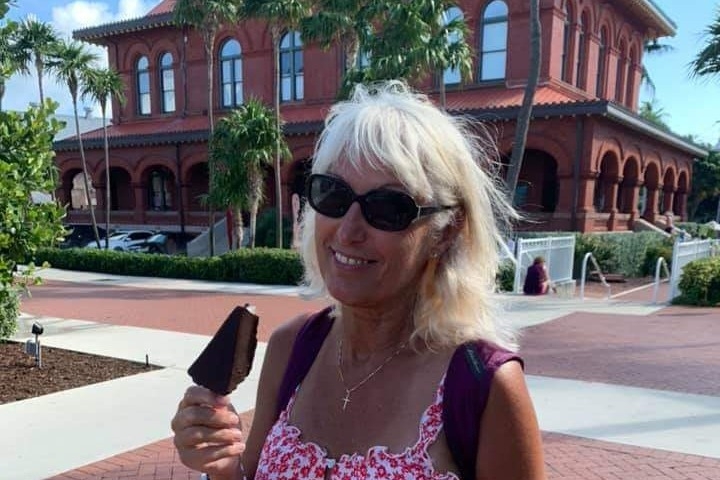
I am Theresa Gage and I live in Washington state with my spouse and our two dogs, Joey, (a Chihuahua) and Luke, (a min-pin). When I’m not engrossed in my writing or reading a good book, you’ll find me working in my flower and vegetable garden. I’ve written articles for Working Writer and ezine.com and had short stories published through Art Ascent Magazine and Rumpus Magazine. I recently retired as a nurse.

Q2. What were the key challenges you faced while writing your book “Tangle With Fire”?

My key challenge was to slow down and think of scenes instead of chapters. I knew what I wanted to write, but trying to keep the pacing just right and continue with the storyline was the challenge. I took some classes from the writing coach and podcast host, Kevin T. Johns, which really helped me.

Q3. What books or authors have most influenced your own writing?

Terry Brooks influenced my fantasy writing with his Shannara series, but there are newer authors that I love their writing style too, such as Emma Hamm, Stephanie Mayer, A. G. Howard, and Brigid Kemmerer. A. G. Howard’s different world of Alice in Wonderland is amazing.

Q4. What’s your favourite spot to visit in your own country? And what makes it so special to you?

I like to travel, but nothing compares to Mt. Rainer’s beauty in Washington state.

Q5. What inspired you to write the book ‘Tangle With Fire’?

What inspired me to write the book “Tangle with Fire” was the disrespect my younger daughter showed to her grandmothers when they lived with us. They both had Alzheimer’s. Everyone deserves respect. Then I thought back to my childhood and how I was always the responsible one, while my brother lied and played pranks. Ideas started flowing and I came up with this story.

Q6. How long did it take you to write your book ‘Tangle With Fire’?

It took me two years to get it the way I wanted it. I had joined a critique group which helped to see my mistakes and what worked and what didn’t.

Q7. On what platforms can readers buy your books?

My book is available in softcover print and eBook by Book baby. Soon it is coming out on audible as well. https://store.bookbaby.com/book/tangle-with-fire. Amazon and Barnes & Nobles have it on eBook. In print come October.

Q8. Tell us about the process of coming up with the book cover and the title ‘Tangle With Fire’?

I wanted something with fire for the book cover and the designer did a great job. My main character, Aidan, has magical abilities using fire.

Q9. When writing a book how do you keep things fresh, for both your readers and also yourself?

I try to make things exciting or intriguing.

Q10. What is the most valuable piece of advice you’ve been given about writing?

One of the most valuable lessons I learned was to see things through my character’s eyes. How would they feel if something happened. Everyone is different and sees and feels things differently from others.

Buy Tangle With Fire on Amazon

Interview with author Michael A. Cimino

Q1. Hello, can you please introduce yourself? Readers would love to know more about you.

My name is Michael Cimino. No… not the famous movie director of The Deer Hunter fame, or the handsome young actor from Las Vegas (laughs).

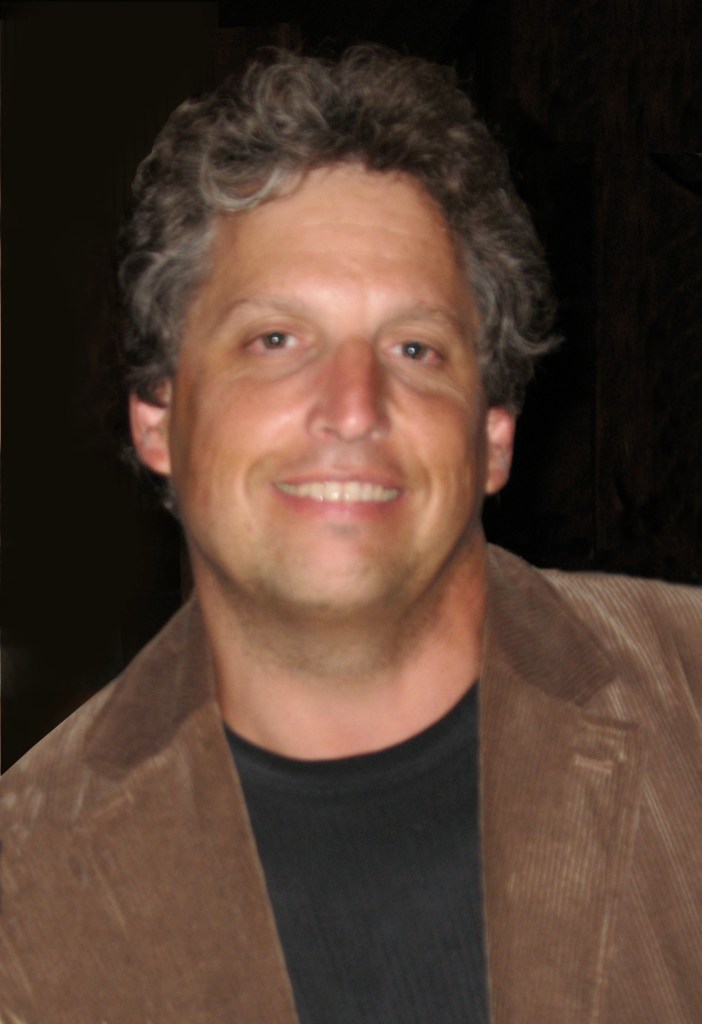
I’m an ex-radio announcer and music journalist from New Jersey who happens to earn a living as a sommelier in upstate New York’s wine country. Oh, and by the way, I am the author of three books; Music Head – A Memoir of Purpose, Badfinger and Beyond – The Biography of Joey Molland, and A Beginner’s Guide to Wine.

Q2. What were the key challenges you faced while writing your book “Music Head – A Memoir of Purpose”?

Probably, the biggest challenge was going through the hundreds of hours of tape recordings that much of the book is based upon. When I was working in the music business I had the opportunity to interview, many famous musicians and I captured all of the interviews on cassette tapes.

Transferring many of the old tapes to the digital format took a lot of time, and then, of course, picking which interviews and what parts of the interviews to use in the book was a challenge as I wanted them to have a cohesive flow in order to not only tell the musicians’ stories but the story of music history as well.

Several of the stars I spoke with were instrumental in the founding of Rock and Roll, and are still stars today; like Roger McGuinn, who founded the very influential group The Byrds in the 1960’s, Gregg Rolie from Journey and Santana, and Pete Best, who was The Beatles’ original drummer.

Q3. What books or authors have most influenced your own writing?

The books that influenced me throughout my life are actually listed in the bibliography of Music Head, but it is hard to tell if any of those authors actually influenced my personal writing style.

I think, the person who did influence the way I write was one of the people who was invited to teach the class on Australian wines when I was studying at the Sommelier Society of America. After his presentation I asked him a very simple question about Australia’s climate and he went off on this tangent for, like, twenty minutes and by the time he was done I was so confused that I don’t think he actually answered my question.

So from that time on I told myself that whenever I was communicating, whether it was educating someone about a wine, or writing about a musician, I would never ‘speak over people’s heads.’

I think reading and writing should be fun and educational, not some academic chore that one needs to complete. I also think that song lyrics have influenced me just as much as poetry and prose.

Q4. What’s your favourite spot to visit in your own country? And what makes it so special to you?

Most definitely, the Finger Lakes wine district in upstate New York. Honestly, I didn’t even know the Finger Lakes existed until I started studying wine. When I first visited the area it was to learn about winemaking and the growing grapes. Then I fell in love with the area and New York wines.

Whenever I was in the Finger Lakes I felt a part of something much bigger. A community of people working within an industry that brings us all together. Wine can do that. So can music. It feels a bit different now that I live here full time, but it is still my favorite place.

Q5. What inspired you to write the book ‘Music Head – A Memoir of Purpose’?

They say, and I don’t know who ‘they’ are, but it has been said that everyone should leave something behind for the rest of the world to remember them by after they’re gone. Some people have children who carry their lineage forward, some create art. I wrote a book that contains music history but it also contains my legacy. I touched upon this subject in the early part of the book.

Q6. How long did it take you to write your book ‘Music Head – A Memoir of Purpose’?

All of my life, practically! The idea has been floating around in my head for decades. When I was younger I was a scrap booker, and had all of these binders full of photos and concert ticket stubs and other memorabilia from my life. I always thought it would be cool to put together a definitive scrap book for my family.

Then, after I started seriously writing in the 1990’s, I thought to put together an autobiography of some sort. After editing the 10 year anniversary edition of my wine book in 2019 I began to compile the stories that make up Music Head, and then on winter break last January I completed it for the most part.

Q7. On what platforms can readers buy your books?

All of my books are available on Amazon.com. Other than that, there are a very small handful of shops in the Finger Lakes area that have supported my books.

Q8. Tell us about the process of coming up with the book cover and the title ‘Music Head – A Memoir of Purpose’?

Originally the book was going to be called Casual Conversations about Rock and Roll, but as it evolved I discovered that the book was really as much about me as it was about the musicians I was writing about, and that changed everything.

Throughout the book, and my life, I have continuously questioned ‘what is my purpose in this world?’ And, ‘who am I?’ Well, music has been the driving force throughout my whole life, so I am a ‘music head,’ and it seems I have found my purpose. It’s all in the book, of course.

As for the cover, my fiancée Debbie always loved the picture she took of me one winter day while I was sitting at my desk working on something. I had a full beard at the time, which is not my norm, and she suggested we use that. She said I looked like a writer! I guess it was my Finding Forester period!

I had the idea to use shiny black as the background in homage to The Beatles’ early singles on the Apple Records label and do the back cover print in the same color of green that The Beatles used. The green didn’t really work out that great so we changed it to gold. Deb used to work in magazine design. We worked on the cover together.

Q9. What would you say is your strength as a writer?

I think this harkens back to what I said about ‘who influenced my writing.’ I like to keep things simple and not try to impress anyone with overly flamboyant statements, or overly wordy passages.

Q10. What is the most valuable piece of advice you’ve been given about writing?

I don’t know if I’ve ever gotten any advice about writing. I certainly can’t recall anyone giving me any advice, but there are two things that spring to mind.

One is a line in the screenplay of The Last Emperor by Bernardo Betolucci. In the movie version he has Peter O’Toole say the line ‘words are important because they say what you mean, and a gentleman should always mean what he says.’ I have always found that statement to be very profound.

The other thing is; I’ve always believed that the universe has a plan. Why I wound up being a writer, I really don’t know, but surely everything happens for a reason.

Buy Music Head: A Memoir of Purpose on Amazon

Interview with author Nigel and Laura Bloomfield

Q1. Hello, can you please introduce yourselves? Readers would love to know more about the two of you.

Nigel- Absolutely! Thank you for speaking with us! I’m Nigel. My wife and I wrote The Happy Giraffe Budget which talks about our experience of creating a completely new way to budget and manage money. I’m sure we’ll talk more about that later though.

We have 3 kids and it seems like most of our time is spent just trying to keep up with them!

Laura- I feel like we are pretty boring people… Nigel has a 9-5 job, I’m a stay at home mom, we live in Utah, we play board games for fun… but then I think about our 19 years of marriage as a whole and we’ve had some exciting and challenging experiences along the way. We’ve lived in 15 homes, Nigel graduated from 2 different universities, we had miscarriages and a stillborn, traveled, filed bankruptcy, owned a restaurant, wrote a book, created a non-profit, we drive an electric fiat that looks like a coke zero car… that definitely makes us sound more exciting than we really are.

Q2. What were the key challenges you faced while writing your book “The Happy Giraffe Budget”?

Nigel- Well I’m pretty sure I was Laura’s biggest challenge! I wrote a lot of the guts of the book. My writing style is really boring though. So she had her work cut out for her, to turn what I wrote into something people would want to read.

The other big challenge was that neither of us are really writers. I deal with spreadsheets and finances for work. So just getting this all written down and organized was a big task. I would go to local writing classes to learn, but it was obvious that I didn’t fit in. Everyone else was in love with writing. I just wanted to write this one book. But we worked through it. Laura’s work is really what made the book amazing.

Laura- I’d say my biggest challenge was just finding time to do it! When we started this project, I had three little kids and a thousand responsibilities. It was hard to find time that I wanted to spend on editing a book. But we had this idea that we really felt like it could help others, so we wanted to share it. That and seeing Nigel work so hard and have this dream encouraged me to eventually make the time to write it.

Q3. What was an early experience where you learned that language had power?

Laura- My parents are amazing teachers. They didn’t teach school, but they taught us in our home and taught us at church. My dad taught seminars at certain points in his career, too. I remember that my dad was going to be teaching a seminar in Las Vegas on my 12th birthday, so my parents took me with them on the trip. As the 6th of 8 children, it was exciting to get my parents to myself, even if it was to sit through business meetings all day! But I watched my dad captivate a room full of businessmen/women and professionals. He was entertaining and exciting, and yet informative and helpful. Even I was interested in what he was saying! I realized that using words could be powerful, and that I wanted to do that, too. To be able to change lives with my words.

Nigel- For me it was high school english with Mr. Lyons. He made reading and writing so incredibly interesting. Well written works had so much meaning and…power, as you put it. We analyzed poems and books of all kinds. I’m always grateful that he taught in a way that opened up a whole world of thinking differently.

Q4. What inspired you to write the book “The Happy Giraffe Budget”?

Nigel- I’ll let Laura talk about how we came up with the Happy Giraffe name! In the book we tell our story about how we failed at budgeting many times until we had this idea that ended up working really well for us.

As we talked to other people and looked around, we realized that we had come up with something very unique. I couldn’t find anyone who managed their money or did a budget like we did. We also realized that a lot of people struggle with budgeting. It’s hard to figure out! So we started to feel like it was really important to write this book and help others learn from our experience.

Laura- Like Nigel said, we just really want to help people. We felt like we had experiences that helped us overcome the battle of budgeting and we wanted to share that with others. My grandpa would say “leave people better than how you found them” and I try to do that in my life. Finances are so hard, and I was once so terrible at them. I know how this one aspect of your life can affect everything! If I can help even one person figure that out and live a better life, then it was all worth it.

In processing through how to do that in the most interesting way (because let’s face it… budgeting is not interesting!), we were drawn to the format of “Who Moved My Cheese,” where it’s an almost childlike story and then you pull principles from it. Being that giraffes are born awesome, it seemed like the best animal to use as a main character, and the rest fell in place after that.

Q5. I understand the book is linked to a nonprofit? Tell me how that came about.

Nigel- Yeah! That’s a little different! As we got close to finishing the book we were talking about how to get this out into the world. How do we publish the book and how do we follow it up with teaching and helping people?

We found that most people who teach about budgeting actually charge a lot of money to do it! That felt really wrong to us. These are people who are already having financial troubles. They need help, but it seems like the wrong time to take more money from them.

So we decided to create a nonprofit and help as volunteers. Which has been such a great decision. The hardest part has been convincing people that the help really is free! We have free spreadsheets and everything else people need on HappyGiraffe.org.

Laura- It’s true… we’ve had friends encourage us to charge for our spreadsheets or our services, but that just doesn’t seem right to us. Plus, there’s this cool feeling when you find out how many thousands of people have downloaded your spreadsheet or how someone has been affected by reading your book, that makes you want to keep working and keep helping. Those rewards wouldn’t seem so empowering if they had a dollar sign attached to them.

Q6. What books or authors have most influenced your own writing?

Laura- This is not a good question for me… I actually hate self help books! Actually, I think the only one I’ve made it all the way through was by Brene Brown, so let’s go with her. John Bytheway and Hank Smith are also authors/teachers that have greatly influenced my teaching style, and therefore my writing style.

Nigel- Apparently college text books have had the most influence on how I write! I just want to get the facts all out there. No fluff. I liked school that way. You just study and memorize!

Q7 What’s your favorite spot to visit? And what makes it so special to you?

Nigel- I love Reno and Carson City, Nevada. That’s where I met Laura. I was working a summer job and I installed the satellite dish for her and her roommates. Best summer of my life! I came home broke and married!

Laura- I love Carson City/Reno/Tahoe as well. But not because I’m a romantic like Nigel… I just love going to my favorite childhood hangouts and restaurants, and seeing my favorite people.

Q8. On what platforms can readers buy your book?

Nigel- The physical and ebook versions are on Amazon. We just released the audiobook version too! We did that one a little differently so it is also available on Barnes and Noble, I was really excited about that one, and lots of other places.

Ask your local library to get it! We made it cheap for them so more people could have access to it.

Q9. What is the most valuable piece of advice you’ve been given?

Laura- I don’t know if it was advice as much as reprimanding, but when I was in 6th grade my best friend ended up going to a different middle school than me. This was back in the 90s, and sagging your pants had just become a thing, and trying to fit in as an awkward 12 year old, I made an effort to sag my corduroy pants and show off a bit of my plaid boxers. The next time I hung out with my friend I told her about what I had done. She simply looked at me and said “why?” That simple question to my simple mind threw me that day, and I’ve tried to consider it with everything I do since. Why am I doing something or acting a certain way or living a certain way? And if there’s not a good, healthy, answer that involves respecting me and respecting those around me, then I try not to do that thing. Obviously I’m not perfect at it, but I do try to govern my life by the simple question of “why?”

Nigel- That’s a hard question. I like what Laura said! A big change in my life was when I realized that money wasn’t going to fix everything and it isn’t the measure of success. A lot of people have told me that, but I’m glad it eventually sunk in just how true that is.

Q10. What’s next for you? Are you writing more books?

Nigel- I think this was our one book! At least for me! I’ll keep my day job. But I’m hoping to keep growing the nonprofit and help people budget happier! I’m ok that it doesn’t make us any money at all. It’s nice to have something to work on that feels meaningful.

Laura- I agree, maybe not more books… unless we do some type of kids book version. I’d love to help kids understand money better, too. But next is starting up our classes for the non-profit and just moving forward with our crazy lives!

Buy The Happy Giraffe Budget on Amazon

Interview with author Mark Bolton

Q1. PLEASE can you introduce yourself to readers who would love to know more about you?

I’m Mark Bolton. I’m 55, married and live in Tampa, Florida USA. I was born and raised in the north of England in modest circumstances and worked hard to escape my rural upbringing and get an education in London where I graduated from City University in 1990. I spent most of the next 30 years working in investment banking and consulting in New York, London, Hong Kong and Mexico City.

Along the way, I took a five-year career break in the movie industry and that’s what brought me to Los Angeles in 2005 where I met my third (and best) wife, Jody. I’ve been resident in the US pretty much ever since. Jody came with a stepson and a stepdaughter a darling cat called Ozzy. My stepson was already a grown man when I first met him, but my stepdaughter was 11 and so she has been a huge part of my life and I have hers for the last 17 years.

Q2. What were the key challenges you face while writing your book?

The Gen Z money manual mastering our new economy.
One challenge was ensuring that I was addressing the top issues that mattered to Gen Z. I undertook extensive research both online and talking with my own family and others from Gen Z, millennials and their parents’ generation and my own – Gen X. In my last consulting job, I was deeply involved with helping companies better understand Gen Z to design products and services that would appeal to them. There are many organizations that publish good Gen Z research and I read voraciously the output of banks, consulting firms, marketing agencies and others synthesizing this research to give me what I believe to be the top challenges for Gen Z. I then tested this theory on social media by analyzing popular hashtags around Gen Z related financial issues to come up with my hit list of topics for the book.

The second challenge was that as a first-time author, although having written many hundreds of documents, and probably thousands of pages in my corporate life I never had to sit down and turn out a 200-page book in one sitting. As I like to make use of the very latest technologies, I made an early decision to dictate the book (on otter.ai – which, by the way, I also used for this interview) and then edit it. This turned out to be a disaster because the quality of the ramblings that poured from my mouth while sitting in the car or on a hike or at home was simply not good enough to be committed to print. So, the next stage that was supposed to be the edit therefore effectively became an entire rewrite of the book.

The third challenge was that at a point in my life when I was taking a career break, there was still the need to earn an income for family and home. And there were times when I was concerned over how long it was taking to write the book and how difficult it might prove to earn a return on that time. The phrase “vanity project” flickered into my head and it’s one that I’m deeply sensitive to avoid. Indeed, I hope I have avoided it by delivering a book that while certainly not Shakespeare does the job of addressing the key challenges and provides multiple practical solutions, tools, analytical approaches and links to useful websites and applications.

Q3. What books or authors have most influenced your own writing?

I’m a lifelong avid reader and have amassed a collection of several thousand books over my lifetime. So having read everything from Charlotte Bronte to Ralph Waldo Emerson to Shakespeare to Jeffrey Archer and back it’s tricky for me to pinpoint specific books or writers. However, Martin Amis comes to mind as a writer, whose novels and semi-autobiographical books I comprehensively enjoyed throughout my 30s and 40s. While I do still try to read fiction, sadly, much of my reading today is confined to practical nonfiction and in that respect a handful of publications, books and authors stand out. Mark Manson’s is a lot of fun to read and in an irreverent, challenging style that I very much enjoy. There is also a writer from the UK called Colin Turner who wrote Born to Succeed, a book that was immensely influential on me in my 30s and positioned me for a great deal of success in my career and business – he’s an inspiration that I mention in my book. More regularly, I’m an avid reader of the Economist magazine as I love the style of crisp, informative facts based but witty writing that is all too rare. I have tried my best to replicate some of that in my book. Though I declare in my defense that it’s my first effort and I’m certain I can do better next time!

Q4. What’s your favorite spot to visit in your own country and what makes it so special to you?

I’m both a US and the UK citizen and consider both countries home.
So, in the US my answer has to be Los Angeles and in particular, my favorite restaurant, which is called Geoffrey’s in Malibu. It has beautiful views over the rooftops south to the Pacific, is always comfortable with a gentle breeze, good service and good food. I love driving on the Pacific Coast Highway and I owned only convertible cars when I lived in Los Angeles. I miss the ability to have the roof down almost every day of the year. I’m very much an outside lifestyle person. I like to exercise outside – cycling, hiking, tennis – Los Angeles is extremely conducive to that lifestyle due to its delightful climate, low levels of humidity and rain and an absence of extreme weather.

My other quick answer will be the north coast of Cornwall, England – which by the way, looks much like the north coast of California. It has towering cliffs, spectacular sandy beaches, huge surf, mile after mile of stunning vistas and the cleanest blue water I’ve ever seen. It’s also complemented by great places to stay and many fabulous restaurants serving some of the best seafood in the world.

Q5. What inspired you to write the book the Gen Z money manual mastering our new economy?

I had the opportunity to take another career break this year and I wanted to do something important and worthwhile and potentially pivot towards ultimately becoming a full-time author. So, I wrote this book from what I’d seen and learned in my own family to help Gen Z kids around the country and around the world. Navigate is a complicated and confusing part of moving from teen hood to adulthood.

Q6. How long did it take you to write the book?

As I mentioned before, I made the error of dictating my book and it took me around six weeks to dictate the entire book. However, it took another six weeks to completely rewrite the book. So really, it should have taken six weeks in total to write the book to the point of the first edit but it actually took 12.

Q7. On what platforms can readers buy your books?

Besides being an author I’m also a businessman. So, I own my own publishing company Transform Media. We have a couple of books published including the one that I’ve just authored and they’re all available on Amazon in the US, UK, France, Germany, Italy. Spain, and also in Australia and New Zealand. All my books are also part of the Amazon Expanded Distribution program so are available through wholesale channels for distribution to books stores, libraries and others throughout the world.

Q8. Tell us about the process of coming up with the book cover and the title.

I’ve known for a long time that I wanted to do something fairly big and fairly creative and I thought it might be a book. I threw around hundreds of ideas given my broad and deep career across financial services, entertainment consulting and elsewhere.

I wrote these up onto the whiteboard in my office and spent hours looking and thinking at each one to determine if that was something that I really felt that the world needed more information on that particular topic and I would be adding value to the pool of human knowledge. Of the few ideas that did, only a handful had the power to help large numbers of people. So, once I’d worked through all of those ideas that remained, I was fairly certain that writing a book to help Gen Z was the way to go. There are many broad areas in life that young people need help and support with health and wellness, relationships, career management as well as financial management. Given my professional background and deep knowledge of the financial sector – I’m having experienced or have family members experience many of the challenges that Gen Z faced. It was the most obvious first book to write in what will become a series under the umbrella ‘Don’t F*ck It Up’ (“DFIU”). The original title of the book was just ‘Money’ but I worked with a marketing consultant to select a title and subtitle to be both clear and appealing to the people that will most benefit from the book. ‘Mastering Our New Economy’ is a phrase that I hope resonates. In a very short period, we’ve moved to an almost all digital economy accelerated of course by the pandemic. Over the last 15 years, unknown to most of the public Artificial Intelligence (“AI”) has been growing in use deep in the bowels of business processes – virtually invisible to the end customer. But chat GPT and Bard, in particular, have changed this and there has been an explosion of end user AI tools, applications services business models. That is a key part of our new economy.

Q9. When writing a book how do you keep things fresh for both your readers and also yourself?

I learned in writing this book that timely anecdotes are a great way to illustrate a point, especially if they are prescient and witty. I can’t guarantee it but as much as I possibly can my future books will take this on board using more stories that illustrate points far more visually than just the plain advice on a page. It’s also a lot more fun to write witty anecdotes than bland text about credit scores or something dry like that!

Q 10. What is the most valuable piece of advice you’ve been given about writing?

I think it’s the guidance to keep your writing short funny and on point.
There’s a great temptation to show how much effort went into the production of a book by writing an immense amount of text – this particularly applies to self-help nonfiction books. Now I’m not talking about fiction here, where the arc of the story is important. But what I think matters is the value of the information contained within and frankly that doesn’t have to make it a 400-page book. However, there is a balance to be struck because readers need explanation. And bluntly when you’re paying $6 or $7 for a Kindle book and $15 to $25 for soft back to hardback then readers tend to expect a minimum number of pages. They expect the writer to have done some work in articulating clearly their ideas and expanding upon them. So, 30 pages isn’t going to cut it. Yet striking that balance between brevity/clarity and value measured by page count is a balancing trick that every writer and every editor has to perform every time they write.

Buy The Gen Z Money Manual on Amazon

Interview with author Mary Pat Ferron Canes

Q1. Hello, can you please introduce yourself? Readers would love to know more about you.

I am the eldest of six children, the oldest of 36 Ferron cousins and the oldest girl of the forty six cousins who are descendants of the O’Donnell Clan written about in the book, Dark Queen of Donegal. So,I have 80 first cousins. I love being from a big family and the closeness to Grandparents , cousins and joy of many family reunions, Baptisms, holidays, birthday parties and much more.

I love my husband, my children and my wonderful grandchildren many of whom have gone to Ireland and visited Donegal Castle.

Q2. What were the key challenges you faced while writing your book “Dark Queen of Donegal”?

One The most significant challenges I dealt with related to “Dark Queen of Donegal”, Ineen, who is more and more a warrior queen. Her husband, the king, became senile which left the kingship in her hands, especially after their prophesied son was kidnapped and held hostage by Elizabeth 1. These are true facts found in writings from 16th century Ireland, State Papers of Elizabeth l and Scotland.

Q3. What books or authors have most influenced your own writing?

Mary Pat Kelly inspired me very strongly, especially her best seller
“ Gallway Bay”. Others are Morgan Llywelyn, “Lion of Ireland”, a best seller, Annals of the Four Masters, C S Lewis, “The Lion the Witch and the Wardrobe”, James Joyce, “The Dubliners”, Margret Mitchell, “Gone With the Wind”, Sigret Undest , “ Kristin Lavranstratter, “ and many more.

Q4. What’s your favourite spot to visit in your own country? And what makes it so special to you?

There are three most important places. The first is my present home of 45 years where we raised our children and have had many grandchildren visits and two other places, important growing up – where I was born in Minnesota and my Grandmother’s farm in Painsville Ohio where so many happy times occurred.

Q5. What inspired you to write the book ‘Dark Queen of Donegal’?

The most significant reasons are the tales my Grandmother of the O’Donnell Clan told about our family heritage going back to when I was six years old. Writing my graduate degree in Ireland inspired me and later I realized that Ineen, the Dark Queen, was not acclaimed down the ages in her role in saving her heroic son.

Q6. How long did it take you to write your book “Dark Queen of Donegal‘“

In many ways, I was writing about it for years in my head from the time my Grandmother, born in 1888, told about her royal blood. Later and after graduate school, I began writing about Ineen’s heroic son. Only in more recent years did I realized the significance of the mother’s role in saving her son from Elizabeth l.

Q7. On what platforms can readers buy your books?

Amazon, Barnes and Noble, The Masters Book Store in Donegal, Ireland, Kenney ‘s in Ireland and Book Stores In UK. I have learned that books have been bought in Ireland, Northern Ireland, Australia, New Zealand, Portugal, Canada, and the USA. So the book can reach most countries.

Q8. Tell us about the process of coming up with the book cover and the title ‘Dark Queen of Donegal’?

I worked with two artists for the book cover and they worked together and sent me various options so that the cover would represent 16th century Ireland and a dramatic view of “The Dark Daughter”. The title came about because I wanted to have the word “Dark “ in it. Dark is important for those who viewed Ineen , dark, and for me because Ineen’s father nicknamed her“Dark Daughter”.

Q9. When writing a book how do you keep things fresh, for both your readers and also yourself?

To keep things fresh, I continue to read about Irish Books and Magazines, play Irish movies and I keep in touch with people in Ireland and those Irish in the United States. I especially look for new information, hoping this book becomes a Screen Play.

Q10. What is the most valuable piece of advice you’ve been given about writing?

Keep going and don’t give up.

Buy Dark Queen of Donegal on Amazon

Interview with author Perry Quayle

  1. Please introduce yourself so that the readers will get to know you better.

I’m Perry, the artist and writer behind the “Floof n’ Feathers” webcomic series, as well as the creator behind the series’ self-published book of cartoons,”Floof n’ Feathers: Misadventures of Mischievous Pets.”

  1. What is your inspiration behind your book “Floof n’ Feathers: Misadventures of Mischievous Pets”?

I’ve been publishing my internet comic series for several years now. The comics follow the misadventures of three pet siblings – a pair of dogs named Finnegan and Pippin, and their cockatoo sister Oliva. The series is heavily inspired by our real-life pets, with varying degrees of exaggeration of course for comedic effect. After writing and drawing the series for several years, I recently decided to go about self publishing a collection of comics from the series so far and hopefully reach an even wider audience of new readers.

  1. When did you realize you want to be an author?

I’d like to think I’ve always had a desire to create and tell stories. I’ve been drawing and using visual storytelling most of my life. I can’t even count how many times when I was young that I would spend my time coming up with yet another new original, short comic book instead of doing my homework, and would use the printer at my mom’s office to run off copies for my friends at school. I was probably responsible for my that office department going over-budget on supplies on more than one occasion with all of their copier paper I must have used up over the years.

  1. Please tell us something about your book “Floof n’ Feathers: Misadventures of Mischievous Pets”?

If you’re someone who has pets of your own and have ever wondered what might be going through their mind, or if you’re even just someone who loves animals like I do and all of their goofy, everyday antics, I think you’ll enjoy “Misadventures of Mischievous Pets” very much.

  1. For which age group is your book “Floof n’ Feathers: Misadventures of Mischievous Pets” suitable for?

My book is suitable for all ages.

  1. What is your favorite Quote?

“I may not have gone where I intended to go, but I think I have ended up where I needed to be.” – Douglas Adams

  1. What do you like the most about your country?

I grew up taking long road trips with my family to the western and southwestern U.S. I’ll always have a nostalgic place in my heart for mountains, national parks, and all the unique geological oddities scattered around the country.

  1. What suggestion do you want to give to parents of little readers regarding a reading habit?

Speaking from my own childhood experience, one of the best ways to help nurture a strong reading habit at a young age is to surround kids with easy access to a variety of books they’ll find interesting. Give them the kinds of books they’ll want to read. My first “novel” I ever read was the first in Dav Pilkey’s Captain Underpants series way back when I was just six years old, and I can tell you it 100% paved the way for not only my lifelong love of reading, but was also a huge spark for my own creative spirit throughout my life.

  1. What would you say is your strength as a writer?

There’s the old cliché of “ write what you know,” but I think that piece of advice has been around for so long because of how true it is. Almost every story line for my comics are inspired somehow by recent real-life events involving our pets at home. I would like to think one of my strenghts is being able to see the unique humor in those kinds of mundane, everyday occurrences and turning them into something entertaining and memorable.

  1. Lastly, who is your inspiration in life and why?

Along with the real-life counterparts of the “Floof n’ Feathers” cast, I’d like to thank my wife Nicole for being my biggest inspiration. These cartoons, and by extension this book, truly would not exist without her continued support and insight.

Buy Floof n’ Feathers: Misadventures of Mischievious Pets on Amazon

Interview with author Jeanette Perez Hernandez

Q1. Hello, can you please introduce yourself? Readers would love to know more about you.

My name is Jeanette Perez Hernandez and I recently became a published author. I am excited to see where this adventure takes me. I was born and raised in Tucson, AZ and I graduated from Cholla High School, joined Marines immediately after, I then went on to graduate from Pima Community College with a liberal Arts degree and also from Pima Medical Institute, where I earned an AS in Radiological Sciences. I have been a Radiologic Technologist for 18 years now at the Tucson VA, serving our nations heroes. I am also an extremely proud momma, veteran, and Latter Day Saint and a follower of Christ. I love to read and I am working on a Theology Bachelor’s degree through Grand Canyon University. I hope to serve as a chaplain someday.

Q2. What were the key challenges you faced while writing your book “An Everlasting Truth”?

Challenges to writing my book was trying to figure out how to engage reader and not have my story be too wordy, lengthy, and or boring!

Q3. What books or authors have most influenced your own writing?

I love to read all kinds of books, but for sure lately, “Blessed and Unstoppable, Your Blueprint For Success,” by Dr. Billy Alsbrooks, his words made my dreaming of publishing a book to actually bringing and manifesting it into reality. Shout out to Dr. Billy Alsbrooks!

Q4. What’s your favourite spot to visit in your own country? And what makes it so special to you?

Favorite place to visit, the Grand Canyon, it is so immense, beautiful, and takes your breath away. When I saw it for the first time, I literally gasped. It is the most spiritual and awe-inspiring place in the entire world in my opinion. I am reminded of how small in the grand scheme of things are and how large and God is; he in charge and not us.

Q5. What inspired you to write the book ‘An Everlasting Truth’?

I started writing the book as a way of healing all the trials, traumas, and tribulations that life had thrown at me. Then slowly but surely, it became a healing process for my soul and I realized that it may help someone else who had similar story or needed a push to share their own story. I realized how I had healed through the process and was hoping someone else may be liberated from a painful past through my story or perhaps, inspire someone to share their own.

Q6. How long did it take you to write your book ‘An Everlasting Truth’?

I began writing my personal thoughts at around the age of 28, I finally put thoughts together in one single form at 43, took total from beginning to end 15 years I suppose.

Q7. On what platforms can readers buy your books?

Readers can buy my book on all sites: Amazon, Christian Reads, my site, http://www.jeanettephernandez.com, through publishing house, TrilogyChristianPublishing.com, Barnes and Noble.com, and Wal-Mart.com.

Q8. Tell us about the process of coming up with the book cover and the title ‘An Everlasting Truth’?

I love the color blue, particularly the shade of a Robin’s egg; it is my absolute favorite, and I wanted to express that on to my cover, which publishing house did an amazing job of creating my wish into reality. I also love the golden wisdom of the Word of God, that is why I chose gold letters, and I wanted feathers in the cover as well, reminds me not to take myself so seriously and also as a tribute to the angels that God sends to us for guidance, protection, and that surround us daily.

An Everlasting Truth was inspired by Jesus Christ because he is they way, the truth and the life and His Word is endless, everlasting.

Q9. When writing a book how do you keep things fresh, for both your readers and also yourself?

I am inspired to help others daily; I put down on paper my thoughts and I want others to understand how my thought process and God allow me to be inspired on a daily basis. A healthy mindset is very important. I like to think that I may be able to simplify for others what I once thought was super complicated and can now easily discern. I hope and like to think my readers appreciate that.

Q10. What is the most valuable piece of advice you’ve been given about writing?

Never give up on your dream book! Keep it in the forefront of your mind until it manifests itself into reality!

Buy An Everlasting Truth on Amazon

Interview with author N.H. King

Q1. Hello, can you please introduce yourself? Readers would love to know more about you.

Yes, sure. My name is Neil and I grew up in Penzance, where the book is set. I’ve lived all over the UK, but my home is currently in Torquay, Devon. I live with my long-term girlfriend, two teenage children (one boy, one girl) and two black cats!

Q2. What were the key challenges you faced while writing your book “The Imagining Wall”?

The main challenge was fitting in writing with all the demands of working and raising a family. In fact, I started writing the Imagining Wall decades ago and the manuscript has been heavily edited since those early days.

In terms of writing itself, the biggest challenge has been dealing with pov changes. It is tough to switch pov within a scene, and I try to do it as little as possible. I’ve had to learn how to achieve this without disorienting the reader. I hope I’ve managed it!

Q3. What books or authors have most influenced your own writing?

That’s a tough question because I am a really eclectic reader. I can read absolutely anything and enjoy it. I also like to think that life and the creative energy of the universe influence me more than anything I’ve read.

Having said that, the way the ‘Celestine Prophecy’, by James Redfield, straddled the boundary between the mundane world and spiritual reality had a powerful influence. However, the Imagining Wall is definitely more plot-driven and covers more diverse traditions than many Visionary Fiction titles. Another influence would be Philip Pullman’s ‘His Dark Materials’ trilogy. Again, it’s that blending of the familiar world with something much bigger. Will’s Oxford is similar to Amber’s Penzance in that way.

Q4. What’s your favourite spot to visit in your own country? And what makes it so special to you?

Anywhere remote where the connection with the spiritual is most tangible. The Imagining Wall is set in West Penwith which includes magical places like Lamorna and St. Buryan. Further north you have Bodmin Moor, Boscastle and other places where the veil between the worlds seems thin.

Aside from Cornwall, the Yorkshire Dales are beautiful, and then there’s North Wales and the Brecon Beacons in South Wales. I’ve been to Ireland once, another place steeped in Celtic history, and I really must get to Scotland one day!

Q5. What inspired you to write the book ‘The Imagining Wall’?

I have always been fascinated with the intersection of belief systems. Having grown up in a place with a rich folklore, and having had so many numinous experiences throughout my life, paganism, witchcraft and shamanism have always fascinated me. On the other hand, I studied science and achieved a Psychology degree, so I understand the workings of the mind and how we experience the world around us from a scientific angle too. Then we have the patriarchal religions, occult traditions, etc., all with their own angles. I wanted to write a story that could make sense through any of the characters’ unique lenses. I also wanted to inspire readers to explore different traditions, so there are hints of all sorts of belief systems scattered throughout it.

Q6. How long did it take you to write your book ‘The Imagining Wall’?

Put it this way: if I knew how long it would take me to get it published, I would never have picked up the pen! I started the Imagining Wall before my eldest was born, so that’s over 18 years at least.

I joined a peer review group after finishing my first draft and it was an eye-opener. Some people loved the story as it was, which was a great confidence booster! But most had constructive criticism. The amazing thing about peer review groups is that they pick up on the same issues. For me, it was a tendency to over-describe and to flit between pov. I then spent many years squeezing editing into a very busy life. Two years ago, I decided to knuckle down and finally get the book finished.

Readers shouldn’t worry though. The second book won’t take nearly as long to create. It’s called ‘Eight’ and I’m really excited to get my teeth into it.

Q7. On what platforms can readers buy your books?

That’s easy – Amazon! At the moment, I’m exclusively selling via Amazon. You can get the Imagining Wall in paperback format or on Kindle. It’s also available via Kindle Unlimited for readers familiar with that programme.

Q8. Tell us about the process of coming up with the book cover and the title ‘The Imagining Wall’?

Readers will have to get the book to understand where the title comes from. Suffice to say, it’s a central part of the story. The cover was designed by Kate Turner, a fantastic artist with lots of experience in cover design and typesetting. I wanted to represent the kingfisher – which plays an important part in the trilogy – as an energetic field while still making it recognisable. That’s where the mirror image concept came from. I also love what Kate’s done with the pillars on the back cover and the colour scheme itself is amazing. The concept was a pure collaboration but the execution is all Kate’s work!

Q9. When writing a book how do you keep things fresh, for both your readers and also yourself?

Great question! My main source of inspiration is the creative source that comes directly from the universe, so I’m always tapping into fresh ideas. I structure the plot as I go, so I’m never tied into a formulaic pattern. I treat the characters as real people and think about how they would react to a situation, and I even ask them as if they were real people. Sometimes their answers surprise me, so I hope the reader feels that ‘aliveness’ too.

Q10. What is the most valuable piece of advice you’ve been given about writing?

Be consistent with pov. If you jump from one character’s head into another’s without somehow indicating that switch, you will confuse them and that will break their engagement with the story. I’ve learned how to use ‘anchor objects’ and other literary devices to subtly say, ‘Hey, we’re moving from Amber’s headspace to Michael’s now, OK?’ Staying in pov also helps you to ‘method act’ your characters a lot better because you’re no longer half in one perspective and half in another.

Buy The Imagining Wall on Amazon

Interview with author Thomas Lubben

Q1. Hello, can you please introduce yourself? Readers would love to know more about you.

My name is Tom Lubben.  I am a man in my 80s who has been married three times, twice to the same woman.   I have an extended family of 31 people living in 6 states.  I am beginning my 60th year in Education- and continue teaching in college.  I swallow 19 vitamins, in 4 gulps, every morning before my morning devotion.  Between the age of 60 and 75, I opened 4 Artistic Focused charter schools that today serve a combined 2,000 students and employ over 200 employees.  I began seriously writing in my 70’s and published three books (fiction and non-fiction) over the past three months.  My mystery series features amateur detective, BJ Gleeson.  Two have been published (Death on the Pines- 2022) (Death on the Bayou) with three more yet to come … and God’s not finished with me just yet.  My non-fiction, spiritual works include “A Year’s Journey” (A journal) and “The Eyewitnesses”, (An account of 10 major miracles of Jesus as observed by Bystanders and Eyewitnesses.)

Q2. What were the key challenges you faced while writing your book “The Eyewitnesses”?

None really, my faith in the Lord helped me through the process.

Q3. What books or authors have most influenced your own writing?

Actually, the Holy Bible was the major influence on my newest book.  Michael Connelly and David Baldacci are my favorite Mystery writers.  I also love the classics, Agatha Christie, and Sherlock Holmes.

Q4. What’s your favorite spot to visit in your own country? And what makes it so special to you?

I love visiting “water”, particularly the Jersey Shore.  I sense God’s power there.

Q5. What inspired you to write the book ‘The Eyewitnesses’?

I was inspired to lead more people to reading about Jesus.  People today are falling away from that belief.

Q6. How long did it take you to write your book ‘The Eyewitnesses’?  

From start to finish took about 6 months.

Q7. On what platforms can readers buy your books?

It is available on Amazon, Lighthouse Christian Publishing, and will soon be available in multiple book stores.

Q8. Tell us about the process of coming up with the book cover and the title ‘The Eyewitnesses’?

The title was easy, Jesus didn’t just do his miracles alone, he was always around “regular people”.  These are their views of his miracles.  The cover was developed by the publisher.  I like it because is makes you wonder, “what is that person eye witnessing?

Also, a unique part of this particular book, I sent the preliminary chapters out to a wide variety of people for comments and suggestions.  They were members of my Friday morning bible group, several area pastors, and family members.   I utilized many of their suggestions in the final version.

Q9. When writing a book how do you keep things fresh, for both your readers and also yourself?

At 82 I am still a lifelong learner, I am always reading, watching tv, and meeting with others.  This keeps me fresh.  I also enjoy public speaking.  I make myself available to a variety of community groups.

Q10. What is the most valuable piece of advice you’ve been given about writing?

Writing can keep your mind engaged; it allows you to capture memories for others to see.  Also, just keep writing, even now, with 5 books published and three more ready to go, I am simultaneously working on three additional writing projects:  another mystery for my series (#6), another spiritual book, and a semi-autobiographical work.

Tom Lubben’s website: https://www.authors-lehigh-valley.com/   

Interview with author Ryan McKinney

Q1. Hello, can you please introduce yourself? Readers would love to know more about you.

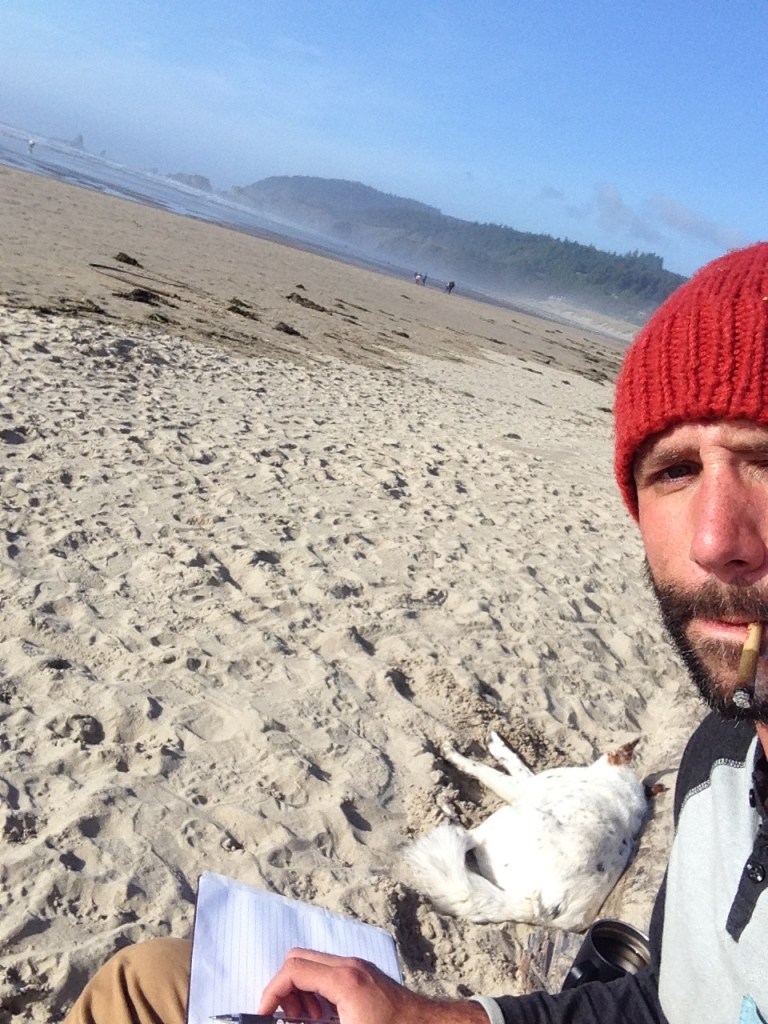
As you know, my name is Ryan. I went to undergrad for English Literature and Language, and completed my master’s degree in Cybersecurity earlier this year. I am married to a beautiful and supportive wife, Abigail, and have two cats that I would love to say are angels, but cats do be cats.

I’ve been writing essentially ever since I was able to comprehend a basic story structure. I was six when I wrote Finbur and the Lilly, a tight ten pages with full illustration about a scientist whose family was abducted so he used a flower to make a smoke bomb so he could save them. Riveting, really. After that, I wrote The Black Samurai and the Alien Invasion. I was a prodigy. If the sarcasm wasn’t evident, I will say that I have come a long way since my early attempts, but I lost the goal that I had back then: to enjoy what I wrote.

Q2. What were the key challenges you faced while writing your book “Neon Nothing”?

The primary challenge I faced was the impostor syndrome. Every writer faces it for different reasons; my reason was writing in the Cyberpunk genre.

Q3. What books or authors have most influenced your own writing?

I don’t think that there is a Cyberpunk author that can say they didn’t draw from Neuromancer – indirectly or not.

Q4. What’s your favorite spot to visit in your own country? And what makes it so special to you?

My favorite spot is, unfortunately, one I don’t get to visit often anymore, the Shakespeare Garden in Central Park West, right around 83rd street. From my little spot, I could see Belvedere Castle and the Turtle Pond. I had this very romantic notion of being a boy in Ireland, looking over the fields of my ancestors, and those things they built. So, having a place, in the middle of New York City, where I could sit and stare across a field at a castle was the greatest thing ever to me.

Q5. What inspired you to write the book ‘Neon Nothing’?

Dogs: Bullets and Carnage. In the manga, one of the main characters has a collar that is part of a “Spine of Kerberos”. I latched onto the concept and, over time, took that campaign and turned it into a story. That story went through three iterations before I arrived at something I can actually refer to as Neon Nothing.

Q6. How long did it take you to write your book ‘Neon Nothing’?

I can give three different answers to this question that I feel are all true, however, I think the truest answer is twenty-one years. I was not born able to write like this. I was not this good of a writer when I was six, thirteen, or even twenty. I had to develop my skills over the course of a lifetime. So, in order for Neon Nothing – in order for anything I write from here forward – to come into being, those years were a part of that process.

Q7. On what platforms can readers buy your books?

Amazon or Barnes & Noble! Some others may come up, but those are the primary two that my publisher, Acorn, partners with.

Q8. Tell us about the process of coming up with the book cover and the title ‘Neon Nothing’?

I took inspiration for my cover from the likes of Akira, Altered Carbon, and the falling up scene from Into the Spiderverse. What brought this particular cover into being was the two main characters of the story, Key and Shio. On the cover, it is Key that is facing away. You can’t see his face because he can’t. He doesn’t know who he is, so we can’t see him. Shio, meanwhile, knows who he is, but is coming to be someone else over the course of the narrative. We can see his face, we know him, but he’s moving away – he’s moving into something new.

Q9. When writing a book how do you keep things fresh, for both your readers and also yourself?

Plagiarism. I joke, but only kind of. I spent a lot of time trying to be “original” before I realized that it’s much more important to write the story your way. I didn’t invent Cyberpunk. I didn’t invent a lot of the core concepts my book deals with. What is completely me – and always fresh – is how I put those things together and progress a narrative. The perspective I have and the story I choose to tell is all my own.

Q10. What is the most valuable piece of advice you’ve been given about writing?

Write. Just write.

Design a site like this with WordPress.com
Get started