Q1. Hello, can you please introduce yourself? Readers would love to know more about you.
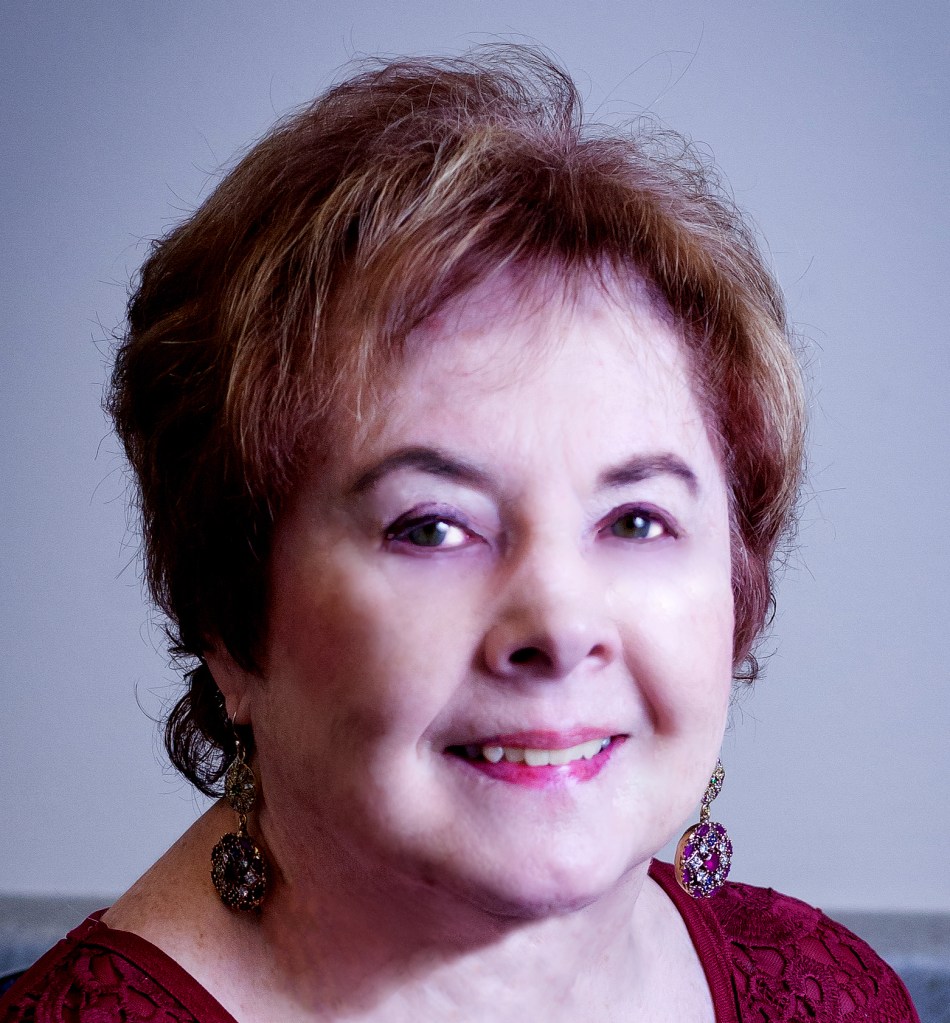
A1. I’m Peggy Ann Shumway, a mystery and historical fiction author. I grew up in the San Francisco Bay Area. I have a degree in multimedia, and when not writing or creating graphics, I dabble in family history. When a Stranger Knocks allowed me to explore my roots and, combined with my love of history, instilled a greater appreciation for my ancestors. I live in Arizona with my interminable library and a precarious tower of crafts. You can find out more information about my books at peggyannshumway.com.
Q2. What were the key challenges you faced while writing your book “When a Stranger Knocks”?
A2. My key challenges are always knowing where to find the research required to write about a time or place I’ve never been to and improving on the flat, stale passages that don’t make sense. Writing isn’t easy for me. Sometimes, I think other authors have a more effortless time of it than me. From what I’ve heard, my colleagues struggle with writing, too.
Q3. What books or authors have most influenced your own writing?
A3. My favorite authors are Kate Morton, Kristina McMorris, Patti Callahan Henry, Delia Owens, Anya Seton, and Daphne Du Maurier. These authors are masterful wordsmiths. They inspire me to up my writing game.
Q4. What’s your favorite spot to visit in your own country? And what makes it so special to you?
A4. I went on a genealogy trip to the Deep South in 1980 and to Arkansas for a family reunion. I fondly remember the bountiful greenery there, and I was impressed with the unique architecture. I’ve also loved visiting Utah and witnessing the beautiful snow-capped mountains, especially after taking a wrong turn and ended up in Wyoming. The scenery was stunning. My ultimate goal is to travel to the Great Lakes area to see the Hopewell and Adena mounds since my first book takes place in that historic area.
Q5. What inspired you to write the book ‘When a Stranger Knocks’?
A5.My great-grandmother was the inspiration behind “When a Stranger Knocks.” Mary Souza always fed the hobos who came to their farm from the train. One vagrant, in particular, finished his meal and then headed across the field toward the irrigation ditch. In front of eleven of the children, he vanished without a trace. The family searched for the man’s body for a long time without success. My grandmother and her siblings believed they had entertained an angel.
Q6. How long did it take you to write your book ‘When a Stranger Knocks’?
A6. Honestly, I couldn’t tell you how long I worked on this book. I fiddled with the story on and off while I wrote my first book, Vestiges. When I got frustrated with one, I’d work on the other. I finished the first draft of the manuscript in 2021 and put it out of my mind until a couple of months ago.
Q7. On what platforms can readers buy your books?
A7. When a Stranger Knocks and Vestiges are available on Amazon.
Q8. Tell us about the process of coming up with the book cover and the title ‘When a Stranger Knocks’.
A8. I originally called this story The Soft Season. After I allowed the title to rattle around in my brain for a couple of years, I decided the name was too vague and started brainstorming for another. When a Stranger Knocks hits more to the message and purpose of my book. The title sounds more intriguing.
The book cover is just another facet of my inventive nature. I love creativity in all its forms. I was a graphic designer for 19 years, so working in Photoshop and Illustrator is second nature to me. I don’t always have the best ideas, but I keep plugging away until I produce something I can live with. The cover I’m using now is version number ten.
Q9. When writing a book how do you keep things fresh, for both your readers and also yourself?
A9. Keeping things fresh takes time and effort. As I often edit, I realize I’ve used an expression or word repeatedly throughout the manuscript. I force myself to comb through my words and replace the offending language until satisfied. I also keep reading to feel the words of other authors. If I can see, feel, hear, and taste my writing, my audience will do the same. I’m a stickler for description and dialogue.
Q10. What is the most valuable piece of advice you’ve been given about writing?
A10. Don’t give up. Writing is one of the loneliest professions on the planet. After a long day at the computer, when you feel like you can’t write another word or look at your story again, step away and reconnect with family and friends. Find ways to get inspired before you re-enter your office. I put in an Italian garden in my backyard a couple of years ago, which is my way of connecting to the earth and finding my center. Digging in the dirt and eating what I produce inspires me.
Q1. Hello, can you please introduce yourself? Readers would love to know more about you.
A1. I’m a citizen enforcer. As the chief officer of the Healthy Living Foundation (HLF), which has an extensive food and consumer product testing program, I take big corporations to court to make them comply with local, state, and federal laws and prevent them from hiding their chemical toxins from shoppers. The HLF has won important court cases against Herbal Essences, Pantene, Chicken of the Sea, Bumble Bee, Mrs. Meyers, and Walmart. We are taking on Justin’s nut butters, Trader Joe’s, Pepsico, California Olive Ranch, and several other corporations and brands in current legal proceedings. Our goal is to eliminate toxic chemicals from foods and consumer products and require labeling when they are present at levels that can cause cancer or reproductive harm.
I am also a journalist and author and have represented the public interest at the National Academy of Sciences.
As a parent, I myself have experienced the choices that every parent must make—the conflict between the chemically loaded stuff your kids want versus what is healthy for them—or not knowing at all what’s in the products I bring into my home.
Q2. What were the key challenges you faced while writing your book Raising Healthy Kids?
A2. I wanted to share inspiring stories of parents and activists, despite all the headlines spewing doom and gloom, and make every reader a black belt in the chemical toxin jungle. I interweave my own toxic poisoning story with DDT, their stories, and 360 degree family protection plans in every chapter.
Q3. What books or authors have most influenced your own writing?
A3. Rachel Carson’s Silent Spring taught me how a single book can have an impact. I am humbly trying to follow in the footsteps of other writers who have made a difference telling inconvenient truths.
Q4. What’s your favourite spot to visit in your own country? And what makes it so special to you?
A4. In my book, I share the work that the HLF is doing in Cancer Alley in Louisiana, that 85 miles of the Mississippi River where there are some two hundred chemical plants packed in along its banks. The folks there have some of the highest cancer and disease rates in the nation. There are poisons in their air, water, and even the food they grow. Yet, the cultural richness of the Mississippi, this great mother river, always leaves me in awe and filled with hope and faith. Sharon C. Lavigne, who lives in St. James Parish and won the 2021 Goldman Environmental Prize for her work to stop the Formosa plastics plant from being built there, wrote the foreword for Raising Healthy Kids.
Q5. What inspired you to write your book?
A5. I could see with parents and my own kids that they truly needed (and craved) guidance on how to live their own healthy lives in a toxic world.
I’ve met the parents of so many kids who have told me they don’t know what to do or how to do it. When adults decide to have kids, no one ever tells them how to protect the fetus from chemical toxins, although these exposure may well be far more limiting and defining their child’s health than even parental smoking. I wanted to write a book that would share heart-warming stores with life-changing lessons to make people’s lives simpler and healthier.
Q6. How long did it take you to write Raising Healthy Kids?
A6. The HLF conducts extensive laboratory testing and investigations in the course of its legal actions, which required time to gather together. These findings have never been revealed to the public before now. For this reason, the process took about eighteen months.
Q7. On what platforms can readers buy your book?
A7. Raising Healthy Kids is available from your local independent bookseller or Amazon, Barnes and Noble, Target, and Walmart.
Q8. Tell us about the process of coming up with the book cover and the title ‘Raising Healthy Kids’?
A8. So much fun! I went online and shared with friends and readers that I was trying to determine the best color for the hardcover edition’s book jacket. Barbie, the movie, was the rage so I even offered an electric pink version together with orange, blue, yellow, and green. Green was the overwhelming favorite, though every color received support.
Q9. When writing a book, how do you keep things fresh for both your readers and yourself?
A9. I have a sense of urgency that parents cannot afford to wait. So the story moves rapidly and entertains. I know that parents are busy. I also know they must have the information I present. Just one tip I give, if you miss it (like testing your child’s preschool tap water), could change your life or prevent a tragic poisoning, and it’s happening everywhere, in our homes. This is such a necessary read, I wanted to make it for everyone. That gave me a sense of mission, faith, and hope.
Q10. What is the most valuable piece of advice you’ve been given about writing?
A10. I have always loved the work of John Steinbeck who is from Salinas, California, one of the places in California that I visited in order to share an extraordinary, perhaps even miraculous, story about how a group of teens is healing and transforming an entire town. “I write because I like to write,” he once said. “I find joy in the texture and tone and rhythm of words. It is a satisfaction like that which follows good and shared love.”
Buy Raising Healthy Kids Protecting Children on Amazon
I live with my husband in Kentucky and am the proud mom of two grown sons and grandmother to five amazing grandchildren. I spent most of my professional life as a dancer and dance educator, while also moonlighting as a freelancer, mainly writing for regional parenting magazines about the challenges of parenting adolescents.
I honestly never thought I possessed the fiction gene! However, when age and injury led to my retirement from dance, I got an idea for a young adult novel about an aspiring ballet dancer with major friend and family problems. That project became my first published novel, WHILE I DANCED. Working on the novel hooked me on writing fiction, and I returned to school to earn my MFA in Writing Popular Fiction from Seton Hill University. I’ve just kept going ever since.
Q2. What were the key challenges you faced while writing your book, “Missed Cue”?
I’d never attempted to expand a short story into a novel, which is what I did with Missed Cue, so that was a bit of a challenge. I also needed to do quite a bit of research on criminal investigations, because I’d never written a police procedural before.
This was also my first novel for adults, and I needed to think through the developmental challenges experienced by adults, which are obviously different than the challenges the protagonists in my young adult novels contend with.
Q3. What books or authors have most influenced your own writing?
I owe my focus on developing my characters prior to plotting to Elizabeth George’s excellent craft books, WRITE AWAY and MASTERING THE PROCESS: FROM IDEA TO NOVEL. Young adult authors, such as Judy Blume, Chris Crutcher, Sarah Dessen, and Gayle Forman, have also greatly inspired me. Their characters are so memorable as they struggle with coming-of-age issues.
Q4. What’s your favorite spot to visit in your own country? And what makes it so special to you?
I love visiting New York City, as well as Denver, Colorado, because that’s where my grandchildren reside. Also, since I grew up in the Northeast near the ocean, anywhere near the ocean feels like home to me.
Q5. What inspired you to write the book “Missed Cue”?
I call “Missed Cue” my “accidental novel.” Since I had a background in the performing arts, a mystery writing friend challenged me to write a short story for Malice Domestic’s anthology, Murder Most Theatrical. After the story appeared, I felt I was not really done with it. The confines of short fiction meant that I couldn’t delve into character development as much as I wanted to, particularly with respect to the police detective, Caitlin O’Connor. So, I decided to expand the story into a novel. I ended up liking Caitlin so much that I’m currently working on a sequel in which she tackles a new case.
Q6. How long did it take you to write your book “Missed Cue”?
About a year.
Q7. On what platforms can readers buy your books?
Amazon Barnes & Noble iBooks Kobo Smashwords
Q8. Tell us about the process of coming up with the book cover and the title “Missed Cue”?
The book cover was designed by Caroline Andrus, the principal designer for my publisher, Melange Books. I presented her with a few ideas, and she came up with something even better!
The title comes from the inciting incident. A revered ballerina misses her cue to awaken in Act Three of Romeo and Juliet. It turns out that she has died onstage and in fact has been murdered.
Q9. When writing a book, how do you keep things fresh, for both your readers and also yourself?
I have mostly written stand-alone books, so my characters and their issues are ever-changing. Recently, for the first time, I have been working on a sequel to one of my novels, MISSED CUE. In the sequel, I’ve been trying to keep things fresh by having my major characters continue to evolve and grow both personally and professionally. And of course, a case in an entirely different setting with a new cast of characters connected to the investigation helps keep things fresh.
Q10. What is the most valuable piece of advice you’ve been given about writing?
The only way to get better at writing is to write regularly and continuously work to improve and grow in your craft. Fundamentally, there are no shortcuts. I also love the oft-repeated advice that “You can’t fix a blank page.”
Q1. Hello, can you please introduce yourself? Readers would love to know more about you.
A1. Hello. My name is Elliott. I am a physician, a psychiatrist, a child psychiatrist, an addictions psychiatrist. I am the Director of Medical Psychiatry at a smaller community general hospital affiliated with a much larger Boston academic center. I am board-certified in general psychiatry, child and adolescent psychiatry, and addiction medicine. I am also an assistant clinical professor of psychiatry at Tufts University School of Medicine. I am also a forensics psychiatrist for the Boston Public Defenders’ Office, and I am the consulting psychiatrist for the Judge Rotenberg Center, a specialized educational center for kids and adults with severe developmental and/or intellectual disabilities. That said, a little less recently I have been a failed critical theorist – like some of you, I dropped out of graduate school, in my case, a doctoral program, and worse, immediately after passing my doctoral exams. (My graduate field was not in any science, by the way, nor was it psychology, but rather, Near Eastern Languages and Cultures.) I have also been a former high school teacher (I taught Latin and Greek) – I remember the awful conversation with my boss six months into my last teaching contract when I told him I was going to be quitting in order to attend medical school. He asked me where my sense of honor was. (I could only look at him and shrug. I console myself now in that at least I looked at him.) I have been an adjunct faculty college instructor. Enough said about that. Going way the f—k back, I am a former housepainter, bouncer (or ‘door-man’, depending on the cover charge), and ice cream slinger. I am a former security guard, a former secret shopper. I am a former line cook, airport courtesy van driver, and mover (not as in paired with ‘shaker’, but literally, a house mover). I am a failed poet and questionable writer. Yet these former identities are often somehow more real to me than my current professional life. Perhaps because I have been down and out. Because I have struggled from the bus station to the bus station. Because I can honestly answer ‘yes’ when my patients throw quasi-rhetorical questions at me, “Do you have any idea what it’s like, Doc?”
That said, despite multiple board certifications, and equivocal academic credentials, what I mostly do is specialize in crisis intervention. In sitting, or standing, face-to-face with those in the midst of struggle. ‘Hanging with’ them, as we used to say. I do my best to staunch the mental bleeding, to suture the emotional wounds, to stop up the incontinence of anguish. There are no real protocols or algorithms for what I do. Much of it, if not all of it at times, is based on instinct, impression, and feel. I size up the exam room and go from there. I have an advantage, I must confess, in that I work from a general hospital setting. I have backup, security, and a ready array of drugs and restraints at my back. And perhaps most importantly, I have the hidden office space to which to escape, to allow me to sit back, to take a deep breath, and to reflect. To write..
Q2. What were the key challenges you faced while writing your book “Reconceptualizing Mental Illness in the Digital Age”?
A2. The biggest challenge was presenting evidence, in a convincing way, that runs contrary to the accepted narrative of the moment. So much of how we think of mental illness is dictated by outdated manuals, outdated research methodologies, outdated party lines. So much is now dictated and manipulated as well by Big Pharma, Big Insura, and Big Academia, obviously the major players with major financial stakes in the game. And increasingly, mental illness is dictated, and created and nurtured, by mass and social media. The challenges have been to find effective methods of classifying and describing these newer illnesses, all the while drawing appropriate critical attention to our crumbling foundations, all the while walking a political tightrope. For psychiatry, more than the rest of medicine, has become a victim of the neo-Holy War politics here in the post-pandemic spirit of regressive self-loathing. The newer generation of practitioners, in fact, is doing its best to make the field fit a predetermined agenda/dogma of what ‘they’ want ‘it’ to be, i.e. life as it never was, or is, or should be. Unfortunately, as usually happens, reality keeps getting in the way. It is what it is, as the unassailable logic would have it, and perhaps the most challenging piece of all is that everybody knows a little bit about mental illness; rewriting these conceptions, demonstrating misconceptions, tearing down, at times, these deeply held edifices. though necessary, have been exceedingly difficult.
Q3. What books or authors have most influenced your own writing?
A3. This is an interesting question for a physician. Medical school was pure torture in that it did not allow much time for reading. I remember wanting nothing more than to read actual real books. Bound, paper books, with actual ideas and thoughts. With unapologetically critical philosophies. Literature, that is. So, what did I read? I read crazy stuff. I read Hamsun and Dostoyevsky. I read Laurence Durrell and John Fante. I read Bowles and Frisch. I read Anthony Burgess and Henry Miller. I read Nabokov and Katzantzakis. I read Yukio Mishima. I read Jean Genet and Jeanette Winterson. I read Kurt Vonnegut. (And shhhh, don’t tell…but I may be the only psychiatrist in history to have read all the novels and short stories of the Marquis de Sade.) I read chapters here and there of the Beat boys. I read Epicurus and Lucretius. Of philosophy, I read Spinoza and Bayle. I read William Godwin and Thomas Paine. I read Diderot, Helvetius, and d’Holbach. I read Kierkegaard and Nietzsche. I read Marx and Gramschi. I actually read Freud, the philosopher and sociologist, and a chapter or two of Bergson and Heidegger. I read the novels of Sartre and Camus. When I went into medicine and psychiatry I devoured all of Adorno’s and Horkheimer’s, all of Foucault’s and the other anti-humanists’ near-pathologic hatred of the field. And now that I am a full-fledged doctor? Along with my germ-infested collection of white coats, I have tossed most of the medical ‘literature’ aside once again in favor of the real thing. I continue to read the post-structuralists, the post-dialectics, the postmodernistas. Indeed, I’ve always been at least a generation, or more, behind, and so my bizarre doctor-training went on, and goes on. Textbook in one hand, ‘the Other’ in the other.
Q4. What’s your favorite spot to visit in your own country? And what makes it so special to you?
A4. I live in America. In Massachusetts. (The first state to legalize slavery, in 1641, and the last state to adopt universal male suffrage, in 1856.) My favorite spot to visit, however, is a place called Palace Playland in a town called Old Orchard Beach on the southern coast of Maine. Palace Playland is an old-fashioned, honkytonk amusement park right on the beach, complete with boardwalk and arcades, that reminds me, with nearly overwhelming nostalgia at times, of the New Jersey shore of my youth. My daughter loves it, too. There’s a Dairy Queen right across the street.
Q5. What inspired you to write the book ‘Reconceptualizing Mental Illness in the Digital Age’?
A5. The inspiration for the book was my own frustration, at times despair, as a doctor, as a psychiatrist, as I navigated my way through these major systems, Big Pharma, Big Insura, Big Academia, and saw with increasing clarity just how naked these Emperors are, just how inadequate the current standards and dogma are in our new digital era, yet how rigid and inflexible these have all become. We are in an age less of true psychopathologies and more of techno-psychopathologies that mutate so quickly, that are unlike anything else that has come before. Something had to be written.
Q6. How long did it take you to write your book ‘Reconceptualizing Mental Illness in the Digital Age’?
A6. Overall, probably two years or so. It was actually ready for publication in March of 2020. But then the pandemic hit, and illustrative of the points I make in the book, things changed so much and so fast, that I had to substantially revise the work, including the lengthy appendix describing the pandemic experience from a mental health perspective.
Q7. On what platforms can readers buy your books?
A7. It’s available on Amazon, Barnes and Noble, and other major book retailers. It’s also available directly through the publisher, Cambridge Scholars Press.
Q8. Tell us about the process of coming up with the book cover and the title ‘Reconceptualizing Mental Illness in the Digital Age’?
A8. The book cover design was meant to create an image that combined the connotations of the title and the subtitle. The title is ‘Reconceptualizing Mental Illness in the Digital Age’. The subtitle is ‘Ghosts in the Machine’, meant to reflect both the virtual milieu in which most of us now live and the mental consequences of such. I wasn’t sure, in fact, which should be the title and which should be the subtitle. I had a great book designer, Kerry Cronin, who created a wonderful design that leaves it ambiguous while also capturing the tension of negotiating our digital times.
Q9. When writing a book how do you keep things fresh, for both your readers and also yourself?
A9. I like to write in spurts. I grow stale quickly if I sit for more than an hour or two. By writing in shorter bursts I can quickly review the previous day’s work, fix it, and move on. For readers, I like to mix up topics, I keep the chapters broken into manageable sections, I try to use humor as best I can (for better or for worse), and I try to be as straightforward and honest as I can with my writing. I refer to outside sources frequently, ranging from Ancient Near Eastern texts to the latest Taylor Swift lyrics. I cite movies and television, as well as books and other media.
Q10. What is the most valuable piece of advice you’ve been given about writing?
A10. Rewrite. Writing is rewriting. Over and over till it’s right. The first draft is a great template, but the real writing occurs with the revisions. The next great bit of advice I have been given is to read your work out loud to yourself. This really helps you hear if you are making sense, if you are logical, if the words flow.
Q1. Hello, can you please introduce yourself? Readers would love to know more about you.
A1. I grew up in Park Ridge, Illinois, graduated from Illinois State University at Normal, and planned to teach art in elementary schools. Then life took over for the next 60 years. I’ve traveled the world leading golf tours. Stained glass projects I created can be found from Milwaukee to Tokyo. While serving as the executive director of a historical association in Virginia, I learned how to operate a restored historic grist mill. I founded a desk-top publishing company that produced two dozen hard-cover books about the U.S. Civil War, which enjoyed wide distribution.
I lived in five states: Illinois, California, Louisiana, Missouri, and Georgia. I lived on the 37th floor of a high-rise overlooking Lake Michigan and on a 46-foot Chris-Craft yacht in Newport Harbor, California. My hobbies include genealogy, building miniature dollhouses, gardening, travel, Zentangle, and blogging. I learned to ride a horse at age 45 and enjoyed trail riding and raising a foal. In short, I’ve been blessed with various life experiences that offer wonderful bits to include in a novel.
Q2. What were the key challenges you faced while writing your book “The Next Great Discovery”?
A2. Time. Writing time was interrupted by daily life for years. It was hard to keep the plot line top of mind, and the characters were one-dimensional. I started three or four novels but each was derailed in turn. In retirement, I have time.
Q3. What books or authors have influenced your own writing?
A3. I read widely and voraciously. I particularly enjoy the character development in books in series: Louise Penny (Inspector Gamache), Richard Osmond (The Tuesday Murder Club), Donna Leon (Commissario Brunetti). Alexandre McCall Smith (First Ladies Detective Agency), Martha Bond (Murder in [city]).
Q4. What’s your favourite spot to visit in your own country? And what makes it so special to you?
A4. I don’t have a go-to place. Instead, I seem wired to the 60s aphorism “bloom where you are planted.” The place I am in is my favorite spot, but if a move is required, it is an easy transition to the next spot.
Q5. What inspired you to write the book “The Next Great Discovery”?
A5. Hurricane Katrina blew our family out of New Orleans in 2005. Elements of Marshall, Missouri, the small rural town we landed in, inspired the creation of fictional Hawkinston, the town in the book. The local college provided a town-and-gown element. The wholesome heartland was a good foil for mystery and mayhem. I added a female newspaper reporter protagonist, killed her cousin to start the action, added some colorful characters to the mix, and the race was on.
Q6. How long did it take you to write your book “The Next Great Discovery”?
A6. The writing was sporadic over nearly 20 years as life intervened. I moved to a retirement community in 2023 and dusted off the manuscript. The characters let me know that what I thought was the main theme was really a subplot and a major rewrite was in order. I complied with their demands, finished the story, realized that the characters had positioned it as the first book in a series, and published it in 2024. So, 19 years in all, with long periods of dormancy. Book 2 in the series is coming along much faster.
Q7. On what platforms can readers buy your book?
A7. It is available in softcover and as an ebook from Amazon, Barnes and Noble, AuthorHouse, Books-a-Million, and other outlets online. Brick-and-mortar bookshops can order through Ingram.
Q8. Tell us about the process of coming up with the book cover and the title “The Next Great Discovery”?
A8. I wanted the cover to convey a sense of mystery and had in mind a red, white, and black palette. I have a black-and-white photo of a rural building with scary branches in the foreground that I took in a photography class years ago. The building was a perfect stand-in for the grist mill in the story. Unfortunately, the photo was not suitable for reproduction. I used it as a reference and sketched the scene on the cover.
The book’s title comes from a key piece of evidence that helps the protagonist unravel the truth of the mysterious deaths. It is a file folder labeled the next great discovery.
The Heartland to Hometown Mysteries brand arose from the format of the stories. Each book begins in Missouri, the Heartland. The challenge takes the protagonist to the hometown of one of the characters. In “The Next Great Discovery,” the hometown is New Orleans. In Book 2, the hometown destination is the Shenandoah Valley of Virginia.
Q9. When writing a book how do you keep things fresh for both your readers and also yourself?
A9. I like to read dialog aloud to keep it real. Sometimes, a character will come up with something totally out of the blue. It may be a red herring, or maybe it gives the character an extra layer of personality, but either way, it gives the narrative a bit of oomph. I like surprises when I read and like to surprise my readers.
Q10. What is the most valuable piece of advice you’ve been given about writing?
A10. The most basic advice writers receive is “write what you know.” It took me nearly 80 years to understand the importance of these words. I have a deep well of experience to draw from, as long as my memory holds out. What I know is the solid foundation for my writing.
Q1. Hello, can you please introduce yourself? Readers would love to know more about you.
A1. Here’s an excerpt from my website About page: I’m one of those less common personality types that is pretty left/right brain balanced. I worked for 35 years in a highly technical environment as a mechanical designer for a number of corporate engineering departments (there’s the left). Early in that career (back when engineering drawings were still being done on the drafting board) I often got comments about how nice my drawings looked. “Are you an artist?”. Before that, I was a guitarist in a rock band and still play in church (there’s the right). I’ve always been known as a reliable guy by friends and coworkers. “Good old Woody” (there’s the nickname – another story), a friend would say. I’ve always tried to put 100% effort into just about everything I do, down to the little details (left brain again). I love the outdoors, which you probably gathered from my Colorado and Montana references. Nowadays I take daily walks on a nearby trail where I live with my wife in Elk River, Minnesota (when it’s not frozen). It’s from these walks that much of the content for my writing has come.
One quirky thing about me is my affinity for wearing socks with his sandals (the short ankle ones – but only white, black would be nerdy). “Hey, it keeps my feet from getting dirty.” My wife and two daughters and some friends are always on my case about that.
My writing journey has been filled with ups and downs. I considered giving up the effort after a number of negative critiques. There’s something inside me, though, that won’t go away. In my daily walks, driving in the car or waking up in the middle of the night, it stimulates my mind and encourages me to keep with it. There must be more to this than just a guy who thinks he can tell stories. “It feels like something has been put there that doesn’t belong to me and I have to let it out.”
Q2. What were the key challenges you faced while writing your book “Apocalypsis”?
A2. I envisioned it as a short story, but as I began to write, the plot had issues. As I thought more about how to develop the story, an idea came to me which blew the entire plot wide open. Once that element was included, the story began to grow. It would no longer be a short story, but a bona fide novel. About halfway through the writing, I had another idea that would expand the narrative even further. The addition of that element didn’t allow me to keep the length to just a single novel. The completed manuscript would have to be broken in two with the second half still needing some development. I had a framework for the rest of the story, but as I worked on outlining it, more elements came to me. It had to be a trilogy. This brought me to the place I am now. The first novel is virtually complete, the second is about 60% done with the third novel in the trilogy as the first few chapters. While I pursue publication of Apocalypsis, the challenge will be fleshing out the rest of the plot.
Q3. What books or authors have most influenced your own writing?
A3. Books: Moby Dick, The Hobbit, The Lord of the Rings. Authors: C.S. Lewis, J.R.R. Tolkein, Tom Clancy
Q4. What’s your favourite spot to visit in your own country? And what makes it so special to you?
A4. The Rocky Mountains. I lived in Colorado Springs for six years where you could get up in the morning and look out the front window at Pikes Peak. I’ve also taken a few trips to Montana where I climbed Granite Peak, the highest mountain in the state. It’s also where I acquired the nickname, “Woody”. There have been so many “wow” moments out there.
Q5. What inspired you to write the book ‘Apocalypsis’?
A5. The original idea came from a message a pastor gave using the allegory of passengers on a bus as it traveled to its destination.
Q6. How long did it take you to write your book ‘Apocalypsis’?
A6. It’s been about five and a half years since the idea first occurred to me.
Q7. On what platforms can readers buy your books?
A7. Currently unpublished. Readers can visit the website for a brief description and view the cover art. Subscribers to the mailing list will receive occasional newsletters and the opportunity to download a free copy of my novelette, “Offering”.
Q8. Tell us about the process of coming up with the book cover and the title ‘Apocalypsis’?
A8. The cover comes from a pivotal scene in the book. I had it in mind for a while and decided to source someone to create it for me. I’m very pleased with the result. The title for the book when I started it was originally “Voyagers”. As the story developed over time and I had two more titles to create, I needed to come up with something more unique to each novel. “Apocalypsis”, which is Greek for revelation, seemed an appropriate choice, as the characters in the story face ongoing revelations about themselves and the ship.
Q9. When writing a book how do you keep things fresh, for both your readers and also yourself?
A9. I try to create characters that are real and that the reader can be invested in. I also attempt to keep a level of mystery or suspense that makes the reader want to keep reading. I have a pretty visual writing style and my hope is that the reader will create these scenes in their minds.
Q10. What is the most valuable piece of advice you’ve been given about writing?
Q1. Hello, can you please introduce yourself? Readers would love to know more about you.
A1. My name is Eoin Leydon O’Connor, I’m a fiction writer from Sligo, Ireland. I have always wanted to be a novelist ever since I was a kid. Both my parents are big book readers, so I got my love of literature from them. The idea of being able to create an entire world with characters just by using a pen and paper was like magic to me. The fact that you could do it anywhere at any time was brilliant. When I was sixteen, my short story Bullets (one of the short stories in Rural Tales) won 1st place in the under-19s category at the Allingham Short Story competition in 2014. This was the very first time I’d ever received validation for my work, really. I went to college to study a Bachelor of Arts in Writing & Literature in 2017, where I studied writing, both fictional and academically. I studied screenwriting, playwriting, poetry, modernism and postmodernism to name a few. Over the years on the course, I’d compiled several short stories that I wanted to publish. After graduating from college, I studied a Masters of Arts in Creative Practice. In 2023, I decided to try and self-publish my own work on Amazon and hence ‘’Rural Tales’’ was born.
Q2. What were the key challenges you faced while writing your book “Rural Tales”?
A2. The biggest challenge was more so publishing the book. Writing each of the stories was enjoyable and I’ve always liked to edit my own work as well as other people’s. Since this was my first time self-publishing, a friend of mine named Lyndsey Gallagher, who writes contemporary romance novels and self-published on Amazon as well, was able to give me some pointers and guide me in the right direction. I had to figure out the formatting and buying an ISBN as well as trying to price the book and organise the marketing all myself. All of this can be tough if it’s your first time, but it was all worth it.
Q3. What books or authors have most influenced your own writing?
A3. I’m a big fan of Stephen King, so I think he has influenced my writing over the years. I’ve also read Cecelia Ahern and love her sense of humour in her books. As a child I read R.L. Stine’s Goosebumps books and The Nightmare Room book Don’t Forget Me, which really freaked me out. All of these have definitely affected how I write.
Q4. What’s your favourite spot to visit in your own country? And what makes it so special to you?
A4. I love visiting The Burren in Co Clare, because of how its landscape inspired Tolkein to create Middle Earth in Lord of The Rings and C.S. Lewis to create Narnia. I visited it during a misty, rainy day and it looked like something straight out of LoTR, even inspiring me to write one of my own horror shorts.
Q5. What inspired you to write the book ‘Rural Tales’?
A5. I had been having something of a creative blockage – writer’s block if you will – during my second year of college. I was working with author Eoin McNamee as he was mentoring us students on writing fiction. He showed me a page from the UK missing persons website where the body of a man had been found in the woods, hanging from a tree with yellow cable. All the brand names on the man’s clothing had been cut off, which made me wonder if he had done it himself. I asked Eoin McNamee if he thought someone had strung the man up there to make it look like a suicide, to which Eoin smiled and said; ‘That’s how your imagination works, Eoin.’ He told me that the image of that man’s body was vivid in my mind’s eye and to try and draw from that for inspiration. His advice was to think about my own upbringing in Sligo and to try and use that in my writing. Not long after our conversation, 4 different ideas for short stories popped into my head. These ended up being the first 4 short stories in Rural Tales. I wrote them all back to back before the 5th came along and before I knew it, I had 8 stories that I could publish.
Q6. How long did it take you to write your book ‘Rural Tales’?
A6. I started writing the first 5 short stories in October 2018, with the 6th and 7th having already been written from when I was a teenager of about sixteen. The eighth and final one came about a year later, around the summer of 2019. So overall it was about a year in the making.
Q7. On what platforms can readers buy your books?
A7. Readers can get ahold of Rural Tales on Amazon, both in paperback and Ebook for their Kindle. It’s also available on Google Books.
Q8. Tell us about the process of coming up with the book cover and the title ‘Rural Tales’?
A8. I had figured out the title ‘Rural Tales’ I think during Covid, when I was at home during lockdown. The cover of the book was something I spied while scrolling through a website called Canva, where you can create your own book cover, editing the photographs and altering them to suit you. Most of the stories I had written took place in rural Ireland, hence the name and the cover of the countryside.
Q9. When writing a book how do you keep things fresh, for both your readers and also yourself?
A9. As I come up with ideas and try to flesh them out, I always try to be experimental and push myself to put a unique spin on whatever I’m writing. I don’t want to write something that seems cliche and tired, because I think readers pick up on that very quickly. Especially in the Horror genre where people are very familiar with all the tropes and cliches that get passed around. I would say I’m quite picky about what I choose to read and watch, so when I try to write, I want to come up with an idea that will interest people and make them want to read on, because they haven’t quite seen something like it before. That way, it’s more fun to write and hopefully will be to read as well.
Q10. What is the most valuable piece of advice you’ve been given about writing?
A10. People have told me and others that you need to let yourself write a first draft that is terrible and then rewrite it to make it better. I used to fret about making the first draft perfect, but now I think I’m better at just writing it all down, knowing I can come back and fix it up in the next draft. Working with that in mind definitely helps assuage your fears that you’re no good.
Q1. Hello, can you please introduce yourself? Readers would love to know more about you.
A1. My name is Roxanne Seubert and Sasquatch is my debut novel. I love telling stories and particularly love fantasy, any books that include Dragons, Witches, Faries, etc. If I open a book and there’s a map in the beginning, then I know almost immediately that I’m going to be a fan. My dream is to continue to publish books for both middle-grade and young adults to read and enjoy.
Q2. What were the key challenges you faced while writing your book “Sasquatch”?
A2. To write the story, I had to do a lot of research about Sasquatches. Where do they live? What do they eat? What do they look like? How big are their feet? etc. There is a ton of information, books, tv shows, folklore, which I had to sort through. I spoke to several people who had encountered real-life Sasquatches to learn what their first-hand experiences were like. And I took my family out to Money Creek Campgrounds to get a lay of the land. We hiked around the campsite and up a few trails and took hundreds of photos. The research was both interesting and inspiring.
Q3. What books or authors have most influenced your own writing?
A3. There are too many to count, but my favorites are Rick Riordan, Johnathan Stroud, Michael Crichton, Taran Matharu, Holly Black and Margaret Rogerson.
Q4. What’s your favourite spot to visit in your own country? And what makes it so special to you?
A4. I love going to the Oregon Coast around Cannon Beach where, “The Goonies” was filmed. I love walking along the beach, looking at the tidepools, smelling the ocean air, and listening to the waves crash against the shore. It’s a beautiful place especially with the view of Haystack Rock and the Needles, which are geological formations of large rocks standing out in the ocean. It’s a peaceful place and always brings me joy.
Q5. What inspired you to write the book ‘Sasquatch’?
A5. I’ve always believed there are creatures out there which we haven’t encountered yet. Scientists are always discovering new species or finding out that we were wrong about previous beliefs. The folklore of Sasquatch has always fascinated me. There are so many people who swear they’ve seen one. So why can’t they exist?
Q6. How long did it take you to write your book ‘Sasquatch’?
A6. It took a year to write and collaborate with an amazing illustrator J. Pares to create the cover and internal illustrations. Then it took another year to edit, and a year to publish the book. So approximately 3 years in total from start to finish.
Q7. On what platforms can readers buy your books?
A7. Right now, the e-book, paperback, hardcover, and audio book are available through Amazon. The e-book is also available through Barnes & Noble, Goodreads, and IngramSpark. However, I’m getting the paperback and hardcover available through these additional platforms soon.
Q8. Tell us about the process of coming up with the book cover and the title ‘Sasquatch’?
A8. I’ve always loved the Roger Patterson and Robert Gimlin Bigfoot footage. The unidentified creature was filmed in 1967 in a grainy black and white movie. It is the only real-life Bigfoot footage that experts haven’t been able to debunk. The most famous section of the film is slide # 352 of the Bigfoot looking back towards the camera. This was the inspiration for the cover. It’s a well-known image and seen in lots of merchandise. I decided to call the book Sasquatch because I grew up knowing the creature by this name. It wasn’t until much later in life that I learned there were many other names for the same creature, Bigfoot, Yeti, Yowie, Tek Tek, etc.
Q9. When writing a book how do you keep things fresh, for both your readers and also yourself?
A9. Once I had the idea for the book, to tell a story about a group of young kids finding the Sasquatch in the woods, the story blossomed from there. I had a great idea for the ending but when I pitched the idea to my friends, they told me that it had been done before in the movie, “Harry and the Hendersons,” which I hadn’t seen. So, I watched the movie and decided I had to rethink the ending to my story. My friends said I still could use fake Sasquatch prints in the snow to lead the hunters away. But I felt it had been done before and I needed to produce something new. This is how I came up with the chase seen for Connor running away from the hunters.
Q10. What is the most valuable piece of advice you’ve been given about writing?
A10. The best writing advice I have ever given is that while you are writing and realize you don’t know the name of something or need to research a place, just add a placeholder. This way you can keep writing until the scene is done and you have momentum. Then later, you can go back and research the object or location you need to add. This way you don’t interrupt your flow and keep yourself from getting sidetracked. It really helps.
Hello, I’m Ronald Hunter, author of Angel Finally Found His Wings. I’m 64 years old. I was born and grew-up in New York City and currently reside in the Tampa Bay Florida area. I’m retired from US ARMY and American Airlines. Many people are shocked when I tell them that I’m the youngest of 22 children but that’s only a small part of my life. Dad died when I was five years old, and mom soon went to a mental institution due to her severe schizophrenia and I went to an orphanage. After several years, she was released, and I went to live with her, but she “gave” me to a neighborhood Boy Scout Leader. Tragically, he forced me into the child prostitution sex trade in New York City by continuously blackmailing me. If caught, he promised to have my mother sent back to the mental institution. Years later, I escaped his control and started my new life. Angel Finally Found His Wings is my story and how I survived it all. After being a part of the Oprah 200 Men Who Survived Sexual Abuse show, it inspired me to write my book.
Remember, never allow the past to define your future. I AM A SURVIVOR!
Q2. What were the key challenges you faced while writing your memoir, Angel Finally Found His Wings?
As with any writing project, I spent a lot of time determining the flow and how best to tell my story. For me, my memoir is about a horrific childhood that includes my years on 42nd Street in New York City as a child prostitute. Writing my memoir forced me to relive many difficult times. There were numerous times I put the pen down because I needed time to further process what happened to me. In fact, writing Angel Finally Found His Wings took 13 years to complete.
Additionally, there was so much to tell, I had to structure the memoir so that I didn’t overwhelm the reader to the point they would put the book down. I purposedly did not want to sensationalize my story nor embellish it.
Q3. What books or authors have most influenced your own writing?
John Knowles A Separate Piece John Steinbeck Of Mice and Men James Frey A Million Little Pieces James Baldwin Giovanni’s Room
Q4. What’s your favorite spot to visit in your own country? What makes it special to you?
New York City because it’s where most of my life took place. I can reconnect to places and streets. It’s therapeutic because I visit places and try to understand how they played a part in my life.
Q5. What inspired you to write Angel Finally Found His Wings?
For years, my friends and family that knew my story encouraged me to write Angel Finally Found My Wings. But it wasn’t until I was part of Oprah’s 200 Men That Survived Sexual Abuse Show, that I began writing. That experience opened my eyes to the amount of pain and suffering that victims of sexual abuse have and the daily struggle they live with each day. Yes, others and I were victimized but I’m a survivor and I saw the real need for others to see themselves as a survivor and not a victim.
Angel Finally Found His Wings was written so that other survivors have a voice through me, and I want them to know we’re not broken, we can love and be love and we can trust others.
Q6. How long did it take to write Angel Finally Found His Wings?
A total of 13 years but that does not mean I wrote continuously for 13 years. There were numerous times I took a break from it to emotionally get to a better place. In fact, I wouldn’t write for a year or two. I had to seek the professional help I needed to move forward.
Q7. On what platforms can readers buy Angel Finally Found His Wings?
It can be purchased on Amazon and Barnes & Noble as a hardcover, paperback, or Kindle as well as many other sites both here in the USA and internationally. The audiobook will be available soon.
Q8. Tell us about the process of coming up with the book cover and title Angel Finally Found His Wings.
The Boy Scout Leader that took me away from my mother and forced me onto the streets had destroyed every I had including pictures and other personal items. This was one of the many ways he controlled my life. But there was one single picture of me that I kept from him and that is the photo on the cover. This is me at 11–12 years of age. In fact, until recently, it was the only photo of me from the age 6 to my late teens. It’s also the picture I took with me to when I was a member of Oprah’s 200 Men That Survived Sexual Abuse. The torn edges of the photo represent my life. The blue cover background represents the sky.
The title Angel Finally Found His Wings was created after listening to Martina McBride’s beautiful song,” angel with a broken wing.” My street name was Angel and there’s was no doubt my wings were broken BUT I found my wings and escaped that life!
My dear friend Shayne Mackey designed the cover.
Q9. When writing the book, how do you keep things fresh for both the readers and you?
To be honest, I’m not sure. I know my story so well and it never changes. So, for me, I simply just wrote it as if we were sitting at a table together and I’m telling you, my story. I also wrote it as if it were being told by me as a child. I had poor grammar and sentence structure and wanted the reader to understand how I spoke at that time. The more realistic I could place the reader at that time in my life, the better. It was interesting when the editors began reviewing my memoir. They came back with hundreds of edits because of my intentional poor grammar and writing style. I told them not to change any of that because it’s part of telling my story!
Q10. What is the most valuable piece of advice you’ve been given about writing?
Write about what you know. If it’s a memoir, don’t embellish it. Just tell the story.
Q1. Hello, can you please introduce yourself? Readers would love to know more about you.
A1. Hello, or howdy, as they said in the old west, which is my regular genre. I have twenty-four western historical romance books published and one fantasy. I began writing one day in 1980 when I woke from a dream I thought should be in a book. I have very vivid, detailed dreams. Before this time I had been in college studying fine arts, but in 1971 I got divorced and moved to a small town in Utah. I always wanted to live in a small town (I grew up in South LA). I was eager to paint watercolor landscapes. There aren’t any in So. Cal. unless you drive a long way. I never had the chance. My sister introduced me to romance novels and my life changed. I had never even thought about being a writer, although I can see hints that I might have leaned in that direction now that I look back. That first book nine years because I had to learn to write, learn the industry, take classes and make connections. In 1989, I attended a writers workshop. An agent there read my first chapter, asked me about my second book I was working on, and told me my ideas were too unusual to sell to a publisher, that I should go home, write a regular romance, get it published and maybe then I could write what I wanted. That’s a bit simplistic, but I took her seriously. I wrote a romance, entered it in a contest and won first place in the historical division. That gave me the courage to enter it in the Romance Writers of America’s yearly competition, which is huge. I never expected to get anywhere in the contest, I just wanted feedback. To my surprise my book became a finalist. It didn’t win but it did get me an agent. A year and a half later, I received a three-book contract from Kensengton Books. My first book was published in 1994. I wrote five books for them before the historical market crashed in 1999. After that, my agent died, and I became discouraged. No one was selling western historical romance. One day, I was struck with an idea, sat down and wrote a book totally different from anything I’ve written before or since. Pure inspiration. That book was A Kiss and a Dare.
Q2. What were the key challenges you faced while writing your book “A Kiss and a Dare”?
A2. I’d say my biggest challenge was knowing nothing about writing or marketing a fantasy. Actually, the writing came easily. It just flowed out of me. Even so, after having a couple of friends read it, I became discouraged and set aside. It wasn’t until two years ago that I dragged it back out and took another look. I was mesmerized by what I read and knew I had something good, no matter what my friends said. I re-edited and published it.
Q3. What books or authors have most influenced your own writing?
A3. Many authors have inspired me, Nora Roberts, Linda Howard, Kristin Hannah, Penelope Williamson and many more who wrote westerns. In Fantasy, my favorite author is Lynn Kurland. She writes fantastic books, some contemporary, some historical, many time-travels, and all magical.
Q4. What’s your favourite spot to visit in your own country? And what makes it so special to you?
A4. My favorite spot in America is a tiny village on the Oregon Coast. It’s not a town, just vacation homes, but some friends (other writers) and I would rent a house there, go for a couple of weeks, walk the beach, watch the waves and write, write, write. I went there for about seventeen years before the owner died and the house became unavailable. We couldn’t find as good a deal as she gave us and I haven’t been back since. I miss it terribly. There was a lighthouse nearby on a bluff and I placed one of my western historical romances there, Forever Mine. It received a Reviewer’s Choice Nomination from RomanticTimes and won other contests.
Q5. What inspired you to write the book ‘A Kiss and a Dare’?
A5. A Kiss and a Dare was, as I said, pure inspiration. An image popped into my head one day of a handsome man finding a hidden garden and lying down on some grass by a boggy pond. He fell asleep and woke up to find a frog on his chest. As he stared at the creature, it leaped and kissed him. Suddenly, a gorgeous naked young woman with long black hair lay across him. The idea so tickled me that I sat and wrote the book. It’s a reversal on the frog prince fairytale which I set in Wales. It’s been too long since I wrote it to say why I chose Wales, but later I decided to tour the UK. My sister had always dreamed of going to Ireland (we’re part Irish). When she was dying, much too young, of cancer one winter, I told her if she could live until spring, I’d take her to Ireland. She didn’t make it, so I decided to go for her. I put out the word that I was seeking a travel mate. A friend in my writers’ critique group agreed to go. Before going, I found a website for leaving messages for Welsh people. I asked for someone to help me research my book. A man answered and we became friends. When he heard I was coming, he and his wife invited us to stay with them. It was fantastic. He took us everywhere, especially the castles, and I learned so much. We even found a rugged knob of land where a Welsh castle had once stood, climbed up to see it, and it became the setting for A Kiss and A Dare.
Q6. How long did it take you to write your book ‘A Kiss and a Dare’?
A6. As I said before, I wrote the book, then let it lie, almost forgotten, for years before picking it up, dusting it off and re-editing it. I’d say it took a few months to write it initially, a few more when I reworked it.
Q7. On what platforms can readers buy your books?
A7. My books are available only on Amazon, free on KU. I tried going wide (selling in actual bookstores) but people aren’t buying books like they used to. Most authors make more from KU than from going wide. Readers can borrow the books on a special program and we get paid for pages read.
Q8. Tell us about the process of coming up with the book cover and the title ‘A Kiss and a Dare’?
A8. Coming up with a cover for A Kiss and a Dare is still a sort of work in progress. I keep trying to find a design that will more accurately depict the magic involved. There’s a witch, spells, two deadlines, one for the hero and one for the heroine, a newt and a dragonfly, who are friends of the heroine and are people from the 14th century put under spells. There’s even a dragon. My covers come from my vivid imagination and I use my artistic skills to create them.
Q9. When writing a book how do you keep things fresh, for both your readers and also yourself?
A9. Keeping my writing fresh is always a challenge. I try reading books by authors I haven’t read before, and consult friends and my critique partners. I get sparks of ideas from small things I see on TV or read in books, maybe things heard in a restaurant or store. I try to use unusual characters unlike any I’ve created before and do the same with the situations I put them in. In my current western historical romance, the hero and his foreman (on a ranch) grew up in a circus. They keep an old lion as a pet. He’s lost his teeth and is tame unless the hero is threatened. Then he can become ferocious even without teeth. I find characteristics for my characters from a vast supply of sources, TV, books, friends, overheard snatches of conversations in public places, the list is endless.
Q10. What is the most valuable piece of advice you’ve been given about writing?
A10. The most valuable advice I received was probably when that editor told me no publisher would take a chance on an unusual story from an unknown author. All authors try to come up with something unique. Another was to keep dead bodies dropping. Not literally. It means to keep interesting and unexpected action going so readers won’t get bored (or the author). One bit of advice I have for beginning authors is not to expect too much from a first book. It’s best to get a few books written before you even think about publishing. Learn the craft, make connections, visit online sites where you can get your name known, participate in online groups and chats. First books rarely succeed. I’ve seen a few. One author I saw become an overnight success when a husband was in the promotions business. He made her a success with advertising that most authors can’t afford. Even after all these years, I still couldn’t afford the platform he used for her book. Promoting books is the most difficult part of publishing. It’s expensive, there are a lot of cheats out there offering the moon and giving nothing, and it keeps a writer from doing what she wants to do most–write.




 Sassy Reviews