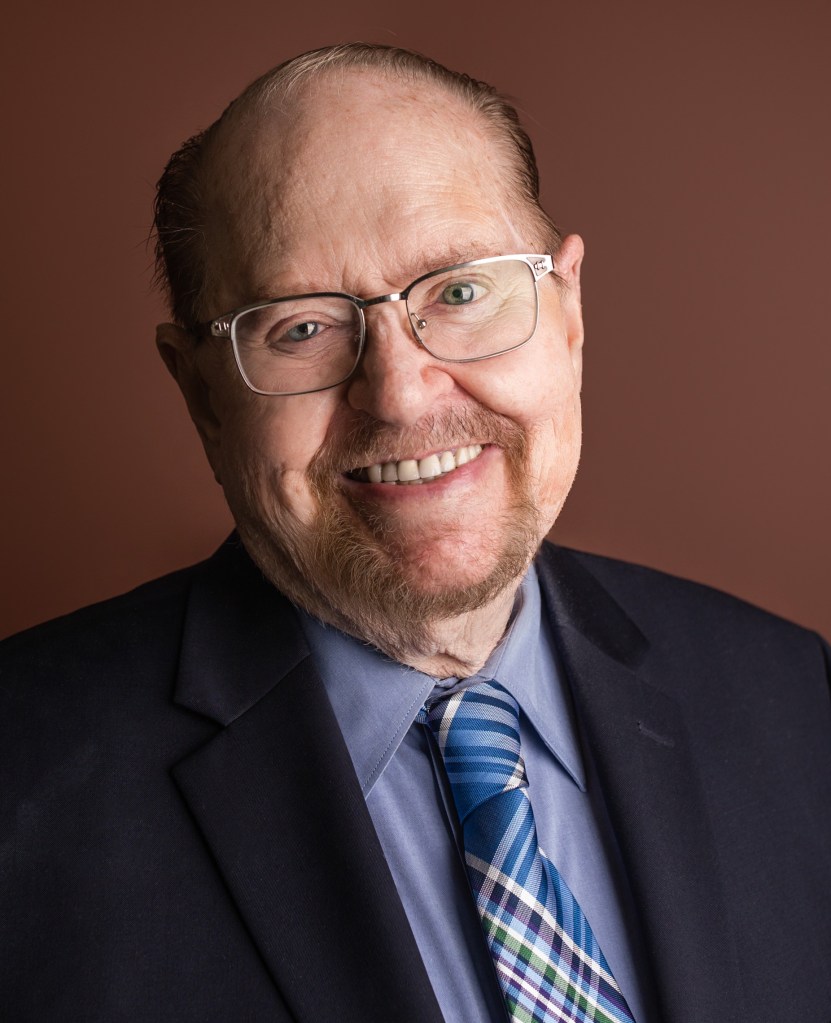
Interview will author Elliott B. Martin

Q1. Hello, can you please introduce yourself? Readers would love to know more about you.

A1. Hello. My name is Elliott. I am a physician, a psychiatrist, a child psychiatrist, an addictions psychiatrist. I am the Director of Medical Psychiatry at a smaller community general hospital affiliated with a much larger Boston academic center. I am board-certified in general psychiatry, child and adolescent psychiatry, and addiction medicine. I am also an assistant clinical professor of psychiatry at Tufts University School of Medicine. I am also a forensics psychiatrist for the Boston Public Defenders’ Office, and I am the consulting psychiatrist for the Judge Rotenberg Center, a specialized educational center for kids and adults with severe developmental and/or intellectual disabilities. That said, a little less recently I have been a failed critical theorist – like some of you, I dropped out of graduate school, in my case, a doctoral program, and worse, immediately after passing my doctoral exams. (My graduate field was not in any science, by the way, nor was it psychology, but rather, Near Eastern Languages and Cultures.) I have also been a former high school teacher (I taught Latin and Greek) – I remember the awful conversation with my boss six months into my last teaching contract when I told him I was going to be quitting in order to attend medical school. He asked me where my sense of honor was. (I could only look at him and shrug. I console myself now in that at least I looked at him.) I have been an adjunct faculty college instructor. Enough said about that. Going way the f—k back, I am a former housepainter, bouncer (or ‘door-man’, depending on the cover charge), and ice cream slinger. I am a former security guard, a former secret shopper. I am a former line cook, airport courtesy van driver, and mover (not as in paired with ‘shaker’, but literally, a house mover). I am a failed poet and questionable writer. Yet these former identities are often somehow more real to me than my current professional life. Perhaps because I have been down and out. Because I have struggled from the bus station to the bus station. Because I can honestly answer ‘yes’ when my patients throw quasi-rhetorical questions at me, “Do you have any idea what it’s like, Doc?”

That said, despite multiple board certifications, and equivocal academic credentials, what I mostly do is specialize in crisis intervention. In sitting, or standing, face-to-face with those in the midst of struggle. ‘Hanging with’ them, as we used to say. I do my best to staunch the mental bleeding, to suture the emotional wounds, to stop up the incontinence of anguish. There are no real protocols or algorithms for what I do. Much of it, if not all of it at times, is based on instinct, impression, and feel. I size up the exam room and go from there. I have an advantage, I must confess, in that I work from a general hospital setting. I have backup, security, and a ready array of drugs and restraints at my back. And perhaps most importantly, I have the hidden office space to which to escape, to allow me to sit back, to take a deep breath, and to reflect. To write..

Q2. What were the key challenges you faced while writing your book “Reconceptualizing Mental Illness in the Digital Age”?

A2. The biggest challenge was presenting evidence, in a convincing way, that runs contrary to the accepted narrative of the moment. So much of how we think of mental illness is dictated by outdated manuals, outdated research methodologies, outdated party lines. So much is now dictated and manipulated as well by Big Pharma, Big Insura, and Big Academia, obviously the major players with major financial stakes in the game. And increasingly, mental illness is dictated, and created and nurtured, by mass and social media. The challenges have been to find effective methods of classifying and describing these newer illnesses, all the while drawing appropriate critical attention to our crumbling foundations, all the while walking a political tightrope. For psychiatry, more than the rest of medicine, has become a victim of the neo-Holy War politics here in the post-pandemic spirit of regressive self-loathing. The newer generation of practitioners, in fact, is doing its best to make the field fit a predetermined agenda/dogma of what ‘they’ want ‘it’ to be, i.e. life as it never was, or is, or should be. Unfortunately, as usually happens, reality keeps getting in the way. It is what it is, as the unassailable logic would have it, and perhaps the most challenging piece of all is that everybody knows a little bit about mental illness; rewriting these conceptions, demonstrating misconceptions, tearing down, at times, these deeply held edifices. though necessary, have been exceedingly difficult.

Q3. What books or authors have most influenced your own writing?

A3. This is an interesting question for a physician. Medical school was pure torture in that it did not allow much time for reading. I remember wanting nothing more than to read actual real books. Bound, paper books, with actual ideas and thoughts. With unapologetically critical philosophies. Literature, that is. So, what did I read? I read crazy stuff. I read Hamsun and Dostoyevsky. I read Laurence Durrell and John Fante. I read Bowles and Frisch. I read Anthony Burgess and Henry Miller. I read Nabokov and Katzantzakis. I read Yukio Mishima. I read Jean Genet and Jeanette Winterson. I read Kurt Vonnegut. (And shhhh, don’t tell…but I may be the only psychiatrist in history to have read all the novels and short stories of the Marquis de Sade.) I read chapters here and there of the Beat boys. I read Epicurus and Lucretius. Of philosophy, I read Spinoza and Bayle. I read William Godwin and Thomas Paine. I read Diderot, Helvetius, and d’Holbach. I read Kierkegaard and Nietzsche. I read Marx and Gramschi. I actually read Freud, the philosopher and sociologist, and a chapter or two of Bergson and Heidegger. I read the novels of Sartre and Camus. When I went into medicine and psychiatry I devoured all of Adorno’s and Horkheimer’s, all of Foucault’s and the other anti-humanists’ near-pathologic hatred of the field. And now that I am a full-fledged doctor? Along with my germ-infested collection of white coats, I have tossed most of the medical ‘literature’ aside once again in favor of the real thing. I continue to read the post-structuralists, the post-dialectics, the postmodernistas. Indeed, I’ve always been at least a generation, or more, behind, and so my bizarre doctor-training went on, and goes on. Textbook in one hand, ‘the Other’ in the other.

Q4. What’s your favorite spot to visit in your own country? And what makes it so special to you?

A4. I live in America. In Massachusetts. (The first state to legalize slavery, in 1641, and the last state to adopt universal male suffrage, in 1856.) My favorite spot to visit, however, is a place called Palace Playland in a town called Old Orchard Beach on the southern coast of Maine. Palace Playland is an old-fashioned, honkytonk amusement park right on the beach, complete with boardwalk and arcades, that reminds me, with nearly overwhelming nostalgia at times, of the New Jersey shore of my youth. My daughter loves it, too. There’s a Dairy Queen right across the street.

Q5. What inspired you to write the book ‘Reconceptualizing Mental Illness in the Digital Age’?

A5. The inspiration for the book was my own frustration, at times despair, as a doctor, as a psychiatrist, as I navigated my way through these major systems, Big Pharma, Big Insura, Big Academia, and saw with increasing clarity just how naked these Emperors are, just how inadequate the current standards and dogma are in our new digital era, yet how rigid and inflexible these have all become. We are in an age less of true psychopathologies and more of techno-psychopathologies that mutate so quickly, that are unlike anything else that has come before. Something had to be written.

Q6. How long did it take you to write your book ‘Reconceptualizing Mental Illness in the Digital Age’?

A6. Overall, probably two years or so. It was actually ready for publication in March of 2020. But then the pandemic hit, and illustrative of the points I make in the book, things changed so much and so fast, that I had to substantially revise the work, including the lengthy appendix describing the pandemic experience from a mental health perspective.

Q7. On what platforms can readers buy your books?

A7. It’s available on Amazon, Barnes and Noble, and other major book retailers. It’s also available directly through the publisher, Cambridge Scholars Press.

Q8. Tell us about the process of coming up with the book cover and the title ‘Reconceptualizing Mental Illness in the Digital Age’?

A8. The book cover design was meant to create an image that combined the connotations of the title and the subtitle. The title is ‘Reconceptualizing Mental Illness in the Digital Age’. The subtitle is ‘Ghosts in the Machine’, meant to reflect both the virtual milieu in which most of us now live and the mental consequences of such. I wasn’t sure, in fact, which should be the title and which should be the subtitle. I had a great book designer, Kerry Cronin, who created a wonderful design that leaves it ambiguous while also capturing the tension of negotiating our digital times.

Q9. When writing a book how do you keep things fresh, for both your readers and also yourself?

A9. I like to write in spurts. I grow stale quickly if I sit for more than an hour or two. By writing in shorter bursts I can quickly review the previous day’s work, fix it, and move on. For readers, I like to mix up topics, I keep the chapters broken into manageable sections, I try to use humor as best I can (for better or for worse), and I try to be as straightforward and honest as I can with my writing. I refer to outside sources frequently, ranging from Ancient Near Eastern texts to the latest Taylor Swift lyrics. I cite movies and television, as well as books and other media.

Q10. What is the most valuable piece of advice you’ve been given about writing?

A10. Rewrite. Writing is rewriting. Over and over till it’s right. The first draft is a great template, but the real writing occurs with the revisions. The next great bit of advice I have been given is to read your work out loud to yourself. This really helps you hear if you are making sense, if you are logical, if the words flow.

Buy Elliott Martin’s book on Amazon

Missed Cue

𝗕𝗼𝗼𝗸: Missed Cue 📚
𝗔𝘂𝘁𝗵𝗼𝗿: Lynn Slaughter ✍️
.
.

🚀 𝐑𝐞𝐯𝐢𝐞𝐰:
Missed Cue penned by the author Lynn Slaughter is a murder mystery. The main character of the story is Lieutenant Caitlin O’Connor. She is a homicide detective and is working on the case of a deceased woman named Lydia along with her partner Sergeant Stan Bisso.

Lydia Miseau was in perfect health but she died onstage and everyone was shocked by her sudden demise. People who knew Lydia appreciated her for her dancing skills, kindness and mentorship. Lydia had no enemies. In the initial investigation, the detectives didn’t find anything that would have caused her death. Lydia was six weeks pregnant when she died. Lydia as a principal dancer was insured by the company and she was insured for ten million.

Cait is having troubles in her personal life too. She falls for the wrong guys and therefore she has started seeing a therapist. Read this story to find out where the investigation would lead Cait.

Cait is an inspiring character. I love reading stories with female protagonists. The plot is gripping and it keeps me on the edge of my seat. Lynn has done impressive work in this book. I am definitely interested in reviewing more books by her in the near future.

  • 𝗠𝘆 𝗥𝗮𝘁𝗶𝗻𝗴: 5/5

★ Book Is Available On Amazon

Keys to Healthy Communication

𝗕𝗼𝗼𝗸: Keys to Healthy Communication 📚
𝗔𝘂𝘁𝗵𝗼𝗿: Bobby Patton ✍️
.
.

🚀 𝐑𝐞𝐯𝐢𝐞𝐰:
“Keys to Healthy Communication: Authenticity, Empathy, and Empowerment,” authored by Bobby Patton, Rusalyn Andrews, and Jennifer Daily, offers valuable insights into enhancing health and well-being through effective communication.

The authors highlight the significant impact of different communication styles on our lives, emphasizing that while some interactions can be uplifting, others can be detrimental. They align with the World Health Organization’s definition of health, which encompasses complete physical, mental, and social well-being, not merely the absence of disease.

Readers will gain a deeper understanding of authenticity, empathy, and empowerment through this book. The authors stress the importance of being mindful of our words and ensuring our responses are constructive, as once spoken, words cannot be retracted.

This book is a compelling and thought-provoking read. The “Just Between Us” section, in particular, enhances self-awareness. Highly recommended for leaders, this book provides crucial lessons for effective leadership. I wish I had discovered it earlier in my leadership journey, as it would have helped me manage my emotions and words better. Nonetheless, I have learned immensely and feel more prepared to lead again. I am deeply grateful to the authors for this enlightening work.

  • 𝗠𝘆 𝗥𝗮𝘁𝗶𝗻𝗴: 5/5

★ Book Is Available On Amazon

Downeast

𝗕𝗼𝗼𝗸: Downeast: This Blessed Assurance 📚
𝗔𝘂𝘁𝗵𝗼𝗿: Dikkon Eberhart ✍️
.
.

🚀 𝐑𝐞𝐯𝐢𝐞𝐰:
“Downeast: This Blessed Assurance” penned by the author Dikkon Eberhart is a captivating read that hooked me from the beginning until the end. The main characters of the story are Percy and his girlfriend Starr Knitter. Percy and Starr have been together for the past six months. 

When Percy and Derek’s mom separated years ago, Percy didn’t think that he would find love again. But, now he is head over heels with Starr. He is waiting to hear yes from her so they can marry soon. One day, Percy came to Derek’s house and told him that he had been shot. When he tried to save Starr who was shot in the hip, he killed a man. 

Vernald is the brother of a man whom Percy shot. Percy wants to help him through his anger. He wants to restore it. This could be dangerous for Percy. Read this story to know what will happen next. Starr is bedridden and wants to be with Percy. Will things work in her favor?

I enjoyed reading this book. The twists and turns in the story kept me on the edge of my seat. The author has done fantastic work in this book. Even though I haven’t read the first book in the series, I was able to follow the story easily. Go ahead with this book without any second thoughts.

  • 𝗠𝘆 𝗥𝗮𝘁𝗶𝗻𝗴: 5/5

★ Book Is Available On Amazon

On The Precipice

𝗕𝗼𝗼𝗸: On The Precipice 📚
𝗔𝘂𝘁𝗵𝗼𝗿: Brianna MacMahon ✍️
.
.

🚀 𝐑𝐞𝐯𝐢𝐞𝐰:
On The Precipice penned by the author Brianna MacMahon is an intriguing read. It is the first installment in the New Caelus book series. Imperium is a unique planet. New Caelus is a city in Imperium. Everything seemed happier and brighter there. Raelynn is a twenty-three-year old graduate. She has recently graduated from Satias Academy.

Keeper Lord Regent Levin Liston, head of the Diplomacy division in the government wanted her to be his Audilla. However, according to High Justice Caine, Lord Regents cannot mentor Audillas. For Raelynn, working as an intern of Lord Regent Levin Liston is like a dream. Read this story to know what happens next and more about the experiences of Raelynn as she begins her career.

Those who are a fan of science fiction with multiple POVs should get their hands on this book. Since this novel has a sexual description, it is recommended only for adult readers. The language used in the book is lucid and easy to follow. I appreciate the author’s vivid imagination in world building.

  • 𝗠𝘆 𝗥𝗮𝘁𝗶𝗻𝗴: 5/5

★ Book Is Available On Amazon

Write It In Lipstick

𝗕𝗼𝗼𝗸: Write It In Lipstick 📚
𝗔𝘂𝘁𝗵𝗼𝗿: River Sutaria ✍️
.
.

🚀 𝐑𝐞𝐯𝐢𝐞𝐰:
This fictionalized memoir-esque introduces us to the author’s experiences with sexual experience and family dysfunction. Capacity is about the author’s love for their dad even though their dad is unaware of how to love some parts of them.

Rage is about the time when the author’s teacher tried to approach them in the school parking lot. They punched him in the face and the author felt as if they had punched their dad.

Secrets is about a session with a therapist and the realization that the person who is trying to help you in your healing journey is the one who has traumatized you.

These stories involve mixed emotions. If you have suffered from a trauma in the past, and still not healed, this book gives hope that there can be strength found in vulnerability. Family dysfunction is not easy to deal with. The stories are gripping and you will crave reading the entire book in a single sitting.

  • 𝗠𝘆 𝗥𝗮𝘁𝗶𝗻𝗴: 5/5

The Poppy Lady

𝗕𝗼𝗼𝗸: The Poppy Lady 📚
𝗔𝘂𝘁𝗵𝗼𝗿: Barbara Elizabeth Walsh ✍️
.
.

🚀 𝐑𝐞𝐯𝐢𝐞𝐰:
“The Poppy Lady” penned by the author Barbara Elizabeth Walsh is a heartwarming story about paying tribute to the men and women who gave so much for our country’s freedom. The main character of the story is Moina Belle Michael. In 1917, she received news about Wilson asking for war. 

When Moina found out that America was going to war, she decided to do everything she could for the soldiers. Moina bought red poppies—poppies of Flanders Fields. She wanted to establish poppies as a symbol to honor and remember soldiers. Get your hands on this book to know how Moina will achieve her dream.

This is an amazing story full of kindness. It inspired me to be kind and put myself in the service of others. The language used in the book is easy to follow. This book is for children of the age group 7-11 years. I had a great time reading it.

  • 𝗠𝘆 𝗥𝗮𝘁𝗶𝗻𝗴: 5/5

★ Book Is Available On Amazon

The Next Great Discovery

𝗕𝗼𝗼𝗸: The Next Great Discovery 📚
𝗔𝘂𝘁𝗵𝗼𝗿: Katherine Bennett ✍️
.
.

🚀 𝐑𝐞𝐯𝐢𝐞𝐰:
“The Next Great Discovery” penned by the author Katherine Bennett is an interesting read. It is the first installment in the “A Heartland to Hometown Mystery” book series. The main character of the story is Leni Spencer. She works as a reporter for the Hawkinston (Mo.) Daily News. 

One day when Leni was at work, her boss Charlene Drake informed her to reach her uncle’s farm as a death had occurred. When Leni visited her Uncle’s farm and saw the yellow tape, she hadn’t thought that it would be her cousin Tiger Allen. Tiger was stabbed and his throat was cut. Being a journalist, Leni is determined to find out what exactly has happened to her cousin.

Those who enjoy reading murder mystery stories should get their hands on this book. The writing style of the author is nice. This is a gripping story that would keep you on the edge of your seat. You won’t feel like putting this book down without finishing it. Katherine has done great work in this book. I am surely interested in reading more books by her in the future.

  • 𝗠𝘆 𝗥𝗮𝘁𝗶𝗻𝗴: 5/5

★ Book Is Available On Amazon

Interview with author Katherine Bennett

Q1. Hello, can you please introduce yourself? Readers would love to know more about you.

A1. I grew up in Park Ridge, Illinois, graduated from Illinois State University at Normal, and planned to teach art in elementary schools. Then life took over for the next 60 years.  I’ve traveled the world leading golf tours. Stained glass projects I created can be found from Milwaukee to Tokyo. While serving as the executive director of a historical association in Virginia, I learned how to operate a restored historic grist mill. I founded a desk-top publishing company that produced two dozen hard-cover books about the U.S. Civil War, which enjoyed wide distribution. 

I lived in five states: Illinois, California, Louisiana, Missouri, and Georgia. I lived on the 37th floor of a high-rise overlooking Lake Michigan and on a 46-foot Chris-Craft yacht in Newport Harbor, California. My hobbies include genealogy, building miniature dollhouses, gardening, travel, Zentangle, and blogging. I learned to ride a horse at age 45 and enjoyed trail riding and raising a foal. In short, I’ve been blessed with various life experiences that offer wonderful bits to include in a novel. 

Q2. What were the key challenges you faced while writing your book “The Next Great Discovery”?

A2. Time. Writing time was interrupted by daily life for years. It was hard to keep the plot line top of mind, and the characters were one-dimensional. I started three or four novels but each was derailed in turn. In retirement, I have time.

Q3. What books or authors have influenced your own writing?

A3. I read widely and voraciously. I particularly enjoy the character development in books in series: Louise Penny (Inspector Gamache), Richard Osmond (The Tuesday Murder Club), Donna Leon (Commissario Brunetti). Alexandre McCall Smith (First Ladies Detective Agency), Martha Bond (Murder in [city]).

Q4. What’s your favourite spot to visit in your own country? And what makes it so special to you?

A4. I don’t have a go-to place. Instead, I seem wired to the 60s aphorism “bloom where you are planted.” The place I am in is my favorite spot, but if a move is required, it is an easy transition to the next spot.

Q5. What inspired you to write the book “The Next Great Discovery”?

A5. Hurricane Katrina blew our family out of New Orleans in 2005. Elements of Marshall, Missouri, the small rural town we landed in, inspired the creation of fictional Hawkinston, the town in the book. The local college provided a town-and-gown element. The wholesome heartland was a good foil for mystery and mayhem. I added a female newspaper reporter protagonist, killed her cousin to start the action, added some colorful characters to the mix, and the race was on.

Q6. How long did it take you to write your book “The Next Great Discovery”?

A6. The writing was sporadic over nearly 20 years as life intervened. I moved to a retirement community in 2023 and dusted off the manuscript. The characters let me know that what I thought was the main theme was really a subplot and a major rewrite was in order. I complied with their demands, finished the story, realized that the characters had positioned it as the first book in a series, and published it in 2024.  So, 19 years in all, with long periods of dormancy. Book 2 in the series is coming along much faster. 

Q7. On what platforms can readers buy your book?

A7. It is available in softcover and as an ebook from Amazon, Barnes and Noble, AuthorHouse, Books-a-Million, and other outlets online. Brick-and-mortar bookshops can order through Ingram.

Q8. Tell us about the process of coming up with the book cover and the title “The Next Great Discovery”?

A8. I wanted the cover to convey a sense of mystery and had in mind a red, white, and black palette. I have a black-and-white photo of a rural building with scary branches in the foreground that I took in a photography class years ago. The building was a perfect stand-in for the grist mill in the story. Unfortunately, the photo was not suitable for reproduction. I used it as a reference and sketched the scene on the cover.

The book’s title comes from a key piece of evidence that helps the protagonist unravel the truth of the mysterious deaths. It is a file folder labeled the next great discovery.

The Heartland to Hometown Mysteries brand arose from the format of the stories. Each book begins in Missouri, the Heartland. The challenge takes the protagonist to the hometown of one of the characters. In “The Next Great Discovery,” the hometown is New Orleans. In Book 2, the hometown destination is the Shenandoah Valley of Virginia.

Q9. When writing a book how do you keep things fresh for both your readers and also yourself?

A9. I like to read dialog aloud to keep it real. Sometimes, a character will come up with something totally out of the blue. It may be a red herring, or maybe it gives the character an extra layer of personality, but either way, it gives the narrative a bit of oomph. I like surprises when I read and like to surprise my readers. 

Q10. What is the most valuable piece of advice you’ve been given about writing?

A10. The most basic advice writers receive is “write what you know.” It took me nearly 80 years to understand the importance of these words. I have a deep well of experience to draw from, as long as my memory holds out.  What I know is the solid foundation for my writing. 

 The Next Great Discovery is available on Amazon

Interview with author J. Gordon Manias

Q1. Hello, can you please introduce yourself? Readers would love to know more about you.

A1. Here’s an excerpt from my website About page: I’m one of those less common personality types that is pretty left/right brain balanced. I worked for 35 years in a highly technical environment as a mechanical designer for a number of corporate engineering departments (there’s the left). Early in that career (back when engineering drawings were still being done on the drafting board) I often got comments about how nice my drawings looked. “Are you an artist?”. Before that, I was a guitarist in a rock band and still play in church (there’s the right). I’ve always been known as a reliable guy by friends and coworkers. “Good old Woody” (there’s the nickname – another story), a friend would say. I’ve always tried to put 100% effort into just about everything I do, down to the little details (left brain again).
I love the outdoors, which you probably gathered from my Colorado and Montana references. Nowadays I take daily walks on a nearby trail where I live with my wife in Elk River, Minnesota (when it’s not frozen). It’s from these walks that much of the content for my writing has come.

One quirky thing about me is my affinity for wearing socks with his sandals (the short ankle ones – but only white, black would be nerdy). “Hey, it keeps my feet from getting dirty.” My wife and two daughters and some friends are always on my case about that.

My writing journey has been filled with ups and downs. I considered giving up the effort after a number of negative critiques. There’s something inside me, though, that won’t go away. In my daily walks, driving in the car or waking up in the middle of the night, it stimulates my mind and encourages me to keep with it. There must be more to this than just a guy who thinks he can tell stories. “It feels like something has been put there that doesn’t belong to me and I have to let it out.”

Q2. What were the key challenges you faced while writing your book “Apocalypsis”?

A2. I envisioned it as a short story, but as I began to write, the plot had issues. As I thought more about how to develop the story, an idea came to me which blew the entire plot wide open. Once that element was included, the story began to grow. It would no longer be a short story, but a bona fide novel. About halfway through the writing, I had another idea that would expand the narrative even further. The addition of that element didn’t allow me to keep the length to just a single novel. The completed manuscript would have to be broken in two with the second half still needing some development. I had a framework for the rest of the story, but as I worked on outlining it, more elements came to me. It had to be a trilogy. This brought me to the place I am now. The first novel is virtually complete, the second is about 60% done with the third novel in the trilogy as the first few chapters. While I pursue publication of Apocalypsis, the challenge will be fleshing out the rest of the plot.

Q3. What books or authors have most influenced your own writing?

A3. Books: Moby Dick, The Hobbit, The Lord of the Rings. Authors: C.S. Lewis, J.R.R. Tolkein, Tom Clancy

Q4. What’s your favourite spot to visit in your own country? And what makes it so special to you?

A4. The Rocky Mountains. I lived in Colorado Springs for six years where you could get up in the morning and look out the front window at Pikes Peak. I’ve also taken a few trips to Montana where I climbed Granite Peak, the highest mountain in the state. It’s also where I acquired the nickname, “Woody”. There have been so many “wow” moments out there.

Q5. What inspired you to write the book ‘Apocalypsis’?

A5. The original idea came from a message a pastor gave using the allegory of passengers on a bus as it traveled to its destination.

Q6. How long did it take you to write your book ‘Apocalypsis’?

A6. It’s been about five and a half years since the idea first occurred to me.

Q7. On what platforms can readers buy your books?

A7. Currently unpublished. Readers can visit the website for a brief description and view the cover art. Subscribers to the mailing list will receive occasional newsletters and the opportunity to download a free copy of my novelette, “Offering”.

Q8. Tell us about the process of coming up with the book cover and the title ‘Apocalypsis’?

A8. The cover comes from a pivotal scene in the book. I had it in mind for a while and decided to source someone to create it for me. I’m very pleased with the result. The title for the book when I started it was originally “Voyagers”. As the story developed over time and I had two more titles to create, I needed to come up with something more unique to each novel. “Apocalypsis”, which is Greek for revelation, seemed an appropriate choice, as the characters in the story face ongoing revelations about themselves and the ship.

Q9. When writing a book how do you keep things fresh, for both your readers and also yourself?

A9. I try to create characters that are real and that the reader can be invested in. I also attempt to keep a level of mystery or suspense that makes the reader want to keep reading. I have a pretty visual writing style and my hope is that the reader will create these scenes in their minds.

Q10. What is the most valuable piece of advice you’ve been given about writing?

A10. Keep working. It’s a process.

Design a site like this with WordPress.com
Get started