Q1. Hello, can you please introduce yourself? Readers would love to know more about you.
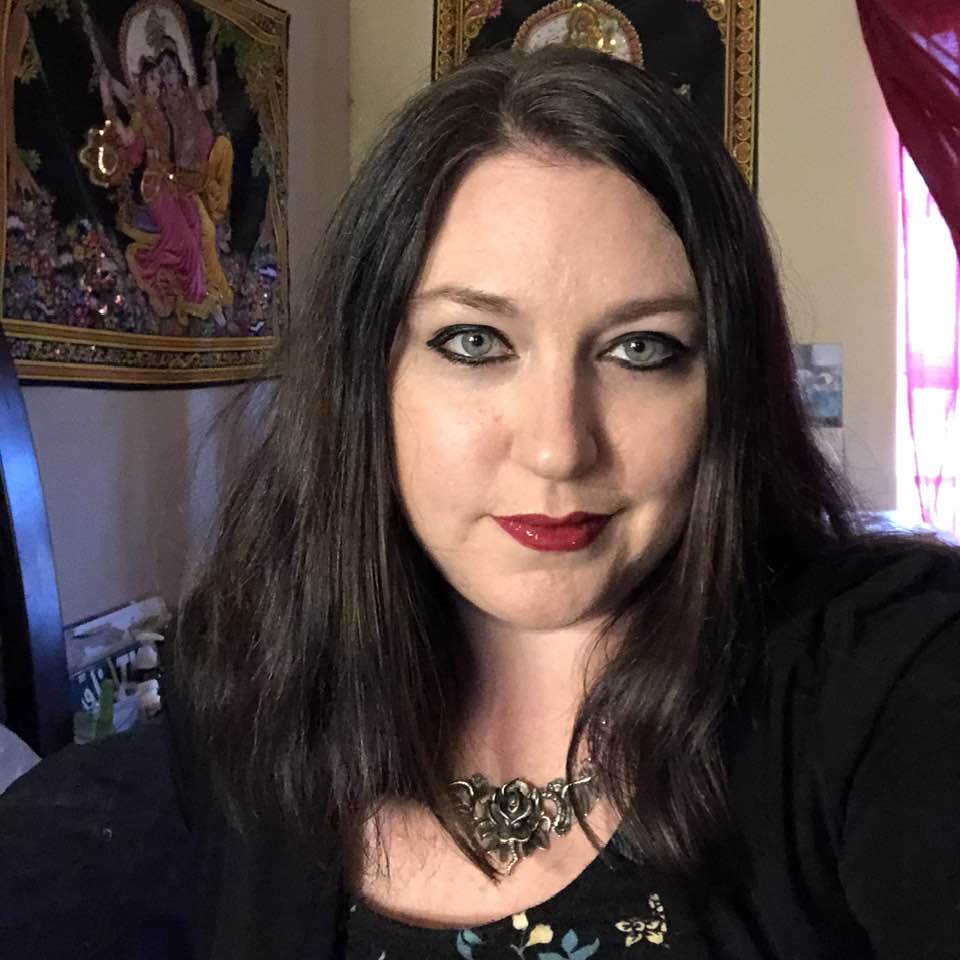
A1. Hello, this is where I become incredibly awkward, but bear with me. I’m RM Watters, a literary historical fiction and fantasy writer and author of ‘The Book of Jezebel’. I’m also an editor, creative director, and managing partner of Frequency 3 Media. Apart from that, I’m a mother and a cat-person. I like video games, true crime documentaries, British cozy mysteries, and solving cryptograms. While I’m a homebody, I love going out with friends from time to time and staying active: biking (usually on my stationary indoor bike, because Floridian humidity is a thing), hiking outdoors, yoga, things like that. I also have a somewhat dry, dark sense of humor that can just pop out at any moment without warning.
Q2. What were the key challenges you faced while writing ‘The Book of Jezebel’?
A2. The biggest challenge was the lack of reliable sources, which historical fiction authors are dependent upon to keep their stories as historically accurate as possible. Researching the Iron Age Levant, particularly the world and characters of Jezebel and Ahab, one is limited mostly to tertiary sources. I’ve done painstaking research, starting with the Biblical accounts and the Midrash, then combing libraries, academic journals, etc., in an effort to better understand the world in which Jezebel lived and to portray her and her story accurately. But when it comes to understanding her and the people in her life, we have very few primary and secondary sources.
The only true primary sources relating to Jezebel and Ahab that have, thus far, been found are Jezebel’s seal and the Stele of Shalmaneser III (also known as the Kurkh Monolith). The stele was constructed by the Assyrian king Shalmaneser III, to commemorate a battle against a group of kings, one of whom was Ahab of Israel. It confirms Ahab was King of Israel and had quite a substantial army of chariots—he made the biggest contribution toward the campaign, if the numbers are to be believed— but other than that, it doesn’t give us much information. On the contrary, one can glean a lot from Jezebel’s seal about her understanding of herself and her place in the world, but it’s still pretty limited and dependent upon modern interpretations. Modern people cannot fully see the past for what it was, because our own cultural and personal biases will always get in the way, and that makes historical accuracy a challenge in both scholarly and creative endeavors.
Nevertheless, those two archaeological finds are amazing. They have, at the very least, proven Jezebel and Ahab were real, living people, backing up their existence in relation to the stories about them that are found in the Biblical books of Kings and Chronicles, and in the Midrash. The problem with the Biblical stories is that they were written by people who were incredibly biased against Jezebel and her “foreign” customs, and even more against her religion. And, despite commonly held beliefs, the Biblical books are NOT primary sources. They are actually tertiary sources, as they were likely written by people who were not direct witnesses to the events and people they discuss. They were based on other possibly secondary sources that have been lost to modern researchers, but that’s the closest we can get. Primary and secondary source material for the Iron Age is incredibly scarce and, of those archaeologists have uncovered, few are readable. That is changing now with AI technology being used to translate ancient texts, and it’s very exciting, but for me it’s too little too late because I’ve already finished the book.
Q3. What books or authors have most influenced your own writing?
A3. That’s a hard question to answer. I read so widely in both fiction and non-fiction. I think the biggest influences for my writing style have come from “classic” literature: Jane Austen, Leo Tolstoy, Emily Bronte, and JRR Tolkien. For more “modern” authors (20th century—present), I’d have to say Sylvia Plath, Agatha Christie, Ursula K. Le Guin, Margaret Atwood, Barbara Kingsolver, Shannon Chakraborty, Terry Goodkind, George RR Martin, and Bernard Cornwell. It’s such an eclectic mix of writers, but I’ve analyzed their works a great deal to better understand the craft of writing. Influences depend more on what I’m writing, although when it comes to length, one can certainly see where Martin, Chakraborty, and the classic authors have had the biggest influence on my writing. My writing is not for light-reading, but it’s deep and thought-provoking and incredibly character-driven. I doubt my novels will ever become mainstream, but my goal isn’t to become popular or famous. I want my books to be enjoyed by the people who find meaning in them. I know that’s not a very “market-savvy” way to approach writing, but I’m more interested in remaining authentic than reaching a wider audience.
Q4. What’s your favourite spot to visit in your own country? And what makes it so special to you?
A4. While I live in the state of Florida in the United States, I grew up in the state of Wisconsin. My favorite place to visit is a small state park called Devil’s Lake. It’s a great place to go camping and hiking in the bluffs with many amazing views of the lake. It’s a very peaceful, beautiful place that was sacred to the native communities who originally populated the area before European settlers. It also has a lot of history, which is something I love about it. The lake and the surrounding bluffs were created by the glaciers during the Ice Age, which is just something really fascinating to think about.
Q5. What inspired you to write ‘The Book of Jezebel’?
A5. Well, I grew up hearing about how evil Jezebel was, and she’s become the archetype of a “bad woman.” As a woman, and one who doesn’t always follow the rules, that has always intrigued me. When one digs a little deeper and begins to analyze the tales of Jezebel and Ahab and their supposed “wickedness,” one finds the
condemnation of them rather…odd. When you compare Jezebel and Ahab to other kings and queens of the Bible, you find that their opponents based their assessment on them on some rather paltry incidents: the ‘murder’ of Naboth the Jezreelite, the worship of different gods and constructing temples to them, the persecution of Yahwists… It’s all rather flimsy, when you compare it to King David who literally had a man murdered so he could take his wife, and all the other great and heroic kings who did a lot of really awful things to people but were given a pass because they worshipped the same God as the people writing the Biblical narratives. When it comes down to it, the ONLY reason Jezebel and Ahab are considered wicked—the “most wicked” king and queen to have ever lived, as the Biblical narrative states—is because they worshipped Ba’al and Astarte instead of Yahweh/Jehovah. That is initially what made me feel the need to rewrite their story from their perspective—specifically Jezebel’s perspective, because I felt it was time to give her back her voice.
Q6. How long did it take you to write ‘The Book of Jezebel’?
A6. Not including research: from the first line I wrote to the last, it took about seven months to write the book; a year, if editing is included. I suspect it would have taken less time had I not been raising my family, struggling with the loss of two close friends to cancer, and working on a graduate degree. Once I committed, the book pretty much wrote itself, despite the many challenges of this past year.
Q7. On what platforms can readers buy your books?
A7. As of March 2024, the complete ‘The Book of Jezebel’ will be available on Kindle and in paperback format on Amazon, and also by direct sale through my website http://www.rmwatters.com. In the coming year, we will also be releasing it in 3 volumes through IngramSpark, which may allow us to get it into brick-and-mortar bookstores and offer hardcover editions. We may expand the market, depending on interest.
Q8. Tell us about the process of coming up with the book cover and the title ‘The Book of Jezebel’?
A8. The book named itself. The title was based on the style of naming Biblical writings: ‘Book of [Author/Protagonist]’. Since it’s supposed to be Jezebel telling her own story, ‘The Book of Jezebel’ was the only way to go with the title, especially because I do sometimes mimic the storytelling styles found in the Biblical books. (My editor actually observed that it’s less literary than my usual style, and I had to remind her that’s because it’s written more in that Biblical matter-of-fact style. However, I daresay it reads more excitingly and with far more detail and “feelings” than one finds in even the most exciting of Biblical stories.)
As for the cover, the design was a combination of trying to appeal to the historical fiction fan-base and portraying the character of Jezebel authentically based on my version of her story. Predominant on the front cover is my representation of Jezebel, from a beautiful artwork of an ancient Persian princess by a digital artist on Shutterstock. After licensing it, I used photo-editing software to remove the background, so I could instead have the symbols of ancient Levantine gods as the background—kind of like it’s carved on a sandstone wall or something of that nature. The papyrus scroll with real Phoenician script surrounding the title, and the awesome font (LHF Ascribe Regular) continue to reinforce the idea that it’s like a ‘lost book of the Bible’ written by Jezebel herself. (Obviously, it’s fiction, and so it was necessary to put ‘a novel’ under the title just to be sure there’s no confusion with someone thinking I’m trying to pass this off as non-fiction.) The purple strips on the top and bottom represent the purple dye that was produced by Jezebel’s people, the Phoenicians as we call them today. (‘Royal purple’ gets its name from the expensive and rare purple textiles that were once only produced in the cities of Tyre and Sidon.) The image of Jezebel’s true seal used on the back cover not only gives a visual representation of the seal I describe in the book, but it also again reinforces that idea that this is her true story, as told by her. Finally, the peacock feathers not only represent the royalty and luxury to which she was accustomed; peacocks play a pretty significant role in the story, particularly concerning the story of Naboth of Jezreel, whom the Biblical narrative accuses Jezebel of having murdered.
How they tie into his part of Jezebel’s story you’ll find out by reading the novel.
Q9. When writing a book how do you keep things fresh, for both your readers and also yourself?
A9. Hmm, how to answer this question. I mix it up. I’m always trying something new. Read and watch things outside my regular genre, get inspired creatively, clear my head by going out into nature, spending time with my family… Just doing things that pull me away from it—especially because, when I’m writing something historical like this, I can get so entrenched in the time and place that I could almost lose myself in it. In a way, I had to “become Jezebel” in order to tell her story: to think like her, to feel like her, to move like her…etc. So, I just step away and keep in touch with who I am, and then I go back into it when I feel refreshed enough.
For my readers, I use dividers in the middle of long chapters so they can also stop and step away from it when they need to. The story is long because it basically covers Jezebel’s entire life. It’s pretty intricate with a lot of subplots all woven together, but I think that helps to keep it interesting. ‘The Book of Jezebel’ deals with many difficult and dark and even traumatic topics at times. I try to inject some humor and lightness, and there’s definitely a fair bit of romance, so it’s not too heavy. I don’t want it to be depressing—and if you know how Jezebel’s story ends in the Biblical narrative, if you grow to love and understand her as I hope readers will, it could be pretty depressing.
I like tragedy, but I always want to find the silver-lining or put a positive spin on it, and I think I managed that. My editor was blown away by the final chapter and how I dealt with the ending. That was great to hear, because I spent A LOT of time on that ending, and endings are so hard to do in general. It’s hard to get an ending ‘right’. I impressed my editor. Only time will tell if my readers are also impressed by the ending. I hope they will be, but it’s a long road to get there, and they’ll need to go through a lot of emotional turmoil as well as moments of joy and even ecstasy before they reach the conclusion.
Don’t skip to the end—even if you know how it ends, don’t skip anything, because the ending will only make sense and be truly meaningful if you’ve read the whole story and understand the relationship between Jezebel and Ahab as I portray them.
Q10. What is the most valuable piece of advice you’ve been given about writing?
A10. Above all, let the characters be in charge of their own story. Get to know your characters as real people, even if they’re entirely a figment of your imagination, because it’s the only way you’ll ever write convincing, realistic characters. Anne Lamott said it best in her book, Bird by Bird: “If you stop trying to control your mind so much, you’ll have intuitive hunches about what this or that character is all about.” Each character has their own story, even the minor ones, and sometimes our characters have different ideas about what they want to do or experience, and they might even surprise or horrify or disgust us from time to time—but at the end of the day, unless there is a good reason to do otherwise, we must let them be who they are and do what they’re going to do whether we like it or not. One must always remember that a writer is NOT their characters—not usually, anyway, and certainly not the majority of them. In order to ‘people’ the literary world with authentic and believable characters, we can’t just write ourselves and make the characters like us. As a rule, there should be as much variety and individuality in our characters as there are in the real world—unless we’re writing characters as allegory.
Buy The Book of Jezebel on Amazon