
Q1. Hello, can you please introduce yourself? Readers would love to know more about you.
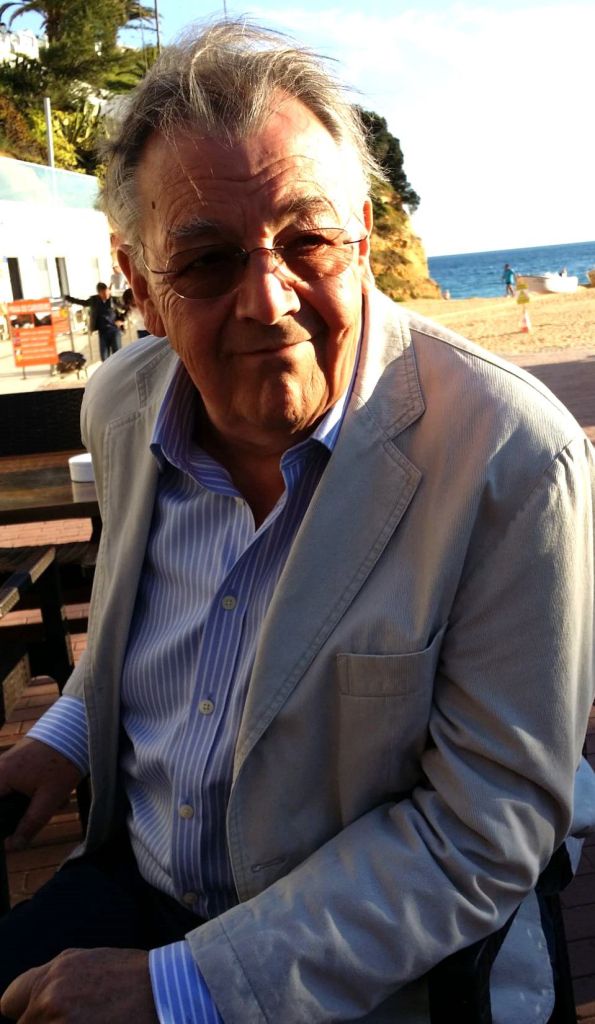
A1. Hi, my full name is Richard Howard Hartley (I write as Howard Hartley). I am a seventy-eight-year-old English, married male who spent my first thirteen years in Kumasi, then Accra, in Ghana. Childhood in Ghana was blissful. The Ashanti, Fante and Ga-Dangme, the local ethnic groups, are fabulous with children, and my sister and I always felt safe. The sun shone, the sea was refreshing and a highlight was the three days starting on 24th December which were always spent on the beach. January, sadly, meant one day flying high in glorious sunshine, then, on the next, ‘coming down to earth’ with a bump courtesy of BOAC, in freezing rain-soaked England and back to reality, school.
An English boarding school between the ages of eight and eighteen helped my parents to develop my character and shape my aspirations, and I had sufficient talent as a musician to win a music scholarship.
After school, I started training to be a Chartered Accountant. As the wages of student accountants were pitiful, I joined the Territorial Army – part-timers training an evening a week, most weekends, and two solid weeks a year – as a private soldier. That doubled my income. After a year as a private, I was selected to be an officer cadet: the wages were the same, but the duties became more onerous. I didn’t go for a Queen’s commission; my final accountancy exams loomed large, and the time involved clashed with the expectations of an army officer. I did, though, thoroughly enjoy my brief military experience and I think it shows in my writing.
I was a Chartered Accountant for more than fifty years before retiring, and rather than getting bored mowing the lawn and pruning the roses, swapping tall tales of derring-do and foiling business shenanigans, with other old fogeys on the 19th hole, I decided to write the book series that had been started in 1993.
Q2. What were the key challenges you faced while writing your book “Sir Edric”?
A2. The books that inspired my love of fantasy were the first ‘Chronicles of Thomas Covenant, the Unbeliever’ by Stephen Donaldson, and, of course, all of Tolkien’s. I had problems, however. I could not suspend disbelief enough to accept Stephen Donaldson’s ‘arch of time ‘, and the same went for Tolkien’s giant eagles, which would have be too heavy to fly if they carried a man, but too fragile if they were light enough to be ridden. I had no problem with an Illearth stone or a Nazgul, but these were pure fantasy, and did not conflict too obviously with basic, schoolboy physics.
My challenge was, therefore, to build a world where the fantastic elements were compelling, but, once explained, had to obey the rules.
Q3. What books or authors have most influenced your own writing?
A3. I’ve already mentioned Donaldson and Tolkien. Add David Eddings and David Gemmell to that list. In allied, but other genres, Bernard Cornwell and Alan Mallinson loom large.
Q4. What’s your favourite spot to visit in your own country? And what makes it so special to you?
A4. I have found that it is not so much the place as the person you are with that makes somewhere special. My wife and I have travelled together to many places, but tend not to return to any particular place – why go back when there are so many places that you haven’t visited yet – unless it is to stay with friends. Accordingly, I’d say that our favourite place, other than home, is a village in Devon called Thorverton. That is where a family that includes my son’s godfather, and my wife’s godson, live; where I play violin duets with the mother of Karen’s godson, we all spend hours poring over complex jigsaw puzzles, we eat too much food and drink too much wine (an oxymoron in my view).
Q5. What inspired you to write the book ‘Sir Edric’?
A5. Not so much inspiration, as desperation! In 1993, my son’s birth was mishandled medically, leaving him in an incubator having oxygen pumped into his lungs with only a small chance of survival; and my wife was badly injured and very ill. That left me pacing around our empty house, alone with worry and dark thoughts, powerless to give comfort or reassurance; unable to intervene and improve matters, and feeling completely impotent. I needed distraction. The Mantonovan Chronicles proved my deliverance. I fired up the old IBM desktop, and wrote and wrote and wrote…
I add that my wife, Karen recovered, our son, Nick, is now a healthy thirty-three-year-old, so that which was drafted was not, at that stage, completed.
Q6. How long did it take you to write your book ‘Sir Edric’?
A6. After Karen recovered, and Nick grew be a normal, happy boy, and, as my book was not immediately snapped up by Bloomsbury, Harper Collins etc. I put the manuscript away in a cupboard and concentrated on the day job. When I retired, aged seventy, we took the view that no publisher with half a brain would look at Book 1 of a series, when the expected lifespan of a UK male at the time was seventy-eight. So I wrote the entire four-book series before seeking publication.
Q7. On what platforms can readers buy your books?
A7. The publisher is Troubador, whose bookshop link is: https://www.troubador.co.uk/bookshop/fantasy-and-horror/sir-edric
Also available at Amazon.
Rakuten kobo: This is currently offered at a discounted £3.99 by kobo.
Q8. Tell us about the process of coming up with the book cover and the title ‘Sir Edric’?
A8. Once I came up with the series title – The Mantonovan Chronicles – book titles become easy: just hint at the hero/ines’ roles. Book 2 will be ‘The Earl of Routecross’, Book3 –‘ The Viceroys’ and so on.
On the cover, I am lucky to be using Troubador as publisher: they have a database of all the skills that self-publishers need, including a panel of designers. I was offered a choice, chose Rob, who I briefed thoroughly: I put forward my idea, he played with it and made it work.
Q9. When writing a book how do you keep things fresh, for both your readers and also yourself.
A9. I am really not sure how I keep fresh. I imagine that if I feel a bit stale it is because the story feels boring. In that case, change the story, if you get bored writing it, then the poor reader will probably put the book down and leave it to gather dust, having chosen something more exciting.
Q10. What is the most valuable piece of advice you’ve been given about writing?
A10. Don’t assume that, just because you know what a word means, then your reader does. Cooks know what a chafing dish is, but few readers will. You may know the difference between a stevedore and a longshoreman, but your readers are unlikely to know. Use ‘warming pan’ and ‘dockworker’ instead. Your job is to entertain, not educate, they are unlikely to have a vast dictionary easily to hand, so make it easy for them.

